
7 Proven strategies to combat workplace negativity today
Discover 7 proven strategies to combat workplace negativity, boost morale, and create a positive work culture for a happier, more productive team.

Suppose you walk into the office on a Monday morning, ready to tackle the week ahead. But instead of smiles or a friendly “Good morning,” you’re greeted with sighs, whispers behind desks, and a lingering tension that feels almost contagious. Sounds familiar?
Workplace negativity isn’t just about the occasional bad day—it’s about an environment where stress, resentment, and lack of communication thrive. Over time, this negativity seeps into productivity, teamwork, and even the company’s bottom line.
But here’s the good news: it doesn’t have to stay that way. With a few simple strategies, you can shift the tone. Ready to discover how? Let’s dive into seven proven ways to combat workplace negativity and create an environment where positivity thrives.
Explore more:How to create a positive work culture?
 ChatGPT
 Gemini
 Claude
 Grok
Grok Perplexity
What workplace negativity looks like
Usually, Negativity at work doesn’t always announce itself loudly. it often creeps in quietly, showing up in small but impactful ways. Have you ever noticed these signs?
- Constant complaining
- Gossip and finger-pointing
- Low energy levels
- Cliques and exclusion
- Social media amplification
These behaviors, while they may seem small individually, can add up to create a toxic work environment. The sooner you spot them, the easier it is to address them. The first step? Acknowledging that these patterns exist. Once you’ve done that, you’re ready to tackle the negativity head-on

The real cost of negativity at work
Workplace negativity can quietly drain the life out of your organization. It silently drains productivity, damages teamwork, and increases turnover. The costs may not always be obvious at first, but over time, they add up in ways that are hard to ignore.
According to a Gallup study, disengaged employees cost businesses $450–$550 billion annually in lost productivity. Negativity is a silent but expensive saboteur.
Employees disengage, collaboration suffers, and absenteeism rises as morale declines. Over time, this toxic environment not only impacts employee well-being but also costs businesses millions in lost productivity and tarnished reputations.
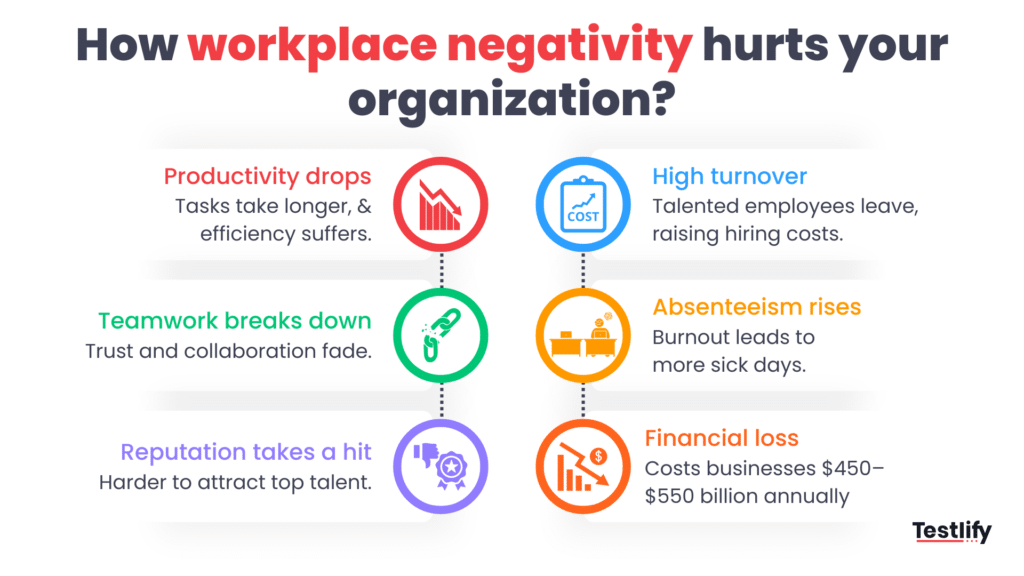
Recognizing these hidden costs is the first step toward creating a more positive and productive workplace.
7 Easy strategies to fight workplace negativity
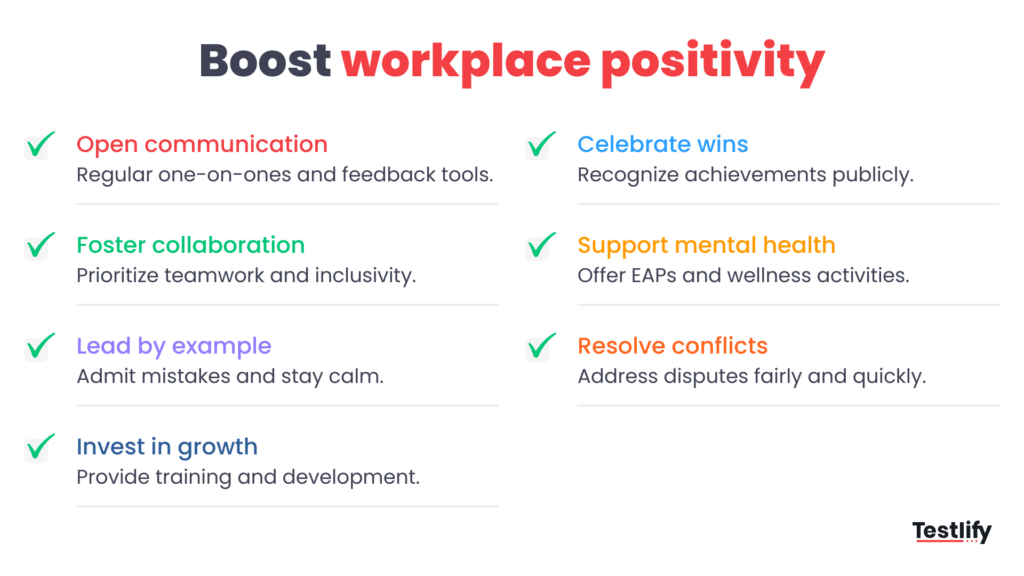
Workplace negativity can be overwhelming, but it doesn’t necessarily have to define the work environment. The following seven strategies are an actionable approach for a more positive and engaging workplace.
1. Encourage open and honest communication
When employees feel unheard or misunderstood, negativity thrives! This can be directly addressed by creating a culture of open communication. Encourage regular one-on-one conversations where employees feel comfortable . These communications can give them the opportunity to discuss challenges, frustrations, or new ideas.
For instance, an open-door policy where employees know they can approach their manager at any time can significantly reduce tension. The managers as well can share one positive highlight and one challenge they faced. Other tools like anonymous feedback forms can help uncover hidden issues that might otherwise go unspoken.
2. Celebrate wins, big and small
Acknowledgment is a simple yet powerful tool to fight negativity. Employees who feel valued are more likely to maintain a positive outlook even during tough times. A thank-you note for a job well done or a shout-out in a team meeting can make a big difference.
For example, organizations can introduce “Kudos Friday” where employees could publicly recognize each other’s efforts. This effort can create a ripple effect of positivity across teams. Celebrating milestones—like completing a project or meeting deadlines—reminds everyone of their collective achievements, creating a stronger sense of purpose.
3. Develop a positive working culture
Positive culture does not come overnight; it is something that has to be deliberately worked towards. Start with the inclusion of respect among members.
Simple things like overemphasizing collaboration instead of competition and the importance of getting everyone’s voices heard in a meeting can work well. It can develop a positive atmosphere in which negativity has a hard time finding its ground.
4. Support mental health and well-being
Negativity mostly arises from burnout or stress. Employee Assistance Programs (EAPs) have proven effective in supporting mental health in the workplace, helping to reduce absenteeism, improve productivity, and lower healthcare costs.
Organizations can introduce “Wellness Wednesdays,” where guided meditations can be performed at lunchtime during work hours. Flexible work hours or even remote working, can help balance the personal and professional lives of employees better.
5. Lead by example
Leadership always sets a tone in the workplace. Once a manager creates an atmosphere for accountability and trust, it will set off a wave of accountability and trust among employees. Moreover, leaders who take the time to check on employees’ well-being beyond just work performance indicate that positivity begins from the top down.
Below are a few practical ways managers can lead by example:
- Acknowledge Mistakes Openly
- Be Open to Feedback
- Stay Calm Under Pressure
- Follow the Same Rules
- Recognize Others’ Contributions
- Admit When You Don’t Know Something
These small but powerful actions show that leadership is about guiding, supporting, and learning alongside the team.
6. Resolve conflicts promptly and fairly
Conflicts that remain unresolved can become a breeding ground for negativity. The confrontation of issues head-on with a fair and solution-focused approach prevents the problem from getting out of hand. If relevant, establish a “Conflict Resolution Hour,” in which disputes can be mediated in a neutral space.
Here, employees should be allowed to express their concerns openly and collectively. This approach can resolve disagreements and can also strengthen trust among team members. Leaders must ensure that they address conflicts promptly, listen to all sides, and work toward solutions that satisfy everyone involved.
7. Invest in growth opportunities
When employees feel stuck in their roles, it’s easy for negativity to creep in. Investing in their training programs, mentorship, or career development can reignite their motivation.
Organizations can introduce quarterly learning stipends. This can help employees acquire new skills. It shows that you care about the future of your employees and that they are part of the organization for the long haul.
Positive change doesn’t happen overnight, it happens with small and consistent efforts. Choose one strategy to start with and watch as it transforms not just your team’s attitude but their productivity and morale as well.
Small tech upgrades for big positivity
Sometimes, a little tech can make a big difference in transforming workplace dynamics. The right tools can improve efficiency and also help create a more engaging and positive work environment. Below are some small yet impactful tech upgrades to consider:
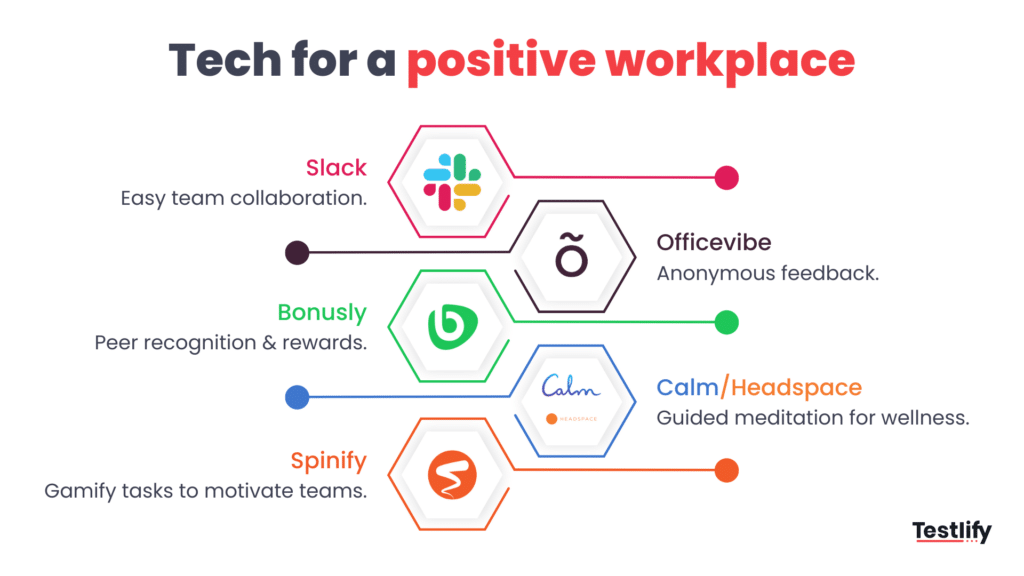
- Slack: Seamless team collaboration and communication.
- Officevibe: Anonymous employee feedback made simple.
- Bonusly: Encourage peer recognition and rewards.
- Calm/Headspace: Support mental wellness with guided meditation.
- Spinify: Gamify tasks to boost motivation and engagement.
These small upgrades help create a happier, more connected, and productive workplace. As a result, it creates opportunities to turn everyday challenges into opportunities for positivity.
Wrapping up: Your move towards positivity
Workplace negativity doesn’t have to be the norm. By taking intentional steps like, promoting open communication, celebrating wins, or leveraging simple tech tools, you can transform your workplace into a hub of positivity.
Remember, change starts small. Implementing even one strategy, like encouraging feedback or supporting mental wellness, can have a ripple effect across the team. The key is consistency and a genuine commitment.
So, what’s your first move? Choose a strategy, start today, and watch how positivity reshapes not just your workplace but the people in it.
FAQs: Common questions about workplace negativity

B2B SaaS Content Writer
Rishav Kumar is a B2B SaaS content writer with 4 years of experience. He loves crafting engaging content. Always exploring fresh ideas, he's passionate about helping businesses grow through impactful writing.
LinkedInRelated resources
View all
HR & recruitment
What is a recruitment fair? (Tips for attending one)

HR & recruitment
Are T-shaped skills the future of hiring? Here’s why

HR & recruitment
Beyond clinical skills: using AI to assess soft skills in healthcare hiring

HR & recruitment
How to conduct a skills audit?

HR & recruitment
What is regretted attrition and how to reduce it?

HR & recruitment
16 HR skills every professional need
Get started.
Hire on proof, not resumes.
Run your first skills-based assessment free — no credit card required.