
What is text recruiting and how to start using it to hire
Discover the ultimate guide to text recruiting! Learn best practices, benefits, tools, and tips to engage candidates effectively and boost hiring speed.

Recruiting has always been at the heart of a business’s success, and as technology changes, so should how we reach the top talent. Among these innovations is text recruiting—a quick, efficient, and highly effective way to reach candidates. So, if you’re in HR, now is the time to look into how this tool can make your hiring process easier and help you create a better team.
According to Gartner, Companies using text message recruiting are 4 times more likely to receive a candidate response within 2 minutes than an email.
In this guide, we’ll walk through the ins and outs of text recruiting. You’ll learn about its benefits, how to implement it, best practices, and some common pitfalls to avoid.
 ChatGPT
 Gemini
 Claude
 Grok
Grok Perplexity
What is text recruiting?
The crux of text recruitment is sending messages to applicants through any of the Short Message Service/Instant Messaging platforms. In this regard, you have more of a concise and time-bound conversation wherein you reach out to them quickly compared to emails and phone calls.
Text recruitment is highly beneficial for targeting the younger workforce. Younger job seekers often prefer texting more than other means of communication. Considering that over 90% of people read their texts within 3 minutes after receiving them, the SMS has an extremely high engagement rate and is a significant tool for HR teams.

Why should HR professionals consider text recruiting?
Text recruiting isn’t just a convenience—it’s a game-changer for modern HR practices.
With a 98% open rate for SMS messages compared to 20% for emails, text messaging ensures your communication reaches candidates effectively
1. Speed and efficiency
The biggest positives of text recruiting are the speed that it affords. It is more than likely that your text will be read nearly at the drop of a hat, compared to emails or phone calls. This fast-paced interaction is vital, especially in the current market, where top candidates might receive multiple offers in a few days. Texting can allow HR professionals to quickly get responses and schedule interviews without having a long back-and-forth email exchange.
2. Higher response rates
Email open rates are low, particularly among younger candidates, so many recruiters are turning to an sms api to improve reach. According to studies, SMS boasts an open rate of 98%, whereas emails are opened less than 20% of the time. That’s a big difference! Texts are more direct, and the candidate is more likely to engage with the message quickly. This is important so that you don’t miss your potential hires.
3. Cost-effective
Although it takes time and resources to make phone calls and use traditional recruiting methods, text recruiting is much cheaper. It streamlines communication, reducing the time spent on lengthy phone calls or administrative work that wastes precious time and money from your team.
4. Convenient for candidates
Today’s candidates are often on the move, and it may be impractical to schedule an actual interview by phone or have candidates check their email when he or she is working. But nearly everyone has their phone, and texting allows for quick, convenient dialogue that can make a candidate feel more at ease and of more importance.
How to start with text recruiting
1. Choose the right platform
Before you start texting candidates, you must decide which bulk SMS text recruiting platform you use. Most tools have specialized SMS-based recruiting. These tools come with automated text message sending, candidate tracking, and even AI-driven responses to ease all of it.
Some ATSs also have built-in texting capabilities, so if your company is already using an ATS, it’s worth checking if this functionality is available.
2. Build a text recruiting strategy
Once you’ve selected your platform, it’s time to develop a strategy. Not all texts are created equal, and you need to think carefully about how you approach potential candidates.
Consider the following:
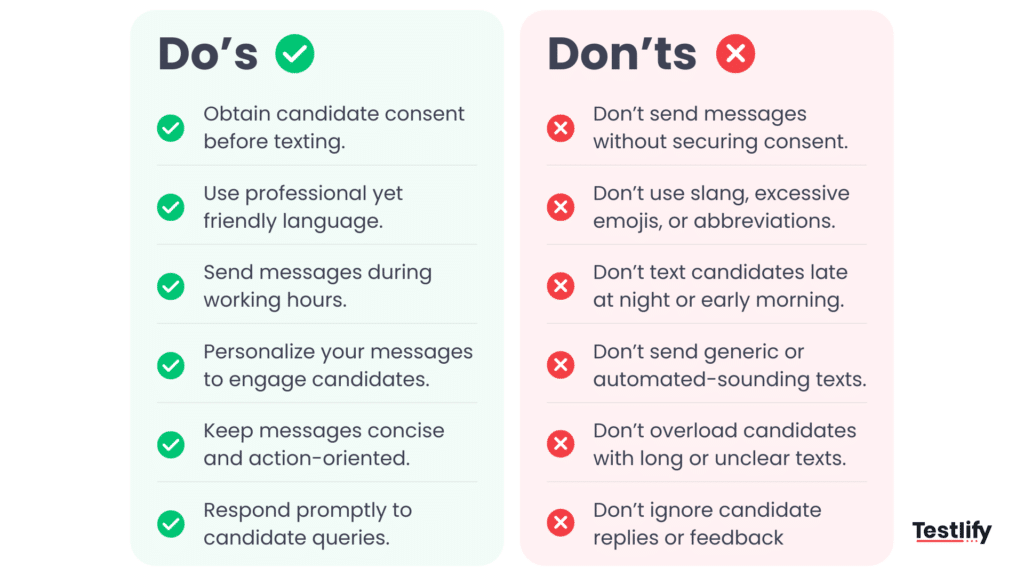
- Personalize your messages: Generic, robotic-sounding texts are unlikely to get your desired response. Personalization is key. Use the candidate’s name and tailor the message based on the job they applied for. This makes the candidate feel valued and more likely to respond.
- Use clear and concise language: Texts need to be short and to the point. Keep your messages simple and focused on the essential information. Avoid long paragraphs and get straight to the heart of the message.
- Respect their time: Texting can be convenient, but it’s also essential to consider the timing of your messages. Avoid sending texts late at night or during weekends unless your candidate has indicated that they are okay with that. Respect their boundaries and working hours.
- Automate where possible: One of the biggest advantages of text recruiting is automating many parts of the process. For example, you can set up automated responses to acknowledge a candidate’s application, confirm interview schedules, or send reminders about upcoming interviews. Automation can save you time and ensure no one slips through the cracks.
3. Create engaging and informative texts
A recruiting text is more than scheduling an interview or receiving a job application confirmation. You can use texts for more information on your company and the job opportunities. You could incorporate a small description of your job role, the type of culture you have at work, or your website or job description.
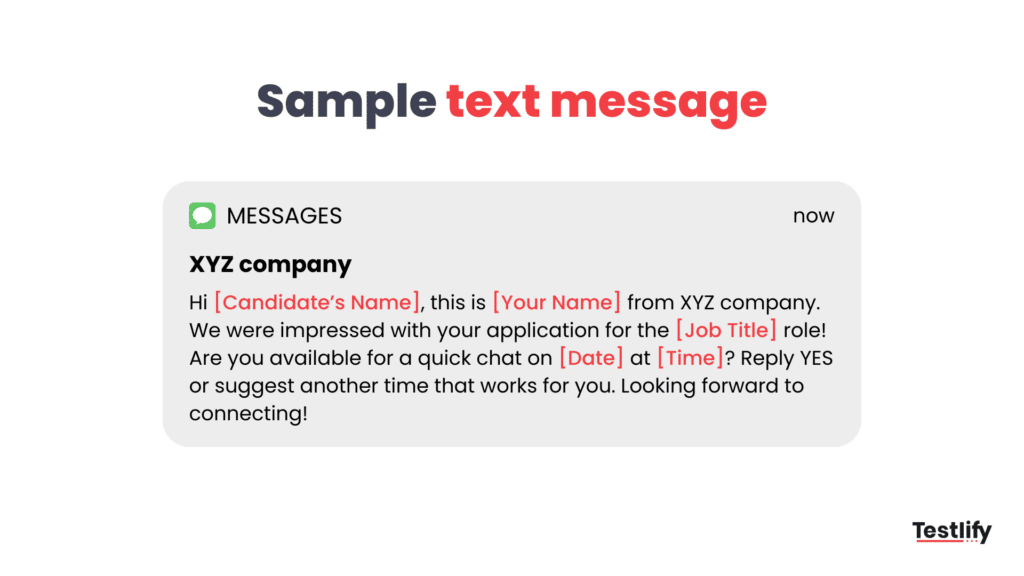
For instance, instead of simply saying, “We’d like to schedule an interview,” you might say:
“Hi [Candidate Name], thanks for applying to [Job Title] at [Company Name]. We’re impressed with your background and would love to discuss the role! Are you available for an interview at [date/time]?”
Such an approach is professional and gives the candidate a glimpse of what it’s like to work with your company.
4. Ensure compliance with regulations
When using text messaging for recruiting, it’s essential to be aware of various regulations that govern text communications. For example, in the U.S., the Telephone Consumer Protection Act (TCPA) restricts the use of automated texts unless candidates have opted in.
Before sending any messages, ensure your candidates have explicitly consented to receive texts from you. If you’re using an automated system, ensure it complies with all applicable laws in your region.
Best practices for text recruiting
Implementing text recruiting effectively involves careful planning and following guidelines. Always secure candidate consent, use professional yet conversational language, and keep messages short and actionable.
Interestingly, 64% of candidates under 40 prefer texts for job updates, making professionalism in this channel crucial for engaging today’s workforce.
1. Be clear about expectations
Communicate with your prospects about how you would like to use text messages. Let them know that you will be contacting them through SMS to schedule interview calls, give feedback, or respond to questions about the job. This relaxes candidates about the communication platform and makes them less likely to ignore your messages.
2. Use texts for screening and engagement
Text recruiting isn’t just about scheduling interviews. It can also be used in the early stages of recruitment, such as screening candidates. You can send candidates brief screening questions via text, making it easy for them to respond quickly and continue through the application process. For example, you might text, “Hi [Candidate Name], we’re excited about your application for [Job Title]. Can you briefly describe your experience with [specific skill]?”
3. Respond promptly
While texting allows for fast communication, keeping that momentum going is important. Respond to candidates as quickly as possible. This responsiveness demonstrates to candidates that your company values their time and is serious about hiring.
4. Keep it friendly and professional
Text recruiting can feel informal, but maintaining professionalism is essential. Keep your tone polite, friendly, and respectful. The goal is to engage candidates in a conversation that feels human, not robotic.
5. Track your conversations
Many text recruiting platforms feature tracking and analytics. You can leverage this to measure the effectiveness of your texts. This will help you know response rates, candidate engagement, and success in getting the person to an interview schedule.
Common mistakes to avoid in text recruiting
1 in 3 candidates finds receiving texts outside work hours intrusive, potentially damaging your employer’s brand.
Text recruiting mostly works well, but there is always a likelihood of making errors that negatively affect relationships with candidates. Spam, casual language, and the timing of the messages all come into the fray of the debate on how not to recruit by texts.
1. Overusing texts
Even though text recruiting works, candidates can get frustrated when bombarded with too many messages. Texts become irritating if they seem like an avalanche of non-stop messages. Apply texts to updates, reminders, or queries, but refrain from overcommunicating.
2. Neglecting to personalize
Automated texts can save time, but don’t fall into the trap of sending generic, impersonal messages. Candidates want to feel valued, and a personalized touch can make all the difference in attracting top talent.
3. Sending texts at inappropriate times
Text recruitment timing is also crucial. Sending messages late at night, early in the morning, or on weekends may make a bad impression. Time zones and preferences of candidates must always be kept in mind.
4. Ignoring candidate preferences
Ask every candidate whether they are comfortable with text message communication. Some candidates prefer email or phone calls instead. Respect for their mode of communication will ensure a better candidate experience.
Conclusion
It’s a revolution in the way that HR professionals communicate with candidates. With SMS or messaging platforms, you engage talent quicker, get higher response rates, and improve your hiring process. However, this requires thoughtful strategy, personalized messages, and regulation adherence.
Done the right way, text recruiting can give your company an edge in attracting top talent in a competitive job market. So why not take the plunge and start integrating text recruiting into your hiring process today?
Frequently asked questions (FAQs)

Content Writer
Yashika Khandelwal is a Content Writer with 3+ years of experience creating research-backed content on hiring, talent assessment, and HR technology. She is a registered Organizational Psychologist and subject matter expert who combines behavioral science with practical recruitment insights to produce accurate, evidence-based content.
LinkedInRelated resources
View all
HR & recruitment
Career Pathing: How to Build Paths That Retain Talent

HR & recruitment
Pros and cons of cross-training employees in 2026

HR & recruitment
How to use reverse mentoring to make it work?

HR & recruitment
How talent acquisition teams can benefit from citizenship investment programs

HR & recruitment
Recruiter burnout: causes, symptoms, and how to prevent it

HR & recruitment
How to create a strategic HR roadmap?
Get started.
Hire on proof, not resumes.
Run your first skills-based assessment free — no credit card required.