
Top 15 Canditech Alternatives and Competitors
Discover 15 powerful Canditech alternatives to streamline your hiring process and assess candidates with confidence.
Canditech is an all-in-one assessment platform designed to help companies streamline their screening process by offering customized, branded tests. This enables hiring managers to make fast, confident, and objective decisions, reducing costly mis-hires.
But it’s not always the best fit for every team. Whether you’re seeking better candidate experience, conversational AI powered interviews, more flexible pricing, or stronger anti-cheating features, there are plenty of worthy Canditech alternatives.
In this blog, we break down the top 15 Canditech alternatives, comparing their features, G2 ratings, and pricing so you can choose the platform that matches your team’s workflow, tech stack, and hiring goals.
 ChatGPT
 Gemini
 Claude
 Grok
Grok Perplexity
Testlify
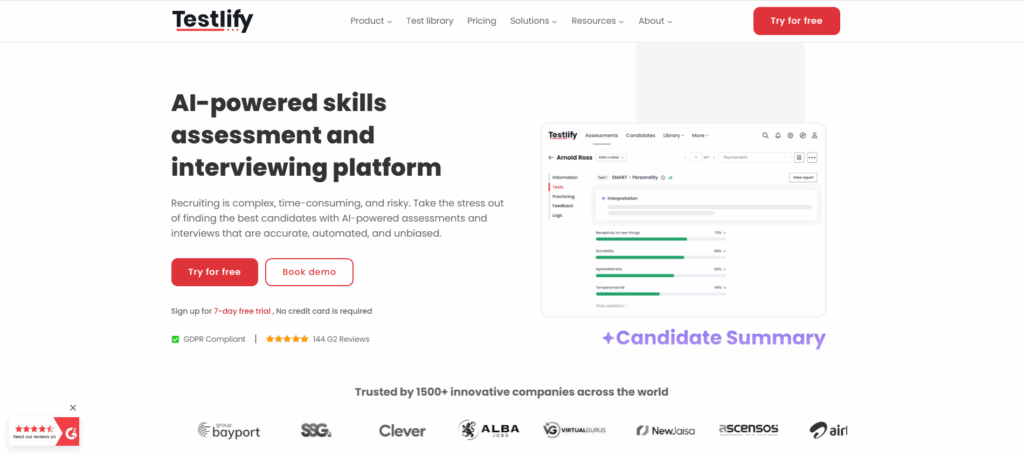
Testlify is a leading AI-powered skills assessment and interviewing platform offering 3,500+ role-specific tests in 15+ languages, helping organizations confidently hire top talent across global markets.
Features
- Extensive Test library: Features over 3,500 pre-built tests tailored to 4,500+ job roles spanning 50+ industries
- Conversational AI interviews: Enables recruiters to create job simulations in chat, voice, or video-based formats, making it ideal for high-volume hiring.
- AI-powered summaries: Generate concise summaries of candidates’ performance, highlighting strengths and areas for improvement.
- Extensive ATS integrations: Compatible with over 100 ATS platforms, including Greenhouse, Lever, and Workable. Candidates can be automatically funneled into hiring pipelines.
- Anti-cheating measures: Features include webcam tracking, randomized questions, tab monitoring, and dual camera proctoring to ensure a secure assessment environment.
G2 Rating: 4.7
Testlify pricing
Testlify offers flexible pricing plans that scale with your business, providing everything from basic assessments for startups to advanced features for enterprise-level hiring.
- Starter plan: Ideal for small teams and startups, this plan starts at $139/month (billed at $1,663/year) and includes 100 candidate credits at $17 per credit with support for 3 users.
- Starter: Designed for growing businesses, the Starter starts at $279/month (billed at $3,343/year) and includes 300 credits at $11 per credit with support for 5 users.
- Starter: Built for scaling teams, this plan costs $699/month (billed at $4,192/year) and includes 1,000 credits at $8 per credit with 10 users.
- Premium plan: Suited for high-growth organizations, the Premium plan includes 3,000 credits and supports 20 users, with pricing available upon contacting the sales team.
- Enterprise plan: Designed for large enterprises, this plan includes 10,000 credits and supports 30 users, with pricing available upon contacting the sales team.
- Enterprise plus plan: Designed for large-scale hiring programs, this plan includes 25,000 credits and supports up to 40 users, with pricing details available upon contacting the sales team.
- Unlimited plan: For companies seeking unrestricted access, Testlify offers an unlimited plan that includes unlimited candidate credits and full platform functionality, with pricing available on request from the sales team.

Talview
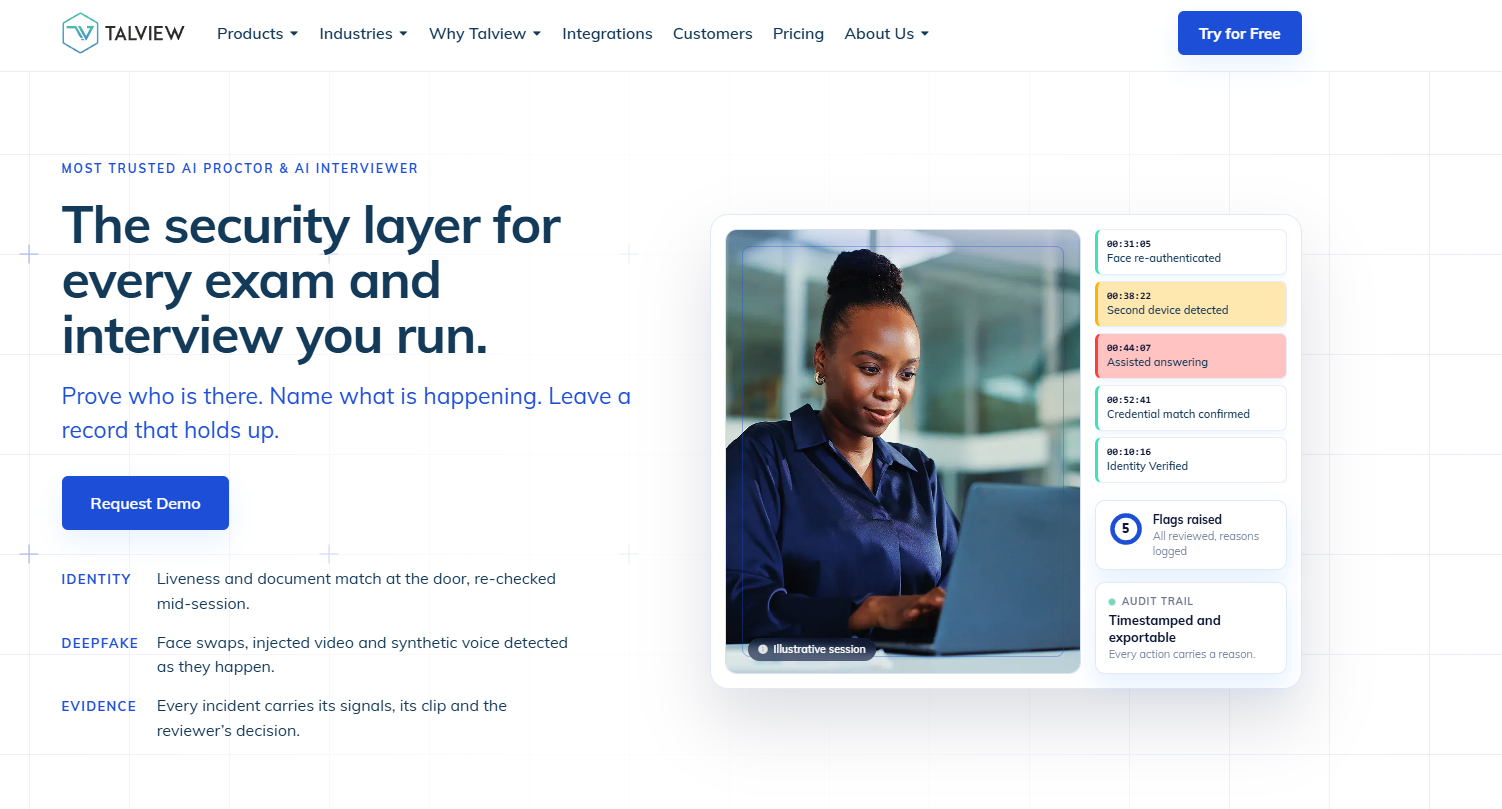
Talview brings assessments, interviews, and proctoring into one platform, with proctoring as one of its strongest selling points. Launched in 2012 as interview master and rebranded in 2017, it now serves hiring teams, certification bodies, and universities from the same technology stack.
Exam boards demand stricter integrity controls than most recruiters, so Talview is built for the more demanding use case and extends that capability to hiring teams.
For teams moving away from xobin primarily because of proctoring, Talview is a close like-for-like alternative on the security side.
Features
- Layered proctoring options: ProView, Talview’s proctoring engine, runs more than 18 automated checks per session and generates an integrity score for every candidate.
- Identity and environment verification: Face, voice, and photo ID matching help verify the test taker, while a secondary camera provides a wider view of the testing environment.
- Assessment and interview in one workflow: Aptitude, coding, and multiple-choice assessments can flow directly into an AI-led video interview from the same invitation.
- Exportable audit trail: Every session generates a timestamped record that reviewers can export for appeals, investigations, or audits.
G2 rating: 4.4/5
Pricing: Talview does not publish a standard rate card and provides custom quotes. Third-party directories show widely varying estimates, so ask for a written annual quote based on your actual candidate volume.
Sapia.ai
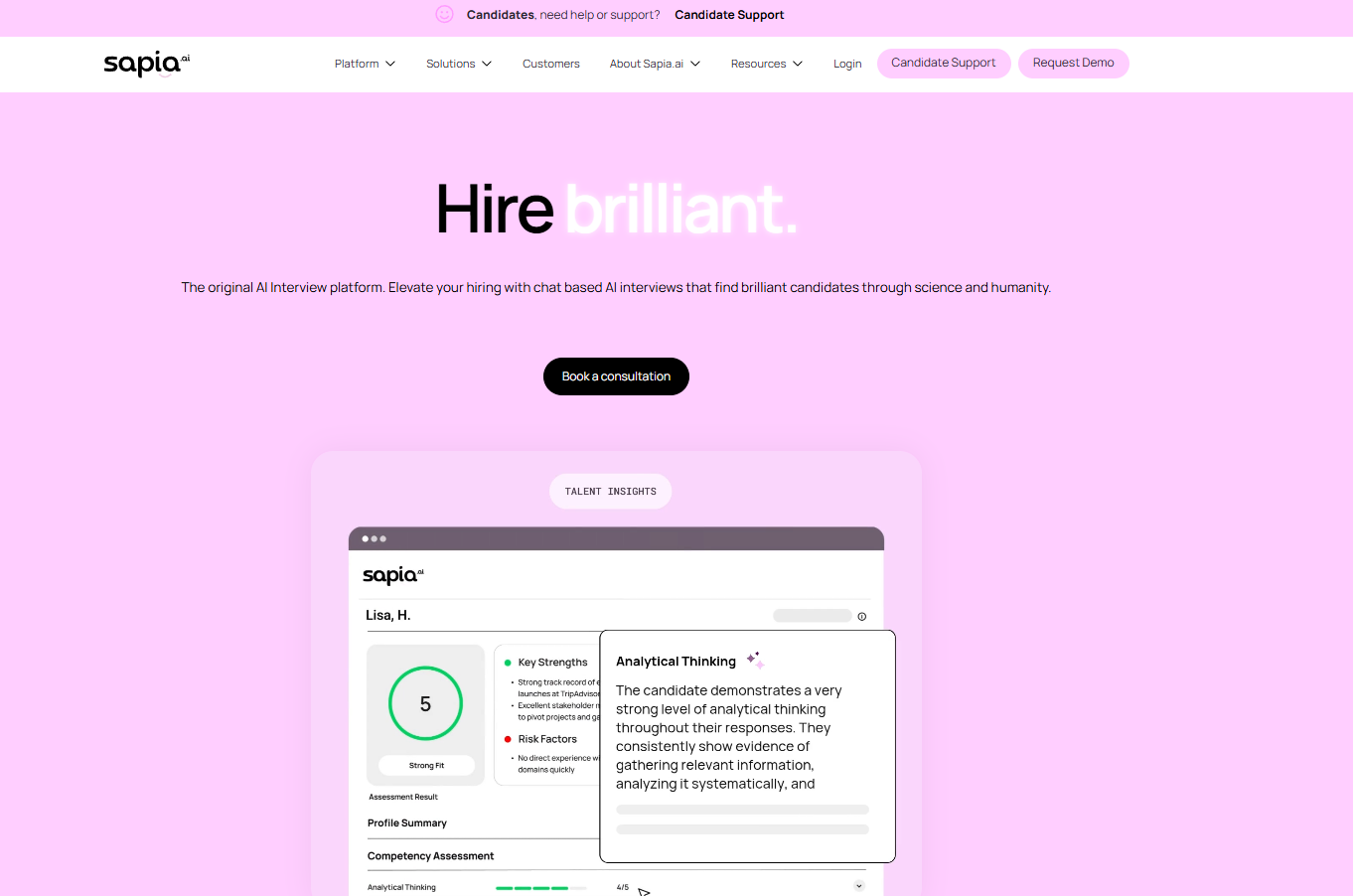
Sapia.ai replaces the traditional first interview with a text-based conversation. Candidates answer a short set of structured behavioural questions in their own time, while its SAIGE scoring engine evaluates responses against a validated competency model.
Removing the camera is intentional rather than a limitation. Text interviews work on weaker connections and remove visual and vocal cues that can influence how interviewers perceive candidates.
The platform is built for high-volume hiring across retail, hospitality, contact centres, and frontline operations.
Features
- Blind chat interview: Candidates complete an untimed text interview without a camera and without seeing their CV during the assessment.
- Job analyser: Turns a job description into a competency-based interview, ensuring each question connects directly to the role.
- Feedback for every applicant: Every candidate receives personality insights and a coaching tip, regardless of whether they progress in the hiring process.
G2 rating: 4.6/5
Pricing: sapia.ai charges per hire rather than per candidate or seat. Companies can interview unlimited applicants and pay only for candidates they hire, with the platform stating that it is best suited to organisations hiring more than 500 people annually.
Vervoe
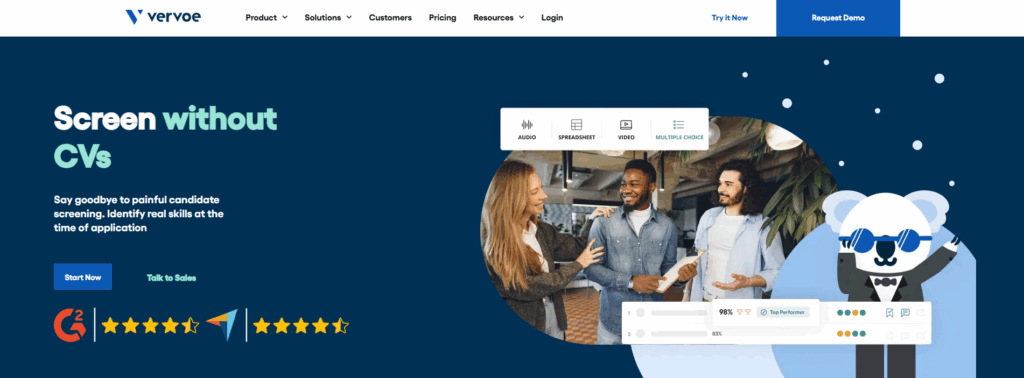
Vervoe is a platform whose mission is to make hiring about merit rather than resumes. It enables employers to see candidates perform job-related tasks and uses AI to automatically grade and rank their responses.
Vervoe’s assessments cover technical, soft, and even creative skills, with an emphasis on real-world exercises that let every candidate showcase their talent in practical scenarios.
Features
- Job simulation tests: Choose from over 300 pre-built assessments across customer support, sales, marketing, tech, and operations. Each test mirrors the actual tasks the candidate would perform on the job.
- Multi-format testing: Combine text, video, file uploads, spreadsheets, and more to capture different dimensions of candidate performance.
- AI grading: Vervoe automatically evaluates responses and ranks candidates based on accuracy, effort, and relevance using AI scoring models.
- Team review and collaboration: Multiple team members can rate candidate responses, leave notes, and contribute to final hiring decisions in a unified dashboard.
G2 Rating: 4.6/5
Pricing: Follows a pay-as-you-go model that can be ideal for organizations that have even hiring cycles or want to finely control costs. The entry plan starts at $300 per year for 10 candidates, with pricing increasing as more candidates are added.
Codility
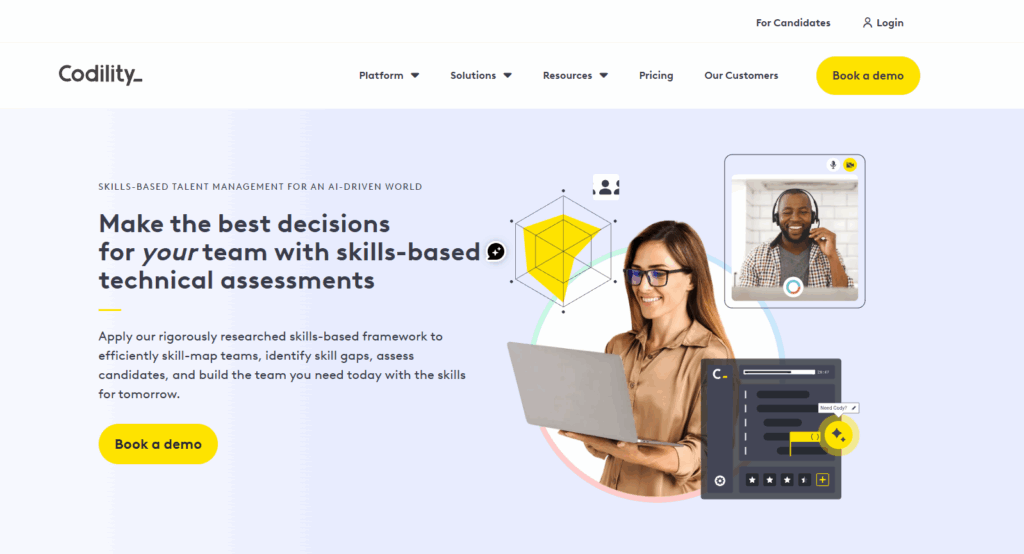
Codility is a coding-focused assessment platform designed for large-scale engineering hiring. It helps evaluate technical candidates efficiently through real coding tasks and collaborative technical interviews.
Features
- Extensive coding test bank: Choose from 1,100+ coding tasks in 45+ programming languages. Questions range from basic algorithms to complex system design.
- Live technical interviews: Codility allows engineers and candidates to code together in real time, using a collaborative IDE with syntax highlighting, compiler, and test runner.
- Automated scoring: Submissions are scored based on logic, correctness, efficiency, and readability. Recruiters get structured reports without needing to write code reviews manually.
- Reporting and analytics: In-depth candidate reports include breakdowns by task, test cases passed, and code quality scores, helping you make informed decisions.
G2 Rating: 4.6/5
Pricing: Codility offers three structured pricing tiers: the Starter plan at $1,200 per year, the Scale plan at $6,000 per year, and a custom plan for large enterprises
Mercer Mettl
Mercer | Mettl is a full-featured assessment suite backed by global HR giant Mercer. It’s especially strong in behavioral and psychometric evaluation, making it a go-to for organizations that need rigor and compliance in their hiring.
It’s well known for its research-based assessments and secure proctoring widely used in corporate hiring, campus recruitment, and certification testing.
Features
- Comprehensive test coverage: Offers 200+ job-specific assessments covering technical, cognitive, behavioral, and psychometric testing. Tests are research-based and customizable.
- Enterprise-grade proctoring: Combines AI-based face recognition, browser lockdown, and live human invigilation for maximum test integrity.
- Brand personalization: Display your own branding, logos, and test domain URL. Maintain consistent branding across the candidate experience.
- Reports & benchmarks: Reports include competency-based scoring, percentile comparisons, and hiring recommendations aligned with organizational frameworks.
G2 Rating: 4.4/5
Pricing: Mercer Mettl’s pricing is customized. Organizations need to contact Mettl for a quote, as costs depend on the number of tests, candidates, and features.
iMocha
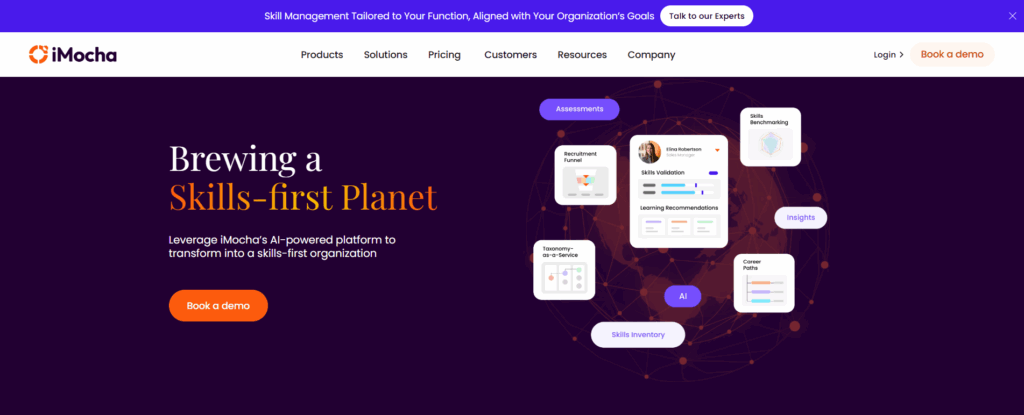
iMocha is an AI-powered skills assessment platform that supports both pre-employment testing and workforce upskilling. iMocha has built a massive skills database and is known for its innovative Skills Intelligence features. Companies use iMocha to test candidates on a variety of skills ranging from coding and IT to finance, language, and more.
Features
- Extensive test library: Over 3,000 ready-to-use tests and 30,000+ skills mapped to industry job roles, including niche domains like SAP, cybersecurity, and financial services.
- Custom test builder: Allows HR teams to build tests by mixing existing questions or creating new ones with custom scoring logic.
- AI interviewer “Tara”: A virtual assistant that engages candidates through conversational interviews, generating insight-rich qualitative reports.
- Reporting and analytics: Track candidate performance by domain, skill group, and question category, helping refine hiring decisions and identify top talent.
G2 Rating: 4.4/5
Pricing: 14-day free trial available. Plans start at $999/year (Starter) and scale up for larger teams.
Hirevue
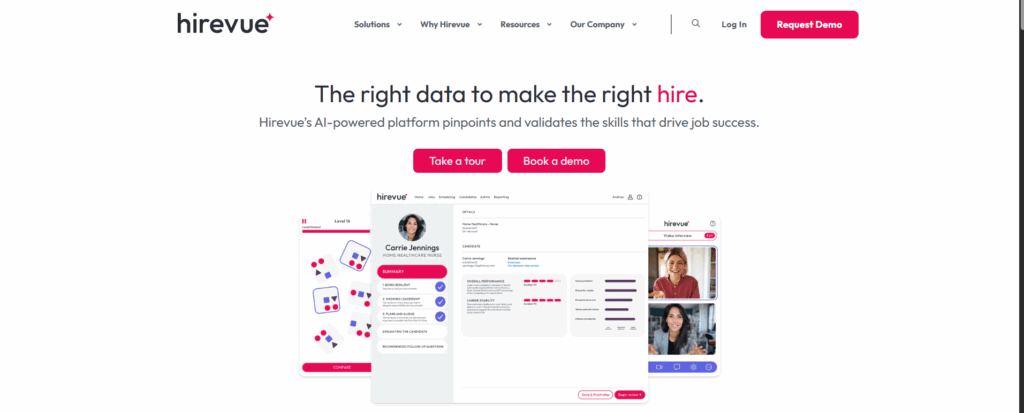
Hirevue is a pioneer in the digital interviewing space that has expanded into assessments. It offers a video interviewing platform combined with game-based and AI-driven assessments.
It is used globally by enterprises to streamline high-volume hiring with on-demand video interviews, coding challenges, and even AI-scored games that measure cognitive ability and personality.
Features
- IO science content library: Get exclusive access to validated role-specific interview content.
- Video interviews (On-demand & live): One-way and live video interviews with scoring rubrics. AI is used to capture non-verbal cues and evaluate the verbal response content and tone.
- Game-based assessments: AI-driven cognitive games that measure problem-solving, communication, and coding skills.
- Scheduling and automation: Auto-schedules interviews, engages candidates via chatbots, and integrates with your ATS.
G2 Rating: 4.1/5
Pricing: Hirevue offers three plan tiers, but pricing is not publicly disclosed and requires booking a demo for details.
TestDome
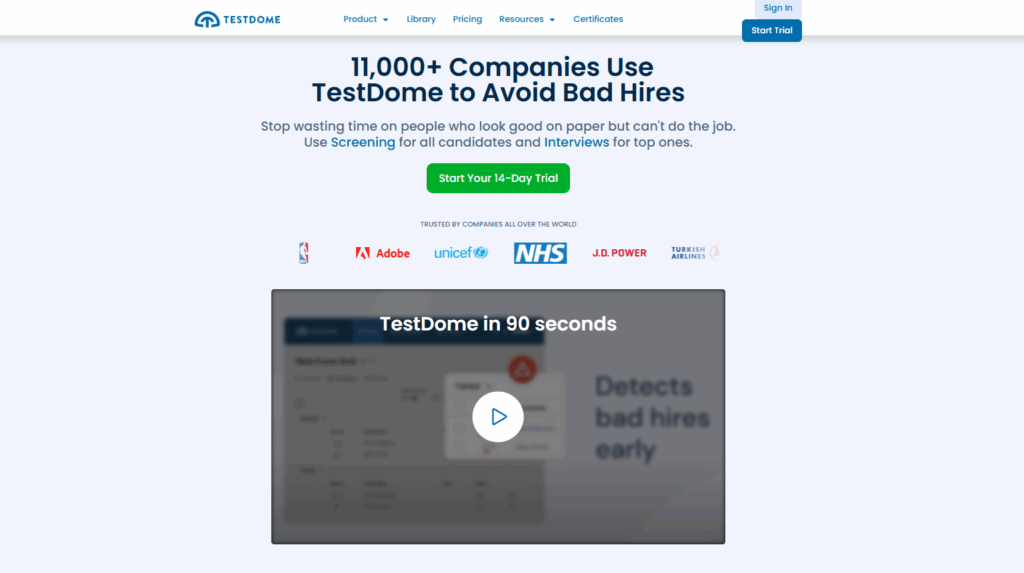
TestDome is a skills testing platform focused on work-sample assessments. Unlike trivia or theoretical quizzes, TestDome provides over 150 pre-made tests that require applicants to perform tasks closely mirroring real job work.
These tests span domains from programming and IT to accounting, customer service, and more, allowing employers to see how candidates might actually perform in the role.
Features
- Work-sample testing: Candidates are evaluated using realistic tasks that mirror what they’d actually do on the job.
- Library of 150+ pre-built tests: Covers roles across software development, accounting, customer service, data entry, and more. Tests are short, effective, and designed to filter out unqualified applicants quickly.
- Custom question creation: Build your own tasks or mix them with TestDome’s library. You can test specific coding languages, logic, writing, or even numerical reasoning.
- Benchmarking and analytics: Compare candidate performance side-by-side with visual scorecards, percentile rankings, and pass/fail indicators.
G2 Rating: 4.5/5
Pricing: Coderbyte pricing is subscription-based. Plans start at around $199/month, which allows unlimited candidates and tests. (Discounted annual plans are available for organizations that prefer yearly billing.)
Coderbyte
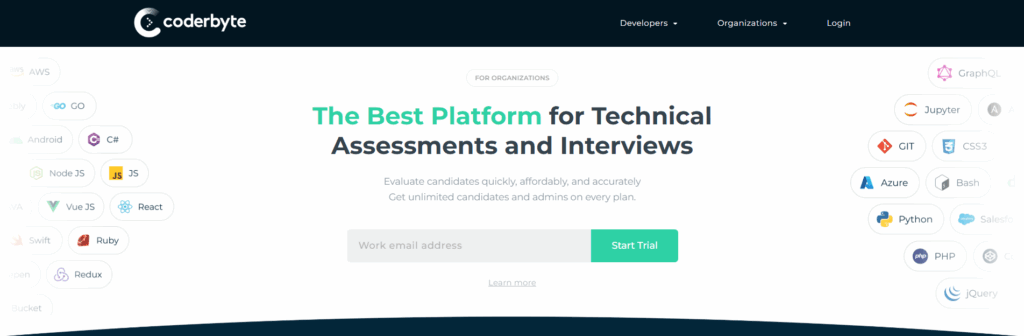
Coderbyte is a technical assessment platform geared toward startups and mid-sized companies for hiring developers and data scientists. It enables unlimited coding tests, coding challenges, and even take-home project assessments on a subscription basis.
Features
- Coding Challenges & Projects: Massive library of 1,000+ coding challenges, 30+ languages, & 100+ skills.
- Multiple question types: Includes multiple-choice questions, open-ended responses, and SQL queries.
- Built-in interviewing tools: Supports live video coding interviews with collaborative tools including a real-time code editor, spreadsheets, Jupyter Notebooks, and a virtual whiteboard.
- Reporting and analytics: Coderbyte offers comprehensive reporting and analytics for each coding assessment, which includes several key components such as the candidate’s code, code video recordings, skill ratings and internal benchmarking charts.
G2 Rating: 4.4/5
Pricing: Coderbyte pricing is subscription-based, at approximately $199/month for unlimited candidates and tests. (Discounted annual plans are available for organizations that prefer yearly billing.)
Hiremojo
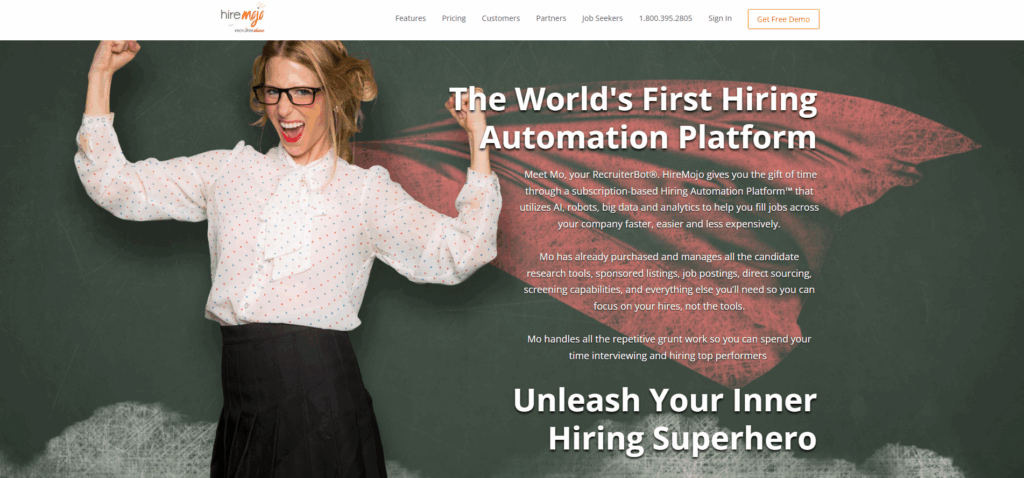
HireMojo is a recruiting automation platform designed to simplify and scale the hiring process. It offers a proprietary performance-based hiring engine that distributes job listings across 100+ job boards and sourcing channels.
Features
- Automated job distribution: Post jobs to 100+ job boards, career sites, and referral networks in one click, with analytics on source performance.
- Pre-screening engine: Patented online interview process screens candidates via dynamic questionnaires. Applicants are scored and ranked automatically.
- Built-in content library: Access pre-written job descriptions and interview question templates across industries.
- Candidate tracking: Manage resumes, feedback, interview schedules, and email communication from a single dashboard.
G2 Rating: 4.5/5
Pricing: HireMojo does not publicly disclose pricing. Interested companies need to contact their sales team for a custom quote. Pricing is likely tailored to the organization’s size, hiring volume, and specific features needed.
HackerEarth
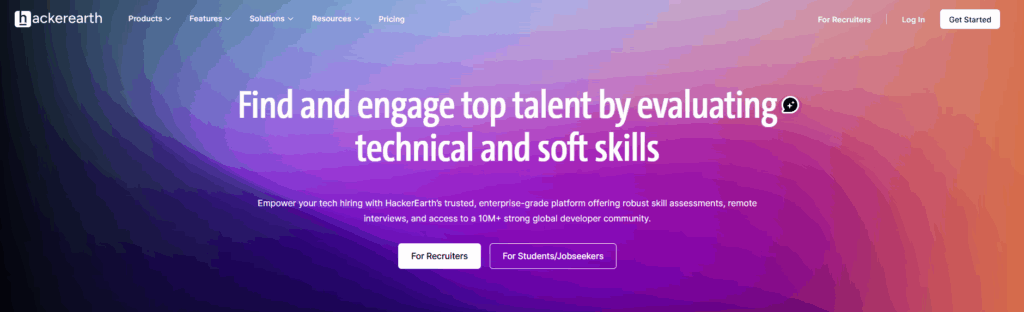
HackerEarth is a comprehensive tech hiring platform designed for enterprise-grade screening, developer interviews, and candidate engagement. It’s a direct competitor to HackerRank, known for its wide coverage of technical roles and proctoring excellence.
Features
- Massive content library: Access over 25,000 questions across domains like software development, data science, AI/ML, DevOps, and cloud. Supports multiple question types including MCQs, project-based, and video.
- FaceCode interviews: A collaborative coding interview platform with HD video, a shared code editor, built-in question banks, and a whiteboard. Helps technical teams simulate real-world pairing scenarios.
- Advanced proctoring: Combines AI-powered webcam monitoring, tab tracking, audio detection, and behavior analysis. Flags suspicious test behavior in real time and allows human proctoring for high-stakes sessions.
- Custom test creation: Use pre-built templates or build from scratch with your own scoring logic, difficulty levels, and time constraints.
- Insights and analytics: Detailed candidate skill maps, time analytics, pass/fail dashboards, and team score comparisons are all included to help improve hiring accuracy.
G2 Rating: 4.5/5
Pricing: HackerEarth offers scalable pricing plans designed to grow with your business. Pricing plans start at $99 per month, with higher-tier plans available to support larger teams and advanced hiring needs
HackerRank
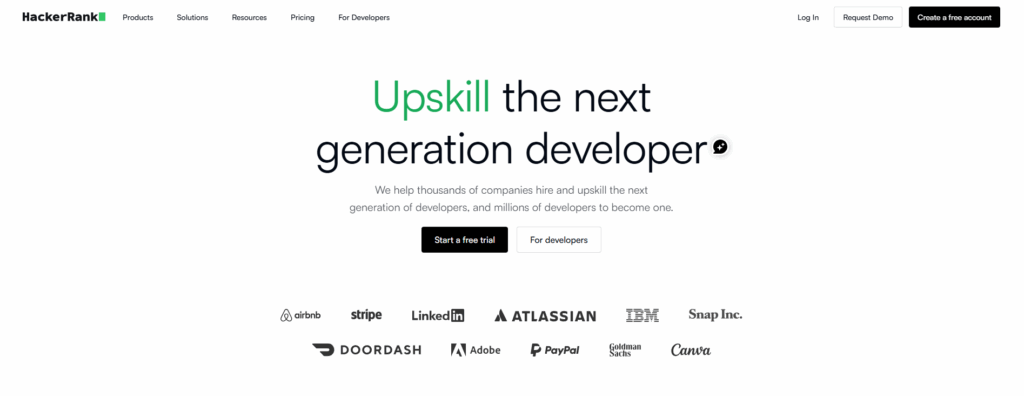
HackerRank is a developer-focused hiring platform trusted by enterprises like Bloomberg and Goldman Sachs. It helps you hire for engineering, data science, and DevOps with a library of technical content and interview tools.
Features
- Extensive test library: Comes with 7500 questions, curated across 45+ programming languages with support for frontend, backend, data, security, and QA roles.
- Interview workflows: Combine screening, take-home tests, and live interviews in one platform. Use built-in pair programming, system design boards, and whiteboards.
- Anti-cheating measures: Prevents test manipulation with proctoring tools like webcam recording, copy detection, and time analysis.
- Structured scoring: Use custom rubrics to evaluate candidate performance on code, collaboration, and problem-solving.
G2 Rating: 4.5/5
Pricing: Starts at $198/monthnth for the starter plan
TestInvite
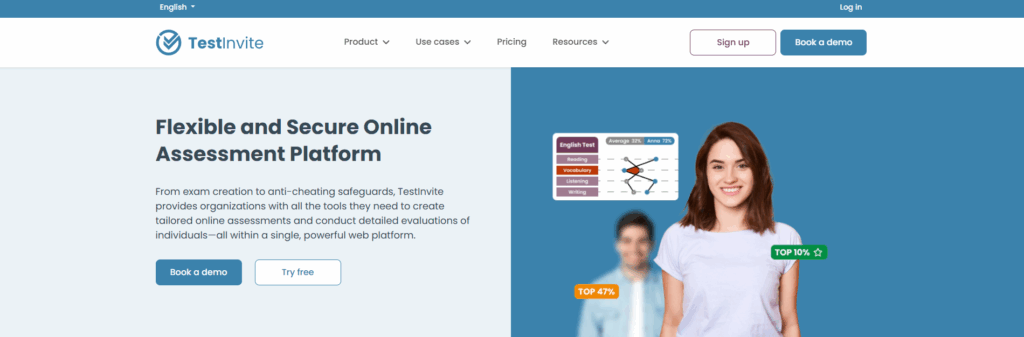
TestInvite is a comprehensive online exam and assessment software built to facilitate secure, highly customizable testing for various purposes, including pre-employment screening, educational exams, and certification.
It stands out for offering fine-grained control over every aspect of the testing process, from designing custom questions to implementing strict proctoring rules. This makes it ideal for organizations that need flexibility and security in their testing platform.
Features
- Custom test creation: A highly flexible test builder with a wide variety of question types (multiple-choice, essays, coding, video responses, and more). This allows you to design assessments that precisely match the competencies you want to evaluate, with custom scoring logic and timing for each question if needed.
- Talent assessment library: If you prefer ready-made content, TestInvite provides a library of pre-built tests to assess candidates on common abilities such as problem-solving, communication, and other role-specific competencies.
- Detailed reports: Rich reporting capabilities, including the ability to customize how results are presented. You can modify scoring logic, derive new metrics, compare results against benchmarks or norms, categorize scores, and add textual interpretations for different score ranges.
- Anti-cheating & proctoring: TestInvite incorporates a comprehensive set of anti-cheating measures such as lockdown browser mode, AI-driven cheating detection, randomized question banks, and the option to record test-taker video or audio, all designed to ensure assessment integrity.
G2 Rating: 4.7/5
Pricing: Starts at $37/month for the Starter, which includes a limited number of test attempts per month. Higher-tier plans with more features and greater usage limits are available for organizations that require more candidates or advanced functionality. Pricing can increase based on the add-ons and scale of usage.
eSkill
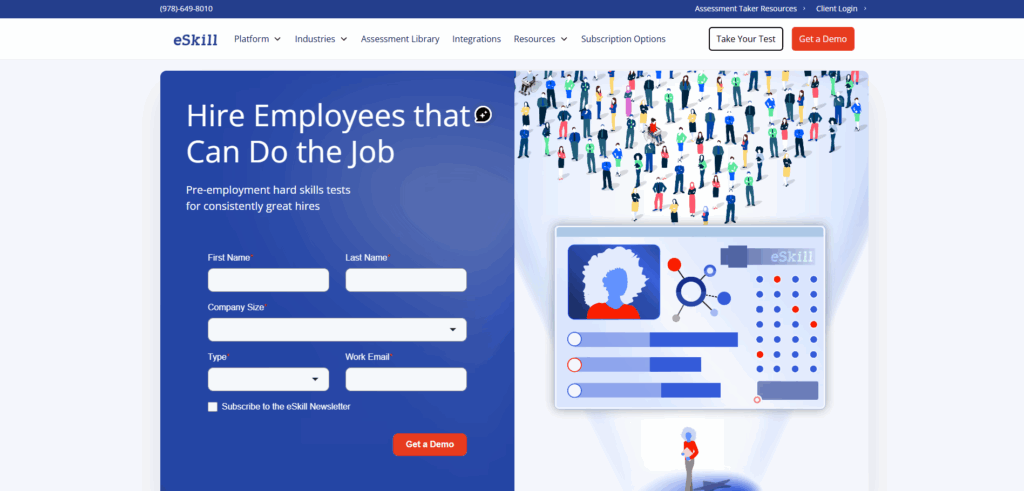
eSkill is a long-established pre-employment testing platform known for its huge variety of skills tests. It offers both ready-made and custom assessments covering clerical skills, software proficiency, literacy and math, accounting, legal, call center scenarios, you name it.
Features
- Massive test library: Choose from over 600 ready-to-use assessments or create custom tests by selecting subjects, topics, and questions tailored to your job or training needs.
- Simulations: Go beyond multiple-choice questions with eSkill’s interactive job simulation tests that evaluate how candidates perform in real-world job scenarios.
- Anti-cheating and advanced proctoring: Enables organizations to maintain the integrity of assessments by monitoring behaviors such as copy-pasting and tab switching, automatically flagging any suspicious activity in real time.
- Reporting and analytics: Access detailed candidate reports, including overall scores and performance breakdowns by subject or question, allowing you to gain insights into each applicant’s strengths and weaknesses.
G2 Rating: 4.5/5
Pricing: eSkill does not disclose its pricing publicly. Recruiters need to get in touch with the sales team to get a custom quote
Which is the best Canditech alternative?
When considering all these options, Testlify stands out as the best Canditech alternative.
Testlify features an extensive test library (over 3,500 tests), AI-powered candidate evaluations, and conversational AI interviews for creating realistic job simulations at scale. It also supports 100+ ATS integrations out of the box.
Whether you’re looking for pre-employment testing tools or a conversational AI powered interview platform for high volume hiring, Testlify excels at delivering everything you need without overwhelming your budget.
Read our in-depth Testlify vs Canditech comparison article to make the best choice for your hiring needs.

Director of Marketing
Akash Patange is the Director of Marketing at Testlify, where he works closely with HR leaders and recruiters to help organizations improve hiring outcomes. He writes about talent assessment, recruitment technology, and data-driven hiring practices.
LinkedInRelated resources
View all
Alternatives
Top 15 eSkill Alternatives and Competitors (2026)
Alternatives
Top 15 TestInvite Alternatives and Competitors
Alternatives
Top 15 HackerRank Alternatives and Competitors in 2026
Alternatives
Top 15 HackerEarth Alternatives and Competitors
Alternatives
Top 15 Vervoe Alternatives and Competitors in 2026
Alternatives
Top 15 Hiremojo Alternatives and Competitors
Get started.
Hire on proof, not resumes.
Run your first skills-based assessment free — no credit card required.