
Top 15 The Talent Games Alternatives and Competitors (2026)
Discover 15 powerful The Talent Games alternatives to streamline your hiring process and assess candidates with confidence.
The Talent Games is an industry leader in gamified recruitment assessments, offering a unique approach to candidate evaluation and development. It helps organizations attract and shortlist top talent especially graduates using online game-based assessments.
However the platform may not be the best fit for every team. If you’re looking for a platform with stronger candidate experience, conversational AI interviews, more flexible pricing, or advanced anti-cheating features, there are several strong alternatives to consider.
In this blog, we review the top 15 Talent Games alternatives, comparing their features, G2 ratings, and pricing to help you find the solution that best aligns with your team’s workflow, tech stack, and hiring goals.
 ChatGPT
 Gemini
 Claude
 Grok
Grok Perplexity
Testlify
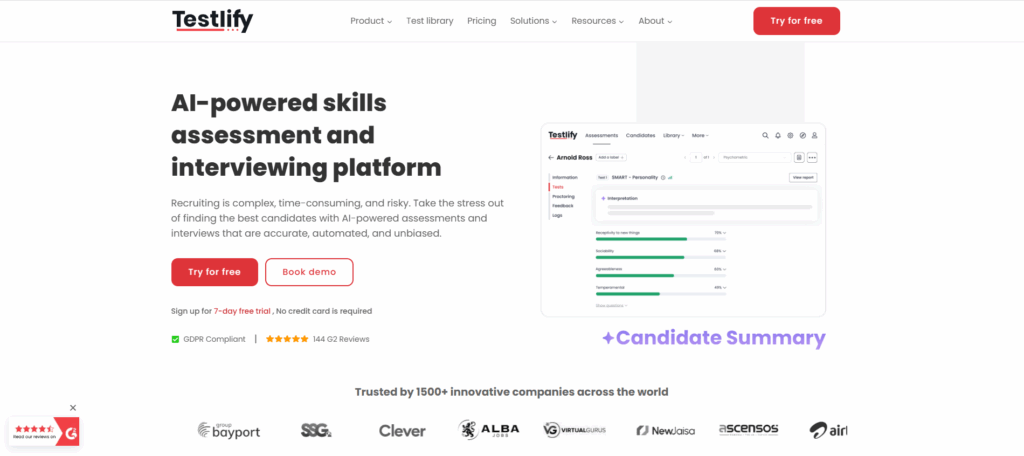
Testlify is an AI-powered skills assessment and conversational interviewing platform that empowers organizations to make informed and unbiased hiring decisions at scale. Traditional resumes often fall short in revealing true potential. Testlify empowers hiring teams to go beyond the CV by evaluating candidates on real-world skills, job readiness, and core competencies.
Features
- Extensive test library: Gain instant access to 3,500+ expertly crafted tests spanning 4,500+ job roles across 50+ industries, enabling comprehensive, role-specific skill evaluations at scale.
- Conversational AI Interviews: Create immersive job simulations using conversational AI in chat, voice, and video formats. These realistic simulations mimic recruiter-style conversations, naturally assess job-specific skills, and are perfect for high-volume hiring needs.
- AI Insights: Instantly generate clear, concise performance summaries that spotlight each candidate’s strengths and identify growth areas, streamlining evaluation and decision-making.
- Seamless ATS integrations: Effortlessly integrate with 100+ applicant tracking systems, including Greenhouse, Lever, and Workable, to automatically funnel candidates directly into your hiring pipeline.
- Robust anti-cheating measures: Safeguard the integrity of your assessments with advanced security features like dual webcam monitoring, randomized question banks, AI assistance detection, and a secure lockdown browser.
G2 Rating: 4.7
Testlify pricing
Testlify offers flexible pricing plans that scale with your business, providing everything from basic assessments for startups to advanced features for enterprise-level hiring.
- Starter plan: Ideal for small teams and startups, this plan starts at $139/month (billed at $1,663/year) and includes 100 candidate credits at $17 per credit with support for 3 users.
- Starter: Designed for growing businesses, the Starter starts at $279/month (billed at $3,343/year) and includes 300 credits at $11 per credit with support for 5 users.
- Starter: Built for scaling teams, this plan costs $699/month (billed at $4,192/year) and includes 1,000 credits at $8 per credit with 10 users.
- Premium plan: Suited for high-growth organizations, the Premium plan includes 3,000 credits and supports 20 users, with pricing available upon contacting the sales team.
- Enterprise plan: Designed for large enterprises, this plan includes 10,000 credits and supports 30 users, with pricing available upon contacting the sales team.
- Enterprise plus plan: Designed for large-scale hiring programs, this plan includes 25,000 credits and supports up to 40 users, with pricing details available upon contacting the sales team.
- Unlimited plan: For companies seeking unrestricted access, Testlify offers an unlimited plan that includes unlimited candidate credits and full platform functionality, with pricing available on request from the sales team.

Harver
Harver acquired Pymetrics in August 2022 and now operates the best-known neuroscience game battery in hiring. Candidates play roughly 12 short games in about 25 minutes, and the platform scores their behaviour against a benchmark built from an employer's own high performers.
It is the closest like-for-like replacement for a campus-scale gamified programme, with adoption across consulting, banking and consumer goods.
Features
- Neuroscience game battery: twelve core games measure attention, risk appetite, effort allocation, emotion recognition and how candidates learn from feedback.
- Employer-specific success models: benchmarks are built from your own incumbent data rather than generic industry norms.
- Language-light task design: games require minimal reading, which supports deployment across many countries and languages.
- Published bias audit: Harver publishes an independent local law 144 bias audit of the Pymetrics platform conducted by BABL AI, which is rare in this category and genuinely useful in procurement.
G2 rating: 4.6/5
Pricing: Harver does not disclose its pricing on its website. Recruiters and employers must contact the sales team directly to obtain a custom quote, which varies based on hiring volume, assessment configuration and contract length.
Arctic Shores
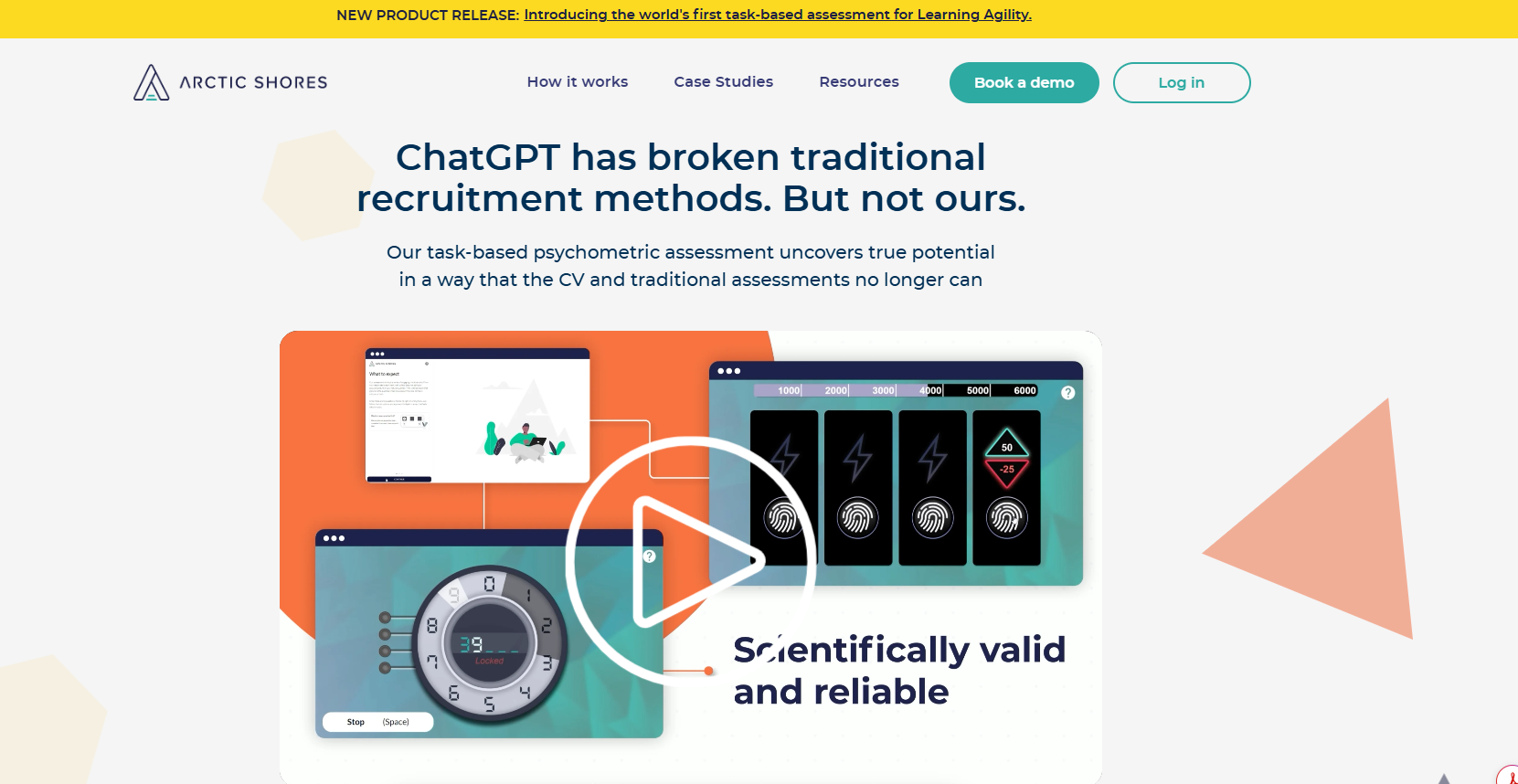
Arctic Shores is a British assessment publisher that deliberately moved from game-based to task-based language. Candidates complete up to nine interactive tasks in roughly 45 minutes while the platform captures behavioural data and maps it to personality, workplace intelligence and learning agility.
Its candidate-facing transparency is the strongest in this group, which matters when you need to explain a rejection.
Features
- Task-based assessment: up to nine interactive tasks per configuration, delivered in the browser across desktop, mobile and tablet.
- Skill-enablers framework: behaviour maps to published dimensions covering personality, workplace intelligence and learning agility rather than an opaque composite.
- Candidate feedback reports: every candidate receives a report explaining what was measured, alongside an employer-facing role fit score.
- Practice task before scoring: candidates complete an unscored practice task first, which reduces disadvantage caused by unfamiliarity with the format.
G2 rating: n/a
Pricing: Arctic Shores does not disclose its pricing on its website. Employers must contact the sales team for a quote based on hiring volume and the configuration of tasks required.
Criteria
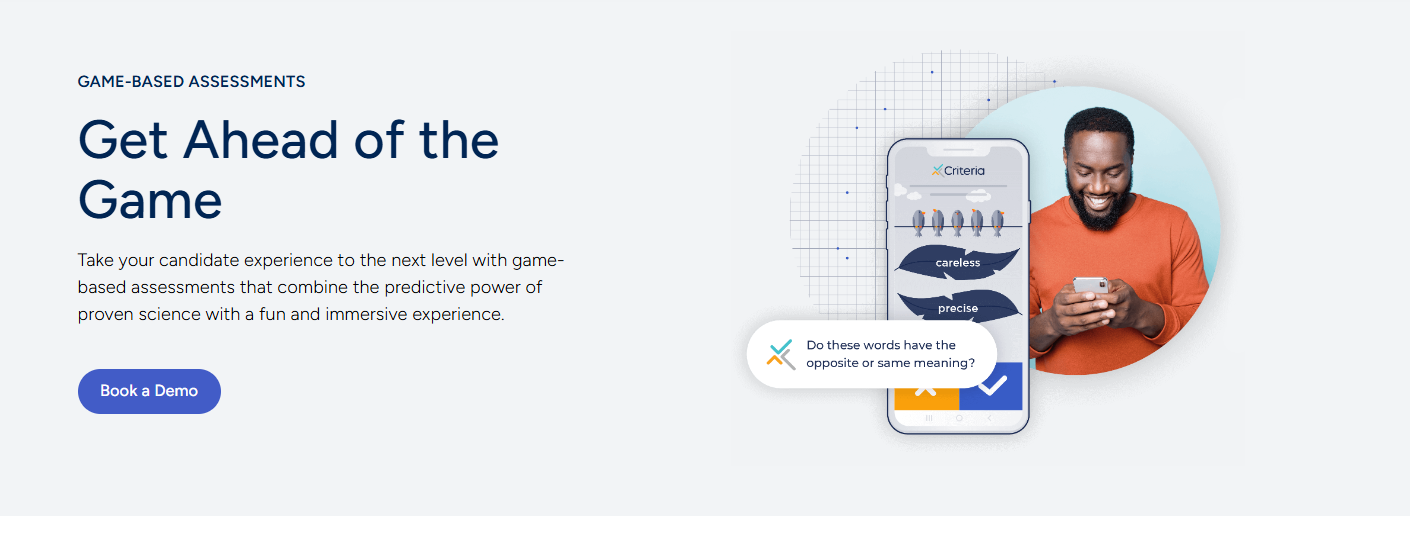
Criteria acquired Revelian in 2020 and absorbed one of the strongest game-based portfolios in the market. Its three game products are Cognify for cognitive aptitude, Emotify for emotional intelligence and GAME for mobile-first cognitive screening.
Cognify is the best-validated commercial game product in this comparison, supported by peer-reviewed research rather than marketing claims alone.
Features
- Game-based cognitive assessment: Cognify measures problem solving, numerical reasoning and verbal knowledge in about 10 minutes plus tutorials.
- Emotional intelligence testing: emotify assesses how accurately candidates perceive and interpret emotion through image-based and situational tasks.
- Percentile reporting: candidates receive an overall percentile plus category percentiles, giving recruiters an interpretable number without exposing raw behavioural data.
- Modular platform: AI proctoring, async and real-time video interviewing, and post-hire development attach to the core assessment plan.
G2 rating: 4.5/5
Pricing: criteria names three plans covering assessment, interviewing and the full suite, but publishes no figures. Every option routes to a pricing request, and a free trial is available. For a wider view of this vendor's market, read our criteria corp alternatives comparison.
Hirevue
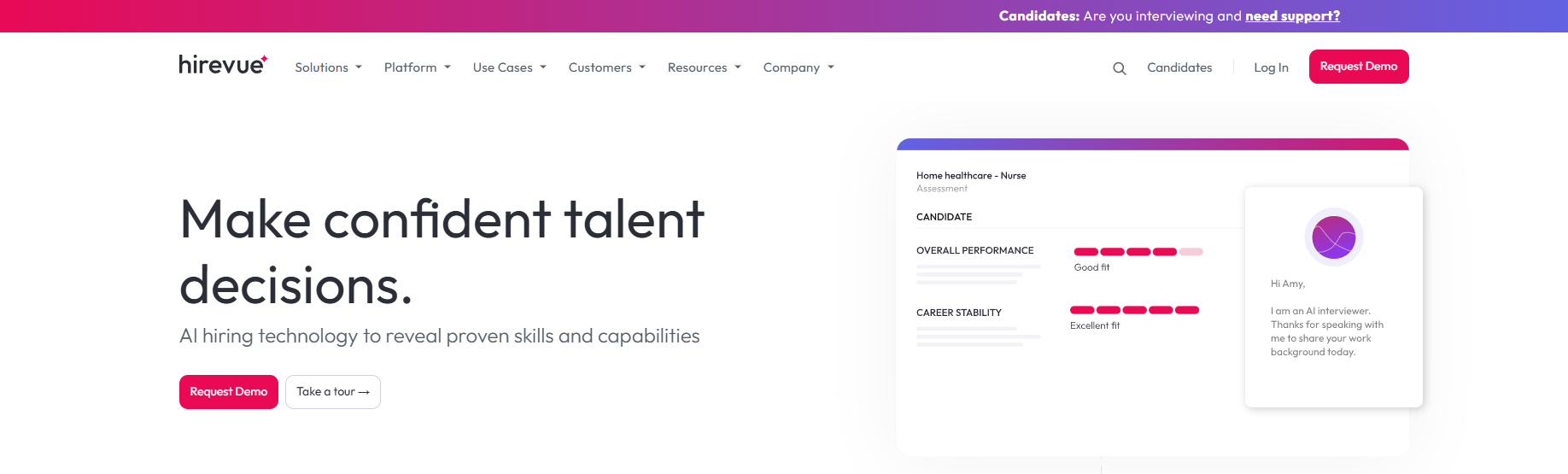
HireVue pairs the volume video-interviewing product most enterprises already know with game-based cognitive assessments. It competes with the talent games directly rather than adjacently, and it handles genuinely large hiring events.
Features
- Game-based cognitive assessment: short interactive challenges measure working memory, processing speed and attention alongside the interview product.
- Structured video interviewing: on-demand and live interviews run against scoring rubrics grounded in industrial-organizational psychology, comparable to a dedicated video interviewing tool.
- Scheduling and candidate engagement: interview scheduling, chatbot messaging and ATS integrations come built into the platform.
- External algorithm audit: Hirevue engaged DCI Consulting to conduct an external bias audit of its competency-based and game-based algorithms.
G2 rating: 4.1/5
Pricing: HireVue does not disclose its pricing on its website. It describes tiered plans without figures, and recruiters must book a demo to receive a quote sized to their hiring volume.
Aon assessment solutions
Aon absorbed cut-e and now sells smartPredict, a set of short gamified challenges used widely in banking, consulting and consumer goods graduate schemes. Candidates typically meet switchChallenge, gridChallenge, digitChallenge and motionChallenge.
Candidate familiarity is high in professional services, which reduces drop-off among the applicants employers most want to keep.
Features
- smartPredict gamified challenges: four short challenges lasting roughly five to nine minutes each measure executive attention, cognitive flexibility, numerical agility and planning.
- Adaptive difficulty: several challenges adjust item difficulty in real time, producing a more precise ability estimate than a fixed test.
- Integrated ability battery: the scales reasoning tests run alongside the games as one assessment programme.
- Established global norms: extensive deployment across european and global graduate hiring provides mature comparison groups.
G2 rating: n/a
Pricing: Aon does not disclose its pricing on its website. Employers contact the assessment team for a quote, and the buying motion runs as an enterprise consultancy engagement rather than a software purchase.
SHL
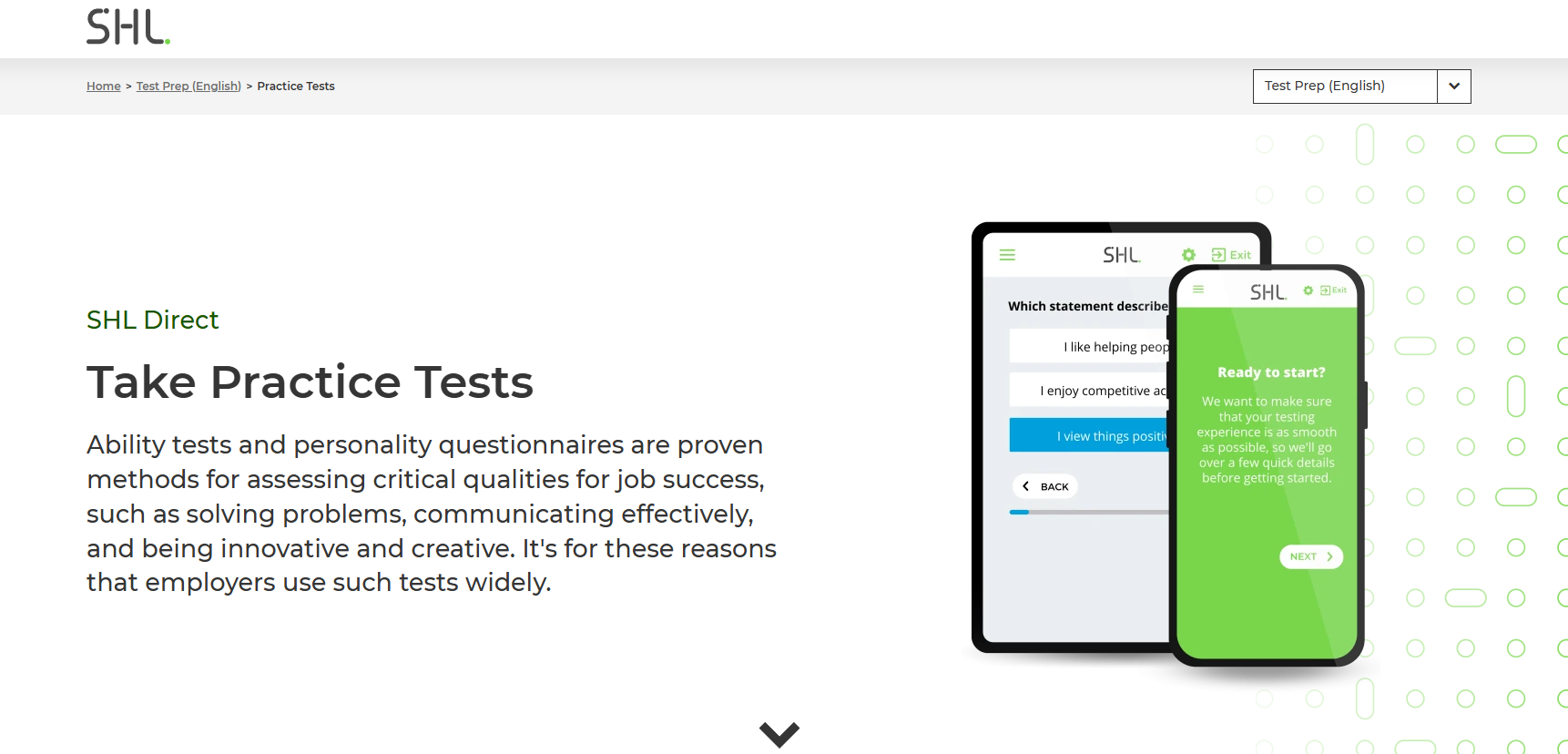
SHL is the largest assessment publisher in the world and brings interactive, gamified cognitive formats into a catalogue that already covers almost every role and geography. It is the institutional choice rather than the innovative one.
For multinational employers, the appeal is running one assessment framework consistently across regions and job levels.
Features
- Interactive cognitive assessments: gamified formats measure problem solving, processing speed and working memory in a shorter sitting than traditional batteries.
- Very large role catalogue: assessments span graduate through executive hiring across most functions and industries, including language tests for multilingual roles.
- Global norm groups: comparison data across many countries and languages supports consistent cut scores worldwide.
- Manager-friendly reporting: output is written for hiring managers rather than assessment specialists, which reduces interpretation training.
G2 rating: 4.3/5
Pricing: SHL does not disclose its pricing on its website. Pricing is quoted per organisation based on assessment volume, product mix, and contract term.
Equalture
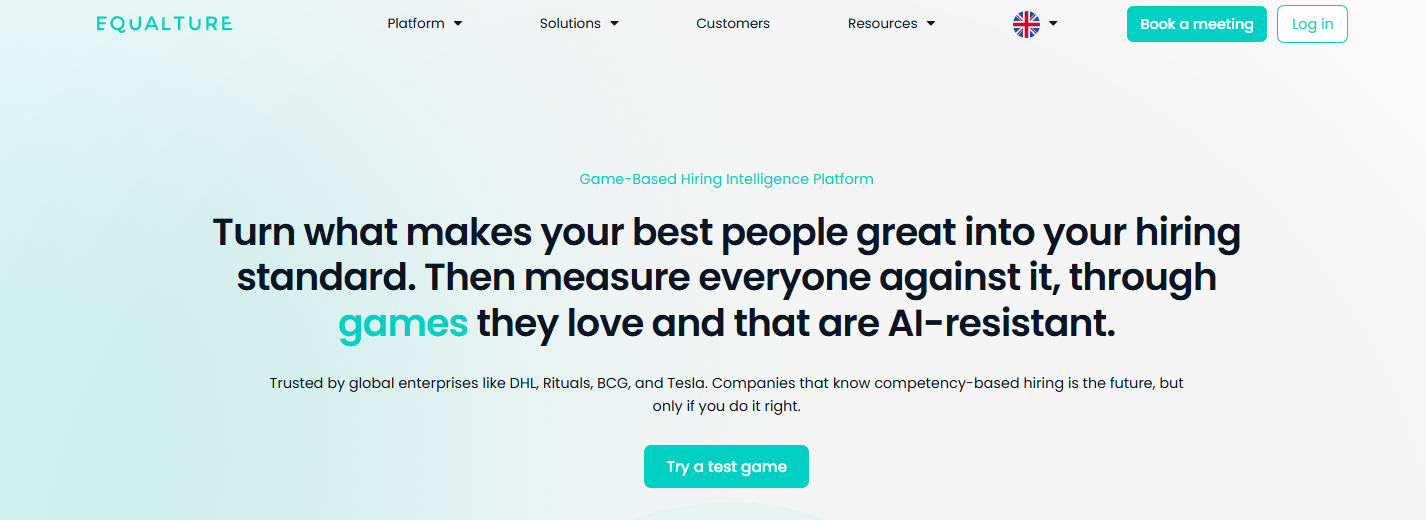
Equalture is a Dutch platform that builds success profiles from your own top performers and scores candidates against them using short neuroscience games. It has moved upmarket from small-business self-serve into retail, frontline and professional volume hiring.
Linking assessment results to retention data closes a loop most vendors in this category leave open.
Features
- Neuroscience game assessments: short games measure cognitive abilities and behavioural tendencies from how candidates play rather than what they self-report.
- Custom success profiles: benchmarks are built from your own workforce data instead of generic industry averages.
- Continuous model refinement: profiles sharpen over time as performance and retention data from your hires accumulates.
- Explainable fit scoring: candidates are banded as high, medium or low fit with reasoning attached to each result.
G2 rating: 4.7/5
Pricing: Equalture does not disclose its pricing on its website. Self-serve tiers were retired as the company moved upmarket, so employers now contact the sales team for a quote based on hiring volume.
Test partnership
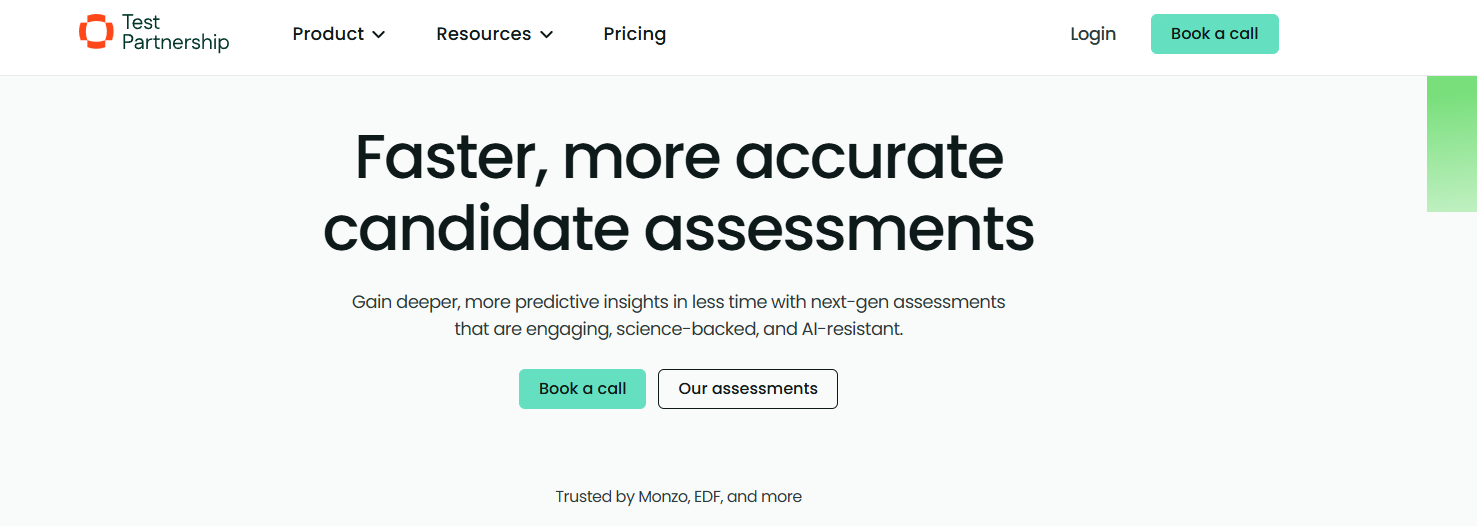
Test partnership built MindmetriQ as an explicit rebuttal to opaque game scoring. Its six games measure specific cognitive abilities using item response theory, and a candidate's score depends only on how many items they answered correctly and how difficult those items were.
No other platform here matches it for score transparency, which matters if you expect to defend a rejection.
Features
- MindmetriQ game series: six gamified ability assessments including pipe puzzle, shape spinner, word logic, like swipe, link the numbers and number racer.
- Computer adaptive testing: item difficulty adjusts to each candidate in real time, improving measurement precision without lengthening the assessment.
- Transparent scoring model: the platform refuses to score behavioural trace data such as mouse movement, which removes an entire category of fairness argument.
- Published technical manual: full documentation of the measurement model is available rather than marketing summaries alone.
G2 rating: n/a
Pricing: Test Partnership does not disclose its pricing on its website. Recruiters need to directly contact the team for a quote.
Cappfinity
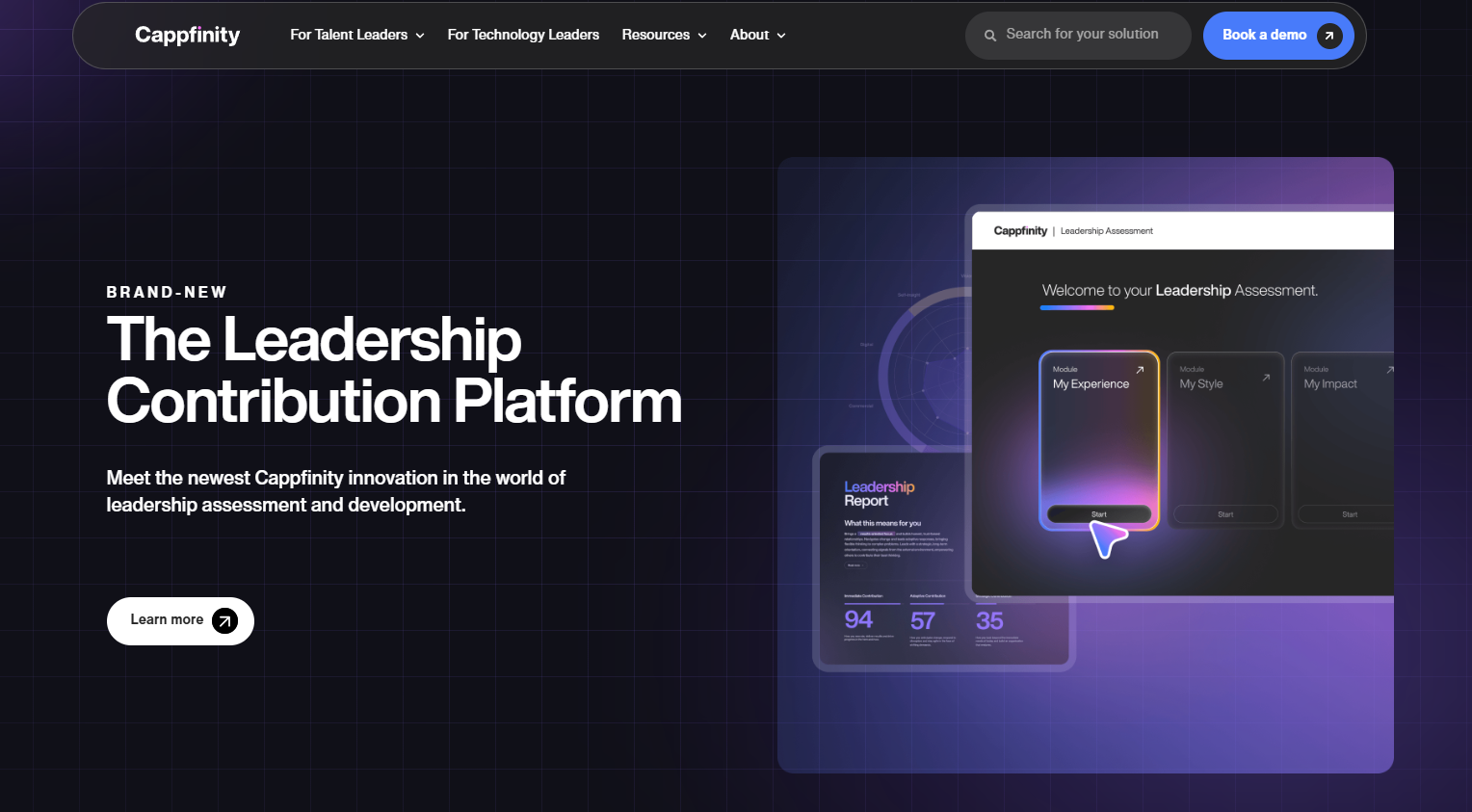
Cappfinity runs immersive, strengths-based job simulations rather than abstract mini-games. Candidates work through realistic scenarios that combine written responses, situational choices and video, which makes the assessment feel like the job.
Face validity is the highest in this group, meaning candidates can see how the task relates to the role they applied for.
Features
- Immersive job simulations: scenarios replicate a realistic day in the role rather than testing abstract reasoning.
- Strengths-based methodology: assessment focuses on what energises a candidate as well as what they can do.
- Employer branding built in: the assessment doubles as an attraction asset, which suits the competitive graduate markets covered in our hiring guides.
- Mixed response formats: written, situational and video components combine within a single candidate experience.
G2 rating: n/a
Pricing: Cappfinity does not disclose its pricing on its website. Engagements are quoted per programme, and bespoke simulation design carries additional build cost and lead time.
Adaface
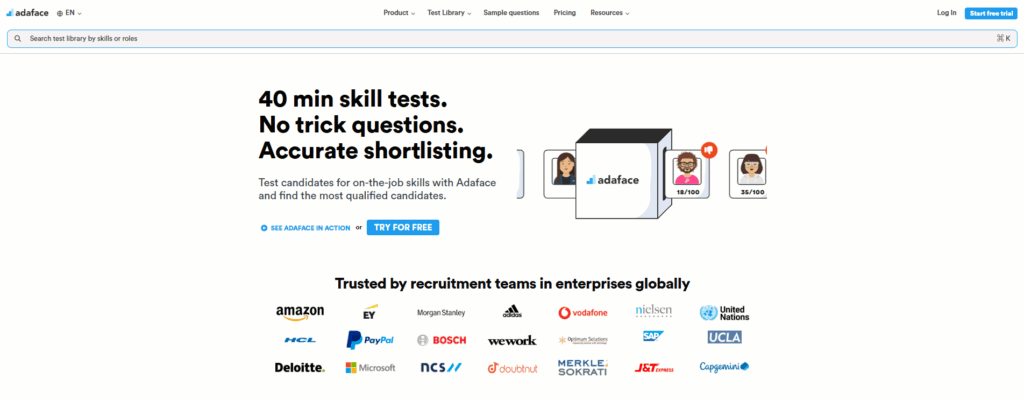
Adaface is one of the most candidate-friendly assessment platforms, offering a refreshing alternative to traditional multiple-choice tests. It uses adaptive, chatbot-driven assessments that evaluate candidates’ job-specific knowledge in a more natural, engaging, and interactive manner.
Features
- Conversational assessments: powered by ada, adaface delivers recruiter-style conversational assessments that test job-specific knowledge of candidates
- Extensive assessment library: gain access to over 150 pre-built tests tailored for roles in engineering, finance, support, and operations, ensuring comprehensive coverage across industries.
- Real-time scoring: automatically categorize candidates into pass, borderline, or fail groups, enabling recruiters to swiftly filter applicants and drastically reduce manual review time.
- Intelligent anti-cheating measures: all questions are crafted in-house, ensuring they remain private and inaccessible to the public. Additionally, the adaface team validates the integrity of the assessments each month by testing whether tools like ChatGPT can solve the questions.
G2 rating: 4.6/5
Pricing: free trial available. Plans start at $180/year (individual plan for basic needs) and scale up for larger teams
Owiwi
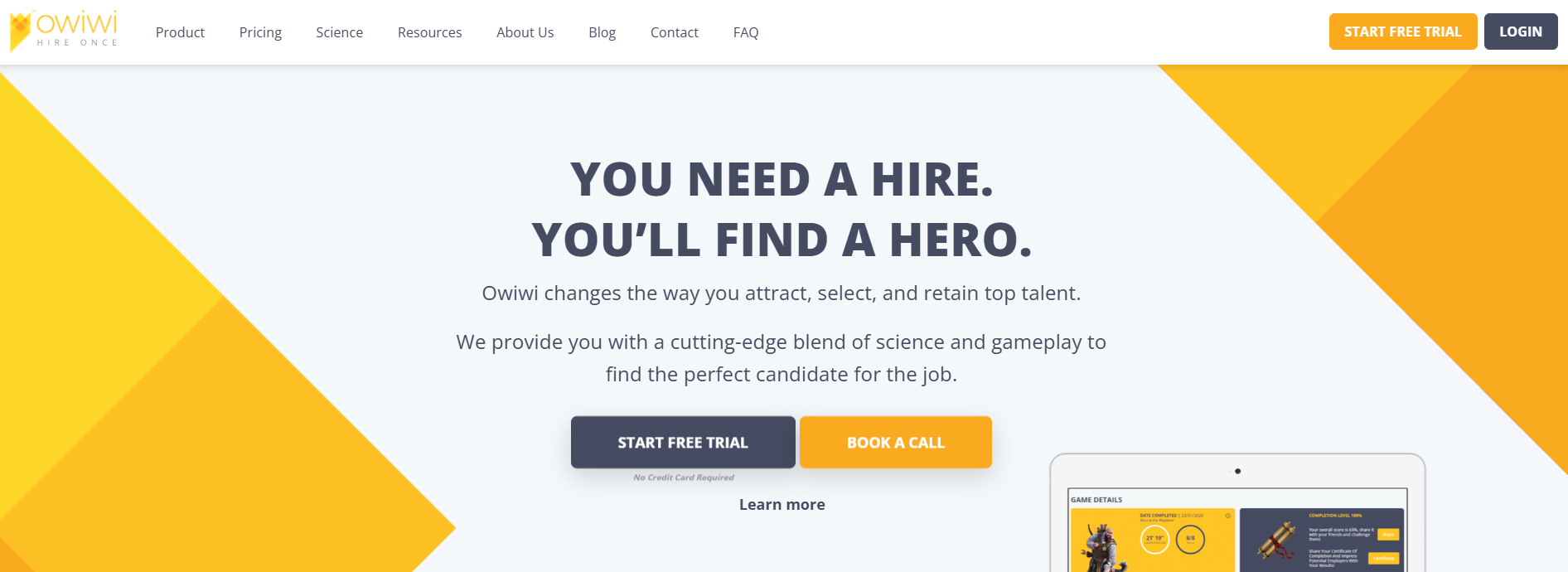
Owiwi is a Greek platform that measures soft skills through a narrative adventure game. Candidates assume a character and make decisions through a branching story, and those choices generate a psychometric soft-skills profile.
Its entry cost is the lowest in this category, which makes gamified screening viable for small teams testing the format.
Features
- Narrative game assessment: a single branching story measures eight soft skills, including adaptability, resilience, decision-making, and teamwork.
- Candidate profile reports: detailed reports arrive by email on completion, highlighting traits and development areas.
- Usage-based model: teams running fewer than 250 assessments a year pay per assessment rather than committing to a licence.
- Startup programme: discounted rates are available to eligible early-stage companies.
G2 rating: n/a
Pricing: owiwi publishes a usage-based pricing model on its website, and third-party listings report entry pricing from around €24 per assessment with a free trial that includes a small number of assessments. Confirm the current figure with the vendor before budgeting.
Vervoe
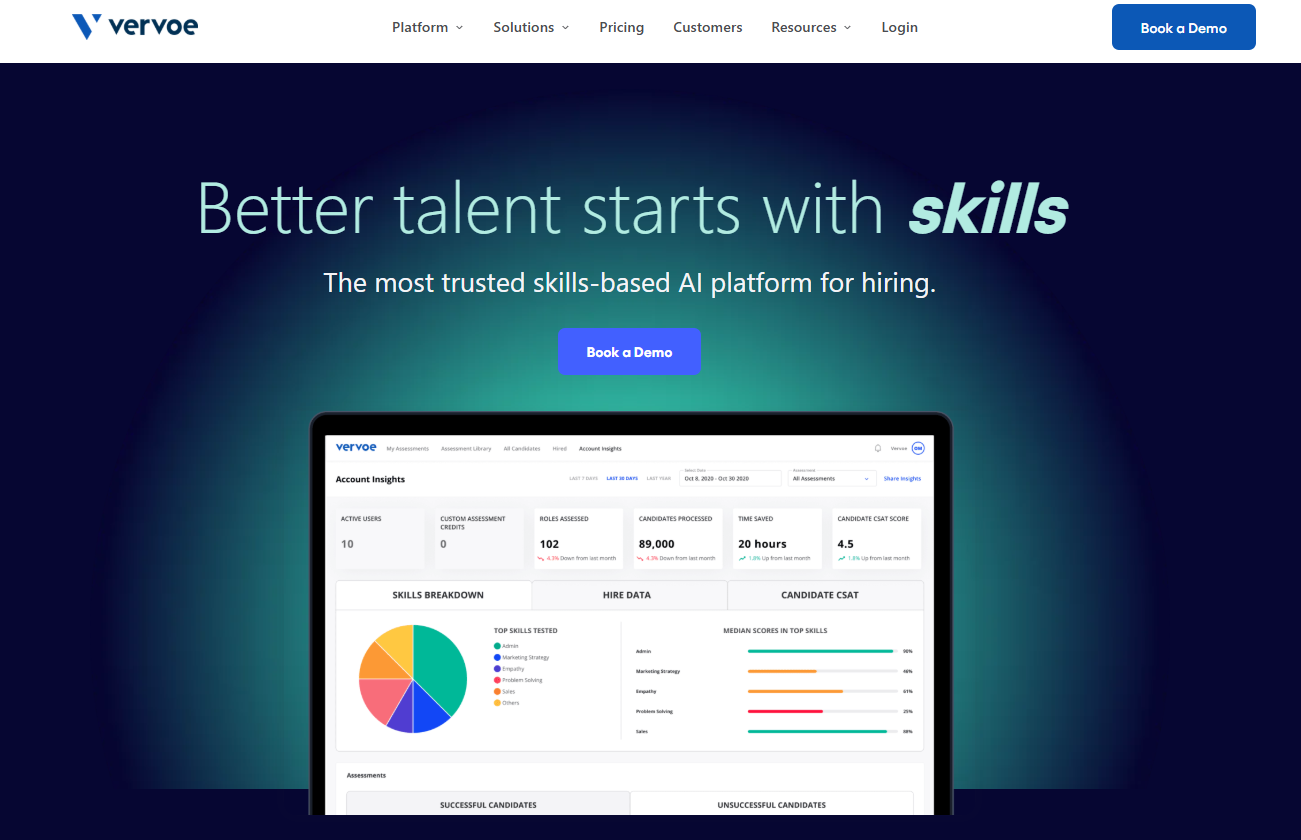
Vervoe puts candidates into job simulations and lets AI grade and rank the responses. It is the closest philosophical match to a gamified vendor, because both argue you should watch someone work rather than test what they memorised.
Simulations resist preparation far better than a repeatable game battery, which directly addresses the practice-site problem in gamified hiring.
Features
- Job simulations: access 300+ pre-built tests that evaluate on-the-job performance across customer support, sales, marketing, technology and operations.
- Multi-format testing: candidates respond through text, video, file uploads or spreadsheets, so the format matches the actual work.
- AI grading: models score and rank candidates on accuracy, effort, and relevance, with explainable and auditable grading.
- Verified bias audit: the platform displays third-party New York City bias audit verification, which few vendors in this category match.
G2 rating: 4.6/5
Pricing: vervoe now runs an enterprise pricing page that routes to a pricing request, with custom plans based on hiring volume and workflow. Software directories still list retired self-serve tiers, so confirm figures with the vendor directly.
Talogy
Talogy is the unified brand for PSI talent management, Cubiks, and Caliper, and it delivers more than 30 million assessments a year across over 50 languages. Its gamified product is Mindgage, a game-based cognitive ability series that uses machine learning to reduce group differences between candidate groups.
It pairs that with Talogy Spotlight, a dedicated early careers solution, which makes it one of the closest strategic matches to the talent games on this list.
Features
- Mindgage game-based assessment: four interactive modules measure cognitive ability through puzzles, spatial tasks and mental rotation rather than written questions.
- Predominantly non-verbal design: tasks require no prior knowledge and minimal reading, which supports global campus programmes across many languages.
- Talogy spotlight for early careers: a configurable graduate assessment solution built for high-volume screening with employer branding and engagement in mind.
- Accessibility built in: the TalogyTech platform holds a WCAG 2.1 accessibility rating, which matters when you screen large and diverse applicant pools.
G2 rating: n/a
Pricing: Talogy does not disclose its pricing on its website. Employers contact the assessment team for a quote shaped by assessment mix, hiring volume, and programme scope. Talogy reports preliminary pilot evidence of reduced group differences on mindgage, though that finding is vendor-reported rather than independently peer-reviewed, so request the supporting technical documentation during procurement.
Talegent
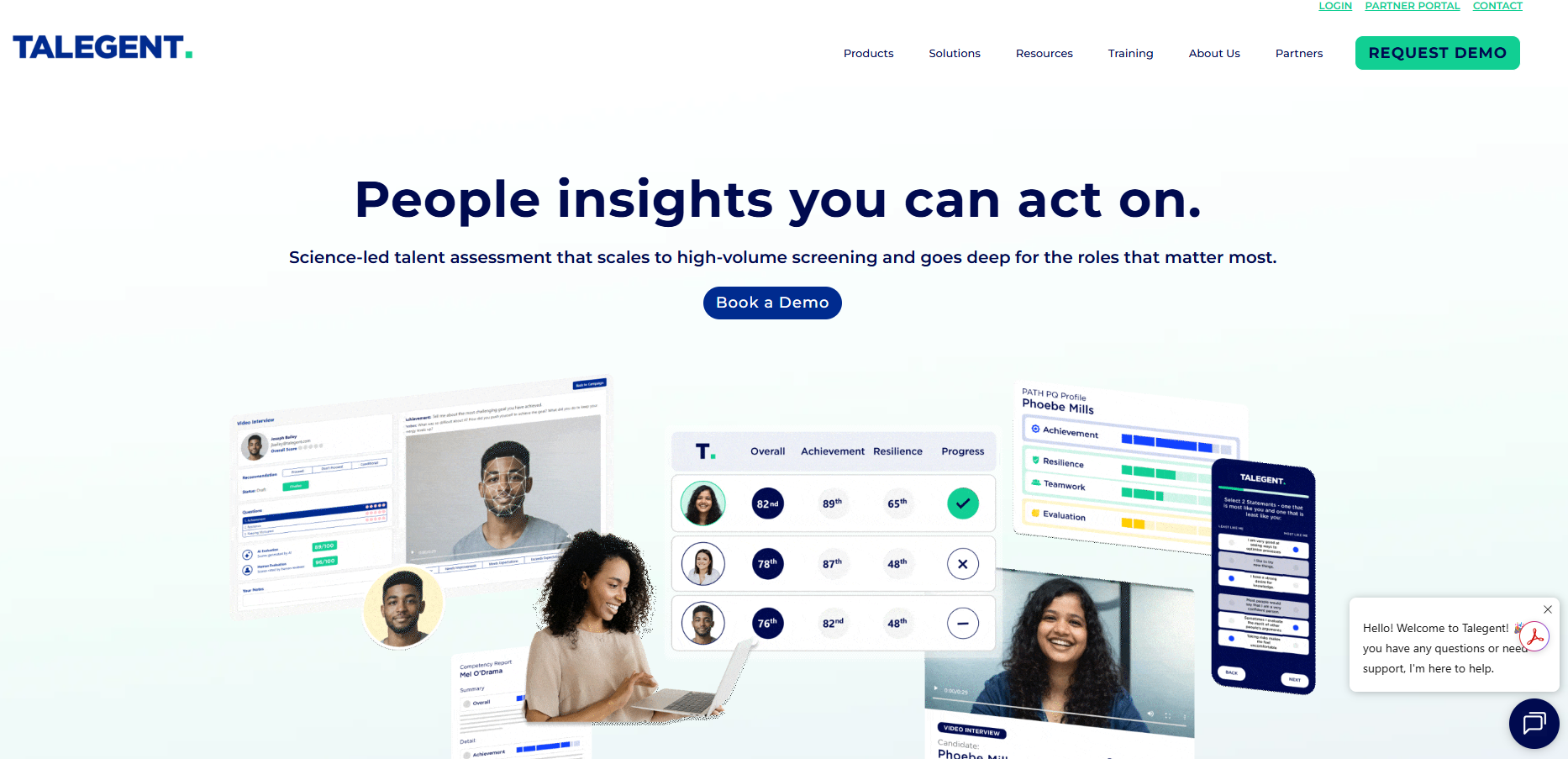
Talegent sells the gamify suite, a set of branded game-based simulation assessments customised to a company and the specific roles it is filling. Its wider catalogue pairs those games with personality, cognitive, values and situational judgement assessments.
It maps more closely to the talent games than almost anything else on this list, because it also sells a graduate solution, a digital assessment centre and employer branding video from the same platform.
Features
- Gamify suite: branded game-based simulations combine traditional psychometric foundations with game mechanics and machine learning to capture richer data.
- Graduate hiring solution: a dedicated early careers offering runs screening through to selection for high-volume campus programmes, comparable in scope to a full AI powered talent assessment platform.
- Digital assessment centre: virtual exercises replace in-person assessment days, matching the assessment centre capability the talent games sells.
- Employer branding video: branded video content runs inside the candidate journey, so the assessment supports attraction as well as selection.
G2 rating: n/a
Pricing: Talegent does not disclose its pricing on its website. Employers request a demo and receive a quote based on assessment mix and hiring volume.
Which is the best Talent Games alternative?
When considering all these options, Testlify stands out as the best Talent Games alternative.
Testlify features an extensive test library (over 3,500 tests), AI-powered candidate evaluations, and conversational AI interviews for creating realistic job simulations at scale. It also supports 100+ ATS integrations out of the box.
Whether you’re looking for pre-employment testing tools or a conversational AI-powered interview platform for high-volume hiring, Testlify excels at delivering everything you need without overwhelming your budget.
Read our in-depth Testlify vs The Talent Games comparison article to make the best choice for your hiring needs.

Director of Marketing
Akash Patange is the Director of Marketing at Testlify, where he works closely with HR leaders and recruiters to help organizations improve hiring outcomes. He writes about talent assessment, recruitment technology, and data-driven hiring practices.
LinkedInRelated resources
View all
Alternatives
Top 15 The TalentMetrix Alternatives and Competitors
Alternatives
Top 15 Equip Alternatives and Competitors
Alternatives
Top 15 Harver Alternatives and Competitors
Alternatives
Top 15 Talview Alternatives and Competitors
Alternatives
Top 15 Cangrade Alternatives and Competitors
Alternatives
Top 15 Test Partnership Alternatives and Competitors
Get started.
Hire on proof, not resumes.
Run your first skills-based assessment free — no credit card required.