
Top 15 eSkill Alternatives and Competitors (2026)
Discover 15 powerful eSkill alternatives to streamline your hiring process and assess candidates with confidence.
The best eSkill alternatives in 2026 are Testlify for all-round skills assessment, ASC and TalentLens for regulated psychometric testing, Skillmeter for coding, and ThriveMap for realistic job previews. eSkill still handles standardized question libraries well, but teams switch when they need AI interviews, live proctoring, richer analytics, and the deep ATS integrations it does not cover as fully.
Here is the pressure behind that switch. The World Economic Forum expects 39% of core job skills to change by 2030, so a static question bank ages fast. Median job tenure sits at 3.9 years (U.S. Bureau of Labor Statistics, 2024), which means you keep re-hiring for the same roles, and each miss is costly: Gallup puts the price of replacing one employee at one-half to two times their annual salary. Pick an assessment platform that actually predicts on-the-job performance and that math starts working in your favor.
This guide ranks 15 eSkill alternatives on test depth, customization, proctoring, analytics, integrations, and value, so you can match a tool to how your team actually hires instead of the other way round.
 ChatGPT
 Gemini
 Claude
 Grok
Grok Perplexity
TL;DR: eSkill alternatives at a glance
- Best overall: Testlify, for its 3,500+ test library, AI interviews, and 100+ ATS integrations in one platform.
- Best for regulated psychometrics: ASC Smarter Assessment and TalentLens, both built for compliance-heavy testing.
- Best for coding-only hiring: Skillmeter and TestGenius for technical screens.
- Best for candidate engagement: The Talent Games (gamified) and ThriveMap (realistic job previews).
- Teams leave eSkill for modern AI assessments, deeper analytics, and stronger integrations, not because eSkill is broken.
- Match the tool to your hiring volume and role mix first; a big test library only helps if it covers the skills you hire for.

How we evaluated these eSkill alternatives
Every tool here was scored against the same six criteria, weighted toward what actually moves hiring accuracy rather than feature-count marketing:
- Assessment depth: range across technical, cognitive, psychometric, and role-specific skills.
- Customization: how easily you can build role-based tests and question types instead of forcing a template.
- Proctoring and integrity: anti-cheating controls for remote assessment, from tab-switch detection to AI-assistance flags.
- Analytics: whether reports drive a decision or just show a score.
- Integrations: native ATS and workflow connections that keep candidates moving.
- Value: pricing transparency and fit for your hiring volume, not just headline cost.
Quick comparison of eSkill alternatives
Scan the table first, then jump to any tool that fits your shortlist. Every platform below gets its own section with features, best-fit use case, and honest limitations.
Tool | Best for | Standout strength | Watch-out |
|---|---|---|---|
Testlify | Most teams, technical and non-technical | 3,500+ tests, AI interviews, 100+ integrations | Deep feature set takes a short setup |
ASC Smarter Assessment | Regulated, high-stakes psychometrics | Validated aptitude and compliance reporting | Limited customization, dated interface |
TalentClick | Behavioral and safety-risk roles | Reliability and attitude profiling | Thin on technical skills testing |
Zapilio | Small and mid-sized teams | Ready-made tests, simple setup | Basic analytics and proctoring |
UbiAptitude | Graduate and entry-level hiring | Cognitive and reasoning tests | Narrow beyond aptitude |
ThriveMap | Realistic job previews | Scenario-based day-in-the-life tests | Not a full skills-testing suite |
The Talent Games | Early-career, high-volume | Gamified, low candidate drop-off | Light depth for technical roles |
TalentMetrix | Competency and development | Structured competency frameworks | More L&D than recruiting |
TestGenius | IT and professional screens | Fast custom coding tests | Weak on behavioral and culture fit |
TalentMesh | Internal mobility and skill mapping | Workforce skills inventory | Limited external candidate testing |
TalentLens | Global enterprise psychometrics | Multilingual, compliance-ready | Complex setup, vendor-dependent |
Talentate | Assess-plus-track in one place | Built-in ATS and scheduling | Smaller test library |
Skillmeter | Coding and developer hiring | Real-world coding challenges | No soft-skill or cognitive tests |
TalentLyft | Full recruitment lifecycle | ATS, branding, pipelines | Assessment tools are basic |
Testello | Startups and quick screens | Fast to launch, easy to share | Not built for large-scale hiring |
1. Testlify
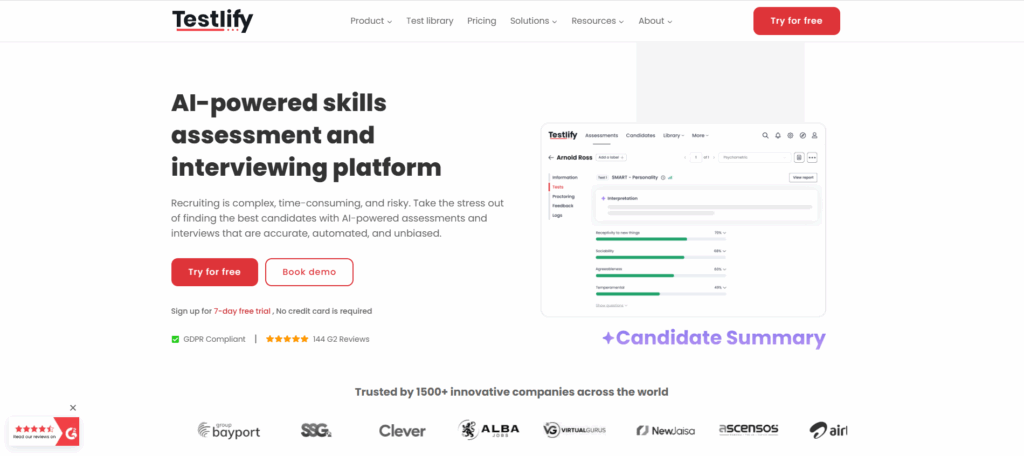
Testlify is an AI-powered skills assessment and interviewing platform that combines role-specific tests, conversational AI interviews, and deep analytics to help teams hire for both technical and non-technical roles at scale.
Key features
- Test library of 3,500+ pre-built assessments across technical, cognitive, and soft skills.
- Custom test creation with 25+ question formats, from MCQs and essays to file uploads and video responses.
- Conversational AI interviews (chat, voice, and video) that simulate real on-the-job scenarios.
- Psychometric assessments for personality, behavior, and thinking style.
- AI Insights that turn raw scores into short, readable candidate summaries.
- More than 100 ATS and workflow integrations, including Zapier and Zoho Recruit.
- Advanced proctoring: dual-camera, live monitoring, and AI-assistance detection.
Why it stands out
Testlify applies the Testlify Multi-Signal Talent Evaluation Model: instead of trusting one test or one interview, it combines skills assessments, AI interviews, psychometrics, and reviewer feedback into a single confidence score. That is the difference between a tool that reports a percentage and a platform that helps you decide. For a mid-sized team hiring 20 people a quarter, scoring the shortlist before the first call can cut a six-week screening loop to about ten days.
It also rates 4.7 on G2, and its full test library and skills inventory tools scale from a five-person startup to an enterprise without a plan change.
Pro tip: Before you compare price tags, list the five roles you hire most. The best eSkill alternative is the one whose test library and question types cover those five roles today, not the one with the biggest catalog on paper. A 3,500-test library only helps if 300 of those tests map to your actual openings.
Best for
Growing and mid-sized teams that want one platform for testing, interviewing, and proctoring rather than three point tools stitched together.
Limitations
The depth means a short initial setup to configure role-based assessments, though templates and AI test generation shorten that considerably.
2. ASC Smarter Assessment
ASC Smarter Assessment focuses on aptitude and psychometric testing, and is widely used in academic, government, and large enterprise settings where standardized testing and compliance come first.
Key features
- Scientifically validated cognitive ability assessments
- Personality and behavioral profiling
- Career guidance and suitability evaluations
- Compliance-friendly reporting for regulated industries
Best for
Regulated employers and institutions that need defensible, standardized psychometric results.
Limitations
The focus on standardized testing limits flexibility. Customization is narrow and the interface feels dated next to newer eSkill alternatives.
3. TalentClick
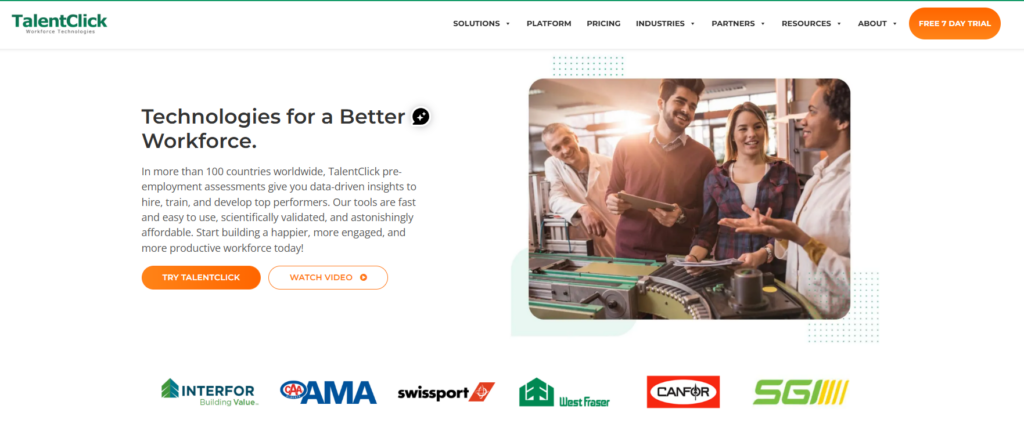
TalentClick specializes in behavioral risk assessment and personality profiling, built to predict how candidates are likely to behave in roles where trust, safety, and compliance matter.
Key features
- Behavioral risk and reliability reports
- Psychometric testing for attitude and temperament
- Job-fit and role compatibility analysis
- Tools for regulatory and compliance needs
Best for
Safety-sensitive and compliance-heavy roles where behavioral risk is the main hiring question.
Limitations
It puts limited weight on technical and job-specific skills, so teams hiring for hard skills usually need a second tool alongside it.
4. Zapilio
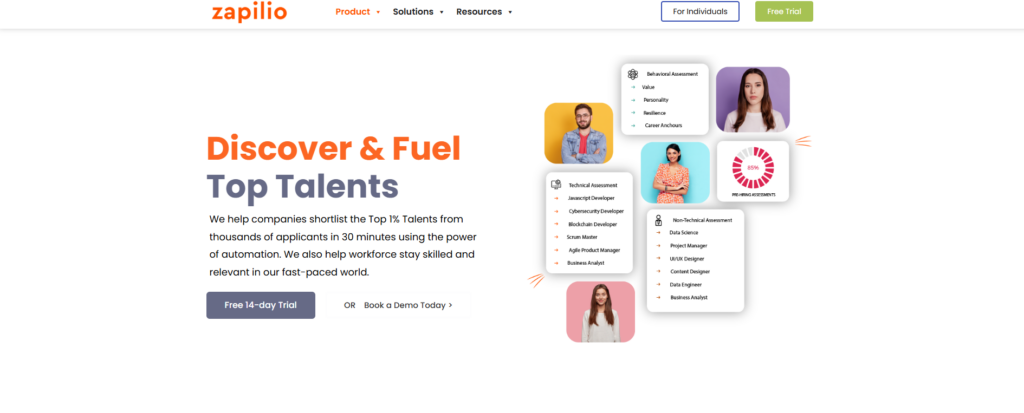
Zapilio is a lightweight pre-employment assessment platform aimed at small and mid-sized businesses that want to simplify early-stage screening with ready-made tests.
Key features
- Ready-to-use skill and aptitude assessments
- Basic performance tracking
- Candidate filtering and shortlisting
- Support for remote testing
Best for
Small teams that want quick, no-fuss screening without a heavy rollout.
Limitations
It lacks advanced analytics, deep customization, and strong proctoring such as AI-assistance detection. As hiring volume grows, its reporting and security can fall short, and integrations are limited.
5. UbiAptitude
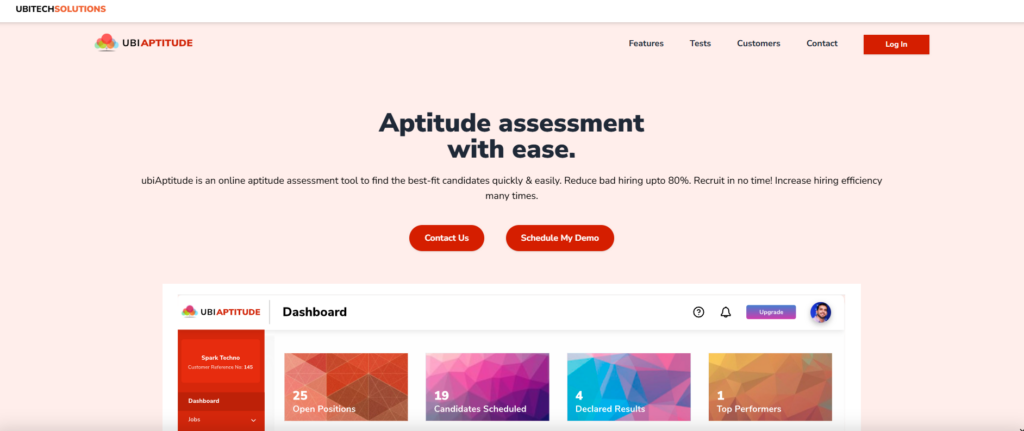
UbiAptitude measures cognitive ability and reasoning, and is most often used for graduate programs, internships, and entry-level recruitment.
Key features
- Logical and analytical reasoning tests
- Numerical and quantitative aptitude assessments
- General cognitive ability evaluations
- Comparative candidate benchmarking
Best for
High-volume early-career hiring where raw reasoning ability is the signal you care about.
Limitations
Support for technical, behavioral, or job-specific assessment is thin, which limits its use for specialized or experienced roles.
6. ThriveMap
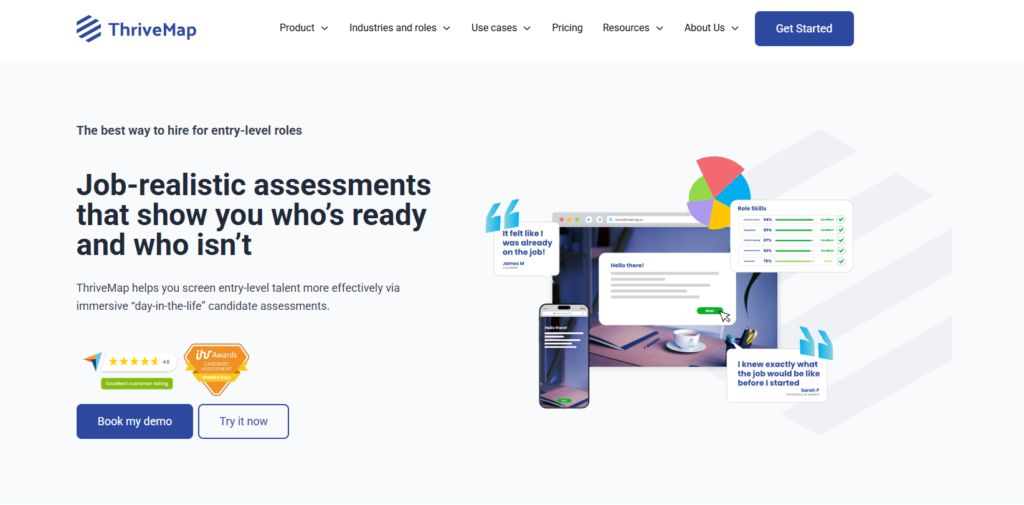
ThriveMap is built around realistic job previews. Rather than abstract tests, it uses simulations and scenarios that show candidates what the role actually involves day to day.
Key features
- Scenario-based assessments that mirror real work
- Interactive job simulations for role-specific evaluation
- Culture-fit and values-based testing
- Automated feedback for candidates and recruiters
Best for
High-volume, high-turnover roles where a realistic preview cuts early attrition.
Limitations
It works best as a complement, not a standalone. It lacks traditional skills testing, technical assessments, and large-scale reporting.
7. The Talent Games
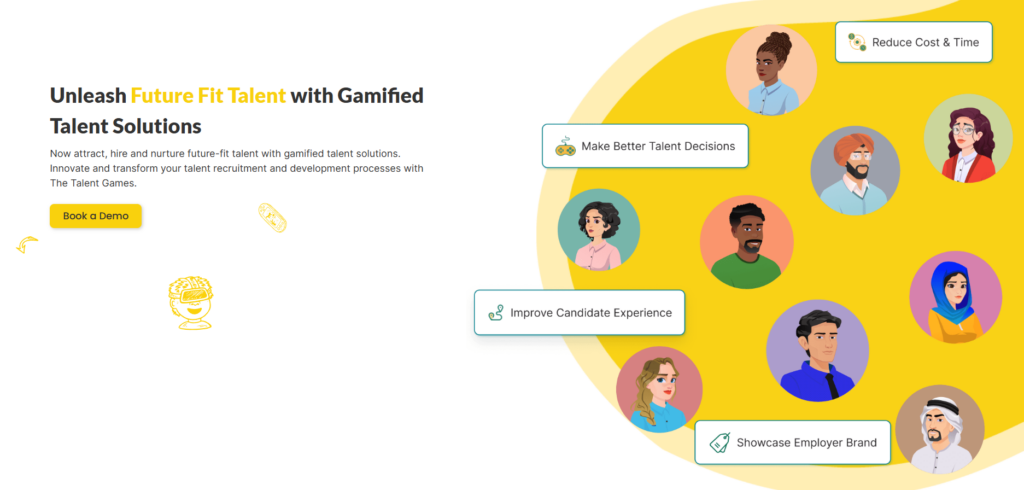
The Talent Games uses gamification to assess cognitive and emotional ability. Turning assessments into interactive games lifts engagement and lowers test anxiety, which suits graduate and early-career hiring.
Key features
- Game-based tasks that measure thinking and problem-solving
- Cognitive performance analytics
- Candidate engagement and motivation tracking
- Mobile-friendly testing
Best for
Campus and high-volume early-career programs where candidate experience drives completion rates.
Limitations
Gamification improves engagement but does not always give enough depth for technical or senior roles.
8. TalentMetrix
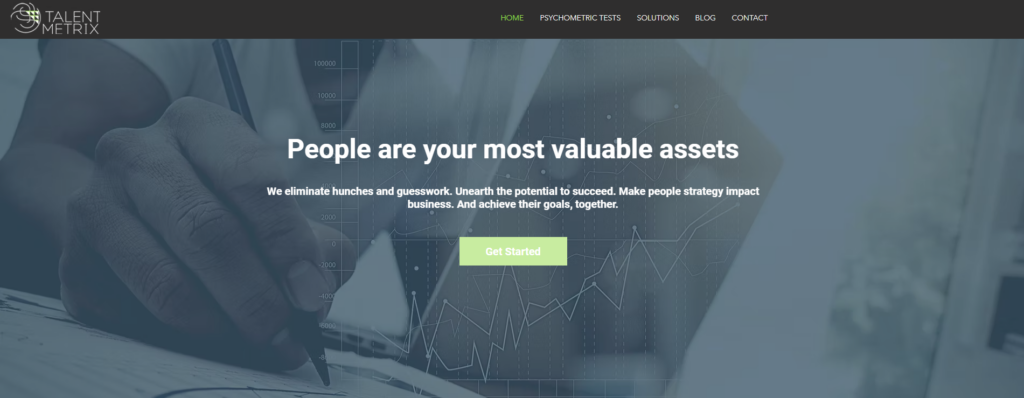
TalentMetrix is designed for competency-based talent management, supporting both hiring and employee development through structured evaluation frameworks.
Key features
- Structured competency evaluation frameworks
- Skills benchmarking against industry standards
- Learning and development recommendations
- Performance and growth analytics
Best for
Organizations that treat assessment as part of long-term workforce planning, not just hiring.
Limitations
It leans more toward development than recruitment. Its hiring tools lack the automation of modern assessment platforms, which can slow fast-paced hiring.
9. TestGenius
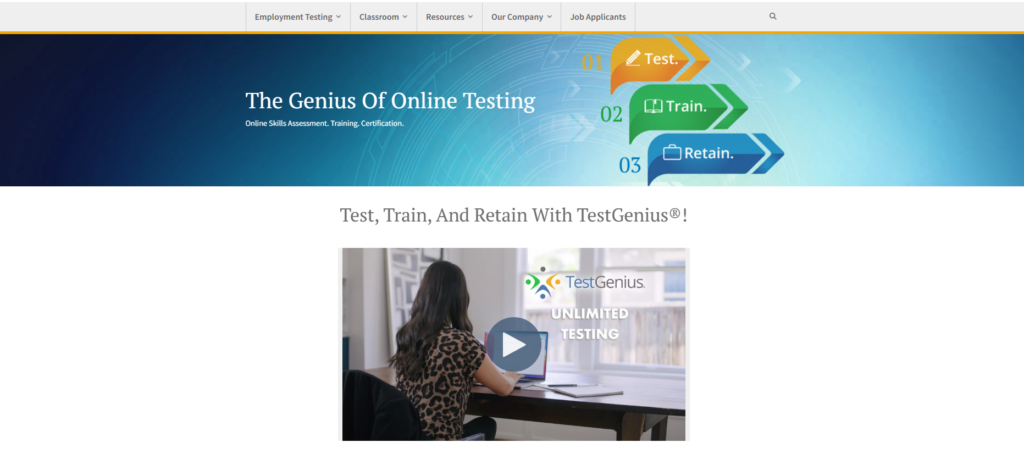
TestGenius focuses on customizable assessments for IT and professional roles, letting recruiters build and deploy skill-based tests quickly.
Key features
- Coding and technical skill tests
- Customizable quizzes for different job profiles
- Automated candidate ranking and scoring
- Tools for role-specific assessment creation
Best for
IT and professional teams that mainly need fast, custom technical screens.
Limitations
Support for personality, behavioral, and culture-fit evaluation is limited, and its analytics are relatively basic.
10. TalentMesh
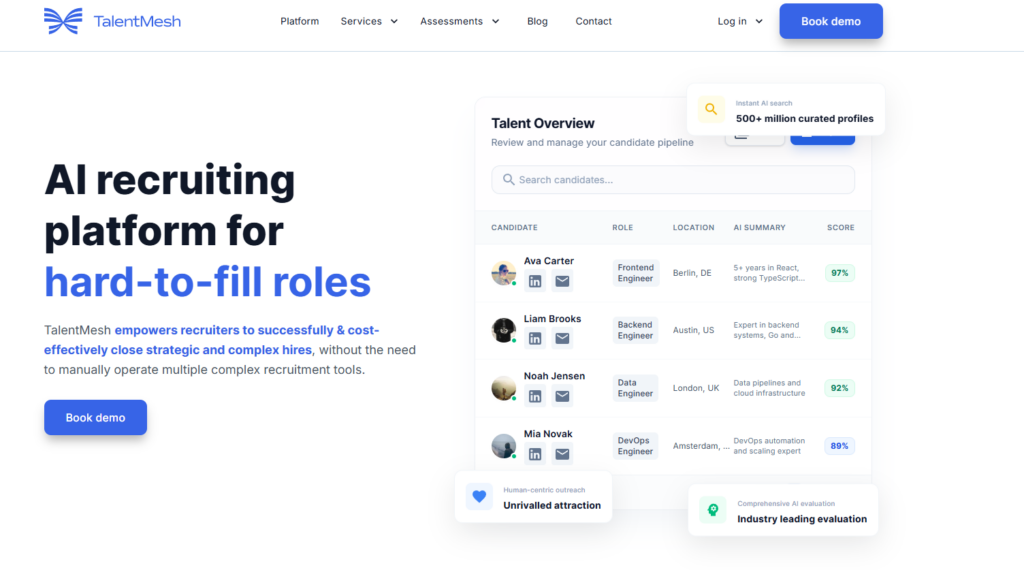
TalentMesh emphasizes internal talent visibility and skill mapping, helping organizations understand their existing workforce while supporting selective external hiring.
Key features
- Centralized skills inventory management
- Workforce capability analytics
- Talent matching and role alignment
- Career path planning
Best for
Companies focused on internal mobility and understanding the skills they already have.
Limitations
It is built for internal mobility more than external recruitment, so candidate assessment features are limited next to dedicated hiring tools.
11. TalentLens
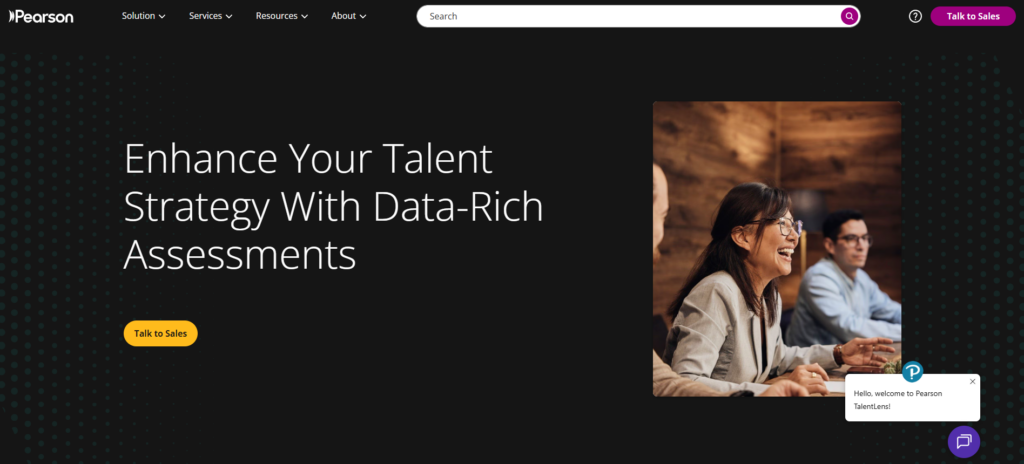
TalentLens provides enterprise-grade psychometric testing for global organizations, with a focus on consistency, compliance, and multilingual support.
Key features
- Cognitive ability and reasoning assessments
- Personality and behavioral profiling
- Multilingual testing support
- Enterprise-level compliance reporting
Best for
Global enterprises that need consistent, compliant psychometrics across many regions and languages.
Limitations
It can be complex to implement and manage. Pricing and technical requirements suit larger teams, and customization often needs vendor support.
12. Talentate
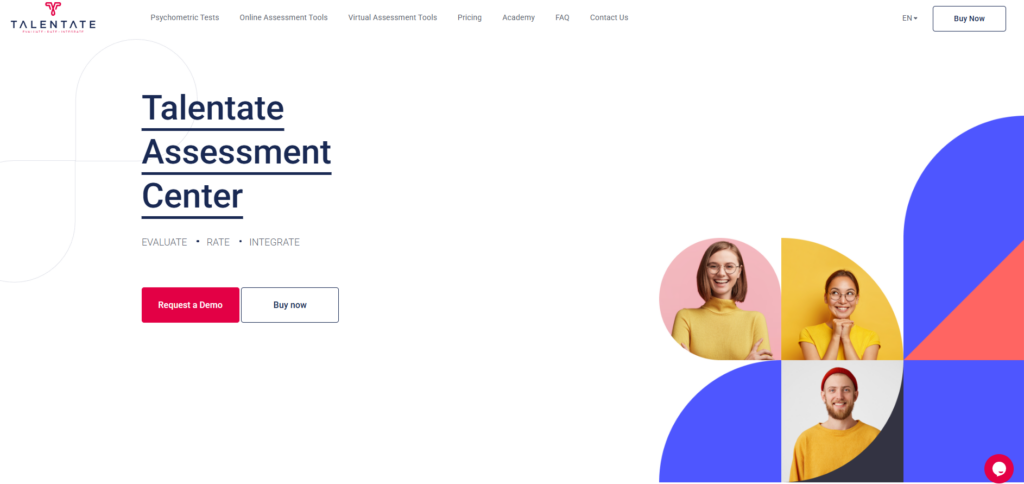
Talentate combines pre-employment assessment with applicant tracking, so smaller teams can test and manage candidates in one place instead of switching between tools.
Key features
- Online pre-employment assessments
- Integrated applicant tracking system
- Interview scheduling and coordination
- Centralized candidate management
Best for
Small teams that want assessment and basic tracking bundled together.
Limitations
Its assessment library is limited and advanced analytics are lacking, so organizations with specialized or high-volume hiring can outgrow it quickly.
13. Skillmeter
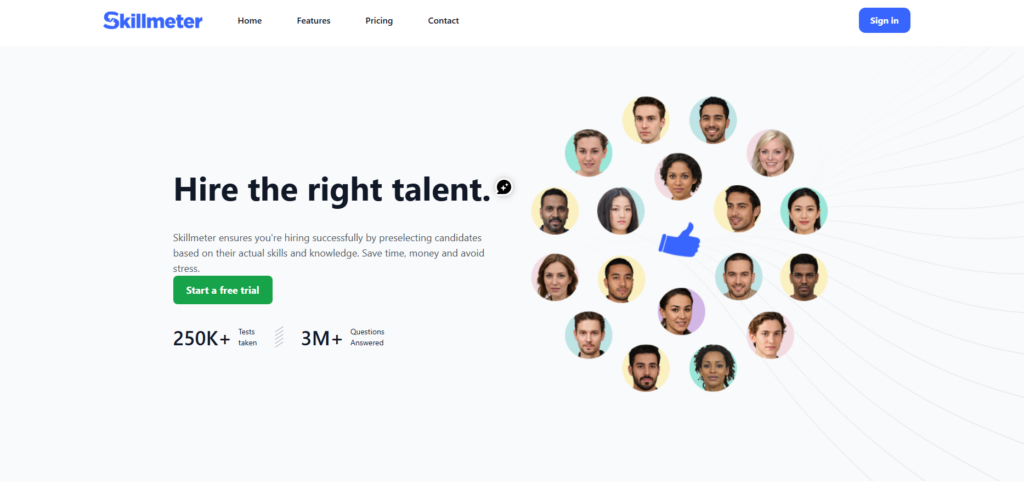
Skillmeter specializes in evaluating technical and programming skills, and is used mainly by IT companies and software development teams.
Key features
- Programming and coding challenges
- Real-world coding simulations
- Automated grading and evaluation
- Detailed developer performance insights
Best for
Engineering teams that only need to screen coding ability.
Limitations
It is highly specialized and does not support behavioral, cognitive, or soft-skill assessment, which rules it out for non-technical or mixed-role hiring.
14. TalentLyft
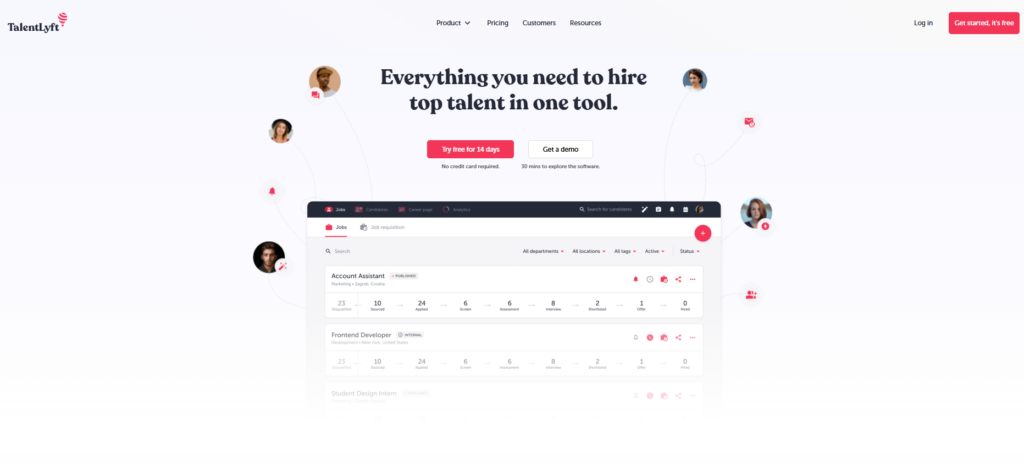
TalentLyft is recruitment software that combines applicant tracking, employer branding, and basic assessment in one system to manage the hiring lifecycle from job post to onboarding.
Key features
- Applicant tracking and testing
- Employer branding and career-page tools
- Structured candidate pipelines
- Recruitment analytics dashboard
Best for
Teams that want an all-in-one recruiting workflow and treat testing as a bonus.
Limitations
Its assessment capability is basic. The test library is smaller than dedicated platforms, and features such as AI proctoring and behavioral analysis are missing.
15. Testello
Testello is a lightweight online assessment platform built for startups and early-stage companies that need a simple way to screen candidates with minimal setup.
Key features
- Standard pre-employment testing
- Custom questionnaire creation
- Basic candidate scoring
- Quick platform setup
Best for
Startups and small teams that want to launch a screen this week, not next quarter.
Limitations
It is not built for complex or large-scale hiring. It lacks advanced reporting, competency mapping, and AI-powered monitoring for high-stakes assessments.
How do you choose the right eSkill alternative?
Start with the roles you hire most and the skills that predict success in them, then work outward. A platform that nails cognitive testing is the wrong buy if 70% of your openings are technical. Weigh these six factors against your own hiring, not against a feature checklist:
- Assessment variety across technical, cognitive, behavioral, and role-specific skills
- Flexibility to build customized, role-based tests rather than editing templates
- Room to scale as your hiring volume grows
- Anti-cheating and proctoring controls strong enough for remote assessment
- Native integration with your ATS and existing HR stack
- Reports that point to a hiring decision, not just a raw score
One more filter that pays off: with the average cost per hire at $5,475 in 2025 (SHRM 2025 benchmarking report) and a mis-hire running up to two times salary, the cheapest tool is rarely the lowest-cost choice. A platform that improves prediction by even a few percentage points usually earns back its price on the first avoided mis-hire.
See how Testlify compares for your roles
Testlify brings a 3,500+ test library, AI interviews, and deep proctoring into one platform, with plans that fit a five-person team or a global enterprise. Start a free trial to build and send a live assessment, or book a demo to see it mapped to your hiring.
Key takeaways
- eSkill is a solid standardized-testing tool, but not a full modern stack. Teams switch when they need AI interviews, live proctoring, and analytics that turn scores into decisions, which matters more as 39% of core skills shift by 2030.
- Testlify is the strongest all-round alternative. Its 3,500+ tests, AI interviews, and 100+ integrations cover technical and non-technical hiring in one place, so most teams can retire two or three point tools.
- Fit beats feature count. ASC and TalentLens win on regulated psychometrics, Skillmeter on coding, ThriveMap on realistic previews. The best tool is the one that covers your top five roles today.
- Mis-hires are the real cost. With median tenure at 3.9 years and replacement running one-half to two times salary, better prediction pays back fast, so weigh accuracy over sticker price.
- Buy for your hiring volume. A lightweight tool like Testello or Zapilio suits low-volume screening; enterprise psychometrics and high-volume programs need platforms built to scale.
- Test before you standardize. Run one real requisition through your shortlist of tools and compare candidate experience, report quality, and time saved before committing.
Frequently asked questions

Director of Marketing
Akash Patange is the Director of Marketing at Testlify, where he works closely with HR leaders and recruiters to help organizations improve hiring outcomes. He writes about talent assessment, recruitment technology, and data-driven hiring practices.
LinkedInRelated resources
View all
Alternatives
Top 15 TestInvite Alternatives and Competitors
Alternatives
Top 15 HackerRank Alternatives and Competitors in 2026
Alternatives
Top 15 HackerEarth Alternatives and Competitors
Alternatives
Top 15 Vervoe Alternatives and Competitors in 2026
Alternatives
Top 15 Hiremojo Alternatives and Competitors
Alternatives
Top 15 Coderbyte Alternatives and Competitors
Get started.
Hire on proof, not resumes.
Run your first skills-based assessment free — no credit card required.