
How HR can support managers in layoff communication
Find out how HR can help managers approach layoff communication with empathy, structure, and support.
In the wake of widespread economic uncertainty, many organizations have had to let employees go, placing managers in the uncomfortable position of handling layoff communication.
Global surveys found 73% of employers were undertaking or considering layoffs, citing reasons such as misalignment with employee skills and financial pressure. For managers, this translates to a high likelihood of having to hold layoff conversations with their team members.
In this article, we will look at how HR professionals can play a crucial role in supporting managers through these difficult conversations.
 ChatGPT
 Gemini
 Claude
 Grok
Grok Perplexity
How bad layoff communication destroys the employer brand
A mishandled layoff can quickly become viral news. In 2024, high-profile incidents such as executives delivering mass layoffs over Zoom sparked public backlash.
In fact, nearly 1 in 5 employees (and 1 in 4 Gen Z workers) say they would vent about a layoff on social media if they were let go, and almost half of companies have experienced social media retaliation after layoffs.
The way layoffs are handled is no longer a private HR matter; it’s seen as a signal of a company’s true values. In other words, it takes years to build trust and only minutes to lose it when layoffs are done callously.
The lesson is clear: how you communicate a layoff is as important as the message itself. HR should ensure that compassion, clarity, and respect guide every step of this process.

Why effective layoff communication matters
Poorly managed layoff communication can severely damage morale and productivity, while a thoughtful approach can mitigate harm.
Consider recent findings from a 2025 survey: 60% of employees feel their leaders lack empathy toward workers being laid off, and 54% do not trust their company’s leadership to handle layoffs compassionately or ethically.
This highlights a major perception gap, as many employees see layoffs as being mishandled, even when leaders believe they are doing their best. Such disconnects can erode organizational trust.
However, transparent communication can make a dramatic difference. Openness about the “why” behind layoffs also reduces confusion and anxiety. When leaders explain the business context and decision-making clearly, employees are more likely to accept the outcome.
How to prepare managers for layoff conversations
HR plays a critical role in preparing managers for layoff conversations by planning the process thoroughly and ensuring they have the right guidance and resources. Here are the key preparatory steps HR should take:
- Plan the timeline: Schedule layoff meetings early in the week and in the morning so employees can access support resources during business hours. Use a private space or a secure video call to ensure respect and confidentiality.
- Ensure compliance: Apply fair, objective criteria and review the layoff plan for potential diversity or discrimination issues with legal counsel. Avoid restrictive clauses or language that could appear unfair or unethical.
- Consider layoff alternatives: Explore redeployment, internal mobility, or reduced hours before finalizing company-wide layoffs.
- Prepare communication materials: Give managers concise talking points and FAQs that explain the business reasons, next steps, and support options.
- Train and coach managers: Coaching can include reminders on body language, maintaining professionalism, and managing their own emotions. Managers need to strike a balance: being compassionate but also firm that the decision is final.
- Employee support: Provide departing employees with clear information on their severance package and available career support offered by your organization.
Do’s and don’ts of layoff communication
When the difficult day arrives, HR should be right alongside managers. to support them during the layoff conversations. The way these meetings are handled will leave a lasting imprint on those being laid off and those remaining. Therefore, it’s imperative to follow some do’s and don’ts for the layoff communication itself:
Do’s | Don’ts |
|---|---|
Hold meetings in a quiet, confidential room or one-on-one video call. Avoid group announcements to maintain dignity. | Use unprofessional or insensitive body language. Don’t check your phone, glance at your watch, or appear distracted during layoff interactions. |
Get straight to the point with empathy. Deliver the message clearly and calmly, explain briefly, and express genuine regret. | Make promises you can’t keep. Avoid statements like “We’ll rehire you soon.” Only mention confirmed support, such as severance or job placement services. |
Keep the conversation focused and brief. Cover key details such as severance, next steps, and let HR handle detailed questions. | Never mention who else is affected or compare situations. Keep the focus solely on the individual. |
Show empathy and respect throughout. Listen actively, and let employees express emotions. End with appreciation for their contributions. | Rush the person out without resources. Provide all documents, explain next steps, and share counseling or EAP options before ending the meeting. |
Ensure HR is present to guide the process, document key points, and answer questions while ensuring compliance. | Neglect HR’s presence. Don’t let managers conduct layoffs alone; it increases emotional and legal risks. |
By following a compassionate script and handling the meeting with care, teams can deliver difficult news respectfully, thereby minimizing backlash and preserving goodwill.
How to provide support to laid-off employees
How you treat people on the way out matters immensely. It not only influences how departing employees feel; it also sends a powerful message to remaining employees about the organization’s integrity.
Managers should know and be able to communicate that HR has put support measures in place for outgoing staff. Key areas of support include:
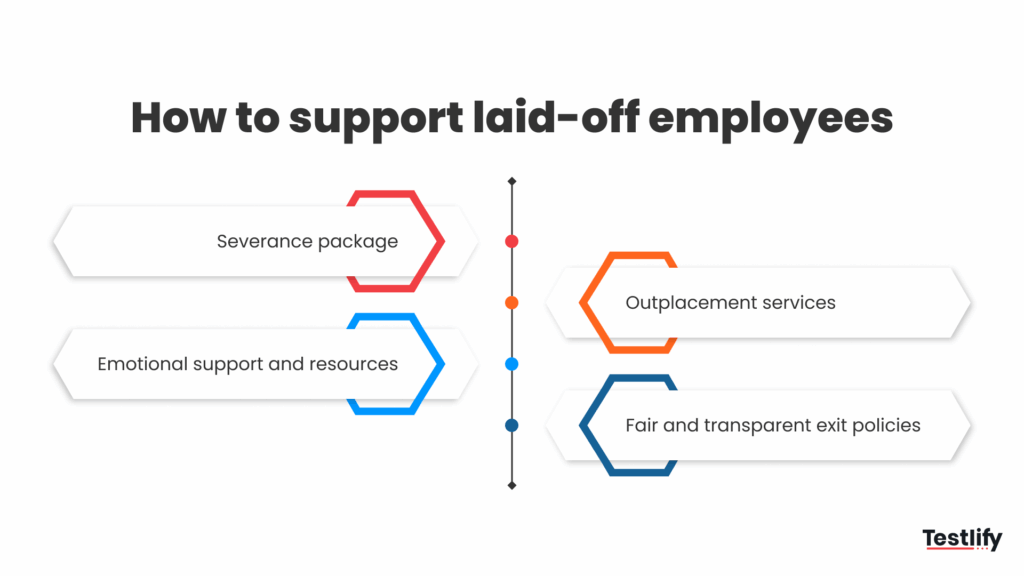
- Severance package: Provide clear, fair severance packages that outline payout amounts, benefits continuation, and guidance on retirement or savings plans. Share all details in writing, and direct any negotiation or clarification requests to HR.
- Outplacement services: Partner with career transition firms to offer résumé help, interview coaching, and job search support. Visible support helps departing employees rebuild faster and protects the employer’s reputation.
- Emotional support and resources: Remind employees of counseling options or EAP coverage that may extend after termination. Provide an HR contact for follow-up questions, and consider a check-in call or reference letter to reinforce empathy.
- Fair and transparent exit policies: Avoid punitive terms such as harsh non-competes or restrictive gag clauses, which can damage trust and invite backlash. Keep confidentiality agreement terms reasonable, and assure employees they can reach out post-exit.
It’s reassuring for a manager to say, “We’re letting you go, but here’s what we’re doing to help you.” It transforms the encounter from just a termination to a transition. This signals to remaining employees that the organization lives its values by taking care of its people.
The bridge you build now through compassionate offboarding can pay reputational dividends later, even to the point of boomerang employees or business referrals from those ex-employees.
How to prevent future layoffs
Many layoffs weren’t caused by over-hiring but by poor performance (30.2%) and skills mismatches (29.7%), issues HR can directly influence. Here’s how HR can tackle these issues early and proactively prevent future layoffs.
- Hire smarter with skill assessment tools: Strengthen hiring by using skills assessment platforms to ensure new hires are well-matched to the role and culture. This leads to stronger performance and better long-term retention.
- Build upskilling programs: Leverage assessment tools to identify skill gaps, guide learning programs, and spot top performers. This helps facilitate the creation of an agile, future-ready workforce.
- Adopt data-driven workforce planning: Partner with finance and the leadership team to forecast needs accurately, avoiding overstaffing and reactive layoffs. Plan headcount conservatively, as it is better to under-hire slightly than to over-hire and cut later.
In short, the best layoff communication is the one you never have to make. When organizations invest in hiring the right people and upskilling, they create a workforce capable of adapting and thriving, no matter how the market shifts.
Final Thoughts
Layoff communication is one of the toughest challenges HR professionals and managers face. It tests not only an organization’s leadership but also its culture, empathy, and long-term vision.
When handled with compassion, these conversations can preserve trust, protect the employer brand, and show that people remain the organization’s top priority.
However, the real goal for every HR leader should be to minimize the need for layoffs altogether. That’s where Testlify can help. The platform enables HR leaders to identify candidates who are both highly skilled and the right long-term fit for your organization.
Book a demowith Testlify today and prevent the need for painful layoffs in the future.
Frequently asked questions (FAQs)

Related resources
View all
Workplace culture
What is cultural alignment and why is important in 2026?

Workplace culture
How Toxic Company Culture Drives Employee Attrition

Workplace culture
5 most pressing issues in the workplace (with solutions)

Workplace culture
5 methods to improve team dynamics and employee behaviors

Workplace culture
How to bridge the generation gap in employee communications

Workplace culture
Bridging communication gaps in workplace disputes
Get started.
Hire on proof, not resumes.
Run your first skills-based assessment free — no credit card required.