
How remote assessments help HR in remote hiring?
Learn how HR leaders use remote assessments to hire smarter, assess real skills, and build stronger global teams with reliable tools like Testlify.
Remote hiring is now a standard practice for companies that prefer to build global teams. HR leaders and recruiters are no longer limited by geography, but hiring remotely brings new challenges.
Remote assessments have become one of the most effective tools to address these challenges. Online skill assessments help HR teams assess remote candidates objectively.
As organizations scale remote roles and teams, structured assessments make it easier to identify top talent and solidify the remote hiring process. But before using them effectively, it’s crucial to understand the real challenges of hiring remotely.
 ChatGPT
 Gemini
 Claude
 Grok
Grok Perplexity
TL;DR – Key takeaways
- Remote hiring works best when decisions are based on skills, not gut instinct.
- Remote assessments give recruiters a fair and structured way to evaluate technical, cognitive, and soft skills from anywhere.
- Good assessment tools help HR teams save time, reduce bias, and find candidates who can work independently and communicate clearly.
- Integrating online assessments with your applicant tracking system keeps your hiring process consistent and data-driven.
- Platforms like Testlify make it easier to assess real talent, maintain fairness, and build strong, reliable remote teams worldwide.

The challenges of hiring remotely
A SHRM 2024 report found 75% of organizations struggled to fill full-time remote roles, often due to gaps in technical and soft skills.
Without face-to-face meetings, it is tough to evaluate cultural fit, written clarity, and self-management. Differences in time zones, work habits, and expectations can slow feedback loops and affect productivity.
Even verifying technical abilities or tracking interview performance can become inconsistent across teams. These obstacles make it easy for bias or guesswork to creep in while assessing remote candidates manually.
These barriers explain why skills-based hiring and reliable remote assessment tools have become core pillars for building a strong remote hiring process.
For a broader view, see our complete guide: Top benefits and challenges in remote hiring and how to overcome them.
What are remote assessments?
A remote assessment is an evaluation or test conducted from a distance using technology, rather than in person. This method allows organizations to assess a person’s skills, knowledge, or condition without requiring them to be physically present at a specific location.
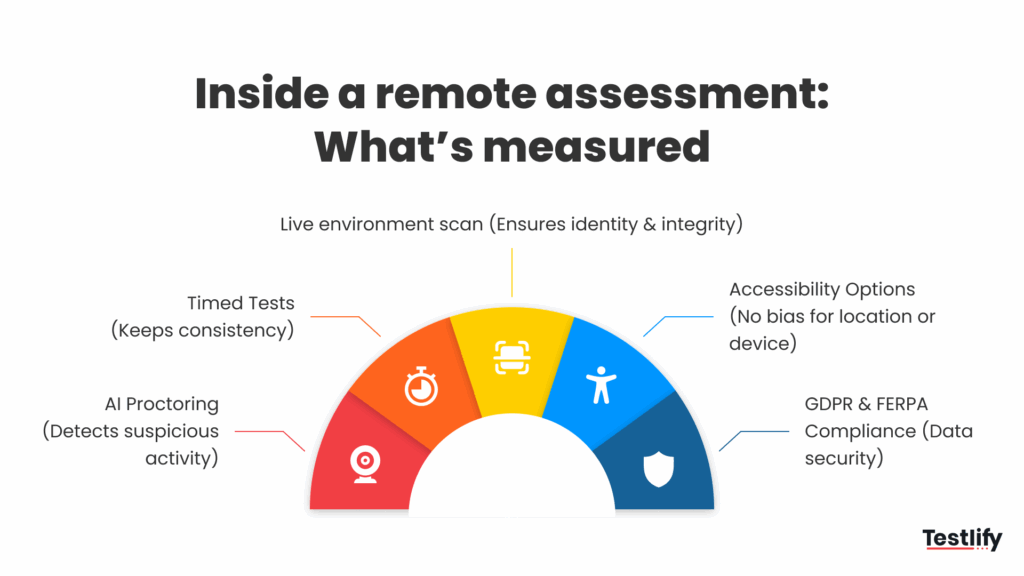
These online skill assessments include technical tests, cognitive evaluations, and evaluations of soft and hard skills to provide real-time insights into how applicants think and perform.
Unlike traditional in-person testing, remote formats rely on technology to ensure accuracy, consistency, and accessibility for distributed teams.
If you use remote assessment tools, you can compare results objectively and identify top candidates for remote roles and global collaboration.
Benefits of remote assessments in remote hiring
Remote assessments have become one of the most practical tools for HR teams hiring remotely. It can help you move beyond surface-level profiles and evaluate a candidate’s true potential.
Modern platforms, such as Testlify, help teams streamline remote hiring through structured online skill assessments, detailed analytics, and built-in integrity checks. Let’s explore how these assessments solve real problems in distributed hiring.
Skills-based hiring over resumes
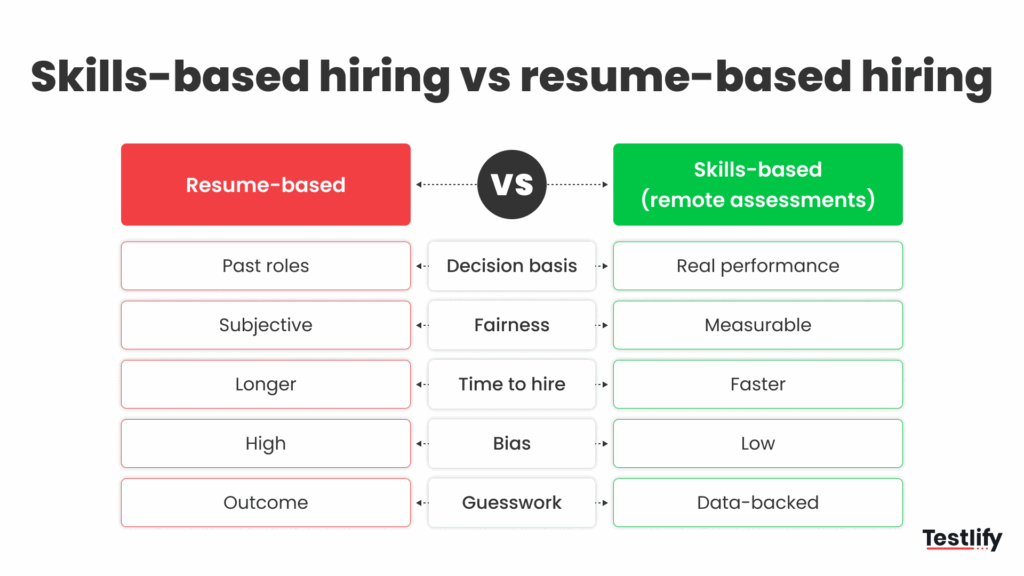
Most recruiters agree that résumés don’t tell the whole story. Skills often matter more than credentials, especially in remote roles. Remote assessments can shift the focus toward what a candidate can do in real time.
With Testlify’s library of 3,500+ job-specific tests, HR teams can assess remote candidates across technical, behavioral, and cognitive skills.
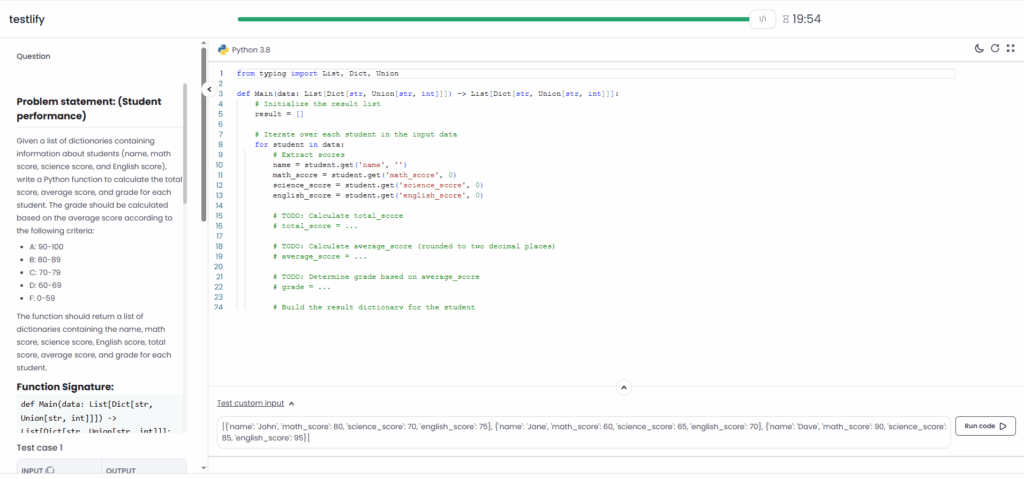
For example, you can use a coding test to evaluate engineers or a business scenario for analysts. The outcome will always be a skills-based hiring process that reduces bias and improves the quality of hire.
Also Try: Quality of Hire (QoH) Calculator
Assessing soft skills remotely
Technical proficiency is important, but remote work success often depends on communication skills and accountability. These traits often seem too difficult to evaluate in a virtual interview.
But, if you turn towards Situational Judgment Test and Behavioral Tests, these traits can be evaluated easily in a virtual interview as well. These tests can reveal how candidates handle challenges such as meeting deadlines, managing feedback, or collaborating asynchronously.
Additionally, Testlify’s AI video and audio interview tools make this process interactive for the candidate.
Wider talent pool and fair hiring
When hiring remotely, geography should never limit opportunity. Remote assessments make it easy to test candidates across time zones and job boards under identical conditions. This standardization ensures fairness and promotes diversity in hiring.
Platforms like Testlify also include AI-powered proctoring and browser tracking to maintain integrity without intimidating candidates. This helps recruiters confidently evaluate applicants from any region while ensuring equal treatment and security compliance (GDPR and FERPA).
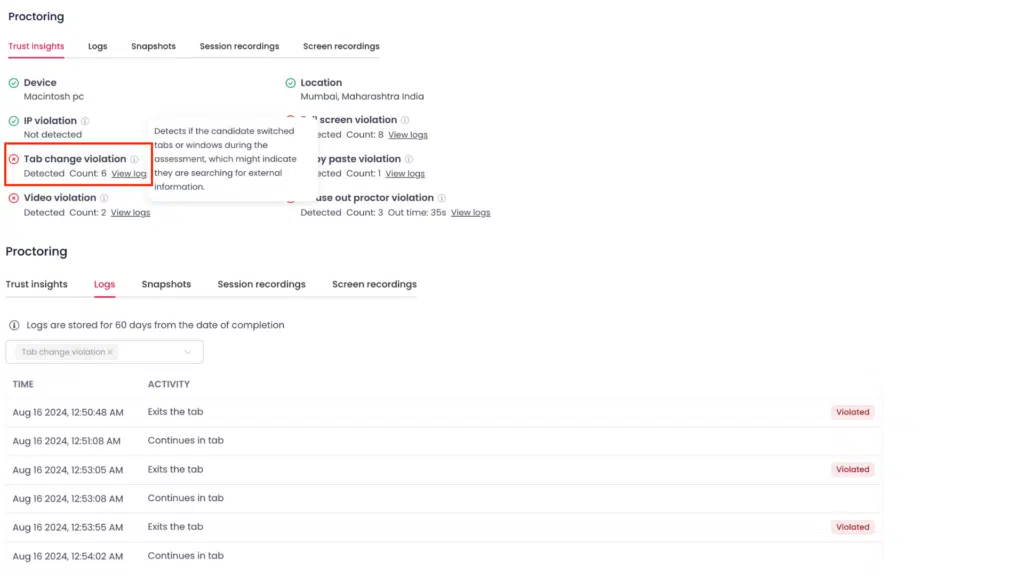
Data-driven decision making
Every test result offers valuable insight. Instead of gut feelings, you can rely on data to identify top performers. Testlify’s dashboard provides a clear view of each candidate’s strengths and areas for improvement.
The best part of Testlify is that you can integrate with over 100 Applicant Tracking Systems (ATS) to review reports directly within your hiring workflow. This saves hours of manual screening and hard work.
Remote assessments simplify hiring remotely by combining structure and data. It helps you find people who can survive and succeed in remote environments.
How to implement remote assessments in your hiring process
If you’re hiring remotely, remote assessments should sit at the heart of your process. Start by identifying the skills that matter most for each role.
Ask your hiring managers what “good” looks like in day-to-day work. Then, match those requirements to specific assessments.
For instance, if you’re hiring an account manager, include an online skill assessment that measures writing tone and client communication. For a developer, test technical reasoning and problem-solving.
Once the tests are set, place them early in the hiring process. They act as a filter. As a result, you will be able to spend time only on qualified candidates. Try to keep instructions clear, and let applicants know what to expect.
To maintain integrity, use built-in proctoring or timed assessments (for multiple time zones). Finally, connect your assessment data with your Applicant Tracking System (ATS) so your team can review results inside the same dashboard.
Final words: Opt for the right remote hiring tools
Every stage of the hiring process (from the job post to onboarding) depends on systems that communicate clearly and simplify work for recruiters.
The proper remote hiring tools can help you shortlist faster and evaluate fairly. Start with assessment tools that assess skills and include structured video interviews as well. Include platforms that support scheduling, feedback, and data sharing across your remote team.
Explore more about Testlify, or try out one of the best assessment platforms that can back you up in every way.
How Testlify works?
Frequently asked questions (FAQs)

B2B SaaS Content Writer
Rishav Kumar is a B2B SaaS content writer with 4 years of experience. He loves crafting engaging content. Always exploring fresh ideas, he's passionate about helping businesses grow through impactful writing.
LinkedInRelated resources
View all
Remote hiring
How to conduct system compatibility check to prevent assessment failure?

Remote hiring
Top tools for running a system requirement check
Remote hiring
How to foster team cohesion and engagement in a remote workforce

Remote hiring
How remote hiring is reshaping the global workforce landscape

Remote hiring
Remote Hiring Tools: Build Your 2026 Hiring Stack

Remote hiring
How to overcome geographical and cultural barriers in remote hiring
Get started.
Hire on proof, not resumes.
Run your first skills-based assessment free — no credit card required.