
11 core HR functions every recruiter should know in 2026
Discover the 11 essential HR functions every recruiter should know in 2025 to boost hiring success and drive company growth.

HR isn’t just about hiring and firing—it’s the backbone of a company’s success. Yet, many businesses still overlook how crucial HR functions are in shaping company culture, driving performance, and ensuring long-term growth.
Is your HR department equipped to handle today’s workforce’s demands, or is it stuck in the past? This blog discusses the top 11 key functions of HR that you should know to succeed in 2025 and beyond.
 ChatGPT
 Gemini
 Claude
 Grok
Grok Perplexity
What does HR do? 11 key functions of human resources
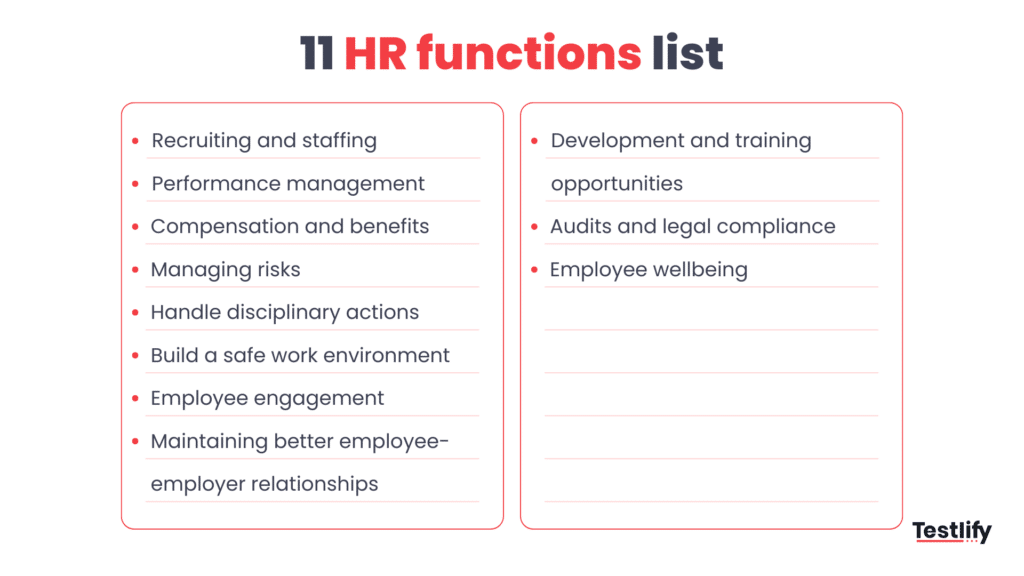
Recruiting and staffing
The primary function of the HR team is talent acquisition. HR professionals are responsible for hiring qualified candidates with the right skills to meet the company’s needs.
Beyond just filling positions, they must ensure that new hires align with the company’s long-term goals. HR also plays a strategic role in team restructuring and making tough staffing decisions when necessary.
Additionally, HR professionals need to anticipate future workforce needs, adapt to changing market conditions, and create opportunities for upskilling and reskilling within the organization.
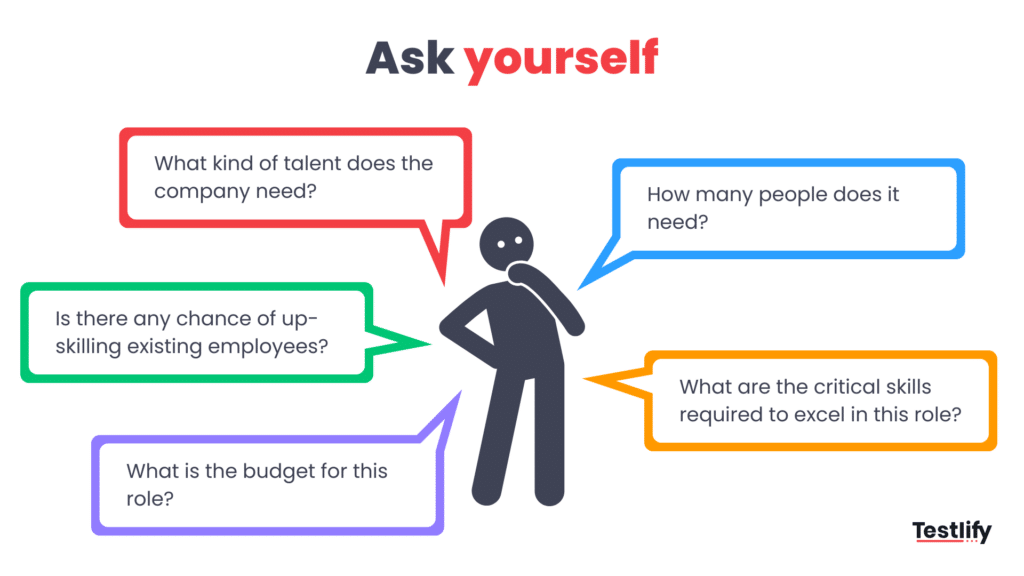
Understanding this will influence hiring, performance reviews, training, and all other HR functions.
Recruiting candidates: Finding the right person for a job starts with creating clear and detailed job descriptions. HR teams must study the job market to set competitive salaries before advertising the position on various platforms.
HR professionals typically screen resumes and applications to decide which candidates should move forward in the hiring process. After this step, HR arranges one or more interviews involving employees, managers, senior leadership, and other key decision-makers.
Retaining talent: HR also focuses on keeping employees satisfied and engaged, which is often overlooked in discussions about hiring. According to research from the Society for Human Resources Management (SHRM), employees consider the following five factors the most important for job satisfaction:
- Respectful treatment of all employees at every level
- Trust between employees and senior management
- Opportunities to use their skills and abilities at work
- Fair compensation and pay
- Job security
Hiring employees: HR managers play a key role in hiring by conducting background checks, explaining payroll and company policies, and onboarding new employees. This process involves a lot of important legal paperwork, record-keeping, and administrative tasks. It is critical to ensure all information is accurate, complete, and securely managed to protect both employees and the company.
Performance management
Performance management is an ongoing process of improving employee performance in an organization. This is done through assessment tools like Testlify, coaching, targeted training, providing feedback, and counseling.
Performance management is an ongoing process that systematically monitors, evaluates, and improves employee performance. Companies can choose any of the methods to improve their employee performance.
Check out Testlify’s Performance Management Skills Test to assess candidates’ ability to drive goal-setting, feedback, and alignment with organizational values.
Performance management is a crucial part of the HR function. Studies show that organizations that adopt continuous performance feedback as a management option outperformed their competitors by 24%. It helps employees build the skills to bridge the gap between today’s workforce and tomorrow’s goals.
Compensation and benefits
A key function of HR is creating a fair compensation rate for each role according to the market valuation. This is crucial for employees as they expect fair and good compensation in exchange for their hard work.
This falls under the reward aspect, which means providing reasonable monetary compensation and recognizing their talent and efforts. A Workhuman report shows that employees who feel undervalued are five times more likely to be disengaged at work.
Compensation is the pay an employee receives, such as a yearly salary or hourly wage, while benefits can vary and may include:
- Health insurance (e.g., medical, dental, vision)
- 401k opportunities
- Education benefits
- Parental leave
- Paid holidays Paid time off
- Sign-on bonuses
- Referral bonuses
- Relocation assistance
- Stock options
Managing risks
One important job of HR is to identify, assess, and handle both short- and long-term risks before they become serious problems. This helps protect both employees and the company. Although risk management isn’t only the responsibility of HR, they play a key role in it.
Here are a few ways HR helps manage risks:
- Training managers properly and gathering anonymous feedback from their teams
- Taking steps to maintain or increase workplace diversity
- Working with IT to keep data and sensitive information secure, often by implementing small business mobile device management tools to monitor and protect employee devices.
- Keeping employee records accurate and protected
- Investigating complaints of harassment, discrimination, or unfair treatment
Handle disciplinary actions
Dealing with disciplinary issues and terminations can be sensitive and complex. HR managers need to handle these situations fairly and consistently.
This often involves following a clear disciplinary procedure, such as starting with a written warning and increasing suspensions or demotions, depending on the situation.
A well-structured system helps hold employees accountable. According to a US Bureau of Labor Statistics survey, companies with consistent and transparent disciplinary processes see a 20% higher employee retention rate.
HR may also consult legal experts to ensure the company follows the law and avoids mistakes that could lead to lawsuits. Ultimately, HR is responsible for enforcing company policies and meeting legal requirements while treating employees with respect and dignity.
Build a safe work environment
HR is responsible for keeping the workplace safe, both physically and emotionally. For physical safety, HR ensures the workplace is free from hazards by conducting worksite analysis and implementing prevention measures. They may also set up safety programs, offer risk management training, and share emergency protocols.
Discover Testlify’s Risk Management Skills Assessment to evaluate candidates’ ability to identify, assess, and mitigate risks effectively in your organization.
A positive work environment is also essential for employee well-being. Research shows that 88% of job seekers consider a positive work culture when looking for a job, and 60% of employees have left jobs because of bad managers. Additionally, 88% of employees believe a positive culture increases revenue by 33%.
Emotional safety includes ensuring the company follows federal and state employment laws. HR must create a respectful environment where employees are protected from harassment, discrimination, intimidation, and exploitation. To support this, HR may provide training sessions to help employees, managers, and supervisors recognize harmful behaviors and understand how to report them when needed.
Employee engagement
Employee engagement is all about creating open and ongoing communication between employees, HR, and senior leadership. This two-way dialogue helps build a strong company culture where everyone feels connected to shared goals, values, and a common mission. It also ensures that concerns and issues are addressed quickly, preventing small problems from growing into larger challenges.
To strengthen trust and connection among employees, managers, and leadership, HR can:
- Communicate new policies, decisions, and goals promptly
- Mediate conflicts between employees effectively
- Recognize individual and team achievements
- Share successes and failures openly
- Ask for feedback and genuinely listen to concerns
- Organize company-wide events and gatherings
Maintaining better employee-employer relationships
Building and ensuring a positive relationship between employees and employers is another important part of the HR function. There should be a mutual understanding and respect between these two factors for a positive workplace.
HR professionals can help create company policies that ensure equity and fairness. The HR manager is responsible for liaising between employees and employers and helping them settle disagreements.
Development and training opportunities
The LinkedIn report states that 94% of employers prefer to stay longer at a company that offers training and development opportunities. Providing development opportunities is advantageous to both the employees and the company.
Targeted training can improve employee’s skills, productivity, and overall performance. It also decreases turnover rates significantly. When employees see that their company supports their growth, they are more likely to contribute positively to the company culture.
HR also plays a key role in offering training programs that match the company’s goals and legal requirements.
Audits and legal compliance
Laws related to labor, benefits, fair pay, hiring, and firing are complicated and can change often, depending on the state. It’s important for companies to understand and follow local, state, and federal regulations to stay successful.
Some of the high-risk areas include:
- Outdated labor law posters
- Poorly maintained or unsecured employee records
- Not keeping records long enough
- Incorrect pay, hour, or time records
A smart HR department avoids problems by regularly reviewing policies and procedures through compliance audits to ensure everything is current and follows the best practices.
Employee wellbeing
HR plays a crucial role in supporting employees’ mental, physical, and financial wellbeing. When employees feel their company genuinely cares about their growth and health, they are likelier to engage and positively contribute to the company culture. Nearly 9 out of 10 employees consider the benefits package when evaluating a potential employer.
But wellbeing isn’t just about providing support during challenges. Personal or work-related problems can negatively affect employees’ performance and productivity, ultimately impacting the company. Poor wellbeing can cost companies significantly, including:
- A loss of $20 million for every 10,000 employees due to low wellbeing.
- A global cost of $322 billion in turnover and lost productivity because of employee burnout.
To prevent these issues, HR should create a wellbeing strategy that includes regular one-on-one conversations with employees and encourages team collaboration. Often, burned-out employees are 63% more likely to take sick days and more than twice as likely to look for a new job.

Why do we need an HR functions list?
HR professionals take on various roles that require different skills. Having a list of HR functions helps them focus on their main goal, especially as new technologies keep changing how things are done.
An HR functions list can help:
- Increase productivity and performance
- Encourage teamwork within the HR department
- Guide HR professionals in reaching company goals
Final takeaway
In addition to the key HR functions mentioned above, there are other important responsibilities that, while not always seen as core HR tasks, play a significant role in employee satisfaction and company culture.
For example, making employees feel valued through small gestures like celebrating birthdays or recognizing milestones can greatly impact morale.
These actions, though simple, help create a positive work environment and strengthen the connection between employees and the organization, ultimately contributing to a more engaged and motivated workforce.
For further reading, explore Key Functions Of Hr You Learn In College.
Frequently asked questions (FAQs)

Related resources
View all
HR & recruitment
Interview to hire ratio: A complete guide for hiring teams

HR & recruitment
Revenue per FTE: Formula, Benchmarks, and How to Improve It

HR & recruitment
What is job restructuring and how to do it?

HR & recruitment
Cost-effective employee training solutions: using SCORM-compliant authoring tools to create E-learning courses

HR & recruitment
7 tips on recruiting students for HR professionals

HR & recruitment
HR budget 101: A comprehensive guide for 2026
Get started.
Hire on proof, not resumes.
Run your first skills-based assessment free — no credit card required.