
13 most common HR issues [and solutions]
Discover practical solutions to common HR issues, from recruitment to compliance, and build a thriving, engaged, and compliant workforce.
![13 most common HR issues [and solutions]](/api/media/file/13-most-common-HR-issues-and-solutions-2.png?dpl=dpl_6Z8Gzi5dgny5ePrnCfPbRPCRYCA7)
HR is the backbone of any organization. It starts from recruiting the right talent to ensuring the satisfaction of employees. HR is essential in shaping the company’s culture and success.
However, there are a few challenges for the HR team in a changing workplace. Therefore, HR professionals must update themselves with the issues that might crop up in their departments and organizations as we enter 2025.
We will cover the top HR issues you need to address in 2025.
 ChatGPT
 Gemini
 Claude
 Grok
Grok Perplexity
What does the role of HR involve?
Human Resource management is a comprehensive approach to managing people within an organization to optimize performance, maintain compliance, and foster a productive workplace culture. Here’s what it typically involves:
- Recruitment and hiring
- Employee relations
- Performance management
- Training and development
- Compensation and benefits
- Compliance and legal requirements
- Diversity, equity, and inclusion (Dei)
- Employee engagement and retention
- HR data and analytics

What are HR issues?
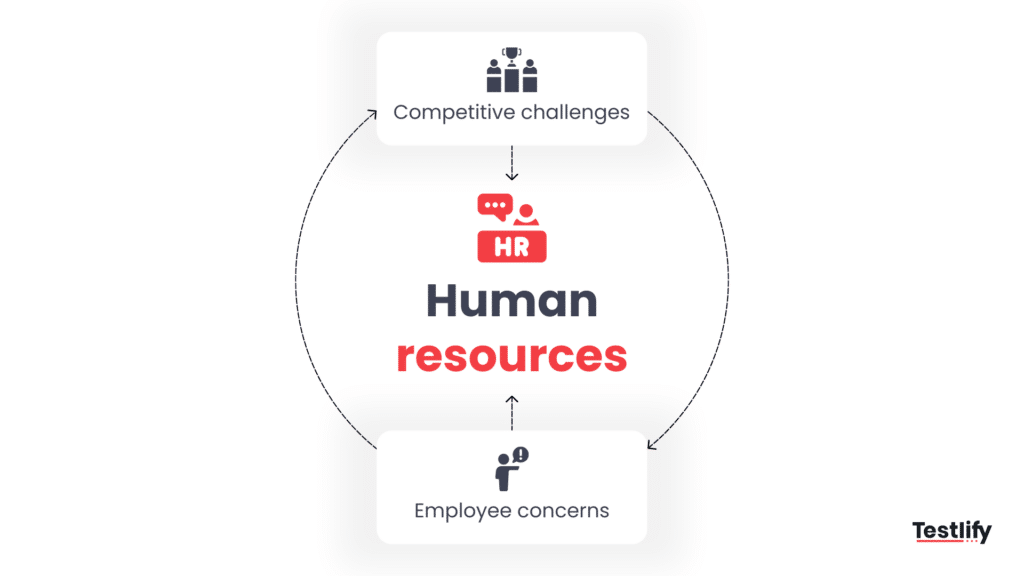
HR challenges refer to the complexities and difficulties professionals encounter in managing and optimizing an organization’s workforce. These arise from various internal and external factors, such as labor laws, demographic changes in the workforce, technological advancements, globalization, organizational change, talent acquisition and management, and cultural differences.
Like in 2020, HR teams were tasked with designing, implementing, and managing remote work systems to ensure business continuity during the global pandemic.
Addressing these challenges effectively requires a strategic approach, proactive planning, and innovative problem-solving. In doing so, organizations can attract, nurture, engage, and retain top talent while remaining aligned with overarching objectives and goals.
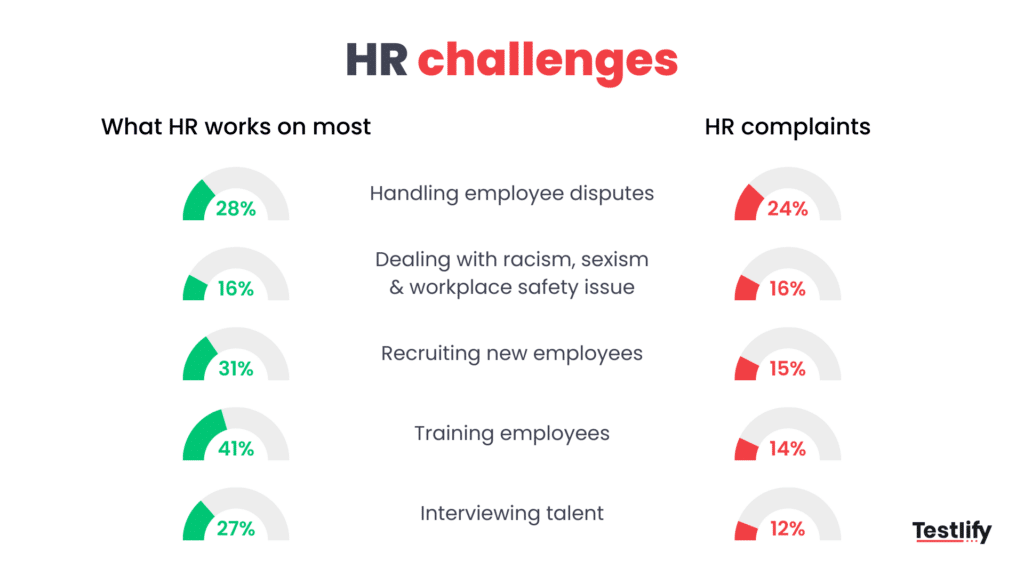
Major HR issues and challenges
1. Employee retention and turnover
Retention of employees is one of the most prominent issues faced by HR professionals today. Employees in the present working era are more mobile and are in the habit of changing jobs very frequently. However, this turnover is necessary, and excessive turnover disrupts an organization’s productivity and morale.
To reduce turnover, HR professionals should create a positive work culture, offer competitive compensation packages, provide growth opportunities, and ensure employees feel valued and appreciated. Regular feedback and strong leadership can also foster loyalty.
2. Remote work and hybrid work models
The pandemic has changed the concept of work for good. Remote and hybrid models have become the new work norms for most organizations with the expectation of greater flexibility. Therefore, as HR professionals, it is essential to work on this shift while managing productivity and collaboration.
To overcome the challenges associated with remote work, the HR teams should focus on setting expectations, providing tools and resources for effective remote work, and maintaining community engagement through virtual events or regular check-ins. Clear communication is key to managing hybrid or remote teams successfully.
3. Diversity, Equity, and Inclusion (DEI)
As more buzzwords go, they are Diversity, Equity, and Inclusion, but in 2024, that’s more important than most other years. Organizations do so just by DEI compliance but have built a culture where every worker is valued and respected.
HR professionals can promote DEI by implementing policies that promote equal opportunities, establishing mentorship programs, conducting bias training, and actively recruiting diverse talent. Measuring progress to ensure DEI initiatives are effective and inclusive is also essential.
4. Employee well-being and mental health
Today, employee well-being includes not only their physical health but also their mental health. For HR professionals, employee mental health is of utmost priority due to the challenges of modern work and global uncertainties.
HR can engage in key aspects of mental health promotion using resources such as employee assistance programs (EAPs), flexible work schedules, mindfulness programs, and stress management workshops. Their managers must undergo training on the identification of burning out or any signs of distress within the teams
5. Compliance with labor laws and regulations
Labor law and regulation are dynamic, so keeping pace with the constantly evolving nature of compliance is a challenge most HR teams face. The consequences include costly lawsuits, penalties, or damage to a company’s reputation.
HR should know local, state, and federal labor laws on wages, benefits, and employee rights. Continuing education and auditing of current practices and software tracking compliance can keep the HR department on top of changing regulations.
6. Talent acquisition and recruitment challenges
Attracting and hiring top talent has become increasingly difficult as the labor market becomes more competitive. The demand for skilled professionals is high, and organizations must find new ways to stand out to potential employees.
HR can enhance recruitment with technological aids such as AI-based ATS, employer branding campaigns, and a more personalized candidate experience. A good talent pipeline through networking or recruitment events also helps alleviate gaps in talent availability.
7. Training and development
In the era of rapid technological advancement, the need for continuous learning and development has never been so important. Organizations must equip their employees with the necessary skills to adapt and thrive.
HR professionals can tackle this challenge by creating learning programs tailored to different employee needs, whether technical training or leadership development. Online learning platforms and microlearning are great options to make training more accessible and engaging.
8. Succession planning
Succession planning is an often overlooked but critical component of HR management. It involves identifying and nurturing future leaders to ensure smooth transitions in key roles.
To ensure long-term organizational success, HR should actively identify high-potential employees, provide leadership development opportunities, and maintain a clear plan for leadership transitions. Regular talent reviews and internal promotions can strengthen succession planning efforts.
9. Employee engagement
Employee engagement is closely related to job satisfaction, productivity, and retention. Low engagement leads to high turnover, lower morale, and decreased performance, which poses a major problem that HR professionals must constantly address.
HR can drive engagement by conducting employee feedback, offering recognition programs, providing growth opportunities, and supporting work-life balance. Engaged workers are more productive and have a higher chance of staying on for some time in the organization.
10. Compensation and benefits
In 2025, pay and benefits remain a high topic for HR departments due to the increasing cost of living and changing employee requirements. Competitive and comprehensive compensation packages are essential to meet current and future employees’ demands.
HR can manage compensation challenges by conducting regular market surveys to ensure pay equity and competitiveness. Moreover, benefits such as health insurance, retirement plans, wellness programs, and flexible work options can make a huge difference in attracting and retaining talent.
11. Managing generational diversity
The present-day workforce is quite diverse, including employees across various generations, such as the baby boomer generation and Gen Z. This raises unique communication, work preferences, and expectations.
The HR department can address this by creating an intergenerational culture where the different generations learn to live together with understanding and respect. By providing cross-generational training, mentorship programs, and a flexible workplace, there is a greater chance of creating a harmonious working group.
12. Technology integration in HR
HR technology is changing fast, and using the right tools may help streamline processes, increase productivity, and create a better employee experience. There are challenges in implementing new technology, from choosing the right software to smooth integration.
HR teams can overcome this challenge by keeping abreast of new HR technologies and adopting tools gradually that meet their needs. Automation, artificial intelligence, and HR analytics can increase the quality of decision-making and employee engagement if introduced intelligently and with proper training.
13. Performance management and feedback
Traditional performance reviews are considered outdated and ineffective for many employees and managers. Annual reviews do not provide timely, meaningful feedback.
HR can intervene by adopting continuous performance management systems that involve regular feedback and open communication. Setting goals, providing continuous coaching, and using data-driven insights support HR professionals in helping employees grow and develop in real-time.
Conclusion
HR departments’ most challenging jobs are recruiting and retention, compliance and technology issues, and other challenges listed. These have to be proactively dealt with if a working environment that is efficient, effective, and supportive has to be there.
The role of HR in 2025 will evolve even more in terms of employee well-being, diversity, and the effective use of technology. In this manner, organizations with HR professionals who can be flexible and responsive to these challenges will thrive better in a more complex and competitive environment.
Proactively managing these very common HR issues would place the company at an advantage in attracting, retaining, and engaging top talent.
Frequently asked questions (FAQs)

Content Writer
Yashika Khandelwal is a Content Writer with 3+ years of experience creating research-backed content on hiring, talent assessment, and HR technology. She is a registered Organizational Psychologist and subject matter expert who combines behavioral science with practical recruitment insights to produce accurate, evidence-based content.
LinkedInRelated resources
View all
HR & recruitment
Global recruitment: benefits, models, and best practices

HR & recruitment
7 types of HR reporting and steps to implement

HR & recruitment
What is job profiling? Everything you need to know

HR & recruitment
What is text recruiting and how to start using it to hire

HR & recruitment
Career Pathing: How to Build Paths That Retain Talent

HR & recruitment
Pros and cons of cross-training employees in 2026
Get started.
Hire on proof, not resumes.
Run your first skills-based assessment free — no credit card required.