
What are AI interviews and do they really work?
AI interviews promise speed and savings, but only if you know what you’re doing. The right tool makes all the difference.
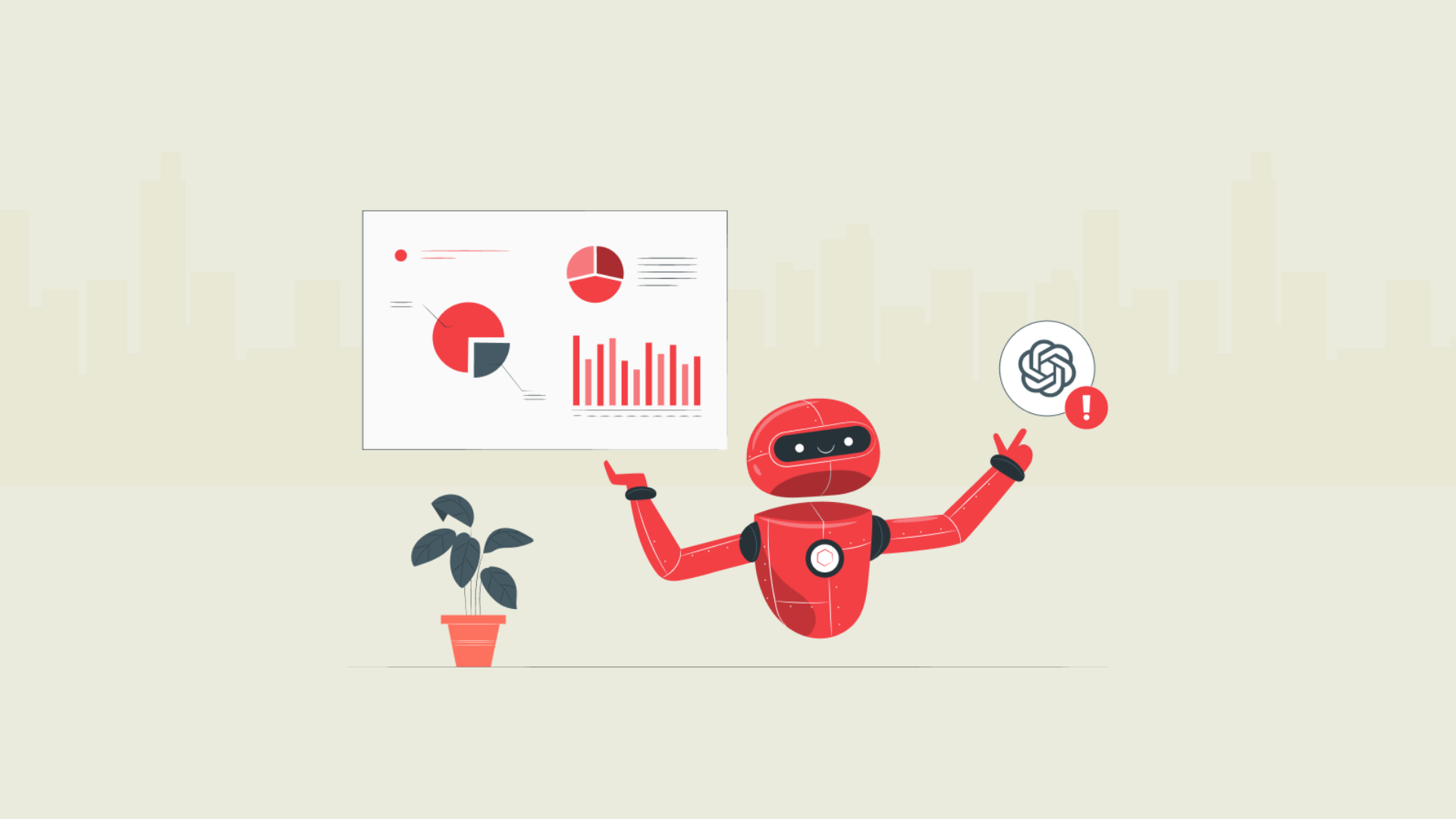
A candidate opens a link, a voice asks the first question, and no one else is on the call. That is an AI interview, and it is now a normal first step in hiring at large companies. So do they really work? The honest answer: yes, for one job, when you use them right. AI interviews are good at first-round screening at volume, giving every applicant the same questions and a consistent score. They are a poor fit for final decisions, senior roles, or anything that needs a human read on judgment and fit. This guide explains what an AI interview is, how it works, where the evidence says it helps, where it fails, and how to run one without losing the trust of the people you want to hire.
 ChatGPT
 Gemini
 Claude
 Grok
Grok Perplexity
TL;DR
- An AI interview is software that runs a structured interview, records the answers, and scores them against role criteria a recruiter sets.
- They work best for high-volume, early-stage screening, where they cut the recruiter hours spent on repetitive first-round calls.
- They work worst as a final gate. 71% of Americans oppose letting AI make the hiring decision, and in many regions that is also a legal risk.
- Adoption is wide. 88% of organizations now use AI in at least one business function, so candidates increasingly expect to meet one.
- The safe pattern is AI-assisted, human-led: let the software screen and score, then have a person review the transcript before anyone moves forward or gets a rejection.

What is an AI interview?
An AI interview is a job interview where software asks the questions, records the responses, and scores them against criteria a recruiter defines in advance. It can run as a voice or video conversation, a one-way recorded video, or a text chat. The AI handles the interview and the note-taking; it does not, in a well-run process, decide who gets hired.
The three common formats differ in how much they ask of the candidate and the recruiter:
- Conversational voice or video: the AI speaks, listens, and can ask a follow-up. Closest to a live screening call.
- One-way recorded video: the candidate records answers to fixed prompts on their own time; the recruiter reviews later.
- Text or chat-based AI interviews: a typed exchange, useful for high-volume roles and candidates on low-bandwidth connections.
How does an AI interview work?
An AI interview follows a fixed script that the hiring team sets up before any candidate joins. The software asks each person the same core questions, captures the answers, turns speech into text, and rates the response against a rubric. The output is a transcript plus a score, which a recruiter then reads. Here is the usual flow:
- Set the questions and rubric. The team picks role-relevant questions and defines what a strong answer looks like.
- Invite candidates. Everyone gets one link and answers on their own schedule, across time zones.
- Run the interview. The AI asks, listens, and in conversational formats asks a short follow-up when an answer is thin.
- Transcribe and score. Answers are converted to text and rated against the rubric, with the same yardstick for every applicant.
- Hand off to a human. A recruiter reviews the transcript and score, then decides who advances. This step is the one you never skip.
The scoring is the part that earns trust or loses it. A good setup keeps the criteria job-related and visible, so a recruiter can see why a candidate scored the way they did instead of taking a number on faith.
Inside Testlify's AI Conversational Interviews
Testlify's own Conversational AI Interviews illustrate what a well-built pipeline looks like in practice, and the feature is worth walking through in detail rather than treating as a footnote. It runs natively inside Testlify's assessment platform, so an interview score sits next to a candidate's coding result, cognitive score, and personality profile in one dashboard instead of living in a separate tool nobody checks.
The feature scores three layers in a single pass: technical accuracy, cognitive reasoning, and behavioral signals like tone and follow-through, then routes every result straight into the analytics dashboard recruiters already use daily. It also syncs with more than 100 ATS platforms, which matters more to a global hiring team than the AI itself, since the harder problem is usually stitching one process together across regions, not scoring a single conversation. Testlify's founder, Abhishek Shah, summed up the intent at launch: "Our AI Conversational Interviews act like a recruiter who never sleeps or judges you."
Early adopters cut screening time by more than 60 percent without a drop in candidate experience, according to Testlify's own launch data. That combination of technical depth, seamless integration with existing recruitment processes, and proven efficiency is what separates an AI interview that delivers meaningful hiring insights from one that simply produces another transcript.
Do AI interviews really work?
For their real job, top-of-funnel screening, the evidence says yes. The strength of an AI interview is consistency: every candidate gets the same questions and the same scoring, which removes some of the noise that makes unstructured human interviews unreliable. People sense this. In a Pew Research survey, 47% thought AI would do better than humans at evaluating all applicants in the same way, against 15% who thought it would do worse.
That consistency is the same reason structured interviews have long outperformed casual ones. The public read is not naive, though. The same Pew Research study on AI in hiring found 66% would not want to apply for a job that used AI to help make the hiring call, and 71% opposed AI making the final decision outright. So AI interviews work when they screen and score, and backfire when they are sold to candidates as the judge.
What are the benefits?
The clearest gain is recruiter time at the top of the funnel, where first-round calls normally eat the most hours. Instead of scheduling dozens of screens, a team sends one link and reviews scored transcripts. The table below sets a traditional first-round process against an AI-assisted one for a high-volume role.
Screening step | Traditional first round | AI interview screening |
|---|---|---|
Scheduling | Back-and-forth email, recruiter and candidate calendars | One link, candidate answers on their own time |
Consistency | Varies by interviewer and time of day | Same questions and rubric for all 100% of applicants |
Recruiter hours for 50 candidates | About 25 hours of live calls | Under 5 hours reviewing transcripts |
Candidate access | Limited to shared working hours | 24/7, across time zones and devices |
Record of the conversation | Scattered notes | Full transcript plus a score |
There is a fairness angle too. Because the rubric is fixed, an AI interview can strip out some of the inconsistency that creeps into human screening. Among people who see racial and ethnic bias as a problem in hiring, 53% expected it to improve with more AI use, not worsen. That is a hope, not a guarantee, and it only holds if the tool is tested for it.
Where do AI interviews fall short?
AI interviews follow the script; they do not chase the unexpected. When a candidate says something surprising, a good human interviewer leans in. The AI usually moves to the next question. That makes the format weak for senior, creative, or relationship-heavy roles where the interesting signal lives off-script.
Three limits are worth naming plainly:
- Bias can be inherited. A model trained on skewed past hiring can repeat that skew. It needs an adverse-impact check, not blind trust.
- Candidates can opt out. With two-thirds reluctant to apply to AI-screened jobs, a clumsy rollout shrinks your applicant pool.
- It cannot read a room. Warmth, nuance, and the human parts of fit still need a person, which is why the final call stays human.
Pro Tip: Tell candidates up front that a person will review their interview, and give them a way to reach a human. The Pew data shows the objection is rarely to the software itself; it is to being judged by a machine with no recourse. Naming the human in the loop protects both your brand and your applicant pool.
The fraud problem hiding inside AI interviews
AI interviews created a new opportunity for hiring fraud, not just a new efficiency gain. Gartner surveyed 3,000 job candidates and found that 6 percent admitted to some form of interview fraud, whether posing as someone else or having a stand-in take their place. Gartner now projects that 1 in 4 candidate profiles worldwide could be fake by 2028, and remote, AI-run interviews are a big part of why that number keeps climbing.
The mechanics are simple once you see them, and they have gotten cheaper every year. Proxy interviews used to require an accomplice willing to sit in a room and lie to a camera. Now they mostly require a second monitor, since a stand-in can feed answers to the real candidate, or simply take the interview outright, while a real-time AI tool quietly generates talking points off-screen.
A candidate can also hand an asynchronous video interview, one recorded on the candidate's own time instead of live, to someone more qualified and never touch it themselves.
Testlify's breakdown of proxy interview fraud walks through the specific red flags that expose a stand-in, from lagging audio to eyes that keep tracking off-screen instead of at the camera.
Background checks do not close this gap on their own. They confirm history, not identity, so a background check can come back clean for a person who never showed up to a single interview. Pairing identity verification with a skills assessment before the live interview, the approach Testlify outlines in its guide to stopping employment fraud, gives recruiters a far stronger signal than the AI interview score by itself.
How to make AI interviews work for your hiring team
Getting value out of AI interviews is a design problem, not a shopping problem. Three traps sink most rollouts: skipping structure, skipping verification, and treating the score as a verdict instead of one input. Avoiding all three is mostly a matter of sequencing the rollout correctly, not spending more on the tool itself.
Start with structure, not just software
Buying an AI interview platform without a structured question bank just automates chaos faster. Build the same rigor into an AI interview that Testlify recommends for any structured job interview: fixed questions, a shared rubric, and a rating scale every reviewer understands the same way.
Write questions that map directly to the skills the role requires, not generic personality prompts. Testlify's own research on why structured interviews work explains why this single habit predicts job performance more reliably than almost anything else recruiters control.
Verify before you trust the score
An AI interview score is only as reliable as the identity behind it. Confirm that the person answering the questions is the person who applied, using live ID checks or proctoring before the interview counts toward a decision.
Treat the AI score as one input, not a verdict. Cross-check it against a skills assessment whenever the stakes of the role justify the extra step, and keep the scoring model explainable rather than a black box.
Keep a human in the final decision
AI interviews are built to screen, not to hire. Route the highest-scoring candidates from the AI round into a live video interview or an in-person round before making an offer.
Testlify's list of the best interview questions to ask gives hiring managers a starting point for the follow-up conversation that either confirms or contradicts what the AI score suggested.
Key takeaways
- AI interviews are a screening tool, not a decision engine. Their whole value is consistent first-round scoring, which is why using them to reject or hire outright wastes the strength and invites the backlash. Keep them at the top of the funnel.
- The human review step is the product, not a formality. With 71% of people opposed to AI making the call, the recruiter reading the transcript is what makes the process both trusted and defensible. Never automate that step away.
- The time saving is real but role-specific. For 50 high-volume applicants an AI interview can turn about 25 hours of calls into under 5 hours of review. For a two-person specialist search, a warm human call still wins.
- Consistency helps fairness only if you test for it. A fixed rubric removes some human noise, and 53% expect AI to reduce hiring bias, but a model can also inherit old bias. An adverse-impact audit is the price of trusting the score.
- Tell candidates a person is involved. Two-thirds are reluctant to apply to AI-screened jobs, so naming the human in the loop protects your applicant pool and your brand.
- One signal is fragile. Pair the interview score with a role-relevant skills assessment so the decision rests on evidence, not a single conversation.
Frequently asked questions

Founder and CEO, Testlify
Abhishek Shah is the Founder and CEO of Testlify, a pre-employment assessment platform used by 1,500+ companies globally to hire fairly and at scale. He focuses on skills-based, bias-free hiring technology. Testlify is part of the SHRM Labs 2026 WorkplaceTech Accelerator.
LinkedInRelated resources
View all
AI interviews
Conversational AI interviews for entry-level hiring

HR & recruitment
AI across all stages of the hiring process in 2026

AI in recruitment
Best practices for hiring data analysts using assessments?

Candidate assessment
What tools support voice responses for language proficiency testing?

Candidate assessment
How do ATS-integrated assessments streamline hiring workflows?
Candidate assessment
How to assess financial modeling and accounting skills pre-hire?
Get started.
Hire on proof, not resumes.
Run your first skills-based assessment free — no credit card required.