
What is a recruitment fair? (Tips for attending one)
Learn how to make the most of recruitment fairs with this guide for HR professionals. From preparation to follow-up, boost your hiring success.

Recruitment fairs are a great opportunity to engage with fresh talent. Whether you are looking to fill specific roles, build up your talent pipeline, or just let people know about your company, it is unparalleled when it comes to meeting a large pool of potential candidates in one place.
However, going to a recruitment fair without preparation can lead to missed opportunities and wasted time. Then how can HR professionals make the most of these events? That’s what this how-to guide is all about.
In this blog post, we will walk you through all that you need to know about these fairs: from why they are good to how you can best prepare and execute them.
 ChatGPT
 Gemini
 Claude
 Grok
Grok Perplexity
What is a recruitment fair?
A recruitment fair is a gathering of employers and job seekers in one location. These events are designed to help companies find talent for open positions, while candidates get the chance to learn about different companies and career opportunities.
According to SHRM, almost 85% of employers say they engage in career fairs to find talent, specifically those who are looking to fill entry-level positions.
These recruitment fairs generally take place at universities, conference centers, or large venues, drawing candidates from diverse industries and walks of life.

Why you should attend recruitment fairs?
You might be thinking, “why should I take the time to attend a recruitment fair when I can just post a job on LinkedIn or job boards?” well, here are some solid reasons why recruitment fairs are an invaluable resource for HR teams.
1. A large pool of candidates
One of the main advantages of recruitment fairs is the sheer number of candidates you can meet in a short time.
According to an SHRM report, 41% of employers hired employees directly through career fairs. With recruitment fairs, you get the opportunity to connect with individuals you may not have come across through traditional job postings.
You also get the benefit of meeting candidates face-to-face, which is something that can’t always be captured through an online resume or job application.
This personal interaction helps build a stronger connection and gives you more insight into the candidate’s communication skills and personality.
2. Time efficiency
Recruitment fairs are a time-saver for HR professionals. Instead of sorting through hundreds (Or thousands) of resumes, you can engage with potential candidates directly and quickly assess if they’re a good fit for your company.
You also have the chance to conduct quick screenings through skills assessment platforms like Testlify and even schedule interviews on the spot, saving you time and reducing your workload later on.
3. Direct feedback and interaction
Unlike online hiring processes, recruitment fairs make it possible for you to give candidates direct feedback instantaneously. This could also be helpful for both you and the candidate in some cases—for instance, explaining on-site the next steps of the hiring process, after which the candidate can decide whether they want to proceed with the opportunity or not.
4. Building your brand
Recruitment fairs are a great avenue to promote your employer brand. Glassdoor suggests that 75% of job seekers look up a company’s reputation before applying to work with them.
You get the opportunity to attract the best candidates who share the same values and mission as you by showcasing your company culture, its values, and working environment through the booth and the people working in it.
How to prepare for a recruitment fair
The key to a recruitment fair is being prepared. You want to make sure your booth, team, and messaging really stand out and have an effect. Let us break that down further into how to prepare for a recruitment fair.
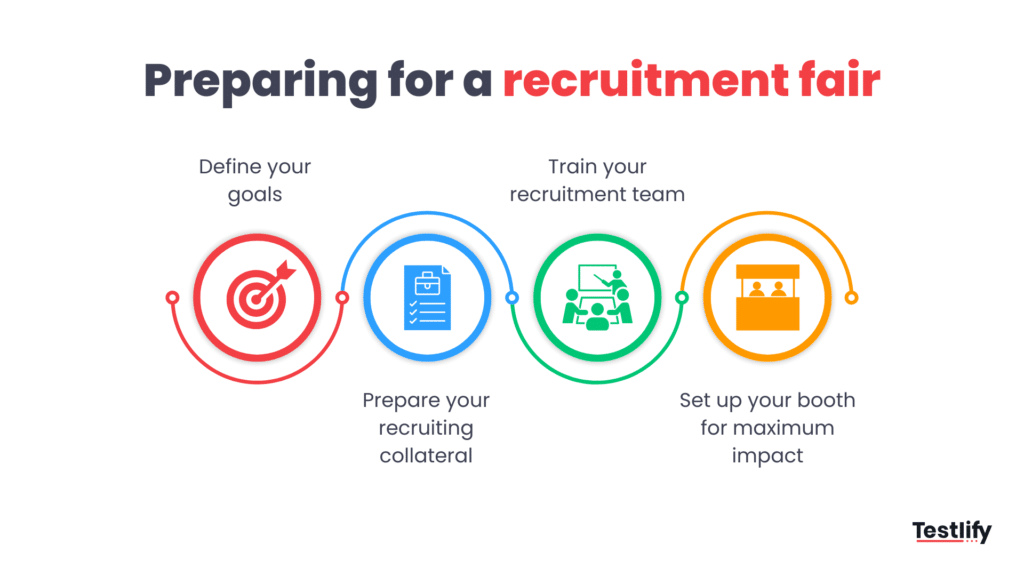
1. Define your goals
Before you start packing your bags for the event, take time to clearly define what you are trying to accomplish.
Do you have immediate needs for specific positions, or is this about creating a talent pipeline in the hopes of filling future positions?
Knowing what you want out of the fair will help guide the conversations you have with candidates, ensuring you’re talking to people who are qualified for your open roles.
For instance, if you are specifically looking for a salesperson, then tailor your attraction tactics to be more attractive to applicants who share proven sales experience. If you’re looking at engineering candidates, ensure you have technical discussions with those truly qualified for the role.
2. Prepare your recruiting collateral
Get all the materials you’ll need to promote your company and your job openings ready. You don’t want to be shuffling through papers when a top candidate comes to your booth. Here’s what you should have ready:
- Have printed job descriptions ready, outlining the qualifications, responsibilities, and benefits of the roles you are hiring for. This will let candidates get an idea of whether or not they fit your requirements before they speak to you.
- Include information on your company’s mission, vision, values, and culture. The more information you can provide about your work environment, the easier it will be for candidates to decide if they want to work with you.
- Make it easy for candidates to apply on the spot. Have printed application forms or a tablet with a digital form they can fill out immediately.
- Handing out items like pens, notebooks, or t-shirts with your company’s logo can help keep your company top-of-mind after the event.
3. Train your recruitment team
Recruitment fairs are a team effort. It’s important that every person representing your company is well-prepared to answer questions and present your brand in the best light. Hold a pre-event meeting to go over expectations, roles, and responsibilities.
Assign one person to answer job-specific questions while another person talks about company culture. Ensure everyone understands how to quickly determine if a candidate is a good fit and how to handle follow-ups after the event.
4. Set up your booth for maximum impact
Your booth is your first impression—make it count! According to event marketer research, booths with interactive designs are 80% more likely to draw people in. Here are some tips for setting up a booth that draws candidates in:
- Make sure your company logo and Name are prominently displayed. Bright colors, clear fonts, and eye-catching visuals can make your booth stand out from others.
- Use technology to make your booth more engaging. For example, a screen displaying employee testimonials or a short video about your company culture can spark interest. You could also set up a fun quiz or game that aligns with your company’s values or mission.
- Create a welcoming environment by making sure your team members are friendly and approachable. Smile, greet candidates, and offer assistance.
How to engage effectively with candidates
Recruitment fairs are all about interaction. When candidates approach your booth, it’s your chance to engage and assess whether they’re a fit for your organization. Here’s how you can make the most of your time talking to potential hires:
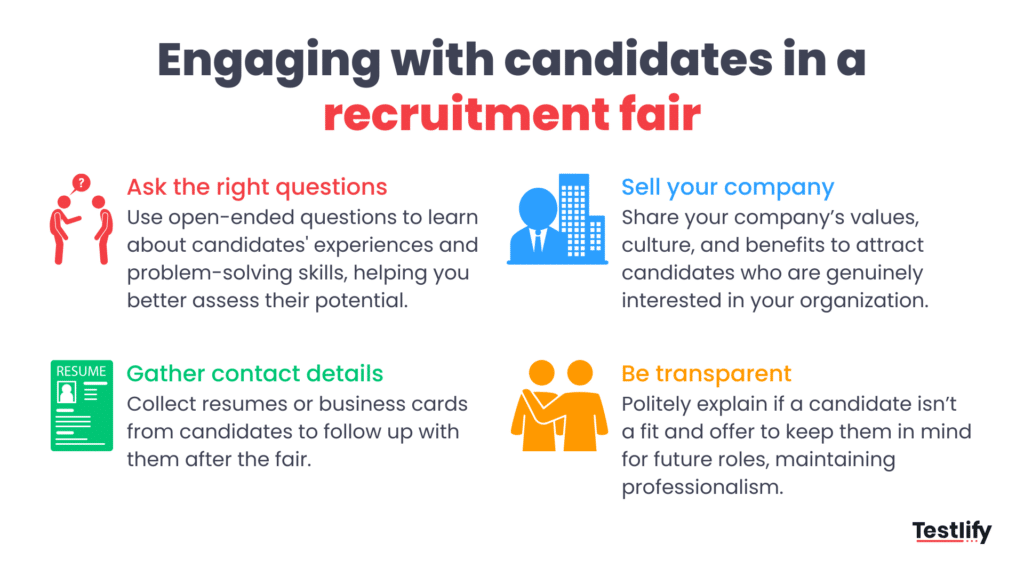
1. Ask the right questions
When speaking with candidates, ask open-ended questions to get them talking. Instead of asking yes/No questions like “do you have experience with sales?”, try something more engaging like:
“Tell me about a time when you had to overcome a challenge at work.”
“What excites you most about working in this industry?”
“How do you typically handle tight deadlines?”
Open-ended questions help you assess a candidate’s communication skills, problem-solving abilities, and experience more thoroughly.
2. Sell your company
Remember, a recruitment fair is a two-way street. While you’re looking for the right candidates, candidates are also evaluating your company. Be ready to sell your company’s culture, values, and benefits.
In fact, a Gallup report found that 70% of employees are more likely to stay with an organization when there is a strong and aligned culture. Emphasize what makes your organization special—be it flexible hours, room for career advancement, or a team-based work environment.
3. Gather contact details
Make sure to take note of candidates you’d like to pursue further. Ask for their resumes or business cards, and collect their contact information. A simple, “I’d love to stay in touch and follow up with you after the event” can go a long way in maintaining that connection.
4. Be transparent
If a candidate doesn’t seem like a fit for the role, be respectful and transparent about it. Let them know that while their background may not align with the specific opening, you’d love to keep them in mind for future opportunities. Respectful honesty Will leave a positive impression.
What to do after a recruitment fair?
The recruitment fair may be over, but your work isn’t done yet. Here’s what you need to do once the event is wrapped up:
1. Review your notes
Go through your notes and the contact information you’ve gathered. Identify which candidates showed potential and would be a good fit for your open roles.
2. Follow up promptly
Don’t wait too long before reaching out to candidates: in fact, jobvite’s 2019 report said 60% of job seekers expected a response within a week after applying. It would also be great if follow-up emails were sent thanking candidates for their time and outlining the next steps in the hiring process.
3. Evaluate the event
Take a moment to review the event. Did you achieve your hiring objectives? What went well and what could improve? Gather feedback from your team on how to maximize your involvement at future recruitment fairs.
Conclusion
The recruitment fair is an asset in the HR professional’s toolkit for filling positions with the best talent more efficiently. We’ll discuss how to make the most out of it: prepare, engage with potential candidates, and follow through afterward.
With the ongoing effectiveness of recruitment fairs as a leading hiring strategy—41% of employers hire directly from career fairs, according to SHRM—this technique should definitely be in your recruitment toolkit.
Frequently asked questions (FAQs)

Content Writer
Yashika Khandelwal is a Content Writer with 3+ years of experience creating research-backed content on hiring, talent assessment, and HR technology. She is a registered Organizational Psychologist and subject matter expert who combines behavioral science with practical recruitment insights to produce accurate, evidence-based content.
LinkedInRelated resources
View all
HR & recruitment
Are T-shaped skills the future of hiring? Here’s why

HR & recruitment
Beyond clinical skills: using AI to assess soft skills in healthcare hiring

HR & recruitment
How to conduct a skills audit?

HR & recruitment
What is regretted attrition and how to reduce it?

HR & recruitment
16 HR skills every professional need
HR & recruitment
5 Essential HR goals and objectives for a thriving 2026
Get started.
Hire on proof, not resumes.
Run your first skills-based assessment free — no credit card required.