
16 HR skills every professional need
Master essential HR skills like communication, recruitment, conflict resolution, and data analysis to drive success and foster employee engagement.
Human Resources is often referred to as the backbone of any organization. HR professionals are not only responsible for recruiting talent but also for shaping the organizational culture, ensuring compliance with labor laws, and managing employee relations. Whether you’re an experienced HR practitioner or just starting your career, it’s important to continually hone your HR skills to stay ahead in the field.
In this guide, we’ll break down the essential HR skills, their importance, and how to develop them to become an effective and impactful HR professional.
 ChatGPT
 Gemini
 Claude
 Grok
Grok Perplexity
What are HR skills?
At its core, HR is about people and processes. HR skills refer to the abilities and knowledge HR professionals need to manage these aspects effectively.
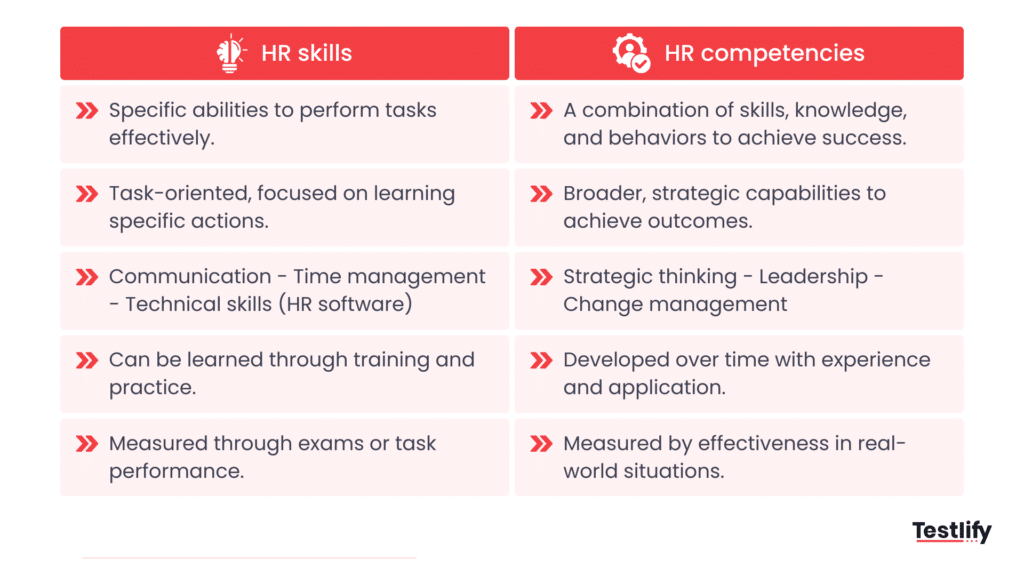
These skills can be broken down into two broad categories: soft skills (like communication, leadership, and emotional intelligence) and technical skills (like data analysis, compliance knowledge, and proficiency with HR tools).
In today’s world, HR professionals are not just administrative workers—they are strategic partners who help shape an organization’s culture, enhance employee satisfaction, and ensure compliance with legal standards. Developing a robust set of HR skills is key to driving success in your HR career.

Key HR skills every HR professional needs
Check out these top skills that every HR professional must know:
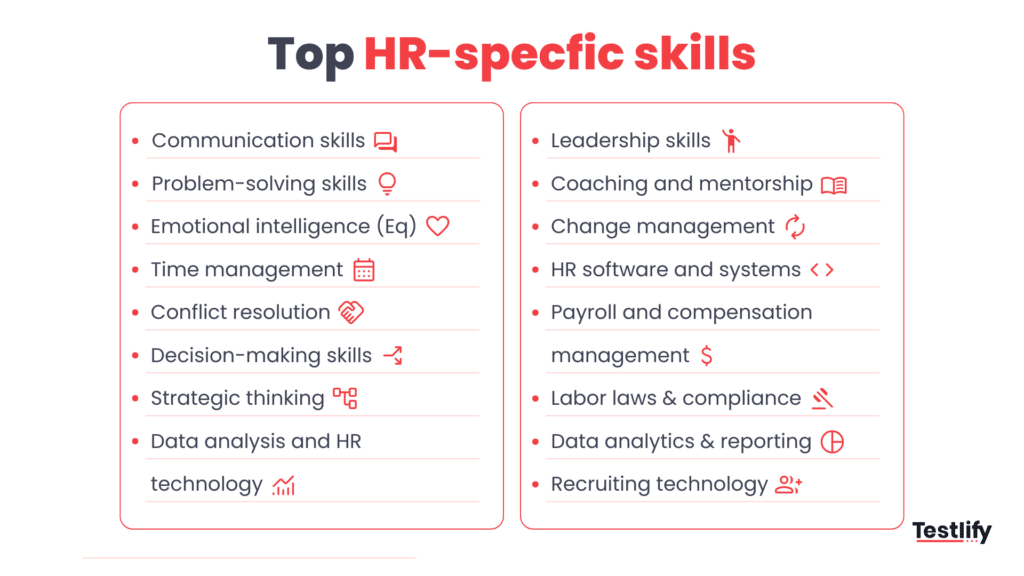
1. Communication skills
Communication is the foundation of effective HR practice.
According to a Gallup poll, 70% of employee engagement is linked to how employees feel about communication within their organization. Whether you’re talking to employees, managers, or candidates, your ability to communicate clearly and empathetically is crucial.
What does this look like in practice?
- Active listening: When handling sensitive employee issues, HR professionals need to truly listen to what’s being said—and sometimes what’s not being said.
- Clear messaging: HR often communicates policies, benefits, and expectations. Being clear and concise helps avoid confusion and ensures employees understand their rights and responsibilities.
- Verbal and written communication: HR pros must be able to write detailed reports, craft emails, and speak publicly in team meetings, recruitment drives, and employee orientations.
2. Problem-solving Skills
No two days in HR are the same. Every day, you’re faced with unique challenges—from resolving conflicts between employees to figuring out how to fill a critical job opening.
A LinkedIn survey found that 85% of HR leaders consider problem-solving skills to be one of the most valuable traits for success in HR.
How to hone your problem-solving skills:
- Break down the issue at hand and gather all relevant information.
- Explore potential solutions, keeping in mind both short- and long-term impacts.
- Consider the perspectives of all parties involved to come up with a solution that benefits everyone.
3. Emotional Intelligence (EQ)
Emotional Intelligence, or EQ, is one of the most important skills in HR. Research by TalentSmart found that 90% of top performers in the workplace have high emotional intelligence. This includes being self-aware, managing your emotions, and understanding the emotions of others.
In HR, EQ plays a huge role in how you handle workplace dynamics, deal with sensitive issues, and navigate conflicts. For example, when an employee is upset or frustrated, an HR professional with high EQ can manage the situation with empathy and understanding, which builds trust and fosters positive relationships.
4. Time management
HR is all about juggling multiple tasks, deadlines, and priorities. From recruitment to employee relations and compliance management, time management is crucial. A study by CareerBuilder found that 58% of workers said they are stressed because they have too many tasks to handle in too little time.
Tips for improving time management:
- Prioritize your daily tasks and use time-blocking techniques to focus on one thing at a time.
- Use tools like Trello, Asana, or even simple to-do lists to stay organized.
- Delegate tasks when necessary. Not everything needs to be handled by one person.
5. Conflict resolution
Workplace conflicts are inevitable. Whether it’s a disagreement between team members or a dispute over a performance review, HR professionals are often called upon to mediate and resolve conflicts. According to SHRM, employees spend 2.8 hours per week dealing with conflict at work. That’s a significant amount of time that HR professionals help save by managing and resolving issues promptly.
How to handle conflict in the workplace:
- Stay neutral and listen to both sides of the issue.
- Guide the conversation in a way that fosters understanding and a resolution.
- Always aim for win-win outcomes, where both parties feel heard and respected.
Related: Read more on essential conflict resolution skills for every HR manager.
6. Decision-making skills
HR professionals often need to make difficult decisions. Whether it’s deciding on the best candidate for a job, determining how to handle an employee’s performance issue, or dealing with a layoff, strong decision-making skills are essential.
According to a Harvard Business Review study, executives who make decisions based on data are 6% more profitable than those who don’t.
Tips for better decision-making:
- Gather relevant data before making decisions (e.g., performance data, employee feedback, or legal requirements).
- Weigh the pros and cons of each option.
- Consider the long-term consequences of your decision.
Advanced HR skills to develop
As your HR career progresses, you’ll need to develop a deeper skill set to become a strategic partner in your organization. Here are some advanced HR skills to help you thrive in an increasingly complex HR landscape.
1. Strategic thinking
HR is no longer just about managing people; it’s about aligning HR functions with business strategy. A McKinsey report found that companies with strong alignment between their business strategy and HR function are 40% more likely to achieve their business objectives.
How to develop strategic thinking:
- Stay informed about industry trends and business innovations.
- Work closely with leadership to understand the company’s goals and how HR can help meet them.
- Focus on the long-term impact of your HR decisions and align your initiatives with the company’s vision.
2. Data analysis and HR technology
HR is becoming more data-driven. From performance metrics to turnover rates, HR professionals now need to be comfortable with data analysis to make informed decisions. According to a Deloitte survey, 71% of HR leaders say HR analytics are a “high priority” for their organizations.
How to sharpen your data skills:
- Learn to use HR software tools like HRIS platforms and applicant tracking systems (ATS) to track and analyze data.
- Familiarize yourself with data analysis tools like Excel or Tableau.
- Use analytics to identify trends and make data-driven decisions.
3. Leadership skills
HR professionals don’t just manage people—they lead them. Whether you’re leading your own HR team, guiding managers on how to handle employee issues, or mentoring junior employees, leadership skills are critical. Gallup research shows that teams led by managers with high engagement are 59% more likely to be productive.
How to develop leadership skills:
- Focus on motivating and inspiring others.
- Lead by example, demonstrating professionalism and ethical behavior.
- Foster a positive work environment by being approachable and supportive.
4. Coaching and mentorship
HR professionals often serve as coaches and mentors. Whether it’s helping a new manager develop their leadership skills or guiding employees on their career path, coaching and mentorship are key elements of modern HR.
How to be a great mentor:
- Listen actively and ask questions that help others find their own solutions.
- Provide constructive feedback and support career development.
- Share your knowledge and experiences to guide others toward success.
5. Change management
Organizations are constantly evolving. HR plays a central role in managing and guiding employees through change, whether it’s adopting new technology, restructuring the business, or implementing new policies. According to a Prosci study, organizations with a structured change management process are 6x more likely to meet their goals.
Tips for effective change management:
- Communicate openly and frequently with employees about the changes.
- Provide the necessary resources and training to help employees adapt.
- Offer support and address concerns to minimize resistance.
Technical HR skills
While soft skills are essential, technical skills in HR are equally crucial for maximizing efficiency and ensuring compliance. In today’s tech-driven world, HR is using more tools and data than ever before to manage people and processes effectively. Below are some key technical HR skills to develop:
6. HR software and systems
HR software tools like HRIS systems, performance management platforms, and payroll software are critical for automating processes and managing data efficiently. Proficiency with tools like Workday, BambooHR, or ADP will save you time and help streamline HR operations.
7. Payroll and compensation management
Managing payroll and compensation is a technical skill that requires accuracy and compliance with laws. Familiarity with payroll software and understanding tax codes is essential for managing employee compensation effectively.
8. Labor laws and compliance
HR professionals need to stay up-to-date on labor laws and regulations, from the Fair Labor Standards Act (FLSA) to Family and Medical Leave Act (FMLA). Knowing how to navigate these legal requirements ensures your organization stays compliant and avoids costly fines.
9. Data analytics and reporting
Understanding how to use data analytics tools to track key HR metrics such as turnover rates, employee performance, and recruitment costs is vital. Using data to inform decisions can drive efficiency and improve HR outcomes.
10. Recruiting technology
Applicant tracking systems (ATS), job boards, and recruitment marketing tools have become indispensable in the hiring process. Knowing how to use these tools effectively helps you source, engage, and hire the best talent.
How to develop your HR skills
To stay competitive in the HR field, continuous learning is key. Here are some ways to enhance your skills:
- Take Online courses
- Seek mentorship
- Attend conferences and webinars
- Ask for feedback
Conclusion
HR is more than just a job—it’s a critical function that shapes an organization’s success. To excel as an HR professional, you need a diverse skill set that includes both technical expertise and interpersonal qualities. By focusing on both the hard and soft skills required in HR, and continuously developing them, you’ll position yourself as a key player in driving organizational success.
With the right skills, you’ll be able to navigate complex challenges, foster a positive work environment, and help your organization achieve its business goals. So, invest in your growth, embrace learning, and be prepared for an exciting and fulfilling career in HR.
Frequently asked questions (FAQs)

Content Writer
Yashika Khandelwal is a Content Writer with 3+ years of experience creating research-backed content on hiring, talent assessment, and HR technology. She is a registered Organizational Psychologist and subject matter expert who combines behavioral science with practical recruitment insights to produce accurate, evidence-based content.
LinkedInRelated resources
View all
HR & recruitment
5 Essential HR goals and objectives for a thriving 2026

HR & recruitment
101 guide to using the 9-box matrix
HR & recruitment
Modern recruitment hacks and pitfalls to avoid in 2026
HR & recruitment
7 innovative HR initiatives you must know in 2026

HR & recruitment
Quiet hiring: A bold solution or a hidden workplace problem?

HR & recruitment
Different recruitment types: Pros, cons, & what works best
Get started.
Hire on proof, not resumes.
Run your first skills-based assessment free — no credit card required.