
18 best candidate rejection email templates
Discover candidate rejection email templates with tips to maintain a positive relationship, provide feedback, and keep communication professional.

One of the most delicate and important tasks you will encounter as an HR is sending rejection emails to candidates. While hiring can be a rewarding and engaging process, rejecting candidates who have put their trust and effort into the process can be difficult. How you handle this communication can impact not just your company’s reputation but also the way candidates perceive their experience with your organization.
In this blog post, we will walk you through the process of crafting rejection emails, provide ready-to-use templates, and offer tips on how to maintain a positive relationship with candidates, helping your organization stay respectful and professional throughout the hiring process.
 ChatGPT
 Gemini
 Claude
 Grok
Grok Perplexity
What is a candidate rejection email?
A candidate rejection email is a formal communication sent to a candidate who has not been selected for a role after an interview or assessment. This email is essential for closing the loop with candidates and ensuring they know the outcome of their application. A rejection email also serves as an opportunity for the organization to maintain professionalism and uphold its brand.
Although delivering bad news is never easy, a well-crafted rejection email can soften the disappointment for the candidate, keeping the door open for future opportunities. These emails are not only a sign of respect, but they also reinforce your organization’s culture, showing that you value candidates’ time and effort.

Key components to crafting an effective candidate rejection email
When writing a rejection email, there are several key components to ensure that your message is clear, respectful, and professional:
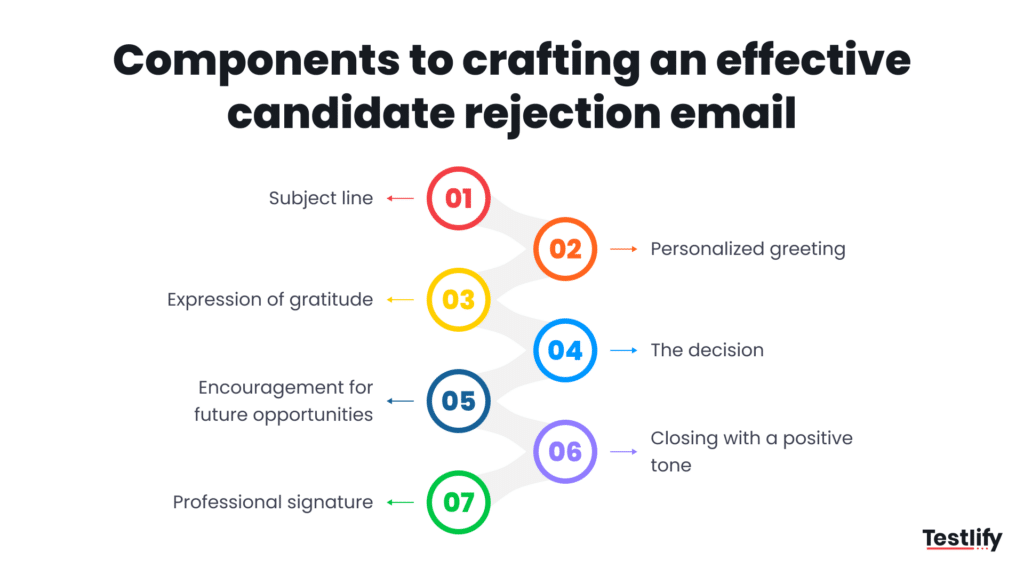
1. Subject line
The subject line should be straightforward and professional. It should immediately convey the purpose of the email. Avoid being vague or overly harsh. A few examples of appropriate subject lines include:
- “Update on Your Application for [Job Title]”
- “Decision Regarding Your Application for [Job Title]”
- “Thank You for Interviewing with Us”
2. Personalized greeting
Using the candidate’s first name in the greeting adds a personal touch to the rejection email. It signals that you’ve taken the time to review their application and are not sending a generic response. This small but meaningful gesture helps candidates feel valued and respected, rather than just another number in the hiring process.
3. Expression of gratitude
Starting the email with gratitude shows that you recognize the candidate’s effort. Acknowledge the time and energy they invested in applying, interviewing, or attending assessments. A simple thank you helps soften the disappointment of the rejection and leaves a positive impression of your company’s professionalism and respect for their effort.
4. The decision
Be clear and polite when delivering the decision. While you don’t need to go into great detail, providing a general reason such as the role being filled by a candidate with a different skill set or experience level keeps the message respectful. This transparency helps candidates understand that their rejection was based on factors unrelated to their worth.
5. Encouragement for future opportunities
If the rejection stems from a specific issue, like a skills mismatch, encourage the candidate to apply again when their experience aligns more closely with the job. Offering the opportunity to stay in touch or inviting them to connect on LinkedIn can keep the door open for future opportunities and demonstrates that you value their potential for future roles.
6. Closing with a positive tone
End the email by expressing gratitude again and wishing the candidate success in their future endeavors. This leaves the candidate with a sense of respect and appreciation. A positive, courteous closing can turn an otherwise disappointing message into one that fosters goodwill and maintains a relationship with the candidate.
7. Professional signature
Always close the email with a professional signature that includes your name, job title, and contact information. This maintains a formal tone, ensuring that the email feels like a professional communication rather than a generic or impersonal message. It also makes it easier for the candidate to follow up or stay in touch if they wish to do so.
Basic principles of writing a job rejection email
Writing a job rejection email requires tact, kindness, and professionalism. Here are some basic principles to follow to ensure you communicate your message effectively:
1. Keep it short and to the point
Rejection emails should be concise and direct. While it’s important to convey respect and gratitude, the email should not be overly long or filled with unnecessary details. Keeping the message brief respects the candidate’s time and makes the rejection easier to process.
2. Avoid negative language
Rejection emails should focus on positivity and neutrality. Phrases like “not good enough” or “you failed” can be demoralizing and are best avoided. Instead, use language that conveys the difficulty of the decision and emphasizes the high level of competition, ensuring that the candidate doesn’t feel personally criticized.
3. Stay professional and courteous
Regardless of the outcome, always maintain professionalism and courtesy in a rejection email. Acknowledge the candidate’s experience and qualifications with respect, even if they weren’t selected. This helps keep the tone respectful and professional, fostering goodwill and showing that your company values each candidate’s effort.
4. Maintain empathy
Candidates often invest significant time and emotional energy into the application process. A rejection email should acknowledge this effort and express empathy for their situation. Showing understanding and offering kind words can soften the disappointment and help the candidate feel supported, even in the face of rejection.
How to write the perfect candidate rejection email
Writing the perfect candidate rejection email involves a blend of politeness, clarity, and professionalism. Below is a simple step-by-step guide to help you draft the perfect rejection email.
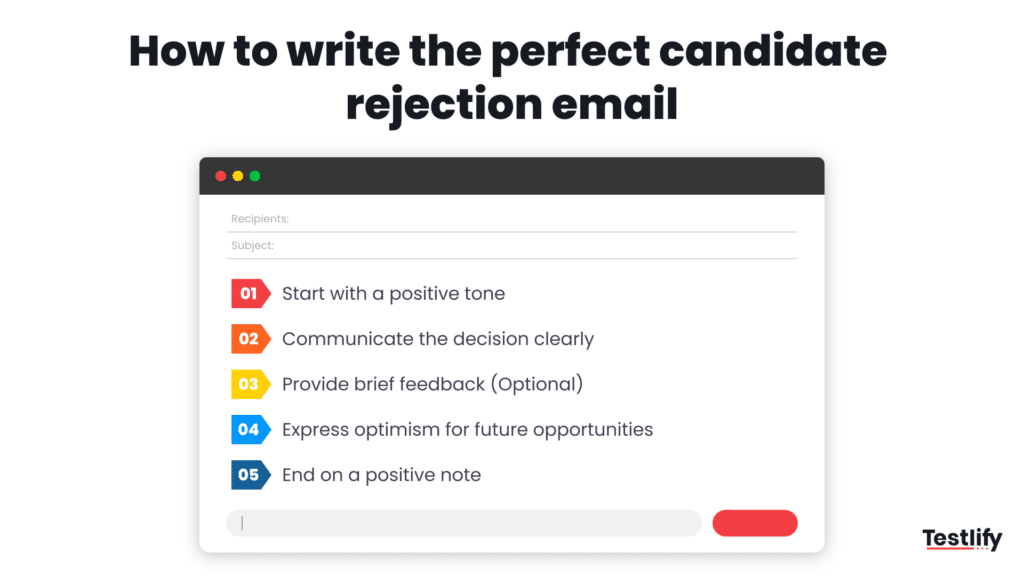
Step 1: Start with a positive tone
Begin by thanking the candidate for their time and efforts. You could mention how much you appreciated learning about their background and the insights they brought to the interview or application process.
Step 2: Communicate the decision clearly
Don’t leave the candidate in suspense. Let them know that you’ve decided to move forward with another applicant. Avoid vague wording that could make them confused or anxious.
Step 3: Provide brief feedback (Optional)
While you don’t need to provide detailed feedback, offering a brief, constructive comment could be helpful, especially if the candidate is a strong one who simply wasn’t a fit for this particular position. For example: “While your qualifications were impressive, we ultimately selected a candidate with more experience in [specific skill].”
Step 4: Express optimism for future opportunities
If appropriate, invite the candidate to apply for future openings. You can also encourage them to stay in touch and connect with the company on social media platforms like LinkedIn.
Step 5: End on a positive note
Finish your email with an encouraging statement, like wishing them success in their job search and future career goals.
Candidate rejection email templates
Here are some templates you can use to craft your rejection emails. These templates can be customized depending on the nature of the rejection.
1. Generic rejection email
Subject: Your Application for [Job Title] –[Company Name]
Dear [Candidate’s Name],
Thank you so much for applying to[Company Name]. We appreciate the time and effort you put into your application for the [Job Title] position.
After careful consideration, we regret to inform you that we have decided to move forward with another candidate whose qualifications more closely match the needs of the role.
While we were impressed with your experience and skills, we encourage you to stay connected with us and apply for any future openings that align with your background.
We wish you all the best in your job search and future endeavors.
Best regards, [Your Name] [Your Job Title] [Company Name] [Contact Information]
2. Rejection email after an interview
Subject: Update on Your Interview for [Job Title] –[Company Name]
Dear [Candidate’s Name],
Thank you for taking the time to interview with us for the [Job Title] position at[Company Name]. It was a pleasure learning more about your skills, experience, and career goals.
After careful consideration, we have decided to move forward with another candidate who is a closer match for the role at this time.
We truly appreciate your interest in joining[Company Name], and we would be happy to keep your resume on file for future opportunities.
Wishing you all the best as you continue your job search.
Sincerely, [Your Name] [Your Job Title] [Company Name] [Contact Information]
3. Rejection email after multiple interviews
Subject:[Company Name] – [Job Title] Position Update
Dear [Candidate’s Name],
Thank you again for your time and effort throughout the interview process for the [Job Title] position at[Company Name]. It was great getting to know you and discussing your qualifications in detail.
After much consideration, we’ve decided to proceed with another candidate whose experience better aligns with the requirements for this role.
We understand how disappointing this news can be, and we want to express our sincere gratitude for your interest in joining our team. Please feel free to stay in touch and apply for future openings that may be a better fit.
Best regards, [Your Name] [Your Job Title] [Company Name] [Contact Information]
4. Rejection email – for a high-quality candidate (Personalized)
Subject: Thank You for Your Application to[Company Name]
Dear [Candidate’s Name],
I want to thank you for your application for the [Job Title] position at[Company Name] and for taking the time to meet with us. Your experience and skills are impressive, and we enjoyed learning more about your background.
After careful consideration, we have chosen to move forward with another candidate who we feel is a closer fit for the current needs of the team. This was a very difficult decision, and I want to assure you that it in no way reflects the high quality of your qualifications.
I truly hope you’ll stay in touch and consider applying for future openings with us. You are a strong candidate, and I believe you would be a great addition to any organization.
Best of luck with your job search and future career endeavors.
Sincerely, [Your Name] [Your Job Title] [Company Name] [Contact Information]
5. Rejection email with constructive feedback
Subject:[Company Name] – Feedback on Your Interview for [Job Title]
Dear [Candidate’s Name],
Thank you for interviewing for the [Job Title] position at[Company Name]. We appreciate the time and effort you put into the interview process.
After careful consideration, we have decided to move forward with another candidate who we feel is a better fit for the current needs of the role.
While we were impressed with your qualifications, we believe that [specific skill or experience] would have been beneficial for the role. We encourage you to continue building in this area, and we are confident that it will enhance your future opportunities.
We truly appreciate your interest in[Company Name] and would love to stay in touch for any future openings that may be a better fit for your skills.
Best regards, [Your Name] [Your Job Title] [Company Name] [Contact Information]
6. Thank you and keep in touch rejection email template
Subject:[Company Name] – [Job Title] Position Update
Dear [Candidate’s Name],
Thank you for your interest in the [Job Title] position at[Company Name]. We appreciate the time and energy you invested in applying and interviewing for the role.
After careful review, we’ve decided to move forward with another candidate who is a better fit for the role. However, we were truly impressed by your qualifications and would like to stay in touch for potential future opportunities.
Please feel free to check back for new job openings, and we encourage you to apply for any roles that match your experience.
Best of luck in your career journey!
Sincerely, [Your Name] [Your Job Title] [Company Name] [Contact Information]
7. Following a technical assessment rejection email template
Subject: [Company Name] – [Job Title] Role Status
Dear [Candidate’s Name],
Thank you for completing the technical assessment for the [Job Title] position at[Company Name]. We truly appreciate the effort and time you put into it.
After careful evaluation, we have decided to move forward with another candidate. While your assessment results were commendable, we felt that another candidate’s profile was a closer match for the specific needs of the position.
We appreciate your interest in[Company Name] and hope you’ll apply for future roles that align more closely with your skill set.
Best regards, [Your Name] [Your Job Title] [Company Name] [Contact Information]
8. Rejection email template for an internal candidate
Subject: Internal Application Update – [Job Title]
Dear [Candidate’s Name],
Thank you for your interest in the [Job Title] position and for taking the time to apply internally at[Company Name].
After careful consideration, we have chosen to move forward with another candidate for this role. This was a tough decision, given your contributions to the company, and we truly value your work here.
We encourage you to apply for future openings and continue your professional growth within the company.
Best regards, [Your Name] [Your Job Title] [Company Name] [Contact Information]
9. Rejection email – for a candidate who wasn’t a fit for the role
Subject:[Company Name] – [Job Title] Position Outcome
Dear [Candidate’s Name],
Thank you for your interest in the [Job Title] role at[Company Name]. We appreciate the time you took to apply and the opportunity to learn about your qualifications.
After reviewing your application and qualifications, we’ve decided to move forward with another candidate. Unfortunately, we feel that your experience does not fully align with the specific needs of the position at this time.
We appreciate your interest in our company and wish you the best of luck in your job search.
Sincerely, [Your Name] [Your Job Title] [Company Name] [Contact Information]
10. Rejection email – after a group interview
Subject:[Company Name] – [Job Title] Interview Update
Dear [Candidate’s Name],
Thank you for participating in the group interview for the [Job Title] role at[Company Name]. It was a pleasure meeting you and learning more about your background.
After careful consideration, we’ve decided to move forward with another candidate who more closely matches the role’s requirements.
We appreciate your time and interest in joining [Company Name], and we hope you’ll consider applying for future opportunities.
Best wishes in your career search.
Best regards, [Your Name] [Your Job Title] [Company Name] [Contact Information]
11. Positive note for future opportunities rejection email template
Subject: Thank You for Your Interest in[Company Name]
Dear [Candidate’s Name],
We want to thank you for your application and your time spent with us throughout the interview process for the [Job Title] position at[Company Name].
While we’ve decided to move forward with another candidate, we were genuinely impressed with your experience and qualifications. We encourage you to apply for future openings that align with your background, and we’ll certainly keep you in mind.
Thank you again for your interest, and we wish you the best in your job search.
Sincerely, [Your Name] [Your Job Title] [Company Name] [Contact Information]
12. Rejection email – due to lack of experience
Subject:[Company Name] – [Job Title] Role Update
Dear [Candidate’s Name],
Thank you for your interest in the [Job Title] position at[Company Name]. We appreciated the opportunity to review your application.
After careful consideration, we have decided to proceed with a candidate who has more experience in the specific areas required for this role. While we were impressed with your skills and enthusiasm, we feel this role demands more experience in [specific area].
We encourage you to apply for future opportunities with us as your experience grows, and we wish you the best of luck in your career search.
Sincerely, [Your Name] [Your Job Title] [Company Name] [Contact Information]
13. After no response from candidate rejection email template
Subject:[Company Name] – [Job Title] Position Update
Dear [Candidate’s Name],
We wanted to follow up regarding your application for the [Job Title] position at [Company Name]. After not hearing back from you, we’ve decided to move forward with another candidate who has accepted the offer.
We appreciate your interest in the position and wish you the best in your career search.
Best regards, [Your Name] [Your Job Title] [Company Name] [Contact Information]
14. After a phone screening rejection email template
Subject: Update on Your Phone Interview for [Job Title]
Dear [Candidate’s Name],
Thank you for taking the time to speak with us about the [Job Title] position at[Company Name]. We appreciate you sharing your background with us.
After reviewing your qualifications, we’ve decided to move forward with other candidates who better meet the requirements of the role at this time.
We truly appreciate your interest in[Company Name] and wish you the best of luck in your job search.
Best regards, [Your Name] [Your Job Title] [Company Name] [Contact Information]
15. Senior role candidate rejection email template
Subject:[Company Name] – Senior [Job Title] Position Outcome
Dear [Candidate’s Name],
Thank you for your interest in the Senior [Job Title] position at[Company Name]. We appreciated the time you spent discussing your qualifications and the opportunity to get to know you better.
After careful review, we’ve decided to move forward with another candidate who more closely aligns with the specific leadership needs of the role.
We appreciate your experience and accomplishments and hope to stay in touch for future opportunities.
Sincerely, [Your Name] [Your Job Title] [Company Name] [Contact Information]
16. Rejection email template – with emphasis on cultural fit
Subject:[Company Name] – [Job Title] Application Status
Dear [Candidate’s Name],
Thank you for applying for the [Job Title] position at [Company Name]. We appreciate the time you spent with us during the interview process.
After much consideration, we’ve decided to move forward with another candidate. While your qualifications are strong, we feel that another candidate is a better fit for our team’s culture at this time.
We sincerely appreciate your interest in[Company Name] and encourage you to apply for future roles that might better align with your strengths.
Best of luck in your career endeavors.
Sincerely, [Your Name] [Your Job Title] [Company Name] [Contact Information]
17. Rejection email – due to salary expectations
Subject:[Company Name] – [Job Title] Application Status
Dear [Candidate’s Name],
Thank you for applying for the [Job Title] position at[Company Name]. We enjoyed getting to know you through the interview process.
After reviewing your qualifications and salary expectations, we’ve decided to move forward with another candidate who is a closer match for our compensation structure at this time.
We appreciate your interest in our company and hope you’ll consider applying for future opportunities that align more closely with your expectations.
Best regards, [Your Name] [Your Job Title] [Company Name] [Contact Information]
18. Rejection email – after a referral
Subject:[Company Name] – [Job Title] Referral Outcome
Dear [Candidate’s Name],
Thank you for being referred to us for the [Job Title] role at[Company Name]. We appreciate your interest in the position.
After reviewing your qualifications, we’ve decided to move forward with another candidate who we feel is a better fit for the current needs of the role.
We truly appreciate the referral and the time you invested in the application process. Please stay connected, and we encourage you to apply for any future openings.
Best regards, [Your Name] [Your Job Title] [Company Name] [Contact Information]
Tips for writing a good rejection letter
Building and maintaining a positive relationship with candidates, even after rejection, is essential for your company’s reputation and future hiring efforts. By keeping communication open, respectful, and encouraging, you can ensure that candidates leave with a positive impression, potentially returning for future opportunities.
Be timely
Sending a rejection email promptly is crucial for the candidate’s job search. The sooner they know the decision, the sooner they can move on to other opportunities. Delaying the communication can leave candidates in limbo, affecting their motivation and next steps. Timeliness shows respect for their time and effort and reflects well on your company’s professionalism.
Be respectful and appreciative
Always express gratitude to candidates for their time and effort throughout the application and interview process. Acknowledge the work they put in and reassure them that their application was given thorough consideration. This appreciation shows respect and helps soften the disappointment, leaving the candidate with a positive impression of your company.
Be honest, but tactful
While it’s important to be honest about the decision, avoid being overly blunt or critical. Providing feedback should be done in a tactful manner to avoid hurting the candidate’s feelings. Focus on neutral or positive language, emphasizing that the decision was difficult or based on factors unrelated to their abilities, which helps maintain their confidence.
Personalize the message
Personalizing the rejection email shows that you’ve genuinely considered the candidate and their application. Mentioning something specific from the interview or their background helps soften the rejection and lets them know their effort wasn’t overlooked. Personal touches build rapport, making the candidate feel respected and valued, even in the face of a rejection.
Maintain professionalism
Conclude the rejection email with professionalism and courtesy, as this may be the last interaction you have with the candidate. A polite and respectful tone leaves a positive impression and ensures the candidate walks away with a favorable view of your company. Maintaining professionalism is essential for preserving your company’s reputation and for potential future opportunities.
Tips for maintaining a positive relationship with candidates
A well-crafted rejection letter can help maintain a professional and respectful relationship with candidates. By following key guidelines, you can ensure that your message is clear, empathetic, and constructive, leaving candidates with a positive view of your company, even if they weren’t selected.
Keep the door open
By expressing appreciation for a candidate’s skills and encouraging them to apply again in the future, you maintain a positive connection. Even if they aren’t selected now, this keeps the relationship open for potential future opportunities. It shows the candidate that you value their qualifications and can lead to a productive re-engagement if a more fitting role becomes available down the line.
Stay transparent
Being transparent about your decision, even without providing a detailed critique, helps build trust with candidates. Offering a brief, respectful explanation for the decision allows them to understand your reasoning and reduces uncertainty. Clear communication fosters a sense of professionalism, and candidates appreciate transparency, even if it’s not the outcome they hoped for.
Offer constructive feedback
When a candidate requests feedback, offer insights that can help them improve without being overly critical. The goal is to be encouraging while providing guidance that is actionable and specific. Constructive feedback highlights areas for growth, empowering the candidate to develop their skills, and shows that you care about their professional growth, keeping the relationship positive.
Encourage networking
Encouraging candidates to connect on LinkedIn or other professional networks keeps them engaged with your company. It provides them with an opportunity to stay updated on future job openings, and it can be a valuable way to maintain a long-term professional relationship. This gesture helps them feel included and keeps the connection alive for potential future roles.
Offer to keep in touch
If a candidate demonstrates potential for future opportunities, offer to stay in touch and suggest they keep an eye on upcoming job listings. This shows that you recognize their value and are open to considering them for future roles. Keeping this line of communication open can turn a rejection into a future hiring success if the right opportunity arises.
Conclusion
Writing candidate rejection emails can be challenging, but they are an essential part of the hiring process. By being thoughtful, clear, and respectful in your communication, you can help candidates navigate their disappointment and maintain a positive view of your company.
Remember that rejection is a natural part of the job search, and how you handle it can make a big difference. By using the templates and tips provided, you can craft professional, empathetic rejection emails that leave candidates with a positive impression of your organization.

Content Writer
Yashika Khandelwal is a Content Writer with 3+ years of experience creating research-backed content on hiring, talent assessment, and HR technology. She is a registered Organizational Psychologist and subject matter expert who combines behavioral science with practical recruitment insights to produce accurate, evidence-based content.
LinkedInRelated resources
View all
HR & recruitment
Interview Invitation Email Templates: 17 Free Samples for 2026

HR & recruitment
Interview Questions Bank: 30+ HR Questions to Ask

HR & recruitment
AI vs human-led hiring assessments: Which is better?

HR & recruitment
What makes a hiring test legally compliant?

HR & recruitment
30 Onboarding Email Templates: Pre-Boarding to 90-Day (2026)

HR & recruitment
How long should the hiring process take?
Get started.
Hire on proof, not resumes.
Run your first skills-based assessment free — no credit card required.