
Testlify vs Jobma: Which interviewing platform is best for recruiters in 2026
Compare Testlify vs Jobma to see which AI interviewing platform is better for helping recruiters identify top talent in 2026
Hiring today looks nothing like it did five years ago. Recruiters are often burdened with high application volumes, assessing remote candidates, and are responsible for maintaining the integrity of the assessment process
According to LinkedIn’s Global Talent Trends, 76% of hiring managers say attracting quality candidates is their biggest challenge. And SHRM reports that the average cost-per-hire exceeds $4,000, making hiring mistakes expensive.
This is where AI-native skills assessment platforms and interviewing, such as Testlify and Jobma enter the picture to help recruiters assess candidates’ skills and identify top talent in record time
But which platform truly delivers better hiring accuracy, stronger anti-cheating safeguards, deeper analytics, and scalability for high-volume hiring? Let’s find out.
 ChatGPT
 Gemini
 Claude
 Grok
Grok Perplexity
What is Testlify?
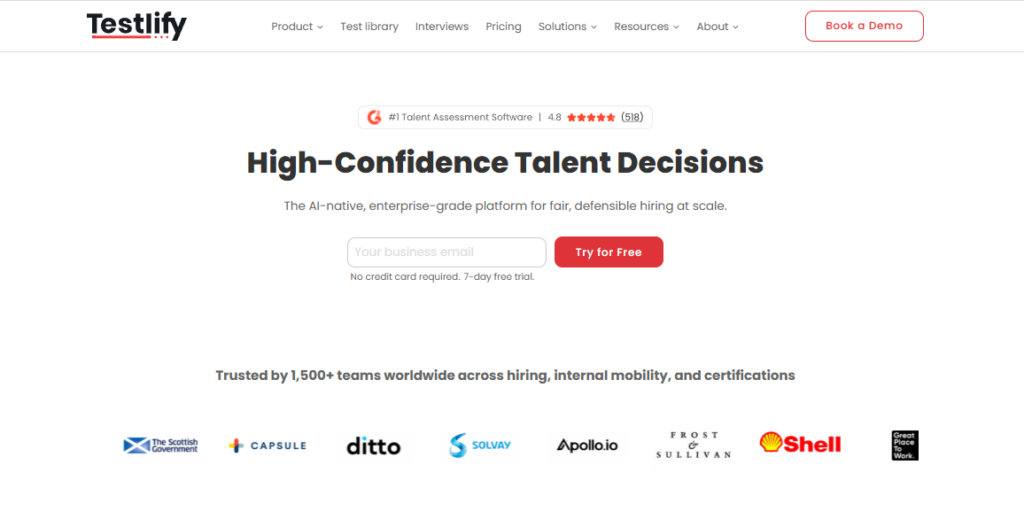
Testlify is a leading AI-native skills assessment and interviewing platform that helps organizations identify top talent globally. With 3,500+ skill tests, conversational AI interviews and 150+ interview templates available in 16+s, the platform enables companies to hire confidently across global talent markets.
Key highlights of Testlify include
- Conversational AI interviews across chat, voice, and video formats
- Massive test library of 3,500+ role-specific skill tests
- Psychometric tests to measure cognitive ability and behavioral traits
- Technical tests supporting 45+ programming languages
- Create custom assessments with 15+ multiple question types and weighted scoring
- Advanced anti-cheating and proctoring features
- Benchmarking analytics and AI insights
- Seamless integrations with 100+ ATS and HRMS platforms
- Mobile-friendly candidate experience
- White-label branding and customizable communication templates
- 24/7 personalized customer support through your desired communication channels

What is Jobma?
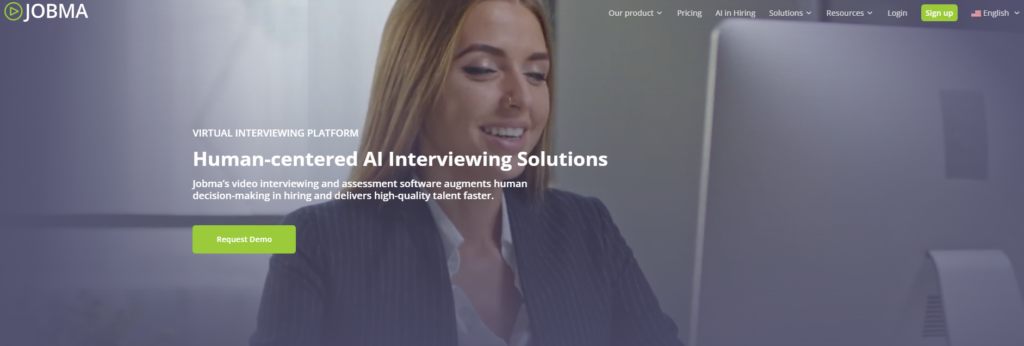
Jobma is an AI-powered video interviewing and candidate assessment platform designed to help organizations streamline remote hiring. The platform focuses on asynchronous and live video interviews, enabling recruiters to evaluate candidates efficiently while maintaining consistency and fairness in the hiring process.
By combining one-way video interviews, AI-powered scoring, coding assessments, and proctoring features, Jobma helps companies screen large candidate pools and identify qualified talent faster. The platform is particularly useful for organizations conducting remote hiring, global recruitment, or high-volume screening processes.
Key highlights of Jobma include
- One-way video interviews that allow recruiters to screen large numbers of candidates asynchronously
- Live video interviews with built-in scheduling and calendar synchronization
- AI-generated interview kits that automatically create role-specific interview questions
- Multi-format interview questions, including video, audio, written, multiple-choice, and coding questions
- AI-powered scoring that evaluates candidate responses and provides objective insights
- Multilingual transcription to review candidate responses across multiple languages
- AI proctoring to detect suspicious activity and maintain interview integrity
- Coding assessments supporting 20+ programming languages
- Panel interviewing capabilities that allow multiple stakeholders to participate in interviews
- Customizable branding for interview pages and candidate experience
Testlify vs Jobma: Quick Comparison
Jobma is primarily built as a video interviewing platform with AI-assisted scoring and proctoring, making it useful for organizations that want to conduct asynchronous and live video interviews at scale.
Testlify, on the other hand, is a comprehensive talent assessment and AI interviewing platform that combines resume screening, conversational AI interviews, skill assessments, proctoring, and advanced analytics in a single ecosystem.
Below is a high-level comparison of the two platforms:
Feature | Testlify | Jobma |
|---|---|---|
AI interview formats | Chat, voice, and video conversational AI interviews | Primarily one-way and live video interviews |
Assessment library | 3,500+ tests across 4,500+ job roles | Limited assessment library with coding kits |
Question formats | 15+ customizable question types | Video, audio, written, MCQ, and coding questions |
Resume screening | AI-powered resume screening with job-fit scoring | Not a core feature |
Anti-cheating tools | Dual camera proctoring, AI detection, screen recording, behavioral monitoring | AI proctoring with activity monitoring and live proctoring |
Analytics | Benchmarking analytics, AI overviews, and detailed reporting | AI scoring and interview insights |
Integrations | 100+ ATS and HRMS integrations | ATS integrations with scheduling and calendar sync |
Security and compliance | SOC 2 Type II, ISO 27001, GDPR | SOC 2 Type II, GDPR, CCPA, AI interview compliance laws |
Candidate experience | Conversational AI simulations, multilingual support, mobile-friendly | Structured video interviews with practice questions and retakes |
Best suited for | Technical hiring, campus recruitment, and high-volume hiring | Video interview-based screening workflows |
Overall, while both platforms offer valuable features for modern recruitment, Testlify stands out as a more comprehensive skills assessment and AI interviewing platform for skill-based hiring.
To understand why, we will explore the core capabilities of both platforms in detail to understand how they compare across key areas of the recruitment process.
Testlify vs Jobma: AI interview experience and depth
AI-powered interviews are becoming a central part of modern recruitment. They allow recruiters to evaluate candidates consistently, reduce scheduling challenges, and analyze responses using structured evaluation criteria. Both Testlify and Jobma offer AI-driven interviewing capabilities, but their approaches differ significantly in terms of depth, flexibility, and realism.
Testlify AI interview experience
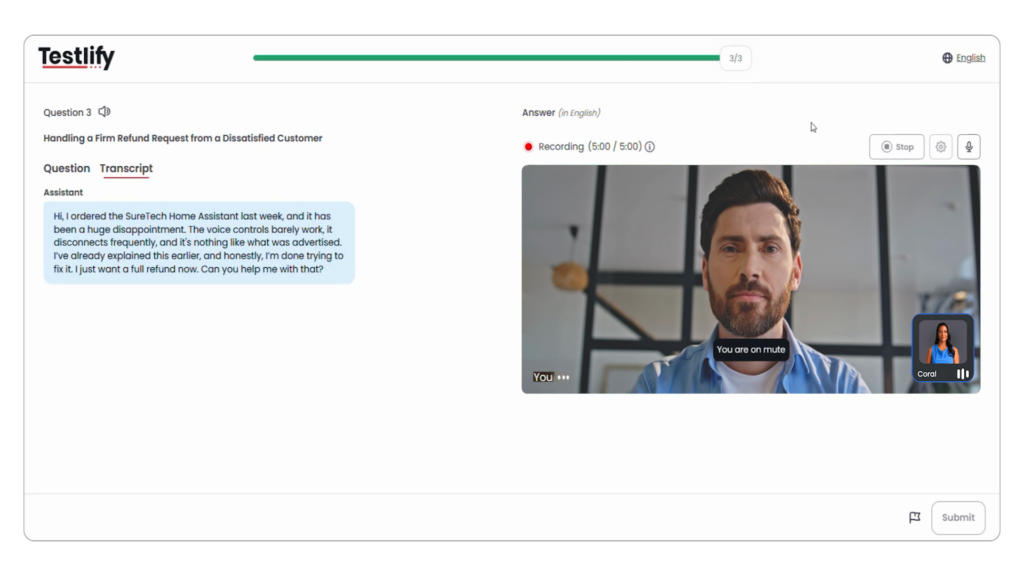
Testlify uses a conversational AI to conduct screening interviews at scale. Instead of simply answering recorded questions, candidates engage in dynamic conversations that mirror real workplace situations.
For example, a candidate applying for a customer support role will be tasked with resolving a billing complaint via chat, while a sales candidate could respond to a voice AI interviewer designed to evaluate persuasion and tone. Video interviews can also include AI avatars that guide candidates through realistic job scenarios.
Testlify’s AI interviewer analyzes responses across multiple dimensions, including:
- Answer relevance and accuracy
- Communication clarity and tone
- Confidence and emotional intelligence
- Verbal and non-verbal cues
- Behavioral patterns
This allows recruiters to assess not just what candidates say, but how they think, communicate, and react in realistic situations, resulting in deeper hiring insights.
Jobma AI interview experience
Jobma primarily focuses on structured video interviewing, offering both one-way video interviews and live video interviews.
In one-way interviews, candidates receive a list of questions and record their responses using video, audio, or written formats. Recruiters can then review these responses asynchronously, allowing hiring teams to screen large candidate pools efficiently.
Jobma also offers AI-generated interview kits, which automatically create question sets based on job descriptions. These kits provide a structured interview framework that helps standardize candidate evaluations.
The platform uses AI to score candidate responses and generate transcriptions, helping recruiters review answers quickly and compare candidates objectively. Jobma also supports live video interviews with built-in scheduling, recording, and panel interview features, enabling real-time discussions with shortlisted candidates.
Verdict
Both platforms offer AI-powered interviews, but their capabilities differ in depth. Jobma excels in video interview management and structured asynchronous screening, making it useful for organizations that primarily rely on recorded interviews.
However, Testlify provides a more wholesome AI interviewing experience by combining conversational simulations, chat, voice, and video interactions, and behavioral analysis into a single system.
This makes it particularly effective for evaluating communication, problem-solving ability, and real-world job readiness, giving hiring teams a more comprehensive understanding of candidate potential.
Testlify vs Jobma: Test library
A strong assessment library is essential for organizations that want to evaluate candidates based on real skills rather than resumes alone. The depth and flexibility of the assessment ecosystem can significantly impact how effectively recruiters identify top talent. Both Testlify and Jobma offer assessment capabilities, but their scope and specialization differ.
Testlify test library
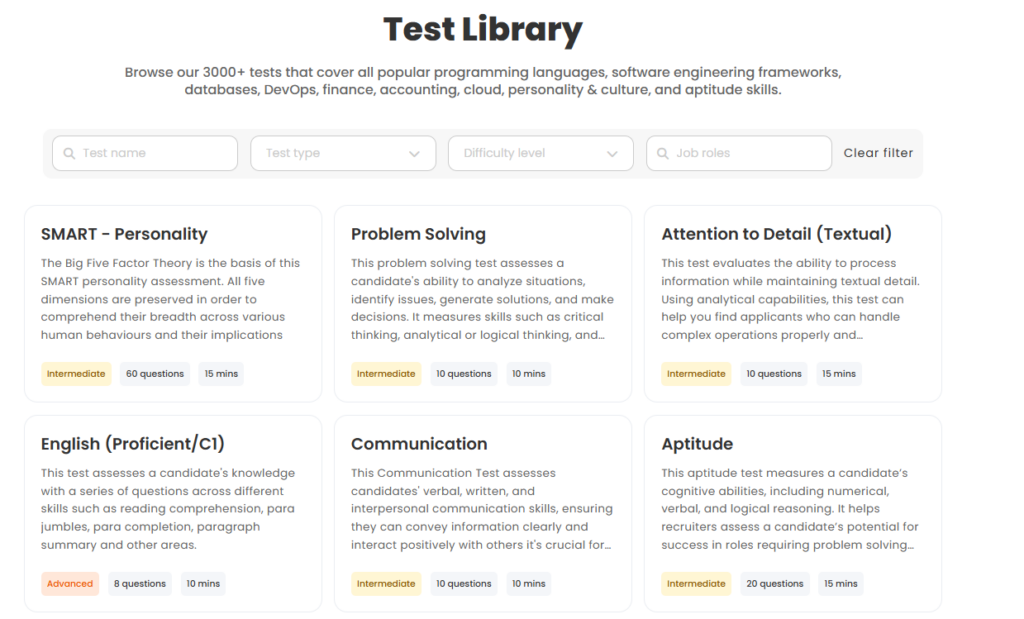
Testlify offers one of the most comprehensive test libraries in the pre-employment testing space, with 3,500+ tests covering over 4,500 job roles across 50+ industries. This extensive library enables organizations to evaluate candidates across a wide variety of positions, from technical roles to customer-facing jobs and operational positions.
The platform includes multiple assessment categories designed to evaluate both technical and behavioral competencies:
- Cognitive ability tests (e.g., problem-solving, logical reasoning, attention to detail)
- Role-specific tests (e.g., tailored assessments for various job roles)
- Blue-collar hiring tests (e.g., practical skill assessments for blue-collar roles)
- Programming tests (e.g., coding, algorithm design, technical proficiency)
- Software skills tests (e.g., Microsoft Office, CRM systems, other software tools)
- Psychometric tests (e.g., personality traits, emotional intelligence, behavioral tendencies)
- Situational judgment tests (e.g., decision-making, conflict resolution, judgment in real-life situations)
- Live coding tests (e.g., real-time coding challenges and assessments)
- Typing tests (e.g., speed, accuracy, data entry proficiency)
- Language tests (e.g., proficiency in speaking and writing specific languages)
In addition to its large test library, Testlify allows recruiters to build custom assessments using 25+s, including
- Multiple Choice Questions (MCQs)
- Open-ended and descriptive questions
- AI-powered Chat simulation
- AI-powered Video interview
- AI-powered Audio interview
- Custom coding questions and live coding tests
- Fill-in-the-blanks
- File upload questions
- Google Docs, Sheets, and Slides questions
- Microsoft Office questions
- Rating, number, and date questions
- Qualifier questions
This flexibility makes Testlify particularly suitable for technical hiring, campus recruitment, and high-volume screening, where recruiters need scalable assessments across multiple job categories.
Jobma test library
Jobma provides limited skill assessments primarily designed to complement its video interviewing platform. Recruiters can include various question formats in interview kits, such as video, audio, written, multiple-choice, and coding questions.
The platform also offers coding assessments that support more than 20 programming languages, allowing hiring teams to evaluate candidates’ technical skills in areas such as problem-solving, debugging, and programming knowledge.
While Jobma supports multi-format interview questions and coding tests, it does not feature a large library of role-specific tests as seen in platforms such as Testlify.
Verdict
Both platforms support candidate assessments, but their depth varies significantly. Jobma provides useful coding challenges and multi-format interview questions that complement its video interview workflows.
However, Testlify offers a far more extensive and flexible assessment ecosystem, with thousands of role-specific tests, psychometric evaluations, and customizable question formats.
This breadth allows organizations to evaluate candidates across a wide range of competencies, making Testlify a stronger choice for enterprises.
Testlify vs Jobma: Anti-cheating and proctoring capabilities
As remote hiring becomes more common, maintaining the integrity of online assessments and interviews has become a major concern for recruiters. Without proper safeguards, candidates may use external assistance, AI tools, or unauthorized resources during evaluations. To address this challenge, modern hiring platforms incorporate proctoring and anti-cheating technologies that monitor candidate behavior and ensure fair assessments.
Both Testlify and Jobma provide proctoring features, but they differ in the depth of monitoring, automation, and fraud detection capabilities.
Testlify anti-cheating and proctoring features
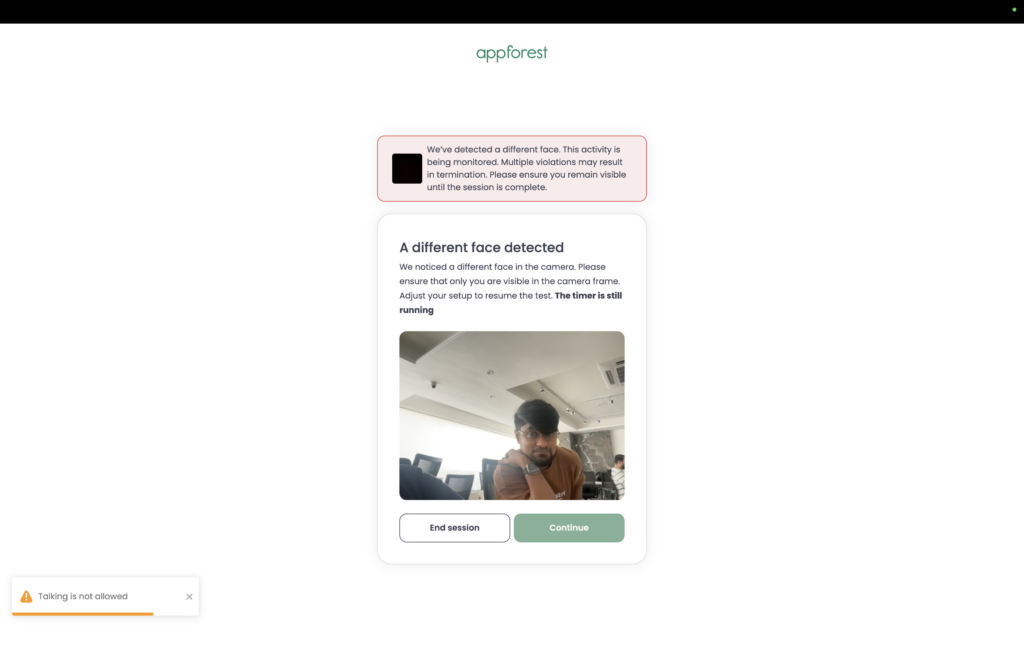
Testlify offers a comprehensive set of anti-cheating tools designed to protect the integrity of remote hiring processes. The platform uses a combination of AI-based monitoring, behavioral tracking, and environment verification to ensure candidates complete assessments honestly.
Some of the key proctoring features include:
- Dual camera proctoring to monitor candidates from multiple angles
- Screen recording to track candidate activity during assessments
- AI assistance detection to identify the use of external AI tools
- Face detection and photo ID verification to confirm candidate identity
- Copy-paste tracking to prevent candidates from copying answers
- Mouse-out and tab switching detection to monitor suspicious activity
- Full-screen enforcement to prevent candidates from opening other applications
- IP tracking and location monitoring for verification
- Question randomization to reduce answer sharing
- Live environment checks and system requirement validation
These capabilities help organizations maintain a highly secure testing environment, particularly for technical hiring, campus recruitment, and large-scale remote assessments where cheating risks are higher.
Jobma anti-cheating and proctoring features
Jobma also incorporates AI-based proctoring tools to maintain fairness during video interviews and assessments. Its system acts as a virtual invigilator that monitors candidate activity throughout the interview process.
The platform tracks several behavioral indicators during interviews, including:
- Detection of multiple faces appearing on screen
- Active window tracking to identify if candidates switch tabs
- Monitoring time spent per question
- Tracking device and location data
- Detecting copy and paste actions
Jobma also offers live proctoring, where a human invigilator can monitor interviews in real time and intervene if suspicious behavior occurs. This approach can be particularly useful in highly regulated hiring environments where manual supervision is required.
Verdict
Both platforms provide important safeguards to protect the integrity of remote hiring processes. Jobma’s AI monitoring and live proctoring features work well for organizations that focus primarily on video interview integrity.
However, Testlify offers a more extensive and advanced anti-cheating framework, with features such as dual camera monitoring, AI assistance detection, screen recording, and detailed behavioral tracking. These capabilities make it better suited for organizations conducting large-scale skill assessments, technical hiring, and remote campus recruitment, where maintaining strict evaluation integrity is critical.
Testlify vs Jobma: AI scoring, analytics, and reporting
Accurate candidate evaluation depends not only on the assessment itself but also on how effectively the platform analyzes and presents results. AI-driven scoring and analytics help recruiters move beyond subjective judgment and make hiring decisions based on structured insights and measurable performance data.
Both Testlify and Jobma use artificial intelligence to evaluate candidate responses, but the depth of analytics and reporting capabilities differs significantly between the two platforms.
Testlify AI scoring and analytics
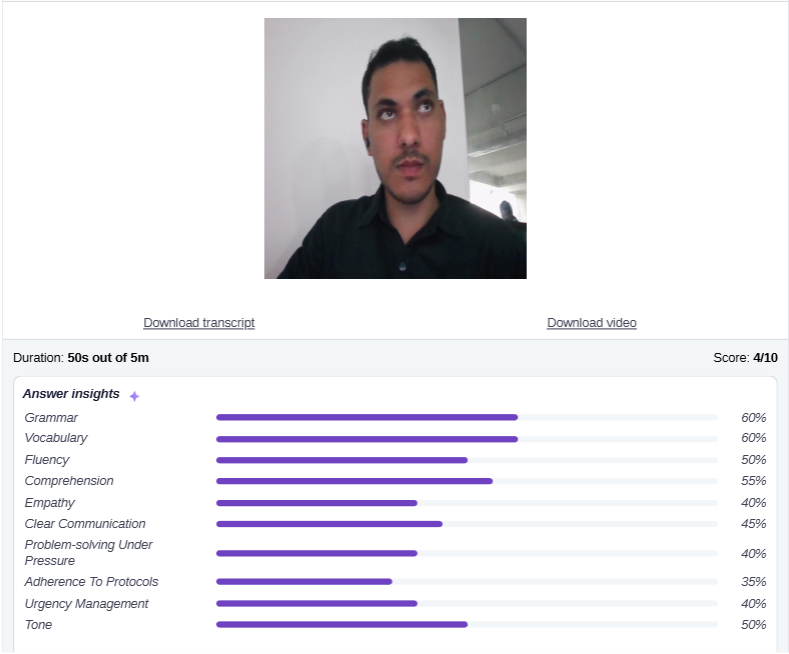
Testlify uses AI to analyze candidate performance across assessments and interviews, providing recruiters with detailed, multi-dimensional insights into candidate abilities.
The platform evaluates responses based on several parameters, including:
- Answer relevance and accuracy
- Communication clarity and tone
- Confidence levels and emotional intelligence
- Behavioral patterns and decision-making ability
Testlify’s AI system generates automated scoring reports that break down performance by skill, question type, and overall assessment results, helping recruiters quickly identify high-performing candidates.
One of Testlify’s standout features is benchmarking analytics, which allows recruiters to compare candidates against industry standards or other applicants in the same hiring pipeline. This makes it easier to identify top performers and recognize skill gaps within the talent pool.
Additionally, the platform provides AI overviews, which summarize candidate performance and highlight strengths and improvement areas. These summaries help hiring managers quickly review candidates without analyzing every individual response.
Testlify also enables recruiters to export reports in formats such as PDF, Excel, or CSV, making it easy to share insights with stakeholders and hiring teams for collaborative decision-making.
Jobma AI scoring and analytics
Jobma also incorporates AI scoring to assist recruiters in evaluating candidate responses during video interviews and assessments.
The platform analyzes candidate responses using transcriptions generated from video or audio recordings, allowing recruiters to review answers quickly and objectively. AI scoring provides an additional layer of evaluation by identifying response quality and assigning scores based on predefined criteria.
Jobma also generates AI-powered summaries and insights that help recruiters understand candidate communication clarity, confidence, and collaboration potential based on recorded responses.
While these insights can help streamline interview review, Jobma’s analytics capabilities are primarily centered around video interview evaluation rather than a comprehensive assessment analytics ecosystem.
Verdict
Both platforms use AI to simplify candidate evaluation, but they differ in analytical depth. Jobma provides useful AI scoring and summaries for video interview responses, helping recruiters review candidates more efficiently.
However, Testlify delivers a far more comprehensive analytics framework, combining AI scoring, behavioral analysis, benchmarking insights, and detailed reporting. This deeper analytical approach enables hiring teams to make more informed, data-driven hiring decisions, especially when evaluating large candidate pools or complex skill requirements.
Testlify vs Jobma: Resume screening
One of the biggest challenges in modern recruitment is managing the sheer volume of applications. Recruiters often spend hours manually reviewing resumes before candidates even reach the assessment or interview stage. AI-powered resume screening and hiring automation tools help organizations streamline this process by automatically identifying qualified candidates and filtering out unqualified applicants.
When comparing Testlify vs Jobma, one of the key differences lies in how deeply each platform supports early-stage candidate screening and workflow automation.
Testlify resume screening
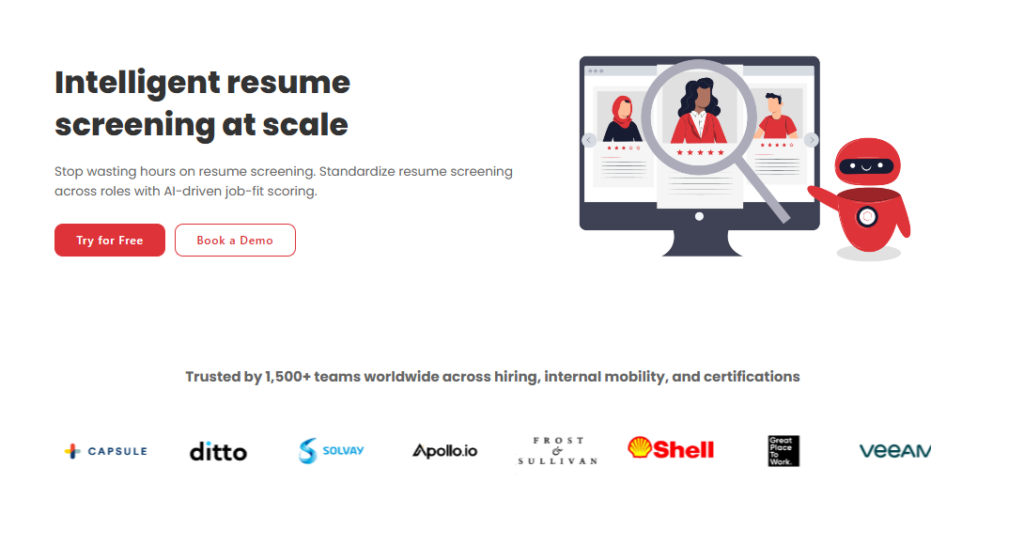
Testlify includes an AI resume screener designed to help recruiters evaluate large candidate pools quickly and consistently.
Instead of manually reviewing resumes, Testlify automatically analyzes candidate profiles based on role-specific criteria such as required skills, experience, and qualifications. The platform then generates job-fit scores and match labels like high, medium, or low to help recruiters prioritize the most relevant candidates.
The screening process works as follows:
- Resume retrieval from ATS: Testlify pulls candidate resumes directly from the organization’s applicant tracking system.
- AI job-fit analysis: The platform evaluates resumes against predefined job requirements.
- Automated shortlisting: Candidates who meet the criteria are automatically moved to the assessment stage.
- Automated rejection: Candidates who do not meet the requirements can be filtered out automatically.
- Result synchronization: Resume scores and assessment results are synced back to the ATS for easy review.
This automation significantly reduces manual screening time while ensuring candidates are evaluated using consistent criteria. It also helps recruiters focus their efforts on high-potential applicants earlier in the hiring process.
Jobma resume screening
Jobma primarily focuses on video interviewing and candidate evaluation after the screening stage, rather than AI-powered resume analysis.
While the platform offers automation features such as automated candidate invitations, interview kits, and AI scoring, it does not provide a dedicated AI resume screening system that evaluates candidates before they reach the interview stage.
Recruiters typically use Jobma alongside an ATS that handles resume screening, after which shortlisted candidates are invited to complete video interviews or assessments on the platform.
Verdict
Jobma excels at automating video interviews and candidate evaluation once applicants have been shortlisted, but does not offer resume screening features
Testlify offers comprehensive resume screening features and allows organizations to more effectively automate the candidate screening process. This makes it particularly valuable for recruiters tasked with identifying top talent from large applicant pools.
Testlify vs Jobma: Integrations and workflow compatibility
Recruitment platforms rarely operate in isolation. Most organizations rely on applicant tracking systems (ATS), HR management tools, and collaboration platforms to manage the entire hiring lifecycle. Because of this, seamless integrations and workflow compatibility are essential for ensuring that hiring teams can move candidate data across systems without manual effort.
Both Testlify and Jobma support integrations with external recruitment tools, but the breadth of integrations and level of workflow automation differ.
Testlify integrations and workflow capabilities
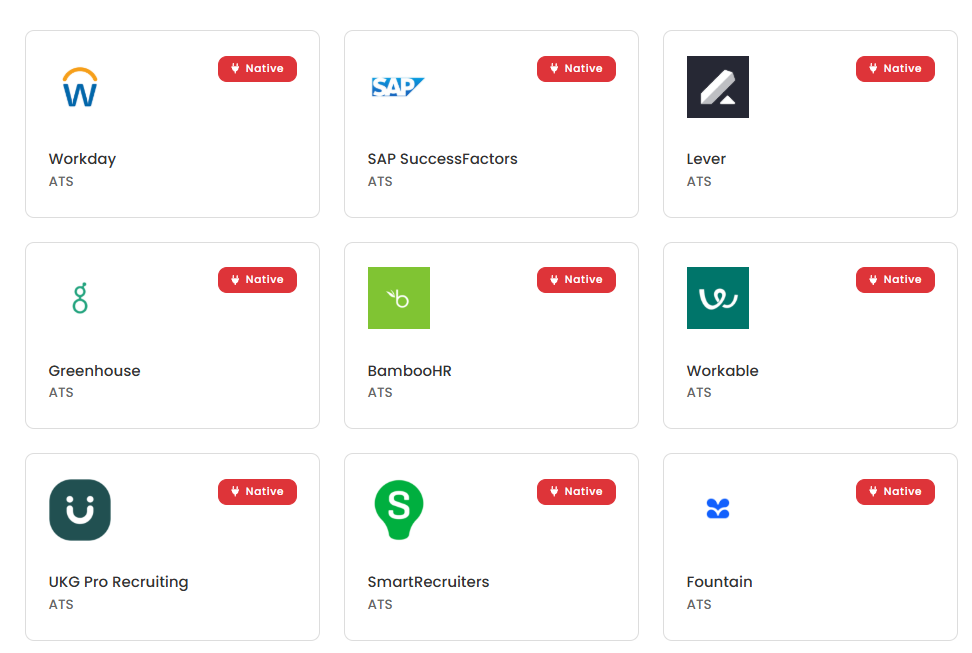
Testlify is designed to integrate smoothly with existing recruitment technology stacks, enabling organizations to connect assessments and interviews directly with their applicant tracking systems.
The platform supports integrations with 100+ ATS and HR tools, allowing recruiters to import candidate profiles, launch assessments, and sync results automatically across hiring systems.
Key benefits include:
- Automatic candidate import from ATS platforms
- Assessment results synced back to the ATS
- Centralized candidate profiles and performance reports
- Reduced manual data entry and administrative tasks
- Improved collaboration between recruiters and hiring managers
Because Testlify integrates both resume screening and candidate assessments into existing hiring workflows, it allows organizations to maintain a centralized view of candidate performance from application to final evaluation.
Jobma integrations and workflow capabilities
Jobma also supports ATS integrations to help recruiters incorporate video interviews into their existing recruitment processes.
Through these integrations, recruiters can invite candidates to complete video interviews directly from their ATS and store interview recordings and evaluation results within the same system.
Jobma also includes workflow features designed specifically for interview coordination, such as:
- Built-in scheduling tools for live interviews
- Google Calendar and Outlook synchronization
- Automated interview invitations
- Panel interview collaboration
These capabilities help streamline the interview stage of the hiring process and reduce scheduling conflicts between recruiters and candidates.
Verdict
Testlify offers broader workflow integration across the entire hiring pipeline, including resume screening, assessments, AI interviews, and reporting. With support for over 100 ATS integrations and deeper automation capabilities, Testlify provides a more comprehensive solution for organizations looking to streamline their end-to-end hiring process.
Testlify vs Jobma: Security, compliance, and data governance
When organizations evaluate hiring platforms, security and compliance are critical considerations. Recruitment platforms handle large volumes of sensitive candidate data, including resumes, personal information, assessment results, and interview recordings. To maintain trust and meet regulatory requirements, platforms must follow strict data protection and governance standards.
Both Testlify and Jobma prioritize data security and regulatory compliance, but they approach governance frameworks slightly differently.
Testlify security and compliance
Testlify places a strong emphasis on enterprise-grade security and data governance. The platform follows globally recognized security standards and provides robust administrative controls to ensure that candidate data remains protected throughout the hiring process.
Key security and compliance capabilities include:
- SOC 2 Type II certification for secure data handling and operational integrity
- ISO 27001 certification, demonstrating strong information security management practices
- GDPR compliance, ensuring responsible data processing and privacy protection for global hiring
- Advanced admin management and access controls to manage user permissions and platform access
These measures ensure that Testlify can be safely used by organizations operating in highly regulated industries while maintaining strict privacy and security standards.
Jobma security and compliance
Jobma also maintains strong security and compliance practices designed to protect candidate data and ensure responsible use of AI in hiring.
The platform adheres to several important regulatory frameworks, including:
- SOC 2 Type II certification for data security and operational controls
- GDPR and CCPA compliance to meet global privacy standards
- Compliance with the Illinois Artificial Intelligence Video Interview Act (AIVIA) and New York City Automated Employment Decision Tools (AEDT) law, which regulate the use of AI in recruitment
These compliance measures help ensure that organizations using Jobma maintain ethical AI practices while protecting candidate data throughout the interview process.
Verdict
Both Testlify and Jobma demonstrate strong commitments to security and regulatory compliance. Jobma’s adherence to AI-specific regulations such as AIVIA and AEDT highlights its focus on responsible AI usage within video interviewing.
However, Testlify offers a broader enterprise-grade security framework, combining SOC 2 Type II, ISO 27001, and GDPR compliance with advanced data governance and administrative controls. This makes it a strong choice for organizations that require strict data protection standards while managing large-scale global hiring operations.
Testlify vs Jobma: Candidate experience and branding
Candidate experience plays an important role in modern recruitment. An intuitive candidate experience not only improves assessment completion rates but also strengthens employer branding. Platforms that provide flexible interview formats, mobile accessibility, and personalized branding help companies create a more engaging experience for applicants.
Both Testlify and Jobma offer features designed to improve the candidate journey, but they differ in how interactive and customizable the experience is.
Testlify candidate experience and customization
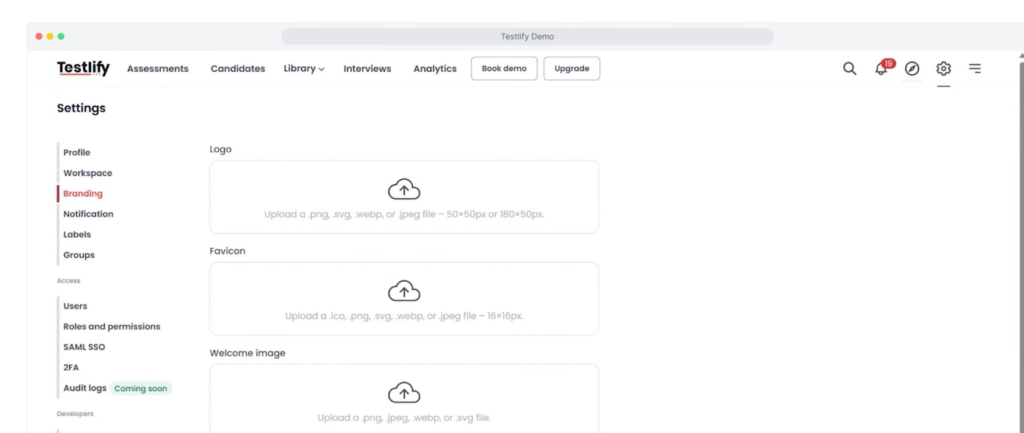
Testlify focuses on creating a modern and interactive candidate experience through conversational AI interviews and imbuing recruiters with the freedom to customize the platform’s interface to their liking.
Testlify also supports several features that enhance the candidate journey:
- Mobile-friendly interface, allowing candidates to complete assessments from any device
- Multilingual support across 15+ langugages to evaluate candidates across global talent pools
- White-label branding, enabling companies to customize the platform with logos, branded emails, and personalized communication templates
- Flexible assessment formats that allow candidates to demonstrate their strengths through different question types
These capabilities help companies create a hiring process that feels professional, engaging, and aligned with their employer brand.
Jobma candidate experience and customization
Jobma focuses on providing a simple and accessible video interview experience for candidates.
The platform allows candidates to complete one-way video interviews without downloading software or creating an account, which reduces friction and makes it easier for applicants to participate. Candidates can also access interviews through computers or mobile devices.
Jobma includes several features designed to improve the interview experience:
- Practice questions so candidates can familiarize themselves with the platform before starting the interview
- Retake options that allow candidates to re-record answers for certain questions
- Think time controls, enabling recruiters to provide candidates time to prepare before answering
- Customizable interview branding with company logos, colors, and banners
These features help candidates feel more comfortable during the interview process and reduce the pressure associated with recorded interviews.
Verdict
Both platforms aim to provide a smooth candidate experience. Jobma excels in delivering a simple and accessible video interview process, with features like practice questions and retake options that help candidates perform confidently.
However, Testlify provides a more interactive and customizable candidate experience through conversational AI interviews, multilingual assessments, and white-label branding capabilities. These features create a more engaging and realistic evaluation environment, helping candidates demonstrate their true abilities while strengthening employer branding.
Testlify vs Jobma: Pricing and scalability
Pricing and scalability are key considerations when choosing a hiring platform, especially for organizations managing large candidate volumes. Recruitment teams need solutions that not only fit their budget but also scale as hiring demands grow.
Flexible pricing models, transparent cost structures, and enterprise-ready capabilities often determine whether a platform can support long-term hiring strategies.
When comparing Testlify vs Jobma, Testlify provides a transparent, scalable pricing structure designed for companies of all sizes, while Jobma generally offers custom pricing based on organizational requirements.
Testlify pricing and scalability
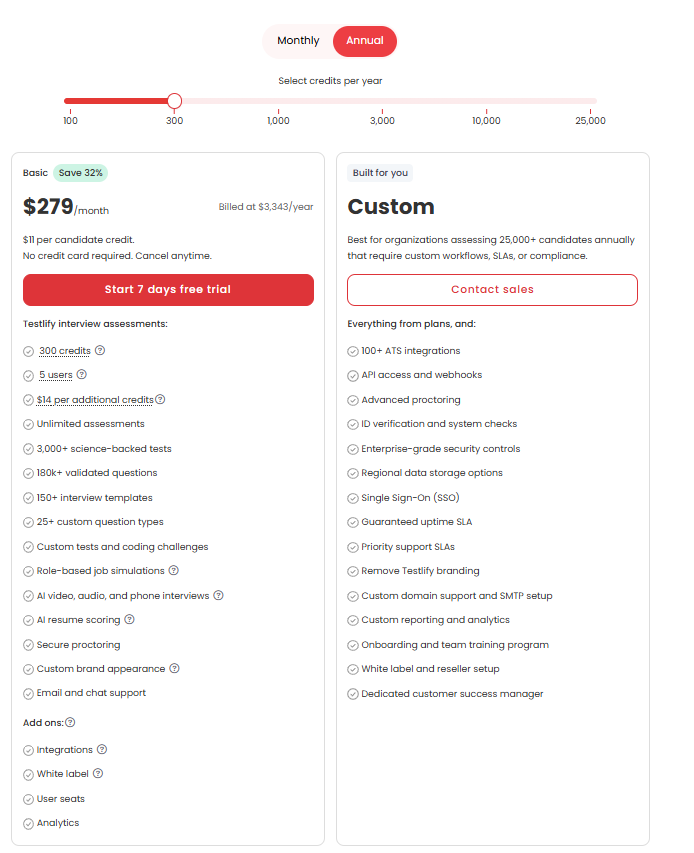
Testlify offers multiple pricing plans that allow organizations to choose a plan based on their hiring volume and team size. The platform uses a credit-based model, where each candidate assessment consumes a credit.
Key pricing plans include:
- Starter plan: Ideal for small teams and startups, this plan starts at $198/monthnth (billed at $1,663/year) and includes 100 candidate credits at $17 per credit with support for 3 users.
- Starter: Designed for growing businesses, the Starter starts at $279/month (billed at $3,343/year) and includes 300 credits at $11 per credit with support for 5 users.
- Starter: Built for scaling teams, this plan costs $699/month (billed at $4,192/year) and includes 1,000 credits at $8 per credit with 10 users.
- Premium plan: Suited for high-growth organizations, the Premium plan includes 3,000 credits and supports 20 users, with pricing available upon contacting the sales team.
- Enterprise plan: Designed for large enterprises, this plan includes 10,000 credits and supports 30 users with pricing available upon contacting the sales team.
- Enterprise Plus plan: Designed for large-scale hiring programs, this plan includes 25,000 credits and supports up to 40 users, with pricing details available after contacting the sales team.
- Unlimited plan: For companies seeking unrestricted access, Testlify offers an unlimited plan that includes unlimited candidate credits and full platform functionality, with pricing available on request from the sales team.
This tiered pricing model allows companies to scale their hiring operations gradually while maintaining predictable costs. Organizations can start with smaller plans and expand as their recruitment needs increase.
Because Testlify combines resume screening, assessments, AI interviews, and reporting in one platform, it can replace multiple hiring tools, which may help reduce overall recruitment technology costs.
Jobma pricing and scalability
Jobma typically offers custom pricing based on organizational needs, such as the number of users, hiring volume, and required features.
Since Jobma focuses primarily on video interviewing and candidate evaluation, companies often integrate it with other recruitment tools like ATS platforms or assessment systems. As a result, the overall cost of the hiring stack may vary depending on the additional tools required.
Jobma’s pricing flexibility can work well for organizations that want a tailored video interviewing solution, particularly those that already use other recruitment technologies for resume screening and skill assessments.
Verdict
Both platforms can scale to support growing hiring needs, but their pricing approaches differ. Jobma’s custom pricing offers flexibility for organizations seeking a dedicated video interviewing tool.
However, Testlify provides more transparent and scalable pricing, with clearly defined plans that support startups, growing businesses, and enterprise hiring teams. Because Testlify combines assessments, AI interviews, resume screening, and analytics on a single platform, it delivers higher ROI.
Final thoughts
Both Testlify and Jobma are designed to help recruiters evaluate candidates more efficiently and reduce the time spent on manual screening. Jobma does a good job of streamlining video interviews, making it easier for hiring teams to review candidate responses and manage interview workflows.
Testlify, however, goes beyond interviews by combining resume screening, skill assessments, conversational AI interviews, proctoring, and analytics in a single platform. This gives recruiters a more complete view of candidate skills before moving forward in the hiring process. Testlify vs Jobma
If you want to see how Testlify can help your team evaluate candidates more accurately and hire faster, book a demo with Testlify and explore the platform in action
Frequently asked questions (FAQs)

Related resources
View all
Video Interviewing Tools Comparison
Testlify vs Talently.ai: Detailed Comparison
Video Interviewing Tools Comparison
Testlify vs VeloxHire: Which AI interviewing platform is best for recruiters?
Video Interviewing Tools Comparison
Testlify vs Ribbon.ai: Which is the best AI video interviewing platform
Video Interviewing Tools Comparison
Testlify vs Metaview: Which AI recruiting platform in 2026?
Video Interviewing Tools Comparison
Testlify vs Willo: Which Interviewing Platform is Best for You?
Video Interviewing Tools Comparison
Testlify vs Sapia.ai: Which AI Interviewing Platform is Best for You?
Get started.
Hire on proof, not resumes.
Run your first skills-based assessment free — no credit card required.