
Testlify vs BrightHire: Which interviewing platform is best for recruiters
Compare Testlify vs BrightHire to explore their AI interview capabilities, skill assessments, candidate evaluation, proctoring, and integrations, and discover which platform best supports your hiring goals.
Interview answers today are often polished, rehearsed, and algorithmically assisted. A candidate can prepare for hours with AI copilots that simulate interview questions, refine responses, and even help craft narratives designed to impress hiring managers. Therefore traditional interviews have become less about measuring ability and more about measuring preparation.
This shift has forced organizations to rethink how they evaluate talent and adopt skills assessment and interviewing tools that can surface genuine skills, contextual thinking, and real-world problem-solving, not just well-practiced answers.
Some platforms now pair interview intelligence, which records and analyzes interview conversations, with AI screening interviews and fraud signals. Others evaluate candidates through validated skill tests and immersive conversational AI interviews in one workflow.
Testlify fits teams that need proof of skills, while BrightHire fits teams that want to run and document interviews. This guide compares both platforms feature by feature to show which one better helps recruiters identify top talent.
 ChatGPT
 Gemini
 Claude
 Grok
 Perplexity
TL;DR;
- Testlify measures skills with 3,500+ validated tests and conversational AI interviews across chat, voice, and video.
- BrightHire, now part of Zoom, combines AI application review, an AI interviewer called BrightHire screen, and live interview intelligence.
- BrightHire now scores AI screening interviews against custom scoring criteria and flags fraud signals such as impersonation and AI-assisted answers.
- BrightHire’s website lists no validated skill test library, coding tests, or white-label option.
- Testlify connects with 100+ applicant tracking systems, known as ATS platforms, and HR tools, while BrightHire lists 18 ATS integrations plus video, chat, and AI tool connections.
- Choose Testlify to verify what candidates can do, and choose BrightHire to improve how interviewers run and document conversations.

Understanding Testlify and BrightHire
Before comparing the two platforms in detail, it is important to understand the role each plays in the hiring process. While both tools use AI to support recruitment teams, they are built with different priorities in mind.
What is Testlify and how does it work?
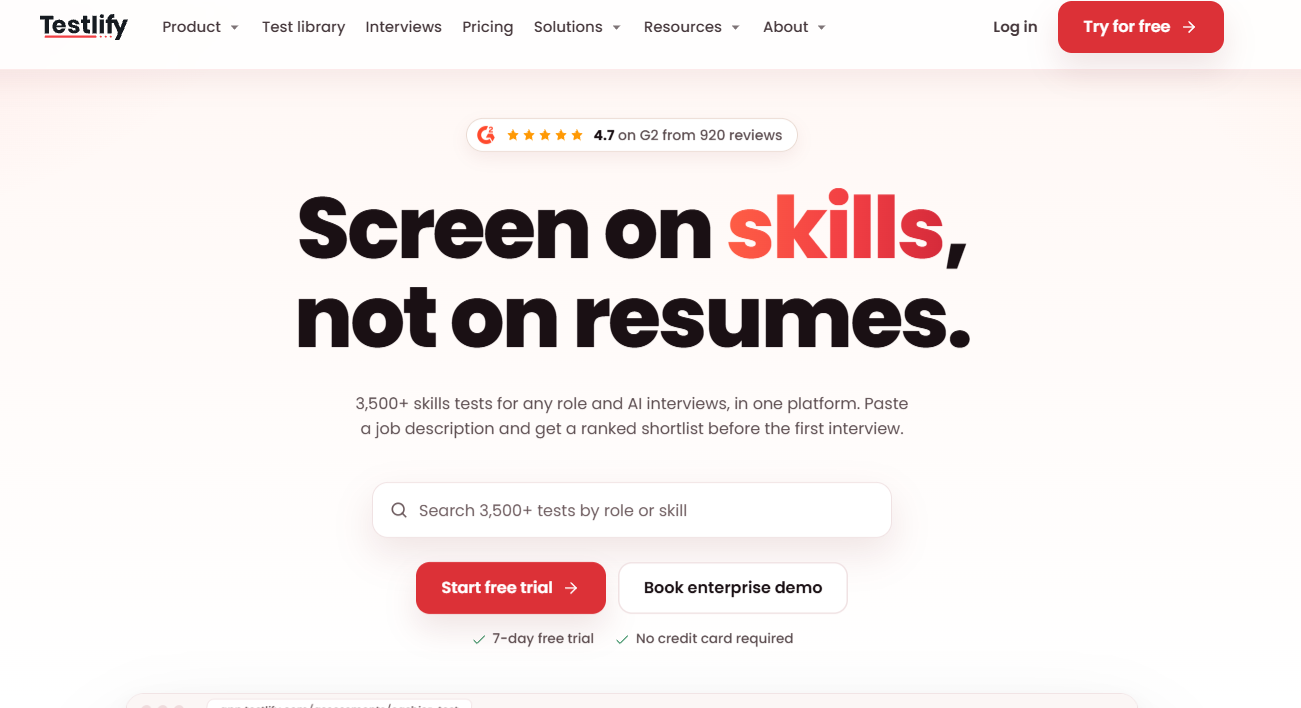
Testlify is an AI-native skills assessment and interviewing platform designed to help organizations evaluate candidates through structured interviews and validated skill tests.
The platform enables recruiters to assess candidates using conversational AI interviews across chat, voice, and video formats, allowing hiring teams to simulate realistic job scenarios and evaluate how candidates think, communicate, and solve problems.
In addition to AI interviews, Testlify offers a library of over 3,500 assessments covering more than 4,500 job roles across 50+ industries, helping companies measure technical skills, cognitive ability, behavioral traits, and job-specific competencies.
With built-in anti-cheating measures, automated scoring, and detailed candidate reports, Testlify allows hiring teams to move beyond intuition and make hiring decisions based on measurable skills and performance.
What is BrightHire and how does it work?
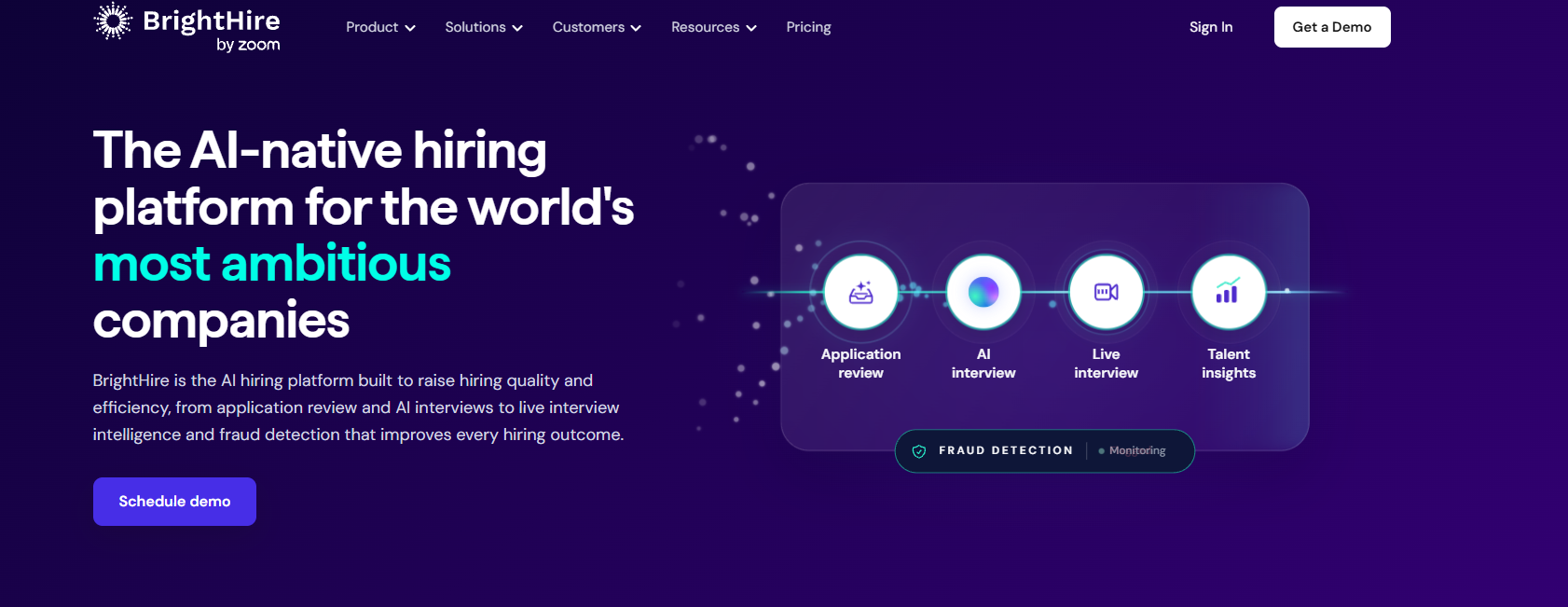
BrightHire is an AI-native hiring platform that covers application review, AI screening interviews, live interview intelligence, and candidate fraud detection. The company now operates as part of Zoom and markets its product as BrightHire by Zoom.
The platform sells three products that work alone or together:
- BrightHire inbound reviews applications against a rubric, which is a set of scoring criteria that the hiring team builds from the job description
- BrightHire screen runs two-way AI interviews by voice or video
- Interview intelligence records live interviews, writes AI notes, and fills in interviewer scorecards.
BrightHire built its reputation on interview intelligence, so it offers no library of validated skill tests or coding assessments.
Interview design and candidate evaluation
A SHRM Labs report on AI-assisted interview cheating cites data from nearly 20,000 interviews in which 38.5% of candidates showed signs of cheating. That number tells recruiters that a confident answer no longer proves a capable hire. Hiring teams now need platforms that verify skills, not just platforms that record conversations.
A well-designed interview should do more than simply guide a conversation. It should allow recruiters to measure how candidates think, respond to real-world situations, and demonstrate the skills required for the role. This is where Testlify and BrightHire take very different approaches.
Testlify focuses on structured candidate evaluation through conversational AI interviews and validated skill assessments. BrightHire, on the other hand, focuses on running structured interviews at scale, from AI-led screening calls to live interviews with real-time guides and AI notes.
How Testlify designs skills-based interviews
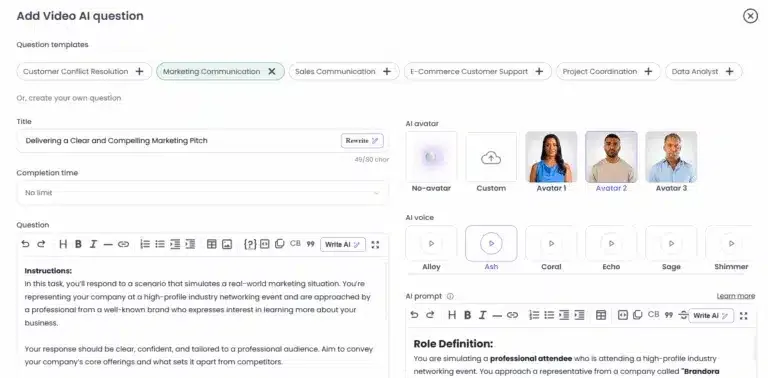
Testlify helps recruiters build structured interviews that evaluate real candidate ability rather than relying only on resumes and traditional interviews.
Recruiters can create role-specific interview flows and combine them with skill assessments to evaluate candidates across multiple dimensions. Conversational AI interviews simulate realistic workplace scenarios, allowing recruiters to observe how candidates think and respond in context.
Key capabilities include:
- Conversational AI interviews across chat, voice, and video formats
- 150+ role-specific interview templates designed to replicate real workplace situations
- Access to 3,500+ validated assessments covering 4,500+ job roles
- Multiple question formats, including MCQs, open-ended responses, coding tasks, file upload, and more
- AI-powered scoring with manual review options for balanced candidate evaluation
- Detailed candidate reports that highlight strengths, skill gaps, and overall performance
- Weighted scoring to ensure critical skills carry more weight in the final candidate score.
- 18+ built-in proctoring and anti-cheating measures to ensure assessment integrity
- Benchmarking analytics to compare candidates against industry standards
How BrightHire runs AI and live interviews
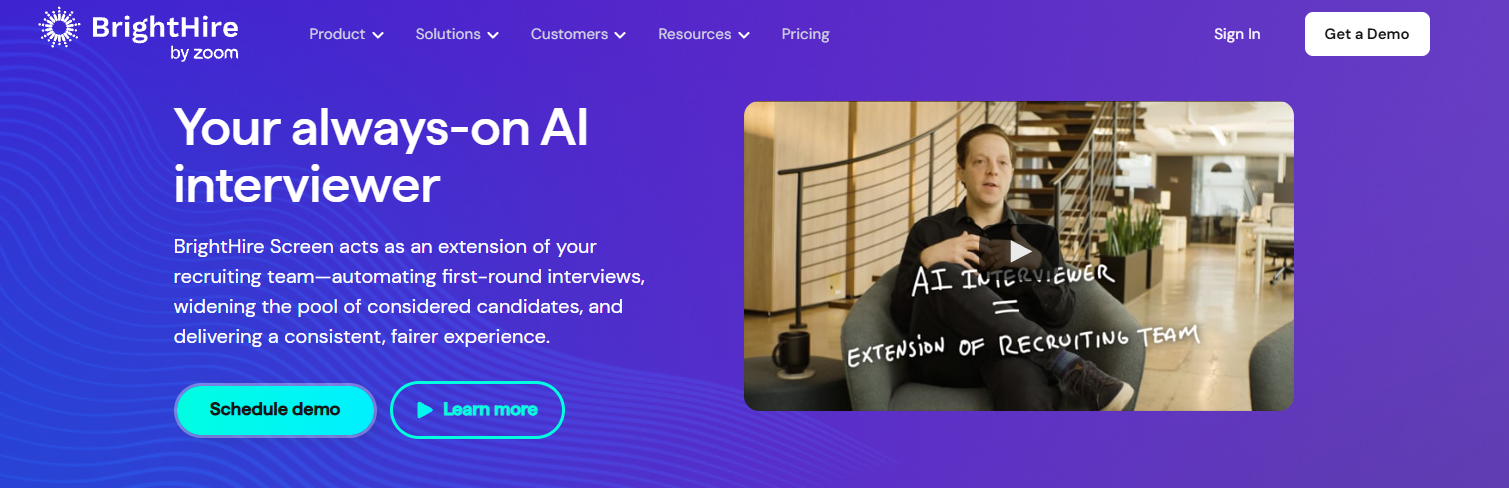
BrightHire builds its interview tools around structured hiring and consistency. Recruiters can generate interview plans from job descriptions and intake notes, and BrightHire Screen then asks every candidate the same role-relevant questions in a first-round AI interview.
Each AI interview adapts with follow-up questions, scores answers against the team’s rubric, and produces a summary, transcript, and audio recording for review. During live interviews, BrightHire supplies real-time guides and interviewer coaching, but it does not test skills through multiple-choice questions, coding tasks, or job simulations.
Key capabilities include:
- Interview planning from job descriptions, rubrics, and intake notes
- Two-way AI screening interviews by voice or video, available 24/7
- Rubric-based scoring with summaries, transcripts, and audio playback
- Qualifying questions that confirm must-have requirements
- Real-time interview guides and personalized interviewer coaching
- AI interview notes with customizable templates
Testlify vs BrightHire interview features compared
Testlify and BrightHire support the interview process in different ways. Testlify focuses on structured candidate evaluation through AI interviews and skill assessments, while BrightHire focuses on structured AI screening and live interview intelligence. The table below highlights the key differences between the two platforms.
Feature | Testlify | BrightHire |
Conversational AI interviews | Yes | Yes |
AI interview formats | Chat, voice, and video | Voice and video |
Skill assessments | 3,500+ Validated tests | Not available |
Interview planning | Yes | Yes |
Candidate evaluation | Weighted scoring, AI insights and detailed candidate skill reports | Rubric scores, summaries, and transcripts |
Scenario-based assessments | Yes | No |
Testlify is the stronger solution for interview design and candidate evaluation because it enables recruiters to assess real skills through validated skill tests and conversational AI interviews. BrightHire now runs capable AI screening interviews and structured live interviews, but it evaluates what candidates say rather than testing what they can do.
Candidate experience and employer branding
The candidate experience does not end with the interview itself. How the interview platform looks, feels, and communicates with candidates also plays a major role in how applicants perceive an organization’s hiring process.
Modern hiring platforms are increasingly expected to support white-labeling and custom branding, allowing companies to deliver interviews that reflect their own brand identity rather than a third-party platform. This helps create a more professional candidate journey and reinforces employer branding throughout the hiring process.
Testlify’s white-label candidate experience
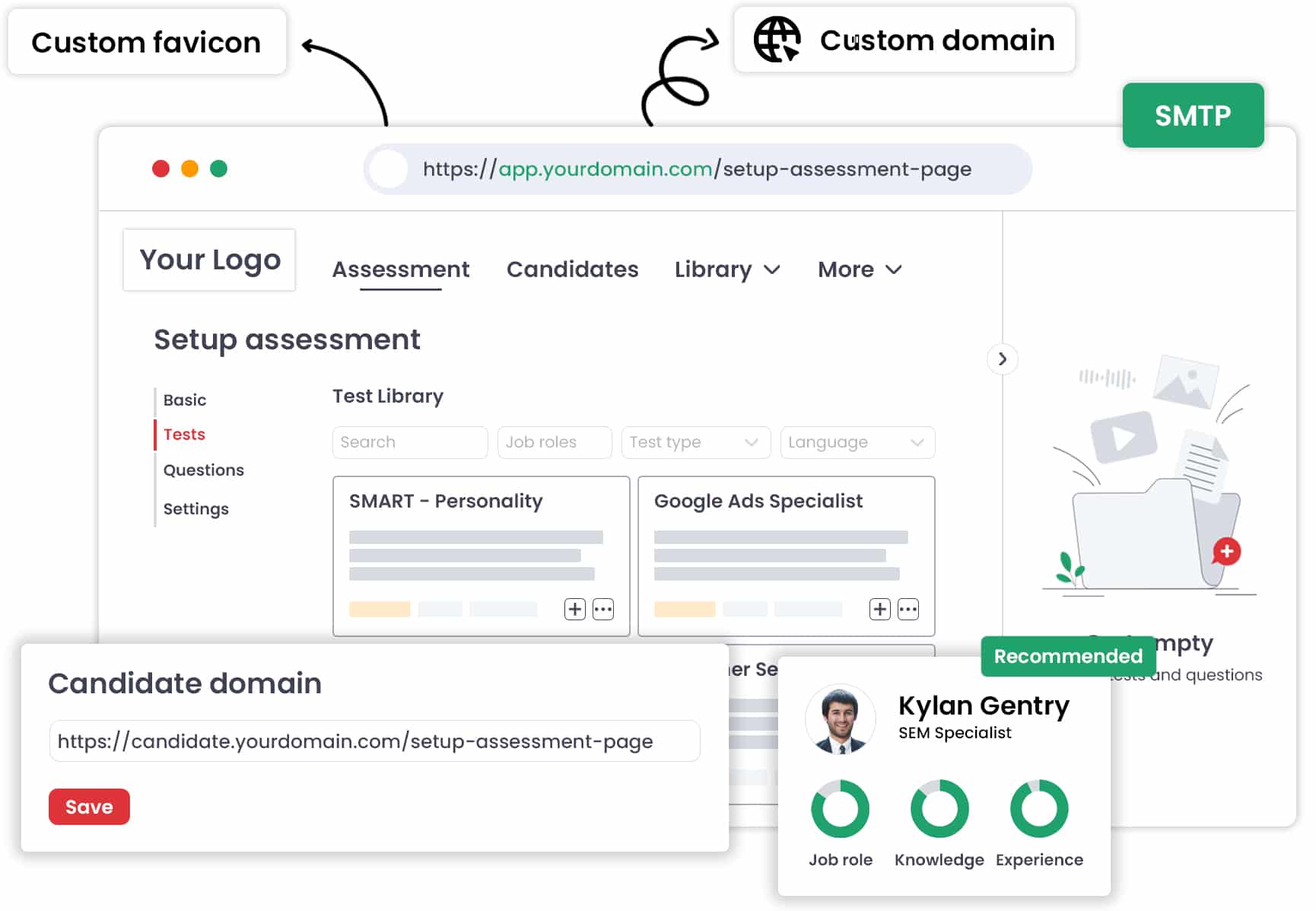
Testlify provides strong white-labeling and customization capabilities that allow organizations to fully brand the candidate interview experience. Companies can customize the assessment interface with their own branding elements, including logos, colors, and messaging.
Recruiters can also personalize candidate communications such as interview invitations, reminders, and rejection emails to match the company’s tone and employer brand. This level of customization ensures candidates experience the hiring process as a seamless extension of the company’s brand rather than interacting with a generic third-party platform.
Key capabilities include:
- White-labeled assessment and interview interface
- Custom company branding, including logos and visual identity
- Personalized candidate invitation and rejection emails
- Custom communication templates aligned with employer branding
- Add welcome intro videos of your company
- Branded candidate experience throughout the interview process
BrightHire’s interview experience
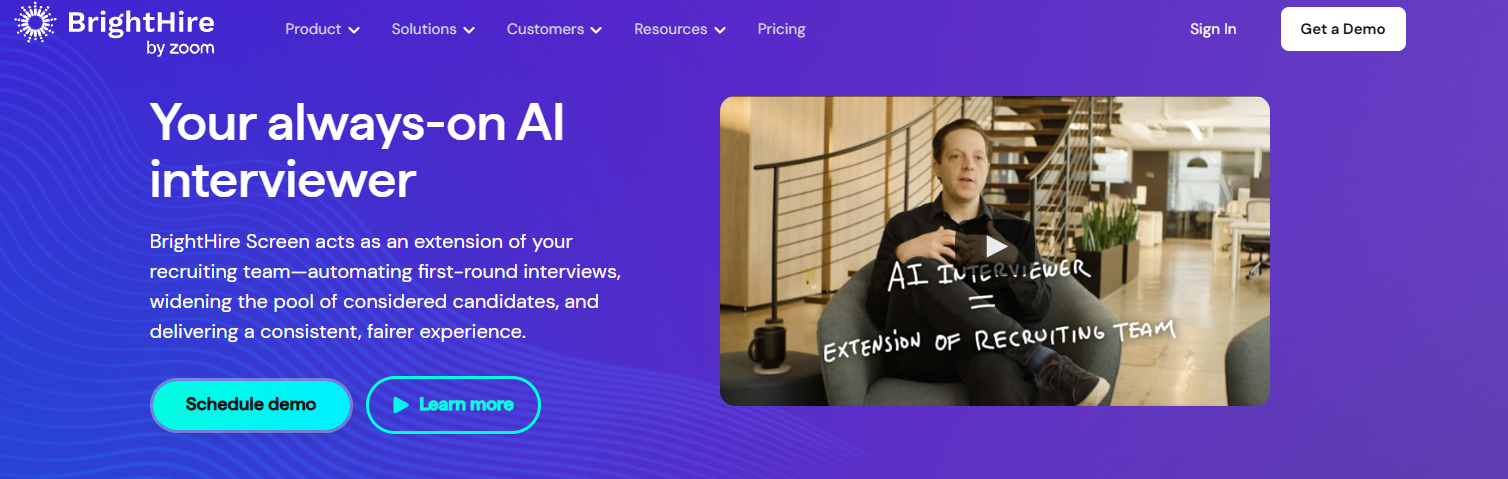
BrightHire shapes the candidate experience mainly through its AI interviewer. BrightHire Screen runs asynchronous interviews, which means candidates complete them on their own schedule, from any device, with no app, download, or login. A short practice round checks audio or video before the interview begins.
Recruiters can add a hiring manager intro video, personalize intros, and set the tone and messaging of each AI interview. However, BrightHire’s website does not list a white-label option, custom domains, or a branded candidate portal.
Key capabilities include:
- Asynchronous voice or video interviews on any device
- Practice rounds with audio and video checks
- Hiring manager intro videos and personalized interview intros
- Configurable interview tone, questions, and candidate messaging
- Candidate consent notices with opt-out controls
Testlify vs BrightHire: Which platform delivers better candidate experiences
Testlify and BrightHire differ significantly when it comes to candidate-facing branding and customization. Testlify enables companies to fully white-label the interview experience and customize candidate communications, while BrightHire offers a flexible, consistent AI interview experience without full white-labeling.
The table below summarizes the differences between the two platforms.
Feature | Testlify | BrightHire |
White-labeled interview interface | Yes | Not listed |
Custom branding with logos and company identity | Yes | Limited |
Branded candidate communication | Yes | Configurable messaging |
Personalized invitation and rejection emails | Yes | Limited |
Employer branding support in hiring process | Strong | Moderate |
Testlify provides a significantly stronger candidate experience from a branding perspective. Its white-labeling and customization capabilities allow companies to present a fully branded hiring journey, while BrightHire offers a convenient AI interview experience with personal touches but no full white-label option.
Candidate evaluation and reporting
Once interviews are completed, the next critical step is evaluating candidate performance and generating insights that help hiring teams make confident decisions. The quality of reporting and evaluation tools can significantly impact how quickly recruiters can identify top talent and compare candidates objectively.
Testlify and BrightHire approach this stage of the hiring process differently. Testlify focuses on structured candidate evaluation through automated scoring, behavioral analysis, and detailed candidate reports.
BrightHire, on the other hand, focuses on rubric scores from applications and AI interviews, AI-written interview summaries, and insights into interview quality across teams.
How Testlify scores and reports on candidates
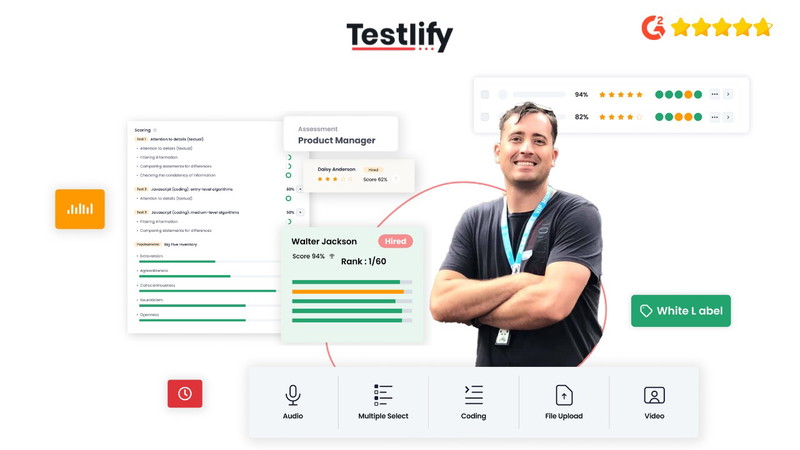
Testlify provides detailed candidate evaluation through automated scoring and structured reporting. The platform analyzes candidate responses across interviews and assessments to generate comprehensive reports that highlight strengths, weaknesses, and overall performance.
These reports allow recruiters and hiring managers to compare candidates across multiple dimensions such as technical skills, communication ability, and problem-solving capabilities. Testlify also offers benchmarking analytics that help organizations evaluate candidates against industry standards or other applicants in the same hiring pipeline.
Key capabilities include:
- Automated scoring of candidate responses
- Detailed candidate performance reports
- AI insights
- Behavioral and communication analysis
- Question-level performance insights
- Benchmarking analytics to compare candidates across industries
How BrightHire scores applications and interviews
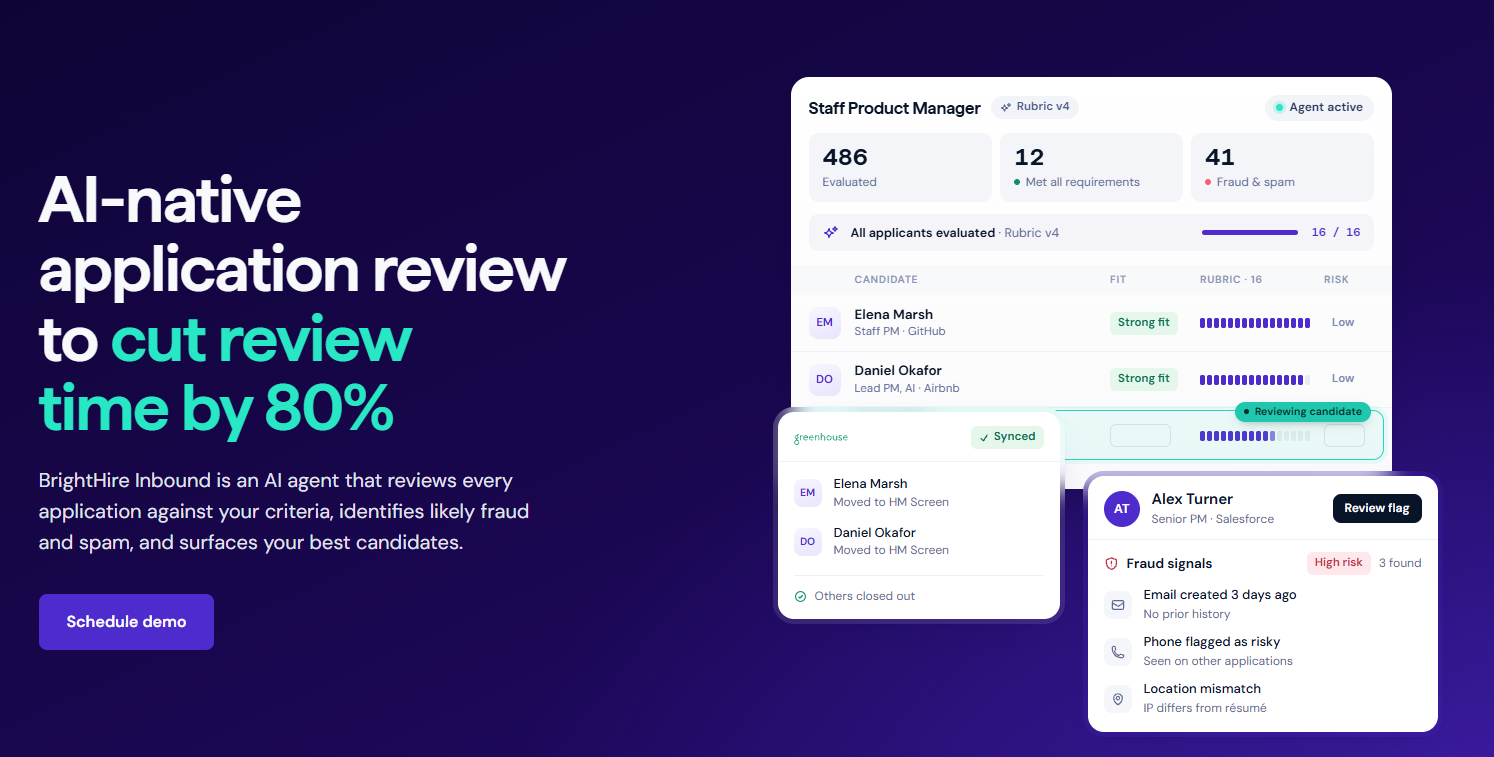
BrightHire now scores candidates at two stages. BrightHire inbound scores every application against a rubric and shows the evidence behind each job requirement, and BrightHire screen scores AI interview answers against criteria your team defines.
After live interviews, BrightHire auto-fills scorecards from AI notes, so interviewers can review and submit feedback to the ATS in one click. Its interview insights module tracks interview quality, interviewer performance, and candidate motivations.
These reports measure the interview process and what candidates said. BrightHire does not benchmark candidates against industry skill standards or score them on validated tests.
Key capabilities include:
- AI interview scores, rankings, summaries, and transcripts
- Scorecard auto-fill from AI interview notes
- Reports on interviewer coaching, candidate motivations, and compliance
- Export reports in CSV and PDF formats
Testlify vs BrightHire: Scoring and reporting capabilities compared
Testlify and BrightHire support hiring decisions in different ways. Testlify focuses on structured candidate evaluation with automated scoring and detailed performance reports, while BrightHire focuses on rubric-scored interviews, AI summaries, and insights into interview quality.
The table below highlights the differences in candidate evaluation and reporting capabilities between the two platforms.
Feature | Testlify | BrightHire |
Automated candidate scoring | Yes | Yes, for applications and AI interviews |
Detailed candidate performance reports | Yes | Limited |
Behavioral and communication analysis | Yes | Not listed |
Benchmarking analytics | Yes | Interview quality only |
Interview summaries and transcripts | Yes | Yes |
Testlify provides significantly stronger candidate evaluation capabilities through structured scoring, benchmarking analytics, and detailed candidate reports. BrightHire now scores applications and AI interviews and offers deep interview analytics, but Testlify enables hiring teams to make data-driven hiring decisions based on measurable candidate performance.
Integrations and hiring workflow compatibility
Hiring platforms rarely operate in isolation. Most organizations rely on applicant tracking systems and HR tools to manage candidates throughout the recruitment process. As a result, strong integrations and workflow compatibility are essential for ensuring interview data, candidate insights, and hiring decisions are seamlessly connected to the rest of the hiring stack.
Testlify and BrightHire both offer integrations with applicant tracking systems, but they support hiring workflows in different ways.
Testlify’s ATS and HR integrations
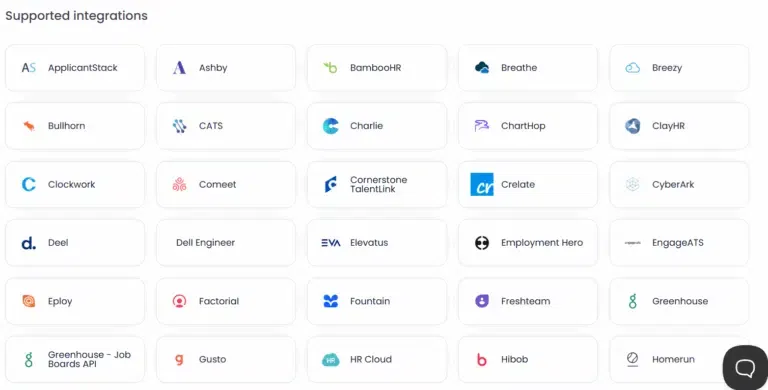
Testlify integrates with over 100 applicant tracking systems and HR platforms such as Workday, SAP, Lever and more, allowing hiring teams to seamlessly incorporate assessments and AI interviews into their existing recruitment workflows.
Candidate profiles, interview results, and assessment reports are automatically synchronized with the organization’s ATS. This ensures recruiters and hiring managers can view candidate performance insights directly within their hiring systems without needing to manually transfer data between platforms.
Key capabilities include:
- Integrations with 100+ ATS and HR platforms
- Automatic syncing of candidate assessment results and interview reports to ATS profiles
- Seamless candidate data transfer across hiring stages
- AI resume screening results synced to ATS workflows
- Automated candidate shortlisting based on assessment performance
- Ability to trigger assessments automatically from ATS stages
- Centralized candidate performance dashboards for hiring teams
- Bulk candidate invitations and automated reminders
- Easy sharing of candidate reports with hiring managers and stakeholders
- Exportable reports in PDF, Excel, and CSV formats
BrightHire’s ATS integrations
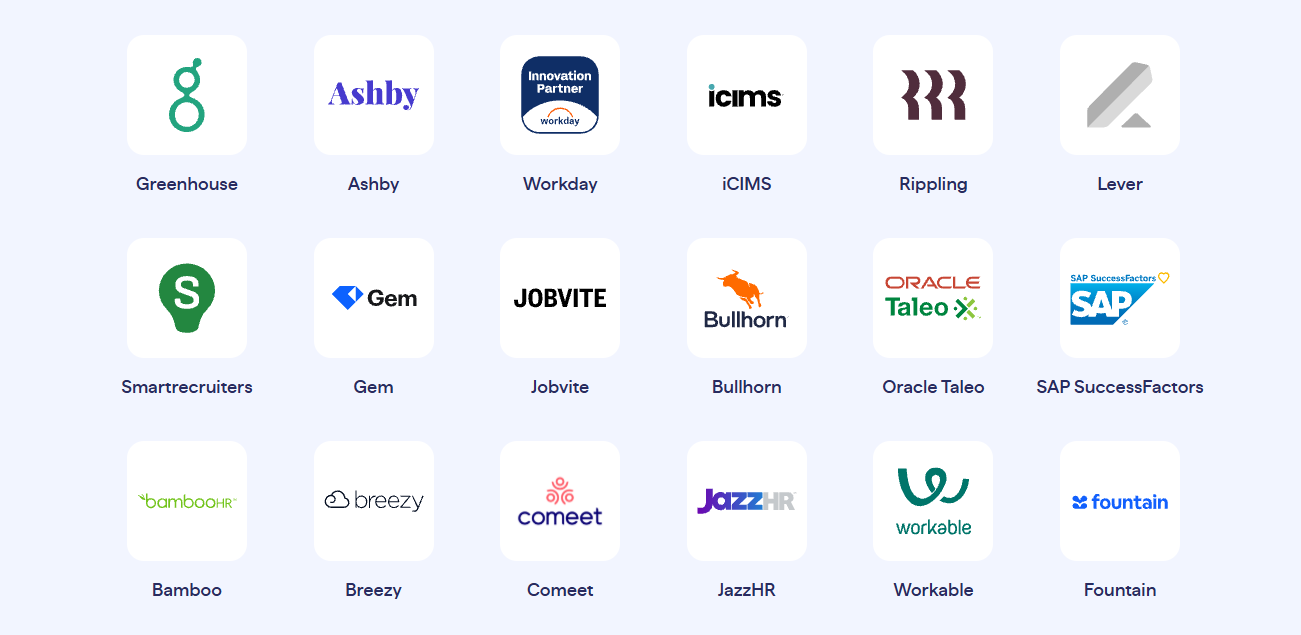
BrightHire builds its workflow around deep ATS integrations. Its integrations page lists 18 applicant tracking systems, including Greenhouse, Lever, Ashby, Workday, iCIMS, SmartRecruiters, and SAP SuccessFactors, plus Zoom, Google meet, and Microsoft teams for video interviews.
Inside the ATS, recruiters can replay interviews, play candidate highlights, complete scorecards in one click, and trigger AI interview invites from stage changes.
BrightHire also connects to Slack, single sign-on tools such as Okta, and AI assistants such as claude and ChatGPT through the Model Context Protocol (MCP), an open standard that lets AI tools securely query BrightHire data.
BrightHire screen currently connects with Greenhouse, Ashby, Workday, and SmartRecruiters, and teams can also run it without an ATS.
Key capabilities include:
- Deep integrations with 18 ATS platforms
- Interview replay and candidate highlights inside the ATS
- One-click scorecard completion from AI notes
- Automatic AI interview invites at ATS stage changes
- Two-way sync of application review actions with the ATS
- Video integrations with Zoom, Google Meet, and Microsoft Teams
- MCP access for Claude, ChatGPT, and other AI tools
Testlify vs BrightHire: ATS integrations and workflow automation compared
Both platforms offer strong ATS integrations, but they support hiring workflows in different ways. Testlify integrates assessments and interview evaluation directly into the recruitment process, while BrightHire syncs application reviews, AI interview results, and interview notes into the ATS.
The table below highlights the differences in integration and workflow capabilities.
Feature | Testlify | BrightHire |
ATS integrations | 100+ Integrations | 18 ATS, plus video, chat, and AI tools |
Assessment data synced to ATS | Yes | No |
Interview notes synced to ATS | Limited | Yes |
Candidate performance reports | Yes | Interview scores and summaries |
Workflow automation for candidate screening | Yes | Yes |
Both Testlify and BrightHire integrate with applicant tracking systems, but they serve different workflow needs. BrightHire excels at embedding interview recordings, notes, and AI screening results inside the ATS, while Testlify provides broader workflow support by integrating assessments, AI interviews, and candidate evaluation data directly into the hiring process.
Security, compliance, and assessment integrity
Security and compliance have become critical considerations when adopting AI-driven hiring platforms. Organizations need to ensure that candidate data is protected, interviews are conducted fairly, and assessments accurately reflect a candidate’s true abilities.
The stakes keep rising. A Gartner survey on candidate trust and interview fraud found that 6% of job candidates admitted to interview fraud, and Gartner predicts that one in four candidate profiles worldwide will be fake by 2028. That forecast turns candidate fraud from an edge case into a core buying criterion for any hiring platform.
Testlify and BrightHire both prioritize security and regulatory compliance, but they focus on different aspects of hiring integrity. Testlify emphasizes assessment security and anti-cheating mechanisms, while BrightHire focuses on protecting interview data and surfacing fraud signals inside interviews.
Testlify’s proctoring and anti-cheating suite
Testlify includes a range of advanced proctoring and anti-cheating features designed to maintain the integrity of candidate assessments and AI interviews. These features help ensure that candidates complete interviews independently without external assistance.
The platform also includes enterprise-grade security certifications and compliance frameworks to protect candidate data and organizational hiring processes.
Key capabilities include:
- Face detection to ensure the correct candidate is taking the assessment
- Photo ID verification for identity validation
- Webcam snapshots during the assessment
- Dual-camera proctoring for remote monitoring
- Full-screen mode enforcement during assessments
- Screen recording to monitor candidate activity
- AI assistance detection to identify external AI tool usage
- Copy-paste activity tracking
- Mouse-out tracking to detect tab switching
- IP address monitoring for suspicious activity
- Question randomization to prevent answer sharing
- Honesty agreements before starting assessments
- Question-level activity logs for detailed monitoring
- Live environment checks before assessments begin
- Internet speed and system requirement checks
- Focus guard (anti-cheat mode) to detect if candidates are focusing out of the test tab
- Talking prohibition detection during assessments
- Live video monitoring during interviews
- SOC 2 Type II, ISO 27001, and GDPR compliance
These features help ensure that recruiters can confidently evaluate candidate performance without concerns about external assistance or dishonest test-taking behavior.
BrightHire’s candidate fraud detection
BrightHire now builds candidate fraud detection into every stage of its platform. It flags suspicious applications through email and phone reputation checks, then looks for deepfakes, proxy interviews, and AI-assisted answers during AI screening and live interviews.
Each flag links to the moment that triggered it, and BrightHire routes flags to human review instead of rejecting candidates automatically.
BrightHire offers its deepest deepfake detection on Zoom interviews and lighter coverage on Microsoft Teams and Google Meet. It does not verify photo IDs or proctor skill tests, and it positions its fraud detection as a complement to identity verification tools.
On compliance, BrightHire holds SOC 2 Type II certification, which means an independent auditor has tested its security controls over time. It also complies with GDPR and CCPA, the main data privacy laws in the EU and California.
Admins can control access by role, set data retention periods, and manage candidate consent and opt-out, while an independent firm audits BrightHire’s AI for bias every year.
Key capabilities include:
- Fraud signals across applications, AI interviews, and live interviews
- Deepfake and proxy interview detection, strongest on Zoom
- AI-assisted answer and multi-device cheating detection
- IP, device, and location risk signals
- Audit-ready records for every fraud signal
- SOC 2 Type II, GDPR, and CCPA compliance
- Role-based access controls and customizable data retention
- Annual third-party AI bias audits
Testlify vs BrightHire: Security and fraud protection compared
Testlify and BrightHire both prioritize security and compliance, but they address different aspects of hiring integrity. Testlify focuses on protecting the assessment process through proctoring and anti-cheating features, while BrightHire focuses on safeguarding interview data and detecting fraud signals during interviews.
The table below summarizes the key differences between the two platforms.
Feature | Testlify | BrightHire |
Assessment proctoring | Yes | No |
AI assistance detection | Yes | Yes, in interviews |
Screen recording and monitoring | Yes | Limited |
Interview recording security | Yes | Yes |
GDPR compliance | Yes | Yes |
SOC 2 certification | Yes | Yes |
Photo ID verification | Yes | No |
Final verdict
Choosing the right interviewing platform comes down to what you want to measure during the hiring process. While interview intelligence can help recruiters understand candidate conversations, evaluating actual skills is just as important when making confident hiring decisions.
Testlify brings both together with structured skill assessments, conversational AI interviews, and detailed candidate insights. It helps recruiters move beyond resume screening and subjective interviews to a more consistent, skills-based approach to hiring.
BrightHire offers useful capabilities for reviewing applications, conducting AI interviews, analyzing interview conversations, and detecting potential fraud. However, its focus remains on interview-based evaluation. It does not offer the same breadth of dedicated skill assessments that Testlify brings to the hiring process.
Ultimately, if your goal is to understand not just how candidates interview but what they can actually do, Testlify offers a more comprehensive approach. By combining skills testing, AI-powered interviews, and objective performance insights in one platform, it gives recruiters more ways to identify the right talent with confidence.
Book a demo today and discover how Testlify can help you build a more effective, skills-based hiring process.

Director of Marketing
Akash Patange is the Director of Marketing at Testlify, where he works closely with HR leaders and recruiters to help organizations improve hiring outcomes. He writes about talent assessment, recruitment technology, and data-driven hiring practices.
LinkedInRelated resources
View all
Alternatives
Top 15 The Talent Games Alternatives and Competitors (2026)
Alternatives
Top 15 The TalentMetrix Alternatives and Competitors
Alternatives
Top 15 Equip Alternatives and Competitors
Alternatives
Top 15 Harver Alternatives and Competitors
Alternatives
Top 15 Talview Alternatives and Competitors
Alternatives
Top 15 Cangrade Alternatives and Competitors
Get started.
Hire on proof, not resumes.
Run your first skills-based assessment free — no credit card required.