
Passive candidates: What are they and how can you hire them?
A passive candidate is someone not actively job hunting but possesses the skills and experience that make them a great fit for your open position.

Recruitment is not a cakewalk, especially considering that around 70% of talents are passive candidates—not even on the job market radar.
So, how can recruiters fill roles when most of the workforce isn’t actively seeking? What sets active job seekers apart from their passive counterparts? And how do you effectively source and recruit these candidates? All these questions are explained in this blog. Read on!
 ChatGPT
 Gemini
 Claude
 Grok
Grok Perplexity
What are passive candidates?
Passive candidates, also known as passive job candidates, are employees currently working in an organization and not actively looking for a job change.
Passive job seekers are open to considering a new role depending on the opportunity. Such candidates are valuable to employers, especially in filling niche-specific roles. Though passive job candidates are more difficult to recruit than active candidates, the hiring rate for the former is high, indicating passive candidates are more desirable.

Why are passive candidates important?
Passive job candidates are preferred because they already have established skills and experience. Research shows these candidates are more engaged, productive, and committed, leading to higher retention rates.
Nearly 73% of candidates that recruiters engage with are passive job seekers.
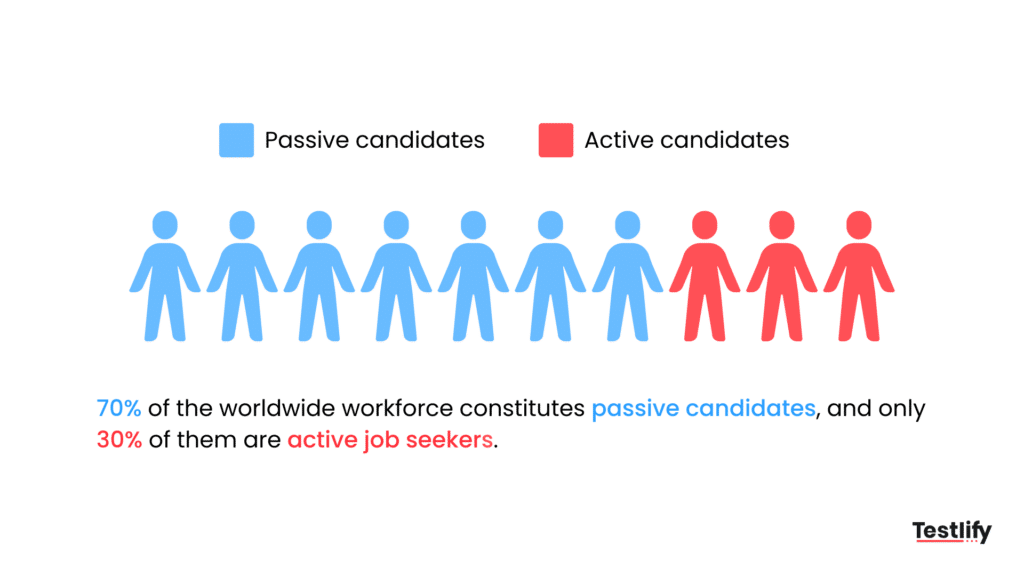
Focusing on 30% of job seekers alone will not guarantee the best fit and might even cost a hefty amount. Studies show a bad hire costs 30% of the role’s salary. Hence, recruiters tap into the pool of passive job seekers to find top candidates.
Additionally, passive job seekers can bring fresh perspectives and innovation to an organization since they are typically employed in their current roles, demonstrating their capabilities in a real-world context.
In addition to those mentioned above, below are some reasons why recruit passive job candidates.
- Less competition: As this candidate isn’t currently looking for a job, your position may be the sole opportunity they are exploring.
- Top candidates: Since passive candidates already work in an organization, they have all the skills and experience needed to excel in your desired role. Also, passive job seekers may not need initial training.
- Proactively vetting candidates: By reaching out to passive job candidates instead of waiting for them to apply, you can be selective in your choices and take the time to research individuals who are the best match for your organization.
Challenges of recruiting passive candidates
Many organizations struggle to recruit passive job seekers because connecting with qualified individuals requires time, effort, and careful communication.
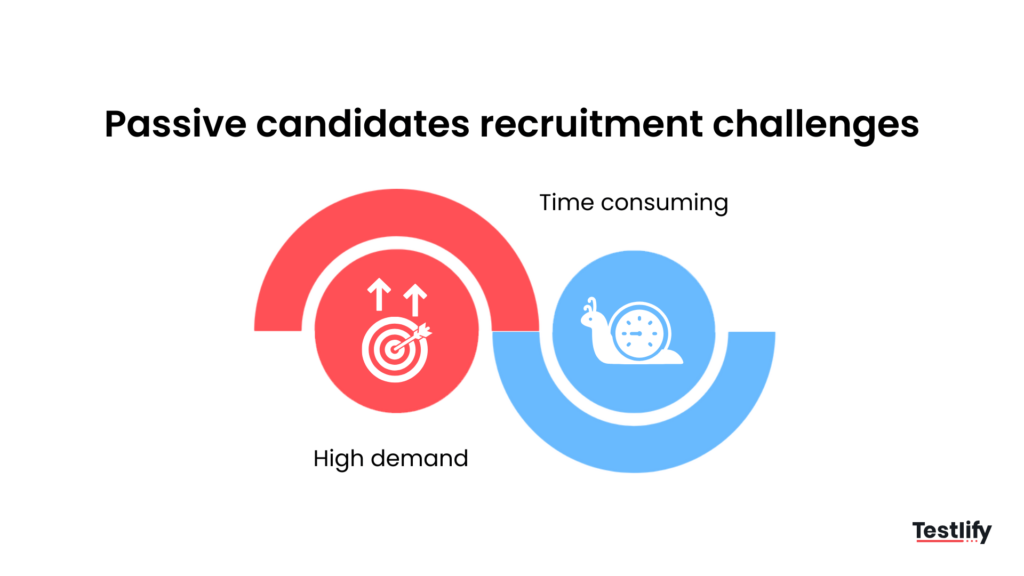
This approach often yields a lower return on investment compared to active recruiting, and if not done well, it can harm the company’s reputation as an employer.
Since passive job candidates have the required skills, they are often in high demand. However, it can be difficult to recruit passive job seekers who are content and well-compensated in their current organization.
Passive candidates vs. active candidates
Passive candidates are individuals open to new opportunities while employed at a company. They often seek leadership positions, growth opportunities, networking, salary hikes, etc.
While they may not actively indicate that they’re seeking a job change, passive job seekers often seek better opportunities. When a role aligns with their aspirations, they will likely consider switching.
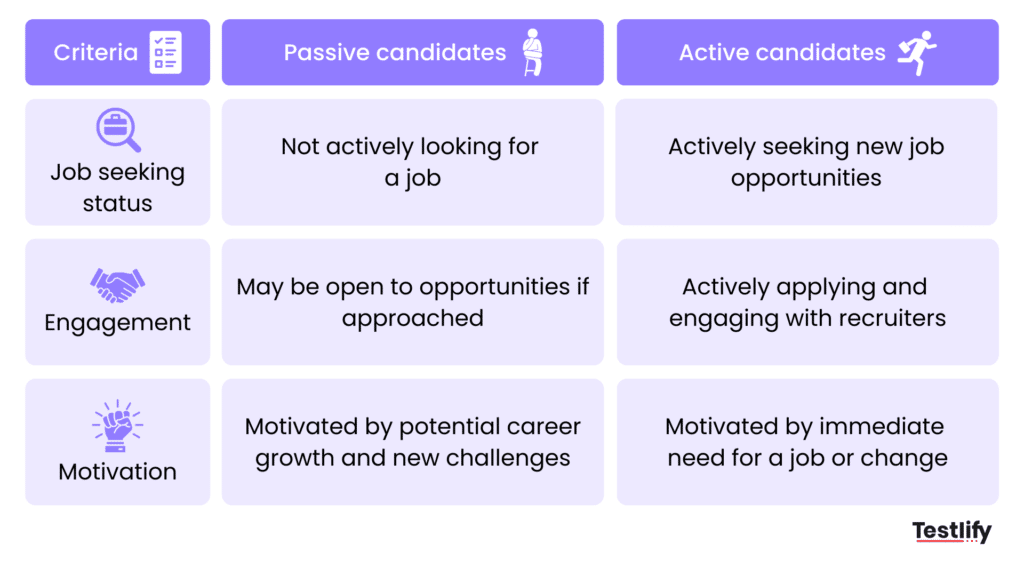
An active candidate is dissatisfied with their current job and actively searches for new positions by regularly checking job boards, networking, contacting hiring managers, and submitting applications.
Related: The Ultimate Guide to Candidate Sourcing
How to find and source passive candidates?
In passive recruitment, hiring managers contact the talent pool of passive candidates, piquing the interest of the right candidates.
Since passive job candidates are not actively looking for a job, recruiters need to take proactive steps, such as using social media, LinkedIn, etc., to find talented candidates. The primary goal of passive recruiting is not to find active job seekers but to build genuine relationships with candidates and encourage them to consider joining your organization.
Engaging qualified passive job seekers means using a combination of several tools and techniques, namely:
- Talent mapping
- LinkedIn recruiter
- Boolean search techniques
- Employee referral programs
- In-person conferences and events
- Recruitment marketing software
- Candidate engagement platforms
- Applicant tracking system (ATS) and HR tools
How to recruit passive candidates?
Recruiting passive job seekers can be difficult but not impossible. Here are 6 proven ways to hire passive job seekers.
Find passive job seekers where they are
If you aren’t where your candidates hang out, you will likely not find them. Contact passive candidates via social media platforms like LinkedIn, Twitter, Instagram, etc.
For instance, LinkedIn’s tool allows recruiters to monitor profiles of interest and notify them whenever a prospect updates their information. Send them a personalized simple message explaining the role and why they will be a good fit. If the position is niche or hard-to-fill, you may need to contact ideal passive job seekers via call or email.
Contact candidates based on recruitment strategy
Reach out to passive job candidates according to your recruitment strategy. The goal is to inform and excite candidates about the company and position. Highlight what sets your company apart in the market, emphasizing any awards and recognitions it has received to showcase its excellence and credibility.
Provide information about the role, benefits, how your company can provide passive candidates career growth, etc.
Also, share helpful resources from your company, like white papers and research guides. This thoughtful gesture will remind them of your company’s work and why they might want to join in the future.
Recruiters need to be persuasive, friendly, and concise. Since hiring managers aren’t looking for new roles, they need to adopt different recruiting techniques to persuade passive job candidates.
Be transparent with passive candidates and set clear expectations
Don’t keep passive candidates guessing. Tell them about the next steps, like phone calls, interview meetings, etc. Follow up regularly if you don’t hear from them in 2-3 weeks.
Most importantly, don’t try too much. Some passive job candidates might not be willing to change their jobs at all. In such cases, respect their decision and give them enough time.
To ensure a smooth process for both you and the candidates, keep track of their responses and remove anyone from your outreach list if they do not engage with your messages within a specified timeframe.
Identify passive candidates using AI tools
Recruiters can use AI-driven tools to identify and recruit passive job candidates.
For example, employees who update their resumes and post on social media forums like GitHub can be identified using certain sourcing tools.
Following this, AI technologies can be used to send emails to test whether a passive candidate is interested.
Unused talent pool
HR professionals can revisit unused talent pools from previous job openings, including passive job seekers who excelled in the interview process and met all the criteria but were not hired for specific reasons.
These profiles and resumes are typically saved and can later be used to identify potential passive candidates.
Provide an exceptional candidate experience
The talent acquisition team must understand that most passive job candidates know nothing about your company.
You are the one who reached out to them, so tell them why your company will benefit them. It is important to build a great relationship of trust with potential candidates.
Offer them a glimpse of what it’s like to work at your company. Help them feel at ease about leaving their current position. Highlight the new opportunities that await them.
Clearly communicate your pro-employee stance on your careers page, in job postings, and through employee reviews.
Best platform to evaluate selected passive candidates
Once you find your ideal candidate, the next step is to evaluate them to ensure they are skilled. A combination of interview and pre-employment assessment is the best way to ensure you have the right fit. Try AI-powered assessment platforms like Testlify. We have 3,500+ tests ready to customize for more than 50 job roles. Create your own questionnaire or select from the existing pool.
Testlify does not just assess the knowledge of your passive job candidates; it also checks their power skills, cognitive ability, problem-solving ability, etc. Book a free demo or try it for free now!
Frequently asked questions (FAQs)

Related resources
View all
Candidate assessment
How can recruiters use the STAR interview method in 2026?

Candidate assessment
Screening In vs Screening Out: Which to Use and When

Candidate assessment
Live Coding Assessment: A Developer Hiring Guide

Candidate assessment
Process knowledge tests 101: A beginner’s guide

Candidate assessment
How to interview a software developer as a non-tech recruiter?

Candidate assessment
Proctored Exams: How They Work and Key Proctoring Features
Get started.
Hire on proof, not resumes.
Run your first skills-based assessment free — no credit card required.