
Human Resource Information System
A Human Resource Information System (HRIS) is a system used to collect, store, and manage data on an organization’s employees. It automates HR tasks and provides data for informed decision-making.
 ChatGPT
 Gemini
 Claude
 Grok
Grok Perplexity
What is human resource information system?
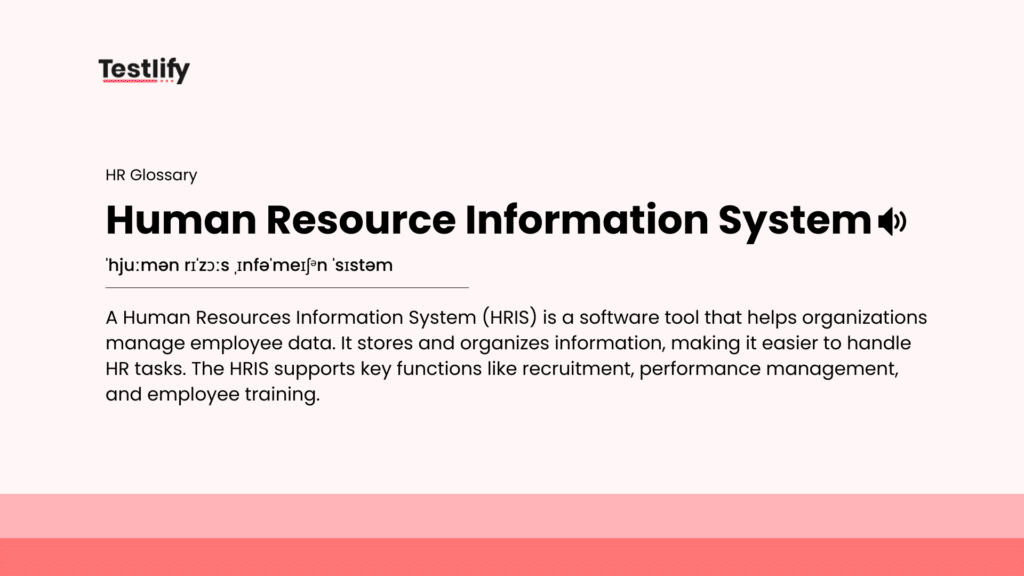
A Human Resources Information System (HRIS) is a software tool that helps organizations manage employee data. It stores and organizes information, making it easier to handle HR tasks. The HRIS supports key functions like recruitment, performance management, and employee training.
People often call it HRIS software, but this term can be misleading. It suggests that different HR systems may use different software.
These systems, called HRMS, help HR teams with talent management, goal setting, and managing the employee lifecycle. They also support performance reviews and streamline management processes. HRMS plays a key role in talent acquisition, payroll processes, and overall human resources management. HBR’s HR information systems research
They provide timely data for HR departments to make data-driven decisions. Managers and employees use these systems to handle employee information, track employee benefits, and ensure long-term success.
The HRIS is a versatile HR software package. The company can run it on their own servers or host it in the cloud. Cloud-based systems offer the added benefit of easier and more frequent updates.
Other commonly used names for this system include HRMS (Human Resources Management System) and HCM (Human Capital Management system). All these names refer to the same thing, which is the HRIS system.
Benefits of human resource information systems
The benefits of Human Resource Information Systems (HRIS) include:
- Improved data accuracy and ease of access: HRIS allows HR professionals to store and access employee data more easily. This leads to better data accuracy and easier access, which is crucial for human resources departments.
- Increased efficiency: HRIS automates routine HR tasks like recruiting, onboarding, and payroll. This increases efficiency and reduces costs, helping HR leaders focus on strategic initiatives.
- Cost savings: Automating HR functions minimizes paperwork and reduces manual errors, cutting administrative costs while improving operational efficiency.
- Better decision-making: HRIS provides data and analytics for informed decisions. It helps track performance, spot trends, and forecast workforce needs, making it an essential tool in modern HR technology.
- Improved compliance: HRIS helps organizations stay compliant with legal requirements. It tracks and reports key metrics like employee hours and compensation, ensuring effective use of HCM software.
- Better communication: HRIS enhances communication between HR and employees. It provides self-service portals for accessing personal information. Employees can request time off and view pay and benefits. This in turn helps streamline HR processes.
- Mobile-friendly access: HRIS is accessible from mobile devices, allowing employees and managers to perform tasks on the go. This feature is vital in today’s HR technology landscape.
- Improved employee self-service: HRIS allows employees to update their personal information. Employees can view pay stubs and request time off using self-service options. This empowers them and reduces the workload on HR departments.
- Better workforce management: HRIS provides data for effective workforce management. It tracks employee performance, attendance, and workforce demographics. This helps HR leaders make data-driven decisions. The support of robust HCM software makes this process more efficient.
Categories of human resource information system
You can classify Human Resource Information Systems (HRIS) into four categories.
- Functional HRIS: This type of HRIS is useful for managers to make routine and repetitive human resource decisions. It includes Worker Information Systems, Position Control Systems, and Performance Management Systems.
- Tactical HRIS: This type of HRIS helps managers to make decisions related to resource allocation. It includes Recruitment Information Systems, Pay and Benefits Information Systems, and Employee Training and Development frameworks.
- Strategic HRIS: This type of HRIS is focused on managing labor negotiations, workforce planning, and specific HR programs. It includes Workforce Planning Systems, and Specific Human Resource Information System Software.
- Complete HRIS: This type of HRIS is an integrated system that covers all aspects of HR management. It includes employee records, organizational policies, and employee monitoring. The system generates reports from any part of HR management.
Steps to implementing an HR information system (HRIS)
Implementing an HRIS is a structured process that ensures success and smooth adoption. Here's how HR departments can manage it:
Identify needs: Define the HR functions you want to automate. For example, do you need help with performance management, employee benefits, or training and development? List the features your organization requires.
Research options: Evaluate different HR software systems. Compare their features, scalability, and cost to match your needs.
Make a selection: Choose the HRIS that best aligns with your organization's goals and budget.
Plan implementation: Configure the system, migrate employee data, and develop a step-by-step rollout plan.
Test the system: Ensure the HRIS is working as intended. Check data accuracy and validate workflows for tasks like performance reviews or employee data management.
Roll out: Launch the system and train managers and employees on its features. Clear instructions and training build confidence in its use.
Provide support: Set up ongoing maintenance to address any issues. Offer help desk support to keep the system running smoothly.
Evaluate and improve: Use data and analytics to monitor system performance. Regular updates ensure the HRIS evolves with your needs, supporting better business decisions over time.
HRIS vs HRMS vs HCM: What’s the difference?
People often use the terms HRIS, HRMS, and HCM alternately, but they have subtle differences.
- HRIS (Human Resource Information System): Focuses on the core HR functions like employee data management, payroll, and benefits administration. The foundational system that supports day-to-day HR operations.
- HRMS (Human Resource Management System): An HRMS includes all the functions of an HRIS. It also adds features like talent management, goal setting, and managing the employee lifecycle. This makes HRMS a more comprehensive solution for HR departments.
- HCM (Human Capital Management): HCM covers both HRIS and HRMS functions. It also focuses on strategic HR management, like workforce planning, performance management, and leadership development. HCM systems manage the overall value and productivity of the workforce.
All three systems help improve HR processes. HRIS focuses on basic HR tasks and HRMS provides more tools for managing HR. HCM takes a strategic approach to managing human capital. SHRM’s HRIS guidance
A well-configured HRIS enables the data-driven talent decisions that support better hiring, retention, and workforce planning. Organizations using pre-employment assessments ensure every hire is grounded in verified skills. A data-driven hiring plan reduces mis-hire risk, while strong talent acquisition practices focused on skills-based hiring help organizations attract and retain top talent.
Frequently asked questions
A Human Resource Information System (HRIS) is software that manages employee data and automates core HR processes : including employee records, payroll integration, benefits administration, time tracking, onboarding, and reporting. It serves as the organization’s system of record for all workforce data, replacing paper-based or spreadsheet HR administration with a centralized digital platform.
Cite this page
Copy a ready-made citation for this page in your preferred style.
- APA
Testlify. (2023). Human Resource Information System. https://testlify.com/hr-glossary/human-resource-information-system/
- MLA
"Human Resource Information System." Testlify, 17 January 2023, https://testlify.com/hr-glossary/human-resource-information-system/.
- Chicago
Testlify. "Human Resource Information System." Testlify. Last modified September 14, 2026. https://testlify.com/hr-glossary/human-resource-information-system/.
- HTML link
<a href="https://testlify.com/hr-glossary/human-resource-information-system/">Human Resource Information System</a>, Testlify (2023)
Related terms
Human Resource Management
Human Resource Management (HRM) is the process of managing an organization’s employees; involving recruiting, hiring, training, and managing personnel while ensuring compliance with labor laws.
Human Resource Outsourcing
Human Resource Outsourcing is the process of delegating certain HR functions to an external provider.
Human Resource Planning
Human Resource Planning is the process of forecasting and meeting future personnel needs.
Human Resources Analytics
Human Resources Analytics is the process of using data and statistical analysis to inform and improve decision-making in HR management.
Human Resources Management System (HRMS)
A Human Resources Management System (HRMS) is a software system that automates and streamlines various HR functions and enables data-driven decisions.
Hybrid Organization
A hybrid organization is a type of organizational structure that combines elements of traditional and decentralized structures to increase flexibility and adaptability.
Get started.
Hire on proof, not resumes.
Run your first skills-based assessment free — no credit card required.