
How are chat simulations shaping the future of enterprise hiring?
Discover how AI-powered chat simulations are revolutionizing enterprise hiring with faster, fairer, and more engaging candidate assessments.

Let’s be honest, traditional hiring methods are getting stale.
Resume reviews, phone screens, and panel interviews have been the norm for decades. While these techniques have served us well, the modern workplace and the talent pool have evolved drastically. Now, organizations need smarter, faster, and more accurate ways to find the best fit for their roles.
Chat simulations (chat interviews), an emerging technology that is not just innovating the hiring process but transforming it into something more interactive, fair, and insightful.
In this post, we’ll explore how chat simulations are reshaping enterprise hiring and why this trend is one HR professionals should not ignore.
 ChatGPT
 Gemini
 Claude
 Grok
Grok Perplexity
Why is traditional hiring no longer enough?
Many organizations still rely on outdated methods. Resumes and interviews often fall short in assessing real-world skills and potential, leading to mismatches and missed opportunities. It’s time to rethink how we evaluate talent.
The resume problem
Resumes offer a snapshot of a candidate’s experience, but they don’t tell you how someone thinks, solves problems, or communicates. Worse, they’re subject to bias both conscious and unconscious.
The interview bottleneck
Interviews can be time-consuming and often don’t provide a consistent basis for comparison. Two interviewers may have completely different styles and criteria, making it harder to ensure fairness and standardization.
The skills gap dilemma
The world is moving fast, and skill requirements are evolving. You can no longer rely solely on past job titles or degrees to judge whether someone is ready for the future.
This widening skills gap means companies need smarter tools to assess real capabilities, not just credentials. Traditional methods often overlook soft skills, adaptability, and how candidates respond in real-world situations. Chat-based assessments help bridge this gap by focusing on how people actually think and perform.

What are chat simulations (chat interviews)?
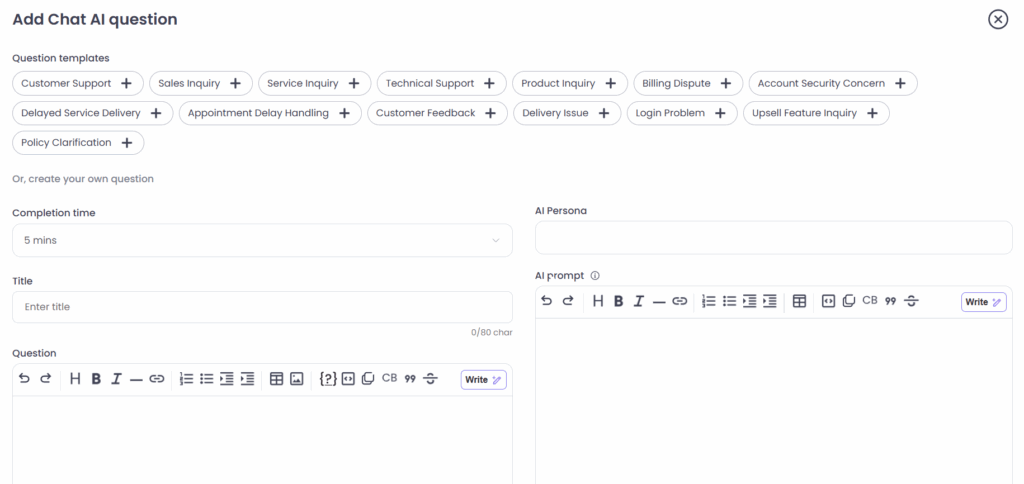
Chat simulation (chat interviews) are AI-powered, scenario-based conversations that simulate real workplace interactions. They are designed to assess candidates in a natural, interactive, and contextual way.
These simulations often mimic Slack conversations, emails, customer chats, or even peer interactions, offering a window into how candidates would actually perform on the job.
How it works?
- Scenario setup: The candidate is given a role-based scenario (e.g., a customer complaint, a team conflict, or a project update).
- Interactive dialogue: The simulation unfolds like a chat, where the candidate responds in real time.
- AI evaluation: The system evaluates the candidate’s responses for factors like tone, empathy, problem-solving ability, decision-making, and communication skills.
Why are enterprises turning to chat simulations?
Forward-thinking companies are embracing chat simulations to modernize hiring. These interactive, AI-driven recruitment tools provide a more dynamic, scalable, and fair way to assess candidates, offering deeper insights while improving speed and experience across the board.
1. Realistic job previews
Chat simulations immerse candidates in job-like scenarios, giving them a hands-on feel of the role’s real-world challenges. This realistic preview helps candidates decide if the job is right for them, while employers see how they perform under role-specific conditions, leading to better mutual fit and fewer mismatches down the line.
2. Standardized, fair assessment
With consistent scenarios for all applicants, chat simulations create a level playing field. Unlike subjective interviews, they minimize personal bias and support DEI initiatives by ensuring that all candidates are assessed based on the same criteria, leading to more objective, inclusive, and equitable hiring decisions across the board.
3. Soft skill evaluation at scale
Soft skills are vital yet difficult to measure using traditional methods. Chat simulations assess attributes like empathy, communication, and adaptability in action. They allow organizations to evaluate these critical skills efficiently across large candidate pools without sacrificing depth or quality enabling more informed hiring decisions at scale.
4. Faster hiring cycles
Top talent doesn’t wait. Chat simulations streamline early-stage assessments, reducing reliance on time-consuming interviews. By automating initial evaluations, enterprises accelerate decision-making, shorten hiring timelines, and reduce time-to-hire giving them a competitive edge in securing high-quality candidates before they accept offers elsewhere.
5. Better candidate experience
Modern candidates expect a smooth, engaging hiring process. Chat simulations feel intuitive and tech-forward, offering a more interactive experience than static assessments or rigid interviews. This approach not only boosts candidate satisfaction but also enhances your employer brand by showcasing your company’s commitment to innovation and efficiency.
Real-world applications of chat simulations
Chat simulations aren’t just theoretical; they’re being used across industries to solve real hiring challenges. From customer support to tech roles and high-stakes healthcare positions, simulations provide practical, role-specific assessments that reveal how candidates perform in action.
1. Customer support roles
In customer service, handling tough conversations is key. Chat simulations can present real-life scenarios, like a frustrated customer demanding a refund, to test how candidates respond under pressure.
These simulations assess emotional intelligence, adherence to company policies, and problem-resolution skills. It’s a powerful way to measure empathy and professionalism before placing someone in a customer-facing role.
2. Sales and business development
Sales roles rely heavily on communication, persuasion, and strategic thinking. Chat simulations can replicate scenarios where candidates must pitch a product, overcome objections, or negotiate terms with a potential client.
These real-time simulations evaluate confidence, clarity, product knowledge, and relationship-building key qualities for high-performing sales professionals offering a reliable preview of how they’ll engage with prospects on the job.
3. Engineering and tech
Beyond technical expertise, tech teams thrive on collaboration and problem-solving. Chat simulations for engineering roles can replicate conversations around debugging issues, clarifying requirements, or planning sprints with cross-functional teams. This helps assess a candidate’s ability to communicate clearly, think critically, and work effectively with others skills that are often overlooked in traditional coding tests or technical interviews.
4. Healthcare and emergency services
In high-stakes environments like healthcare, clear and calm communication can make all the difference. Chat simulations can place candidates in realistic, pressure-filled scenarios such as coordinating care during an emergency or managing a patient issue.
These simulations assess composure, decision-making, teamwork, and communication under stress, ensuring candidates are well-equipped for the demands of fast-paced, life-critical roles.
Integrating chat simulations into your hiring stack
Adopting chat simulations doesn’t have to be complex. With the right strategy and tools, you can seamlessly integrate them into your current recruitment workflow starting small, refining your approach, and scaling as you go.
Step 1: Define competencies
Before introducing chat simulations, identify the key skills and traits you want to assess. Are you looking for strong communicators, empathetic team players, or fast decision-makers?
Clarifying role-specific competencies ensures your simulations are aligned with job expectations, allowing for more targeted and meaningful evaluations that reflect what success in the role truly looks like.
Step 2: Choose the right tool
Related Read: Hiring via job simulation
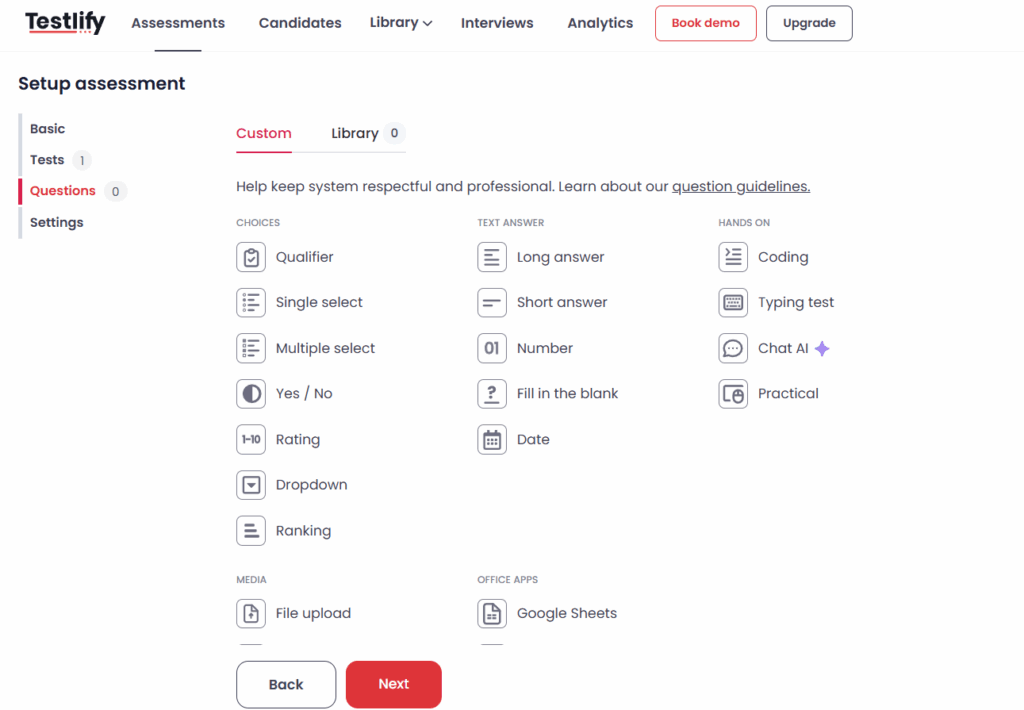
Select a platform that fits your hiring needs. Tools like Testlify offer AI-driven chat simulations with features such as customizable scenarios, real-time analytics, DEI compliance, and seamless integration with your ATS.
Choosing the right technology ensures scalability, accurate data insights, and a smooth candidate experience key factors in making chat simulations a valuable part of your hiring process.
Step 3: Pilot and iterate
Start small by running a pilot program across a few open roles. Collect detailed feedback from both candidates and hiring managers to understand what’s working and what needs refining.
Use this input to tweak scenarios, adjust scoring models, and fine-tune the assessment process. Iterating early helps you optimize outcomes before rolling simulations out on a larger scale.
Step 4: Scale it
Once the pilot is successful, expand chat simulations across departments and job levels. These tools are especially effective for high-volume or geographically distributed hiring, where consistency and speed are critical.
Scaling intelligently allows you to standardize hiring quality, improve efficiency, and deliver a fairer, more engaging candidate experience across your organization.
Addressing common concerns
As with any new technology, chat simulations raise questions around accuracy, privacy, and their role in the hiring process. Let’s break down these concerns and explore how the best platforms are built to address them responsibly and effectively.
“Won’t AI misunderstand context?”
This is a valid concern. Leading chat simulation platforms like Testlify are trained on vast, diverse datasets to better understand language and nuance. They use explainable AI models that show how responses are scored.
Plus, human reviewers can step in to review or adjust results if necessary, ensuring that decisions aren’t made solely by algorithms and that contextual subtleties are fairly interpreted.
“What about candidate privacy?”
Top-tier platforms like Testlify prioritise data privacy and follow strict compliance standards like GDPR and SOC 2. They use encryption, secure storage, and transparent data practices to protect candidate information.
It’s essential to vet any platform thoroughly and clearly inform candidates how their data will be used, stored, and shared, maintaining trust and meeting your legal and ethical responsibilities.
“Will it replace human interviews?”
No, chat simulations aren’t meant to replace human interaction; they’re designed to enhance it. Think of them as a powerful pre-screening layer that adds objectivity and consistency early in the hiring funnel.
They help narrow down the candidate pool more effectively so that recruiters and managers can spend more time on meaningful, in-depth conversations with the most qualified applicants.
What does the future hold?
Chat simulations are just the beginning. As technology evolves, so will the way we assess, coach, and onboard talent, blending AI with human expertise to create hiring experiences that are smarter, more inclusive, and continuously evolving.
AI + human synergy
AI isn’t here to replace HR it’s here to support it. Chat simulations equip HR teams with deeper insights, structured data, and better decision-making tools. By combining AI efficiency with human judgment, companies can create more balanced, data-informed hiring processes. This synergy enables recruiters to focus on relationship-building and strategy while technology handles consistency and scale.
Multimodal assessments
The future of assessments is multi-sensory and immersive. While chat-based simulations are powerful, upcoming innovations will include audio interviews, video interviews, and even VR-based experiences.
These tools can recreate complex workplace environments and interactions, giving employers a 360-degree view of a candidate’s capabilities, and offering deeper, more authentic insights than text-based assessments alone.
Real-time coaching and feedback
Imagine candidates receiving helpful nudges or guidance during simulations just like they would on the job. Future platforms could offer real-time coaching tips or personalized post-assessment feedback.
This turns hiring into a developmental experience, helping candidates grow even if they’re not selected, and positioning your brand as one that genuinely invests in people.
Hiring is only the beginning. The same simulations used in recruitment can support onboarding and learning initiatives. Imagine role-play scenarios that help new hires practice conflict resolution, communication, or product knowledge from day one.
This seamless integration between hiring and L&D promotes continuous learning and accelerates employee readiness and performance.
Conclusion
The hiring landscape is shifting and fast. In a world where communication, empathy, and collaboration are just as important as technical know-how, traditional hiring tools just don’t cut it anymore.
Chat simulations offer a powerful, practical, and scalable way to identify the right people for your organization, not just those who look good on paper, but those who can actually do the job and thrive in your culture.
If you’re serious about improving the quality of hire, reducing bias, and enhancing the candidate experience, it’s time to make your hiring process more interactive.
Because the future of enterprise hiring isn’t just digital. It’s dynamic, fair, and conversational.
For further reading, explore Enterprise Architect.
Frequently asked questions (FAQs)

Content Writer
Yashika Khandelwal is a Content Writer with 3+ years of experience creating research-backed content on hiring, talent assessment, and HR technology. She is a registered Organizational Psychologist and subject matter expert who combines behavioral science with practical recruitment insights to produce accurate, evidence-based content.
LinkedInRelated resources
View all
Enterprise hiring
How to craft effective coding skills tests for tech recruitment?

Enterprise hiring
Return migration: Hiring strategies targeting professionals reshoring to Asia

Enterprise hiring
Culture-first hiring: Why engagement is becoming the #1 hiring criterion for U.S. firms

Enterprise hiring
Conversational AI audio interviews for call center hiring: Faster, fairer, and more scalable recruitment

Enterprise hiring
How enterprises can reduce candidate drop-off with smarter assessments

Candidate assessment
How do ATS-integrated assessments streamline hiring workflows?
Get started.
Hire on proof, not resumes.
Run your first skills-based assessment free — no credit card required.