
How to use reverse mentoring to make it work?
Discover the power of reverse mentoring in the workplace. Learn its benefits, implementation strategies, and tips to foster collaboration and growth.

Mentorship has become an indispensable element of employee development. Traditionally, mentorship has been perceived as a top-down process where senior employees mentor younger or less experienced employees.
According to SHRM, Companies with reverse mentoring programs report a 20% higher representation of diverse employees in leadership roles.
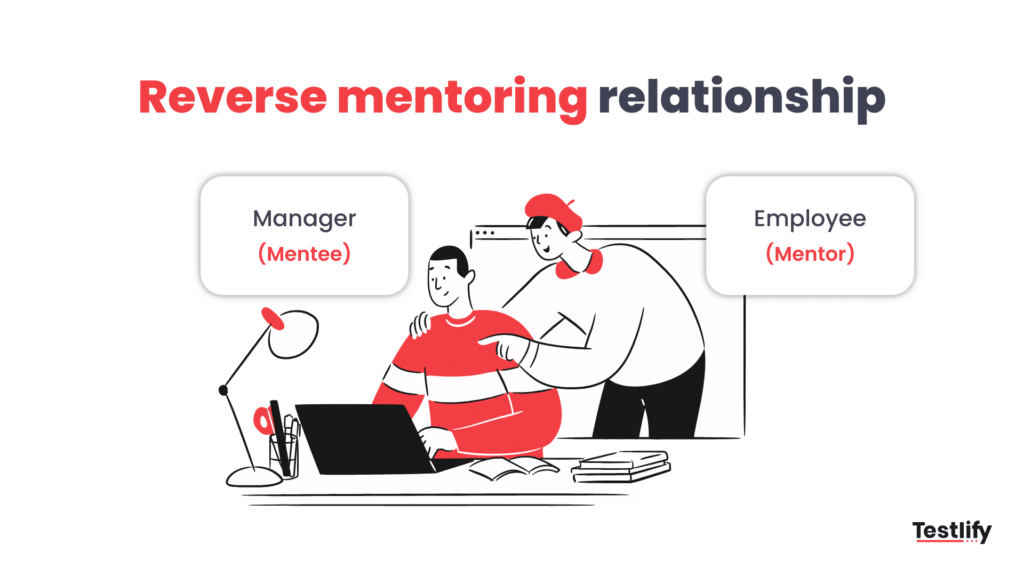
However, reverse mentoring is changing this order of things. In reverse mentoring, the tables are turned — younger or less experienced employees take on the role of mentor to senior leaders or more experienced individuals.
In this blog, we shall explore the concept of reverse mentoring, its benefits, how to implement it in your organization, and much more.
 ChatGPT
 Gemini
 Claude
 Grok
Grok Perplexity
What is reverse mentoring?
Reverse mentoring is a system where young professionals mentor older staff members or leaders. Most of them emanate from other generations and different backgrounds. This covers a knowledge, viewpoint, and skills gap and has scope for mutual learning opportunities. It allows senior employees to know modern technologies, diverse cultural perspectives, and current trends with which they might not be directly in touch in their everyday performance.
Reverse mentoring encourages open communication and enhances relationships between older and younger employees. It aims to break down hierarchical barriers and build an interactive, inclusive learning culture within the organization.

Why is reverse mentoring important?
Reverse mentoring is significant to HR because, as an HR expert, you shape the traits that define any workplace’s culture and propel employee development. Therefore, its applicability in HR can be derived from a few causes.
Bridging generational gaps
It helps bridge the gap between intergenerational persons because many generations work side by side on a single terrain-reverse mentoring as it brings together old and young employees. Because through this, intergenerational learning occurs between both parties, thus intensifying collaboration and respect.
Promoting diversity and inclusion
This reverse mentoring, in turn, contributes to building diversity and inclusion since there is an opportunity for various employees to interact with and learn from each other. In that respect, unconscious biases are removed, creating an inclusive environment.
Enhancing leadership skills
Older workers, who will be mentees in this reverse mentoring setup, can learn leadership skills. They will be well-positioned to understand the trends and how younger people experience workplace issues.
Knowledge sharing and skill development
Reverse mentoring would let the transfer of knowledge flow about digital skills, social media trends, or emerging technologies. Younger employees are already acquainted with these trends and can be a resource for seniors to stay updated in their line of business.
Benefits of reverse mentoring
Reverse mentoring comes with numerous benefits to both employees and organizations as a whole. Let’s dive into the key benefits:
1. Improved communication across generations
One of the most significant benefits of reverse mentoring is its opportunity to improve communication across generations. It is common to have employees from different age groups, each with distinct communication styles and preferences. By reverse mentoring, these differences can be bridged toward more effective collaboration.
Younger employees can introduce new modes of communication that resonate with digital natives, while the seniors can help younger colleagues understand traditional work practices. Such exchange fosters a more harmonious and open environment.
2. Skill development for both mentors and mentees
Reverse mentoring helps both parties acquire a diverse set of skills. In this process, the junior employees mentor seniors on contemporary trends and technologies. Still, at the same time, they also learn about leadership, decision-making, and strategic thinking from their mentors. It is a two-way street for all to grow continuously.
3. Fostering innovation and adaptability
As technology evolves, adaptability and innovation on the part of organizations are imperative. Through reverse mentoring, older executives become more tech-savvy, whereas younger employees develop insight into business strategy and how leaders operate.
It all forms a culture of innovation through employees who are inspired and feel empowered to present fresh ideas and embrace organizational change.
4. Increased employee engagement and retention
The sense of being heard and their contributions help develop senior leaders and make the employees feel valued. More people will engage and feel satisfied with their job in such a situation.
Another important reason reverse mentoring should be considered is that it gives leaders opportunities to recognize young employees, thus increasing the chances of retaining them.
5. A more inclusive workplace culture
Reverse mentoring contributes to building a more inclusive workplace. By allowing employees from different generations and backgrounds to mentor each other, organizations can promote a culture where diverse perspectives are valued.
This inclusive environment helps employees feel more connected to the organization and improves morale.
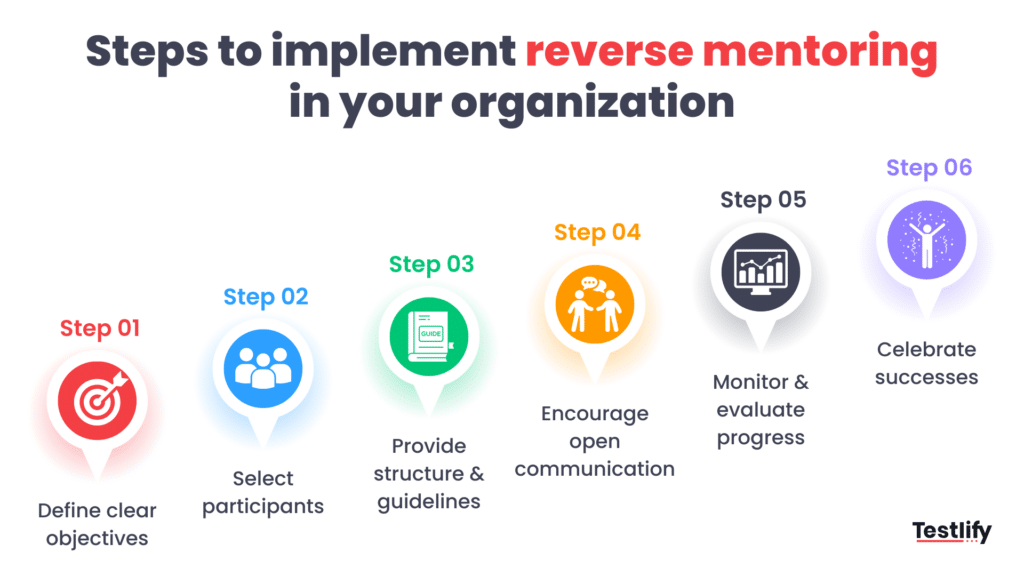
Steps to implement reverse mentoring in your organization
As HR professionals, a reverse mentoring program can be an added value to your employee development strategy. Here is how to set up a successful reverse mentoring program step by step:
1. Define clear objectives
Define your objectives: before launching a reverse mentoring program, define your goals. What do you hope to gain from reverse mentoring? Whether it is innovation, improved communication, or leadership development, setting a clear vision will guide the program and measure its success.
2. Select participants
Carefully select participants for the program. Select pairs with complementary skills and interests to mentor each other. Although reverse mentoring mainly involves younger employees mentoring senior staff, the participants must be motivated to learn from one another.
Consider factors like:
- The gap in the skills or knowledge of each participant
- The personality of the two
- The possibilities of growth in both individuals
3. Provide structure and guidelines
While reverse mentoring encourages an informal relationship, it is very important to keep things structured to ensure that people are on the right track, so there should be established expectations regarding the frequency of meetings, topics to be covered, and the time frame for having a mentor.
Guidance on structuring conversations between a mentor and a mentee will be beneficial. For example:
- Creating an agenda each time for the meeting
- Using particular tools for marking progress
- Establish clear goals for the mentoring relationship
4. Encourage open communication
A reverse mentoring relationship thrives on open and honest communication. Encourage mentors and mentees to share their thoughts, concerns, and feedback. Create a safe environment where participants feel comfortable discussing their ideas and learning from each other without judgment.
5. Monitor and evaluate progress
Monitoring is crucial if the reverse mentoring program is effective. This means a one-on-one check-up with both the mentor and the mentee. The impact of the reverse mentoring program also needs to be known. Its objectives attained need to be known.
Analyze the progress and make required changes to ensure that its success is achieved. Changing the pairs, tweaking the program structure, or making additional participant support available may be needed.
6. Celebrate successes
Lastly, the achievements of the program need to be commemorated. It is a time to honor mentors and mentees who have taken the pains to make it all work. This is a sure way to keep participants motivated and inspire others within the organization to participate in reverse mentoring.
Challenges of reverse mentoring and how to overcome them
While reverse mentoring offers many benefits, some organizations face challenges when launching such a program. Some of the common challenges that are faced include the following: tips on how to overcome each.
1. Resistance to change
Some older workers may feel uncomfortable being mentored by a younger or less experienced employee. To overcome this, highlight the importance that reverse mentoring brings to the organization and its development. Also, learning from them can help them stay in tune with new trends emerging in their industry.
2. Lack of clear structure
Reverse mentoring can easily go awry and lose its direction and effectiveness if not approached in a structured manner. Ensure you give guidelines, resources, and support both for the mentor and mentees. Monitor the progress regularly, ensuring that the program is meeting its objectives.
3. Imbalanced power dynamics
Despite the nature of reverse mentoring, some participants may feel uncomfortable or struggle with each other’s power dynamics. Both parties should instead be encouraged to view the relationship as that of mutual learning rather than one person over the other. Open communication is indeed key in alleviating that perceived power imbalance.
4. Time constraints
Since senior employees have busy schedules, time becomes a challenge in mentoring. Set realistic expectations for the time commitment involved to reduce this. Suggest brief, focused meetings that can easily be fitted into an employee’s schedule.
Conclusion
Reverse mentoring is a strong tool for building an inclusive, innovative, and communicative workplace. By reversing traditional mentorship, organizations can build collaboration among all their employees irrespective of age or experience level. It offers a chance for HR professionals to shape a culture that endorses continuous learning, diversity, and adaptability.
When implemented thoughtfully, reverse mentoring can help improve leadership development, bridge generational gaps, and provide employees with the skills and knowledge needed to thrive in today’s fast-changing world. By following the steps outlined in this guide, you can create a successful reverse mentoring program that benefits your employees and your organization.
Embrace the change, and let reverse mentoring lead the way to a more engaged and forward-thinking workforce!
Frequently asked questions (FAQs)

Content Writer
Yashika Khandelwal is a Content Writer with 3+ years of experience creating research-backed content on hiring, talent assessment, and HR technology. She is a registered Organizational Psychologist and subject matter expert who combines behavioral science with practical recruitment insights to produce accurate, evidence-based content.
LinkedInRelated resources
View all
HR & recruitment
How talent acquisition teams can benefit from citizenship investment programs

HR & recruitment
Recruiter burnout: causes, symptoms, and how to prevent it

HR & recruitment
How to create a strategic HR roadmap?

HR & recruitment
What is the buddy system in the workplace? Benefits, steps, and 2026 guide

HR & recruitment
10 game-changing HR innovation examples you need to know

HR & recruitment
Upskilling and reskilling differences: Which fits your needs?
Get started.
Hire on proof, not resumes.
Run your first skills-based assessment free — no credit card required.