
Top 15 TestInvite Alternatives and Competitors
Discover 15 powerful TestInvite alternatives to streamline your hiring process and assess candidates with confidence.
Most teams do not leave TestInvite because the exams stop working. They leave because the exam is only half the job. Once a candidate passes, somebody still has to interview them, score the interview consistently, and hand a hiring manager evidence they trust.
The short answer: if you need secure, high-stakes exams and nothing else, TestInvite does that well. If you are hiring people, you want a platform that runs the assessment, the interview and the integrity evidence in one place, and Testlify is the closest match on this list.
This page compares 15 TestInvite alternatives on what they actually do, what they cost, and who each one suits. Every price below was checked against the vendor's own pricing page on 6 September 2026, and where a vendor does not publish a figure, this page says so instead of repeating a number from a review site.
 ChatGPT
 Gemini
 Claude
 Grok
Grok Perplexity
TL;DR
- TestInvite is exam software first. It is strong on question banking, lockdown and live proctoring, and it prices from $900 a year up to $35,000 a year on its published plans.
- The usual reason to switch is scope. Hiring teams need interviews, scoring and reporting attached to the test, not a separate exam tool bolted to the side of the process.
- Testlify is the pick for hiring: 3,500+ tests, AI video and voice interviews, and dual-device proctoring where the candidate's phone acts as a second camera.
- Coding-heavy teams should shortlist the developer platforms instead, and certification bodies should stay in the exam category rather than move to a hiring tool.
- Ask any vendor for a written price before you shortlist. Four of the 15 platforms here publish no figures at all, and two more have changed their published prices in the past year.

What is Test Invite (TestInvite) assessment software?
TestInvite is online exam and assessment software for secure, customizable testing. It is used for corporate hiring, education and certification, and its core is a question bank plus an exam builder, automated scoring, a multilingual candidate interface, and test-security settings that run from webcam checks to a lockdown browser and live human proctoring. REST API access sits on the higher tiers.
Think of it as an exam engine. You build the paper, you control who sits it and under what conditions, and you get scores back. That is a genuinely useful thing to own if your job is running certification exams or university assessments.
Where it gets thin is hiring. A hiring decision needs more than a score: it needs an interview, a consistent way to compare answers, and a record a hiring manager can defend later. Those parts live outside TestInvite, which is why so many recruiting teams end up paying for two tools.
Pro tip: before you shortlist anything, write down whether you are buying an exam or buying a hiring decision. The two buys have almost no overlap in what matters, and most bad software purchases in this category start with that question never being asked out loud.
Where do you find the TestInvite login?
You sign in from testinvite.com itself, through the login link in the site header, using the workspace account your administrator created. There is no separate candidate portal to remember: candidates get a direct exam link by email or a registration code, and they never see the admin side.
If you landed here while looking for the login, it is worth asking why. A surprising share of the people searching a vendor's login are checking a renewal, not taking an exam. If that is you, the comparison table below is the faster read.
Why do teams look for a TestInvite alternative?
Four reasons come up again and again.
- Scope. Exams are one signal. Hiring needs interviews, structured scoring and a shareable report, and stitching those together across two systems is where hiring processes quietly rot.
- Volume pricing. TestInvite's published plans run from $900 a year (Starter, 500 credits, one teammate) to $35,000 for Premium+, with enterprise pay-as-you-go starting at $9,900. Credit models are fine at 500 exams a year and punishing at 5,000. If your hiring is spiky, a per-candidate model can cost less than a plan you outgrow in month four.
- Defensibility. Selection procedures have to hold up. US federal guidance is explicit that a selection procedure must be job-related and consistent with business necessity, and that employers should validate tests for the positions they are used for. An exam that nobody mapped to the job is a risk you are carrying without knowing it.
- AI rules. If your tool scores candidates automatically, where you hire starts to matter. New York City requires that an automated employment decision tool has been subject to a bias audit within one year of use, that the audit results are public, and that candidates get notice. Enforcement started on 5 July 2023.
None of that means TestInvite is the wrong tool. It means the buying question is narrower than "which is better": it is whether you are running exams or running hiring.
How we evaluated these platforms
Five criteria, applied the same way to all 15.
- Assessment depth. How many question types, how much of the test library is job-relevant rather than trivia, and whether you can build your own.
- Integrity controls. What the platform can actually detect, and whether it gives a human enough evidence to judge rather than auto-rejecting people.
- What happens after the score. Interviews, reviewer scoring, reports, and whether results reach your hiring stack without a spreadsheet in the middle.
- Price transparency. Published figures beat quote-only pricing. A vendor that hides its price is a vendor whose price moves.
- Who it fits. A tool built for certification bodies is a bad fit for a 40-person marketing team, and vice versa. Fit beats feature count.
Ratings on this page are not sourced from a single review site, because those scores are self-selected and rarely current. Where a G2 score appears below, treat it as directional rather than as evidence.
Quick comparison table
Platform | Built primarily for | Interviews included | Published pricing (checked 6 Sep 2026) |
|---|---|---|---|
Testlify | Skills-based hiring end to end | Yes, AI video, voice and phone | From $139/mo billed annually |
TestGorilla | Structured screening | One-way video questions | Core $142/mo; Plus from $400/mo |
Adaface | Conversational screening | No | From $180/yr |
Vervoe | Job simulations | No | Not published |
Codility | Engineering hiring at scale | Live coding interviews | Not verifiable when checked |
Mercer Mettl | Psychometrics and proctored exams | Video interviews | Quote only |
iMocha | Skills intelligence | AI interviewer | Not published |
HireVue | High-volume video interviewing | Yes, core to the product | Not published |
TestDome | Work-sample screening | Interview add-on | From $7 per candidate |
Coderbyte | Developer take-homes | Live coding interviews | Quote only |
HireMojo | Recruiting automation | Screening questionnaires | Quote only |
HackerEarth | Tech hiring and hackathons | FaceCode interviews | Not published |
HackerRank | Enterprise engineering hiring | Pair programming | Quote only |
eSkill | Broad skills and job simulations | Video responses | Quote only |
Canditech | Work-sample simulations | Video questions | Not published |
1. Testlify
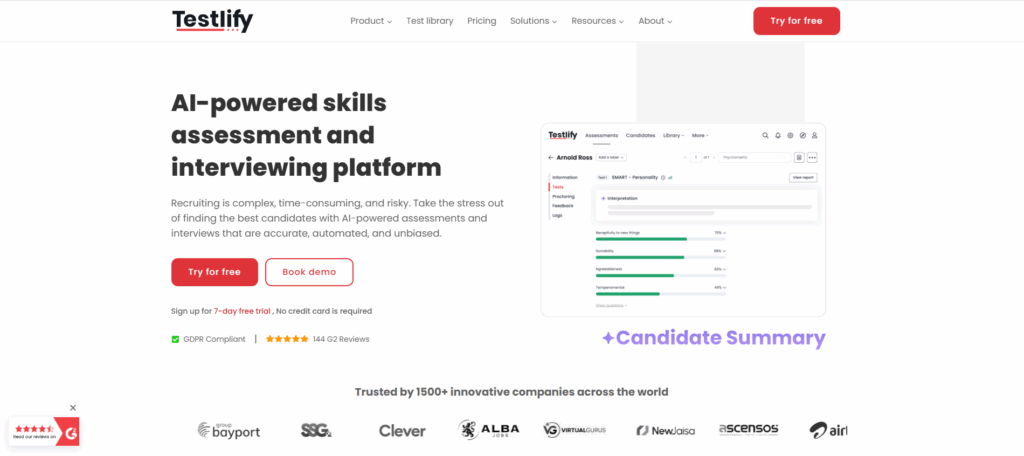
Testlify is an AI-powered skills assessment and interviewing platform. It covers the part TestInvite leaves to you: the test, the interview, the integrity evidence and the report all sit in one place, for technical and non-technical roles alike.
Key features
- 3,500+ role-specific tests across 4,500+ roles, plus more than 25 question types. Coding questions run in an embedded VS Code editor with up to 20 test cases, and vibe coding lets candidates direct AI tools to a working solution instead of writing syntax by hand.
- Office-app questions bound to the real products: Google Docs, Sheets and Slides, Microsoft Word, Excel and PowerPoint. Useful when the job is the spreadsheet.
- AI video, voice and phone interviews, one-way and two-way, with selectable AI avatars and voices, custom prompts, attempt and recording-time limits, automatic multilingual transcripts, and 150+ interview templates. Scoring is automatic with human override.
- Dual-device proctoring, where the candidate's phone becomes a second camera showing both the person and the screen. The session will not start until mobile monitoring is active. No other platform on this list offers it.
- Certificates issued per assessment with a configurable pass threshold, which matters if you moved to TestInvite for certification in the first place.
Pros and cons
- Pros: one tool for assessment, interviewing and integrity; the widest proctoring set here; a large ready-made test library; 100+ ATS integrations so your existing system stays the record of truth.
- Cons: it does not schedule live human interview panels, so calendar coordination stays with your ATS or scheduler. Test-taking is Chromium desktop only, and the mobile app is a capture fallback rather than a way to sit a whole assessment on a phone.
Best for
Teams hiring people rather than certifying them, especially where integrity matters and the process currently spans two or three tools. Testlify also ships a simple built-in pipeline for teams that have no applicant tracking system yet, while integrating with Greenhouse, Lever, Workable and the rest for the majority who already run one.
Pricing
On annual billing, Testlify plans start at $139 a month (billed $1,668 a year) for 100 credits and 3 seats. Basic is $279 a month for 300 credits and 5 seats, Business $699 a month for 1,000 credits and 10 seats, and Premium, Enterprise and Custom are quoted on volume. Extra seats are $15 each per month. There is a 7-day free trial, a 30-day money-back guarantee, and the price is locked for 24 months. White labeling, ATS integrations and SSO are $2,388-a-year add-ons on the self-serve tiers and included on Custom, so budget for them if you need them.
2. TestGorilla
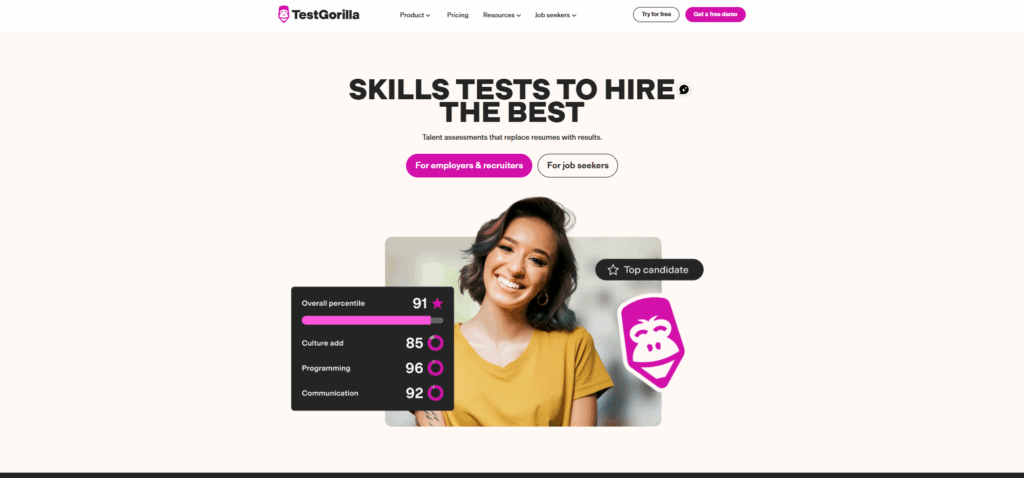
TestGorilla screens candidates with structured assessments drawn from a large ready-made library. It is built for speed and consistency rather than depth.
Key features
- Pre-built tests covering coding, numerical reasoning, cognitive ability, personality and culture add.
- One-way video questions for communication and customer-facing roles.
- Anonymous results and consistent scoring formats to reduce first-impression bias.
- Branding controls for the candidate-facing assessment.
Pros and cons
- Pros: quick to set up, a free tier to trial with, and a credit model that scales with use.
- Cons: no conversational interviewing, and the price moved sharply in 2026, so any figure you read on a review site is probably stale.
Best for
Small and mid-sized teams replacing resume screening with a standard test, where nobody needs proctoring beyond basic checks.
Pricing
Free plan at $0. Core is $142 a month, or $1,704 billed annually. Plus starts from $400 a month, or $4,800 annually. Enterprise is quoted.
3. Adaface
Adaface swaps the standard multiple-choice test for a chat-style assessment, which tends to keep more candidates from dropping out midway.
Key features
- Conversational assessments delivered by a chatbot that asks contextual questions.
- Job-specific test templates across engineering, finance, support and operations.
- Automatic pass, borderline and fail banding so recruiters can filter without reading every report.
- Control over question types, time limits and difficulty.
Pros and cons
- Pros: the best candidate experience of the pure testing tools here, and the cheapest genuine entry point at $180 a year.
- Cons: credits are consumed by test creation as well as invites, and there is no interviewing layer at all.
Best for
Teams whose problem is candidates abandoning a 45-minute exam, not teams whose problem is exam security.
Pricing
Individual $180 a year for 12 credits, Starter $500, Pro $900, Scale $3,000, Growth $5,500, Enterprise $20,000 and Unlimited $50,000 a year.
4. Vervoe
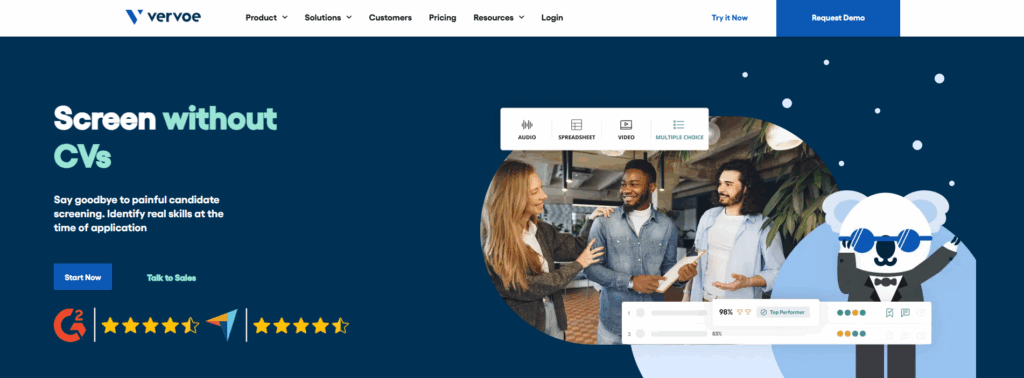
Vervoe is built on the idea that people should be judged on what they produce, not on what a resume claims. Candidates do job-related tasks and the platform grades and ranks the output.
Key features
- Job simulations across customer support, sales, marketing, tech and operations.
- Mixed answer formats in one assessment: text, video, file uploads and spreadsheets.
- AI grading that ranks responses on accuracy and relevance.
- Multiple reviewers can rate and comment in one dashboard.
Pros and cons
- Pros: the simulations are genuinely closer to the job than a quiz, which makes the results easier to defend.
- Cons: no published pricing at all. The pricing page rendered no figures when checked on 6 September 2026, only a request form.
Best for
Roles where output is the whole signal and a wrong hire is expensive enough to justify a longer assessment.
Pricing
Not published. Expect a quote based on candidate volume.
5. Codility
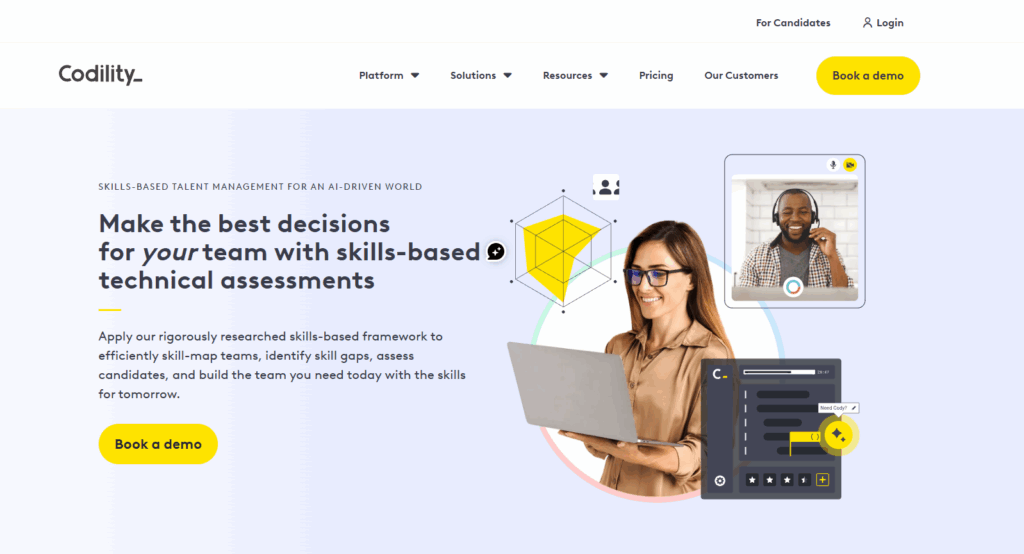
Codility is a coding assessment platform for engineering hiring at volume, with real coding tasks and a collaborative interview environment.
Key features
- A large task bank spanning basic algorithms through to system design, across 45+ languages.
- Live technical interviews in a shared editor with a compiler and test runner.
- Automated scoring on correctness, efficiency and readability.
- Task-level reports showing which test cases passed.
Pros and cons
- Pros: strong signal for algorithmic roles and a mature interview experience for engineers.
- Cons: engineering only. Nothing here helps you hire a marketer or a finance analyst.
Best for
Engineering organizations running structured technical loops at scale.
Pricing
Not verifiable. The public pricing page returned a server error when checked on 6 September 2026, so treat any figure from a third party as unconfirmed and ask for a written quote.
6. Mercer Mettl
Mercer Mettl is the closest thing on this list to a like-for-like TestInvite replacement, because it covers proctored exams and psychometrics rather than hiring alone.
Key features
- Coverage across 200+ job roles and levels, including domain exams and coding.
- A proctoring toolkit spanning AI monitoring, lockdown browsers and human proctors.
- Branding controls including a custom subdomain for assessments.
- Competency scores, percentile benchmarks and hiring recommendations.
Pros and cons
- Pros: credible on high-stakes exams and campus recruitment, with research-based psychometrics behind the content.
- Cons: quote-only pricing and an implementation that assumes an enterprise buyer with time.
Best for
Certification bodies and large campus-hiring programs that need proctoring rigor above all else.
Pricing
Quoted per organization based on tests, candidates and features.
7. iMocha
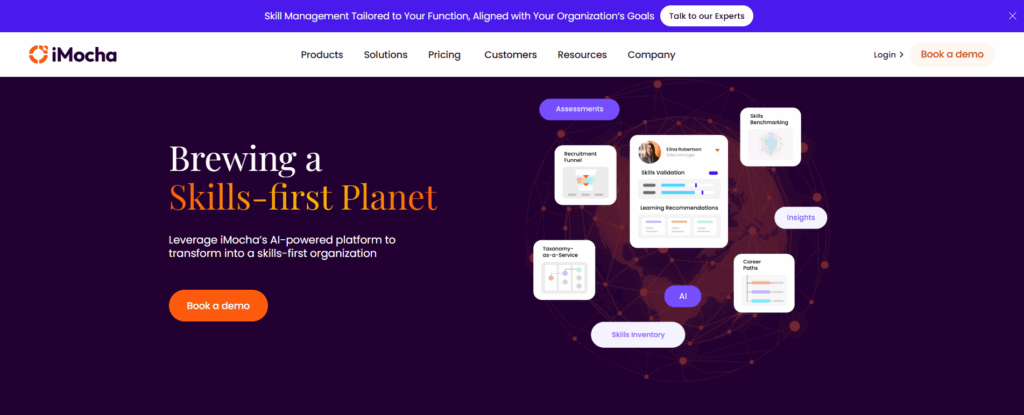
iMocha runs pre-employment testing and internal skills mapping off the same skills database, which makes it as much a workforce-planning tool as a hiring one.
Key features
- A large ready-to-use test library reaching into niche domains such as SAP and cybersecurity.
- A custom test builder that mixes library questions with your own scoring logic.
- An AI interviewer that runs conversational interviews and returns qualitative reports.
- Reporting by domain, skill group and question category.
Pros and cons
- Pros: the skills-taxonomy angle is genuinely useful if you also need to map the workforce you already have.
- Cons: the pricing page rendered no figures when checked on 6 September 2026, and the breadth can be more than a hiring team needs.
Best for
Enterprises pairing external hiring with internal reskilling under one skills framework.
Pricing
Not published. Demo-gated.
8. Hirevue
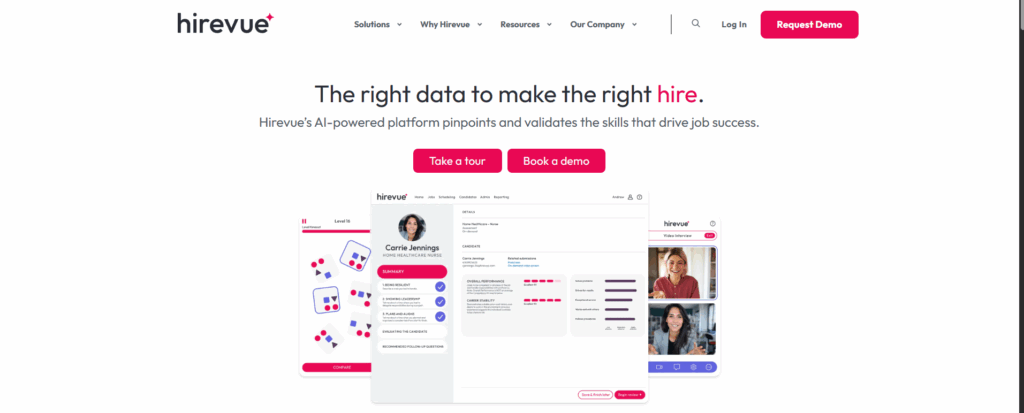
HireVue built the video-interviewing category and later added assessments around it. It is the option to look at if interviewing volume, not exam security, is your bottleneck.
Key features
- On-demand and live video interviews with structured scoring rubrics.
- Validated interview content built by industrial-organizational psychologists.
- Game-based assessments measuring problem solving and cognitive ability.
- Interview scheduling, candidate chatbots and ATS integration.
Pros and cons
- Pros: scheduling and automation for live human panels, which most assessment platforms do not touch.
- Cons: no published pricing, and automated scoring of interviews is exactly the use case regulators are watching.
Best for
Enterprises running thousands of interviews a quarter where coordination is the constraint.
Pricing
Not published. Booking a demo is the only route to a figure.
9. TestDome
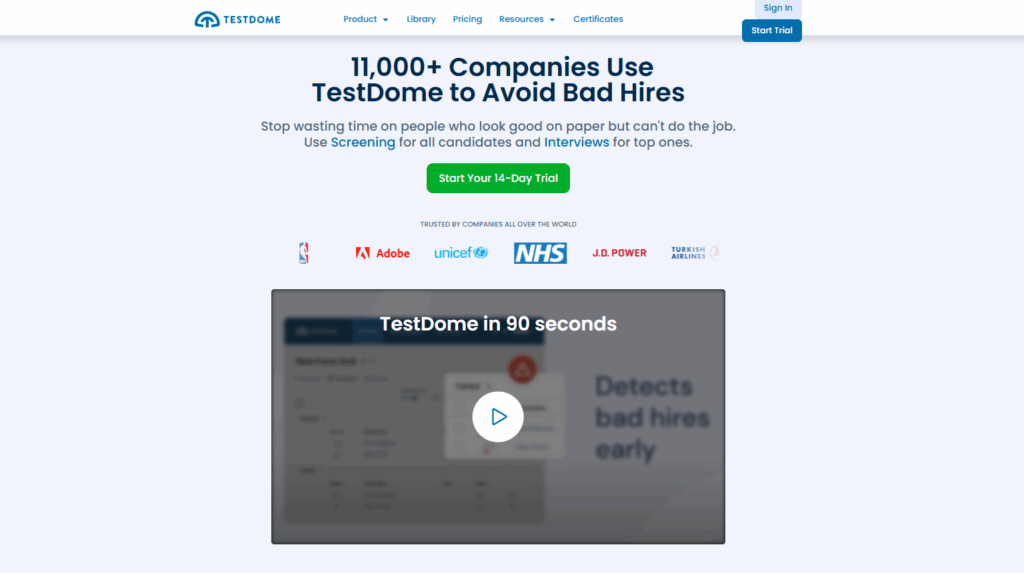
TestDome screens with work-sample tasks rather than theory questions, and it is the only platform here with genuinely simple pay-per-candidate pricing.
Key features
- Work-sample tests that mirror real job tasks.
- Pre-built tests across software development, accounting, customer service and data entry.
- Custom question creation alongside the library.
- Side-by-side scorecards with percentile rankings.
Pros and cons
- Pros: no subscription, so an occasional hiring need does not become a yearly line item.
- Cons: shallow on proctoring and reporting compared with the exam platforms.
Best for
Small teams hiring a handful of people a year who want a real test without a contract.
Pricing
Pay per candidate: $20 each for 5 candidates ($100), $16 for 25 ($400), $10 for 100 ($1,000), $8 for 300 ($2,400) and $7 for 600 ($4,200).
10. Coderbyte
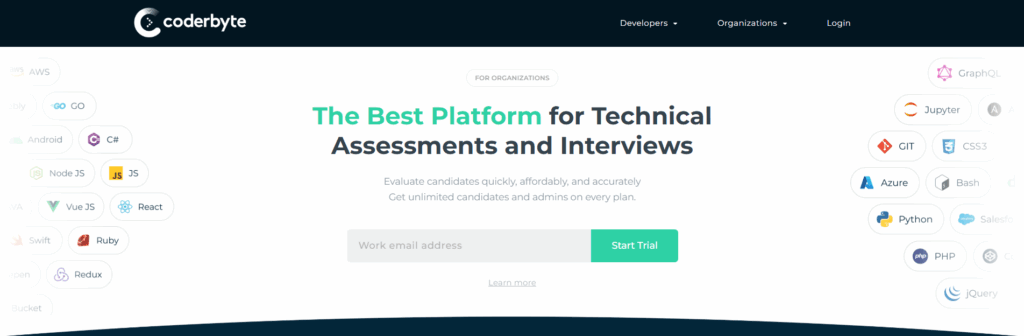
Coderbyte is a technical assessment platform aimed at startups and mid-sized companies hiring developers and data scientists.
Key features
- A large challenge library across 30+ languages, plus take-home projects.
- Multiple-choice, open-ended and SQL question types alongside code.
- Live coding interviews with a shared editor, spreadsheets, notebooks and a whiteboard.
- Reports carrying the candidate's code, playback of how it was written, and skill ratings.
Pros and cons
- Pros: the code playback is a good defence against pasted answers.
- Cons: the pricing page moved and the older public figures no longer resolve, so ask for current numbers in writing.
Best for
Growing engineering teams that want unlimited testing without enterprise procurement.
Pricing
Quote only at the time of writing.
11. Hiremojo
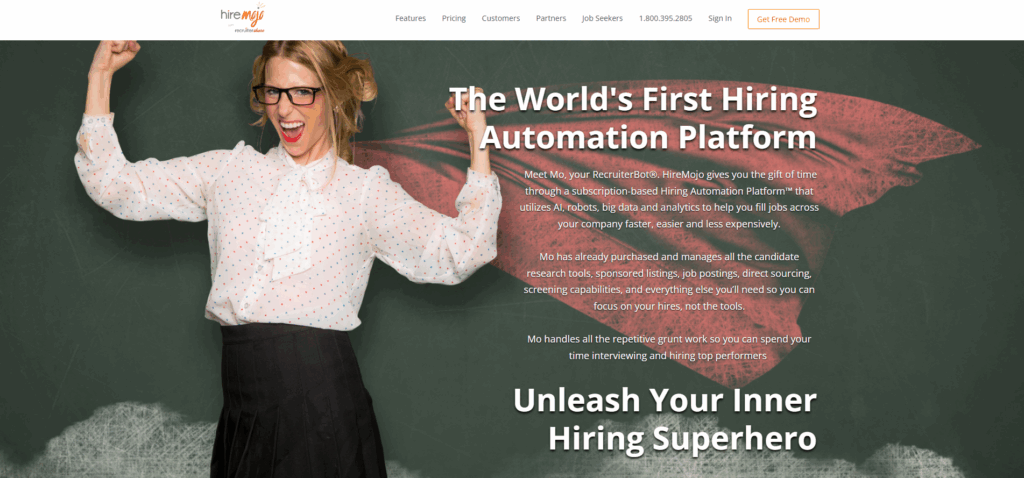
HireMojo is recruiting automation rather than assessment. It belongs on this list only if your real problem is filling the top of the funnel, not measuring the people in it.
Key features
- Job distribution to 100+ boards and sourcing channels with source analytics.
- A pre-screening engine that scores and ranks applicants from questionnaires.
- Ready-written job descriptions and interview question templates.
- Candidate tracking, scheduling and email in one dashboard.
Pros and cons
- Pros: covers sourcing and tracking that assessment tools deliberately leave alone.
- Cons: screening questionnaires are not skills assessment, and there is no proctoring.
Best for
Teams without recruiting infrastructure who need applicants before they need tests.
Pricing
Not disclosed publicly. Quote only.
12. HackerEarth
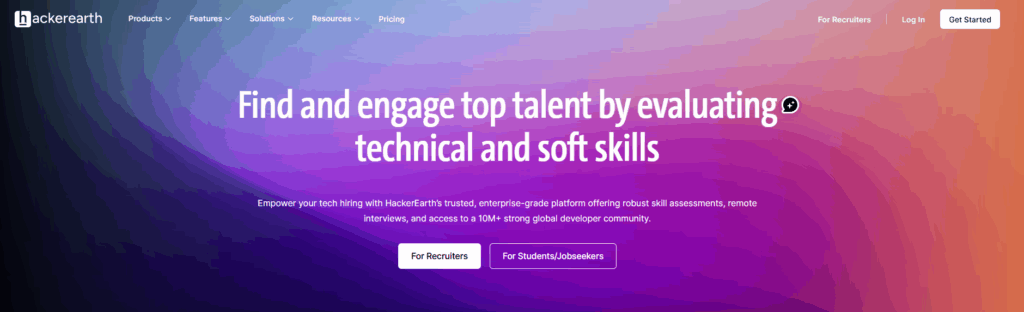
HackerEarth handles enterprise technical screening, developer interviews and hackathons, with proctoring that holds up better than most in the coding category.
Key features
- A question bank in the tens of thousands across software, data science, DevOps and cloud.
- FaceCode interviews with video, a shared editor and built-in question banks.
- Proctoring combining webcam monitoring, tab tracking, audio detection and behavior analysis.
- Skill maps, timing analytics and team score comparisons.
Pros and cons
- Pros: hackathons are a real sourcing channel for engineering brands, and few rivals run them.
- Cons: the pricing page rendered no figures when checked on 6 September 2026.
Best for
Engineering-heavy organizations that also recruit through community events.
Pricing
Not published. Quote based on hiring volume.
13. HackerRank
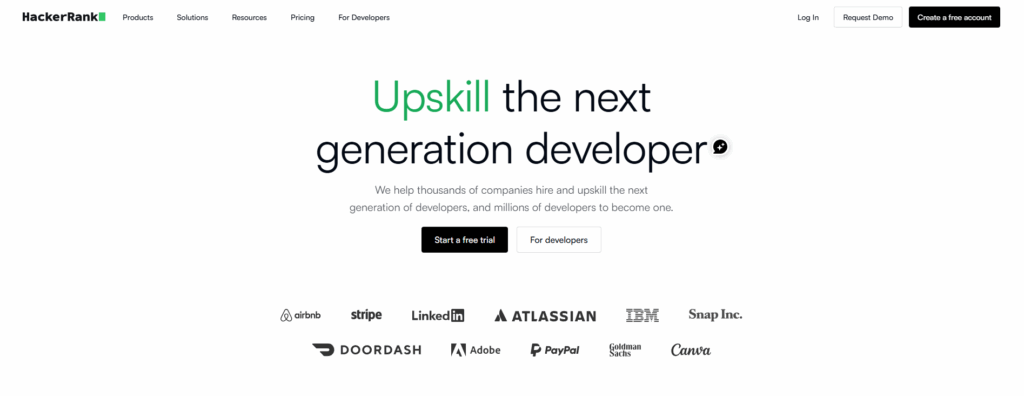
HackerRank is the default technical screening platform in large engineering organizations, with a deep content library and mature interview tooling.
Key features
- Thousands of questions across 45+ languages, covering frontend, backend, data, security and QA.
- Screening, take-homes and live interviews in one workflow.
- Plagiarism and copy detection alongside webcam recording.
- Custom rubrics for scoring code and problem solving.
Pros and cons
- Pros: candidates already know the interface, which cuts assessment anxiety.
- Cons: engineering only, enterprise-priced, and quote-gated.
Best for
Large engineering organizations standardizing technical interviews across many teams.
Pricing
Quote only. Earlier public figures no longer resolve.
14. eSkill
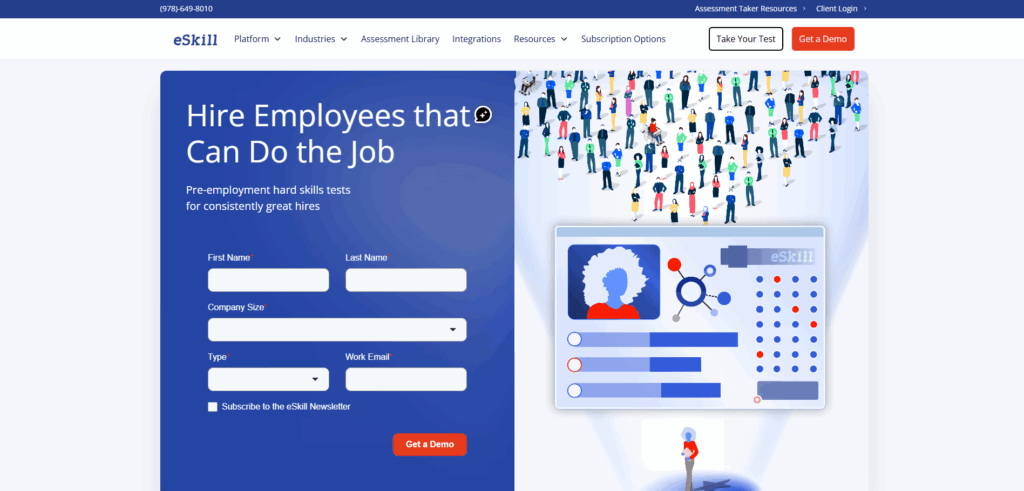
eSkill has been running pre-employment testing longer than most of this list, and its strength is breadth across non-technical roles.
Key features
- Hundreds of ready-made assessments, plus custom tests assembled by subject and topic.
- Interactive job simulations rather than question-and-answer only.
- Behavior monitoring covering copy-paste and tab switching, flagged in real time.
- Score breakdowns by subject and question.
Pros and cons
- Pros: good coverage of administrative, customer service and industrial roles that developer tools ignore.
- Cons: quote-only pricing, and the interface shows its age next to newer platforms.
Best for
High-volume hiring in operations, support and administrative roles.
Pricing
Not disclosed publicly. Quote only.
15. Canditech
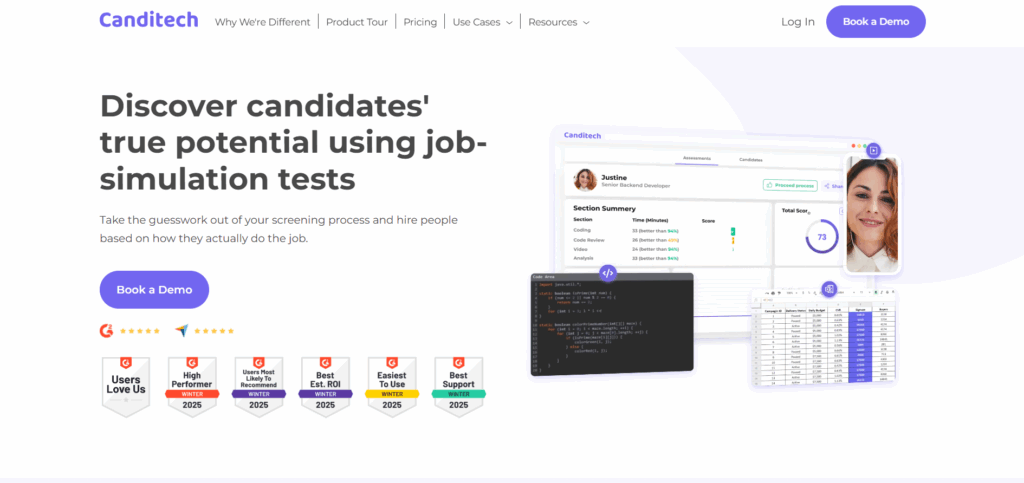
Canditech is a newer job-simulation platform that asks candidates to do a slice of the actual work: write code, clean a spreadsheet, draft a reply, handle a scenario.
Key features
- Hundreds of expert-built tests, plus a builder for your own.
- Simulations spanning code, data, writing and situational tasks.
- Automatic grading and ranking against the same criteria for every candidate.
- Benchmarks that compare results against job-specific baselines.
Pros and cons
- Pros: one assessment can cover a whole role rather than a single skill, which shortens the loop.
- Cons: the pricing page lists four tiers and no figures, checked 6 September 2026.
Best for
Teams replacing a first-round interview with a single realistic work sample.
Pricing
Not published. Individual, Team, Pro and Enterprise tiers, quoted.
Alternatives to other exam and assessment vendors
Google sends this page a steady stream of people looking to replace a different vendor entirely, so here are short, honest answers for the five that come up most.
Is there a better MeritTrac alternative?
MeritTrac is an Indian assessment company built around large-scale recruitment and educational testing, and teams usually look for a MeritTrac alternative when they want faster self-serve setup instead of a managed testing engagement. Testlify is the closest match for hiring: you can build and send an assessment the same day, and the interview and proctoring evidence come with it. If your use case is a nationwide certification exam with human invigilators, stay in the managed-exam category instead.
What works as a HireSelect alternative?
HireSelect is a cognitive, personality and skills testing suite aimed at pre-employment screening. Teams looking for a HireSelect alternative usually want the same aptitude and personality coverage with a modern candidate experience and interviews attached. Testlify covers cognitive ability, personality and situational judgement in the same library as role-specific skills, so you are not buying psychometrics and skills testing separately.
Which Qualified.io alternative suits coding roles?
Qualified.io is a developer assessment platform focused on real project-based coding. A Qualified.io alternative for coding roles should keep that fidelity, and the honest picks here are the developer specialists (Codility, HackerRank, HackerEarth, Coderbyte) if you hire engineers only. Testlify fits better when engineering is one of several functions you hire for, because the coding questions run in an embedded VS Code editor with up to 20 test cases while the rest of the library covers everyone else.
Is there a DoSelect alternative for developer screening?
DoSelect is a coding assessment tool with a large question bank across programming, data science and automation testing. Teams searching for a DoSelect alternative for developer screening usually want deeper anti-cheating, because pasted AI answers broke the older take-home model. Look for code playback, plagiarism detection and browser-level controls. Testlify adds AI-tool and browser-extension detection plus dual-device proctoring on top of the coding tests themselves.
What is a practical Evalground alternative?
Evalground is an assessment and applicant tracking product used mostly by smaller recruiting teams. The practical Evalground alternative depends on which half you actually use. If it is the testing, any platform in the table above will do more. If it is the tracking, Testlify ships a simple built-in pipeline (post a job, take applications, move candidates through stages) for teams that do not run a dedicated system yet, and integrates with the one you have if you do.
Which is the best TestInvite alternative?
Testlify, for anyone whose end goal is a hire rather than a certificate.
The reason is not the test library, even though 3,500+ tests across 4,500+ roles is a lot. It is that the assessment, the AI interview, the proctoring evidence and the report are one product. Nobody exports a CSV. Nobody reconciles a score in one system against an interview note in another. And the integrity evidence arrives in a form a hiring manager can read, because the Testlify Assessment Integrity Framework treats flags as evidence for a human to weigh rather than as an automatic rejection: green means the session was clean, yellow means a quick manual review is recommended, red means cheating was confirmed. Face verification data is deleted after 30 days and candidates can withdraw consent at any time.
That framing matters more than it sounds. Hiring volume is real (US labor data recorded 5.1 million hires in July 2026, a hires rate of 3.2 percent), and at that scale an auto-reject rule applied to a webcam glitch is a lawsuit waiting to happen.
The honest exceptions: if you run proctored certification exams as your actual business, stay with a dedicated exam platform. If you hire engineers and nobody else, the developer specialists will serve you better. And if your bottleneck is coordinating live human panels, that is scheduling, which is a different purchase.
For a side-by-side on the two products in detail, read the Testlify and TestInvite comparison.
Try Testlify on your next open role
Pick one role you are hiring for now, build the assessment, and send it to your next five candidates. You will know inside a week whether scored evidence beats resume screening for that role. Start a free trial, or book a demo and bring the role you are stuck on.
Key takeaways
- Decide whether you are buying an exam or a hiring decision. TestInvite is exam software, and it is good at that. If your process ends with a score, the switching case is weak. If it ends with an offer, you need interviews and reviewer scoring attached, and that is what makes a platform change worth the migration effort.
- Credit models punish growth. A plan sized for 500 exams a year is not the same purchase at 5,000, and TestInvite's own ladder runs from $900 to $35,000 a year. Model your worst-case hiring volume before you sign, because moving mid-contract costs more than starting on the right tier.
- Price opacity is a signal. Four of the 15 platforms here publish no figures at all and several more quote only. That is not automatically bad, but it means budgeting is guesswork until you talk to sales, so start those conversations early rather than after you have shortlisted.
- Integrity has to be evidence, not automation. A proctoring flag is a reason for a human to look again, not a reason to reject. Ask every vendor what a recruiter sees when a flag fires, and whether rejection is automatic. If they cannot answer clearly, that is your answer.
- Where you hire changes what you can automate. New York City requires a bias audit within one year of use for automated employment decision tools, plus public results and candidate notice. If your shortlist includes automated scoring, the compliance work is part of the purchase, not an afterthought.
- Fit beats feature count every time. A certification platform in a recruiting team, or a developer tool used to hire salespeople, fails for the same reason: it was built for a different job. Shortlist on who the tool was designed for, then compare features.
FAQs

Director of Marketing
Akash Patange is the Director of Marketing at Testlify, where he works closely with HR leaders and recruiters to help organizations improve hiring outcomes. He writes about talent assessment, recruitment technology, and data-driven hiring practices.
LinkedInRelated resources
View all
Alternatives
Top 15 HackerRank Alternatives and Competitors in 2026
Alternatives
Top 15 HackerEarth Alternatives and Competitors
Alternatives
Top 15 Vervoe Alternatives and Competitors in 2026

Alternatives
Top 15 Hiremojo Alternatives and Competitors
Alternatives
Top 15 Coderbyte Alternatives and Competitors
Alternatives
Top 15 TestDome Alternatives and Competitors in 2026
Get started.
Hire on proof, not resumes.
Run your first skills-based assessment free — no credit card required.