
Top 15 UbiAptitude Alternatives and Competitors
Discover 15 powerful UbiAptitude alternatives to streamline your hiring process and assess candidates with confidence.
The best UbiAptitude alternatives are the platforms that test what the job actually needs: work samples, role-specific skills, structured interviews and proctoring you can defend, not just a verbal and numerical score. UbiAptitude covers aptitude and psychometric testing well. Most teams outgrow it when hiring moves past graduate intake into technical, customer-facing and high-volume roles.
This guide compares 15 UbiAptitude alternatives on what they measure, how they handle cheating, how they price, and who each one genuinely suits. Testlify is first because it is our platform, and the honest limits are listed alongside the strengths.
 ChatGPT
 Gemini
 Claude
 Grok
Grok Perplexity
TL;DR
- UbiAptitude is a web-based aptitude and skill-testing tool from Ubitech Solutions, built around verbal reasoning, numerical ability, communication and psychometric tests.
- Teams usually leave it for one of four reasons: they need work-sample and coding tests, stronger proctoring, interview capability in the same tool, or clearer pricing.
- A single aptitude score is a weaker predictor than most vendors imply. The 2022 reanalysis of 85 years of selection research put structured interviews among the strongest predictors and revised many older validity estimates down.
- Pick by the roles you hire for. Coding-heavy teams and volume graduate hiring need different tools, and the wrong fit shows up as candidate drop-off, not as a bad report.
- Whatever you buy, aptitude tests carry adverse-impact risk. In the US you have to show a selection procedure is job-related and consistent with business necessity.

What is UbiAptitude?
UbiAptitude is an online aptitude assessment platform from Ubitech Solutions. It gives recruiters a battery of pre-employment tests covering verbal reasoning, numerical ability, communication skills and technical knowledge, plus psychometric tests for attitude and behavior. It runs in the browser with no install, scores automatically, and reports results as soon as a candidate finishes.
It is also used for skill-gap analysis on existing employees, which is why it shows up in campus hiring and internal L and D as often as in recruiting.
Why do teams look for UbiAptitude alternatives?
Four reasons come up again and again.
The tests measure reasoning, not the job. Aptitude batteries are good at general ability. They are much weaker at telling you whether someone can write a clean SQL query, calm an angry customer, or build a working spreadsheet model. For those, you need work samples and role-specific tests.
Remote testing broke the honor system. A test taken at home with a second monitor and an AI assistant open is not the test you designed. Proctoring depth is now a buying criterion, not a nice-to-have.
Screening and interviewing sit in different tools. Teams running graduate intake or volume hiring end up stitching a test platform to a video tool to a spreadsheet, and candidates fall out of the gaps.
Skills keep moving. Employers expect 39% of workers' core skills to change by 2030, and 63% already name skills gaps as the main barrier to transformation, according to the Future of Jobs Report 2025. A fixed aptitude battery ages badly against that.
How we evaluated these tools
Every tool below was assessed on the same five things:
- What it measures. Aptitude and psychometrics only, or work samples, coding and role-specific skills as well.
- Integrity controls. What stops a candidate getting help, and what evidence a recruiter gets to judge it.
- Interview capability. Whether interviews live in the same product or need another vendor.
- Pricing shape. Whether the cost is published, and whether it scales by candidate volume or by seat.
- Who it fits. Team size, hiring volume, and role mix. A tool that is right for 40 engineering hires is rarely right for 4,000 graduate applications.
One caution on validity. It is tempting to buy the platform with the biggest test library, but the evidence does not reward a single score. Sackett and colleagues' 2022 reanalysis of selection-method validity revised many long-quoted coefficients downward and placed structured interviews among the strongest predictors, while years of education and general experience sat among the weakest. Read that as an argument for combining signals rather than for buying a bigger battery.
Quick comparison table
Tool | Best for | Standout capability | Pricing shape |
|---|---|---|---|
Testlify | Teams replacing aptitude-only testing with skills plus interviews | Dual-device proctoring and conversational AI interviews in one platform | Published credit tiers, annual or monthly |
TestGorilla | Small teams wanting fast, simple multi-test assessments | Large library of short, stackable tests | Published plans, free tier |
Adaface | Engineering teams that care about candidate drop-off | Conversational, chat-style assessments | Published plans |
Vervoe | Roles where output matters more than a score | AI-graded job simulations | Quote-led, published entry tier |
Codility | Structured technical hiring at scale | Standardized coding tasks and live pair programming | Quote-led |
Mercer Mettl | Regulated and campus hiring in India and the Middle East | Broad psychometrics plus live remote proctoring | Quote-led |
iMocha | Enterprises mapping an internal skills taxonomy | Very large skills library and skills intelligence | Quote-led |
HireVue | High-volume hiring built around video interviews | Structured video interviewing at enterprise scale | Quote-led |
TestDome | Small teams wanting practical role tests without a sales call | Task-based questions with self-serve checkout | Published, pay per candidate |
Coderbyte | Developer screening on a small budget | Large bank of coding challenges | Published plans |
HireMojo | Teams that want sourcing and screening together | Automated hiring workflow across the funnel | Quote-led |
HackerEarth | Engineering hiring plus hackathons and branding | Coding contests that double as pipeline building | Published plans and quotes |
HackerRank | Established engineering orgs standardizing interviews | Deep technical assessment and interview tooling | Quote-led, published entry tier |
TestInvite | Teams building their own exams and question banks | Exam authoring control and secure delivery | Published, usage based |
eSkill | Customized job-fit tests for operational roles | Mix-and-match subject and behavioral tests | Quote-led |
1. Testlify
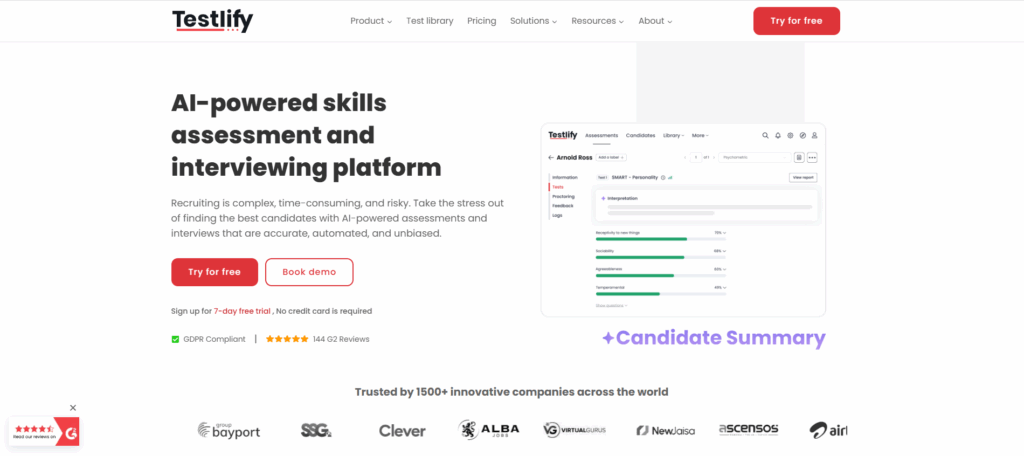
Testlify is an AI-assisted, human-led assessment platform. It covers the aptitude and psychometric ground UbiAptitude does, then adds work samples, coding, software-skills tasks, AI interviews and proctoring in the same product, so a graduate intake and a senior engineering hire can run on one system.
Key features
- 25+ question types, including single and multi select, ranking, fill in the blank, file upload, typing tests and practical tasks submitted by file or URL.
- Real work in real tools. Candidates complete tasks inside Google Docs, Sheets and Slides or Microsoft Word, Excel and PowerPoint, which tests the software skill instead of asking about it.
- Coding that reflects 2026. A browser-based VS Code editor, multi-file projects, up to 20 visible or hidden test cases, SQLite database test cases, and vibe coding, where candidates direct AI tools to reach a working solution instead of writing every line by hand.
- Interviews in the same platform. One-way async video, two-way conversational AI video, voice and audio questions, and outbound AI phone interviews, with selectable AI avatars and voices, custom prompts, attempt and recording-time limits, automatic multilingual transcripts and 150+ interview templates.
- Dual-device proctoring. The candidate's phone becomes a second camera showing both the person and their screen. The session cannot start until mobile monitoring is active. Most platforms have no answer to this.
- Item-level psychometrics. Difficulty index, discrimination index and a quality-risk flag on every question, so you can see which items are actually doing work. This is test-publisher territory that assessment tools rarely expose.
- AI with a human in the loop. AI auto-scores open answers and writes insights, but scores can be advisory only, questions can be routed to a named human reviewer, and the product itself states that AI scores are for guidance and final decisions stay with people.
- AI checker that classifies an answer as human, AI generated or mixed, plus AI-tool and browser-extension detection.
- 100+ ATS integrations including Greenhouse, Lever and Workday, so Testlify screens and your ATS stays the system of record. Teams with no ATS get a simple built-in hiring pipeline: job requisitions, an application form, job-board publishing and stages running from applied through to shortlisted.
Pros
- Aptitude, work samples, coding and interviews in one tool, so you stop paying for three.
- Proctoring evidence is graded green, yellow or red, with yellow flagged for manual review rather than an automatic rejection.
- SOC 2 Type II, ISO 27001, GDPR and NYC Local Law 144 support, with face-verification data deleted after 30 days.
- Pricing is published rather than quote-only.
Cons
- No scheduling for live human interview panels. Testlify runs the assessment and the AI interview; calendar coordination for a panel stays in your ATS or calendar tool.
- Assessments need a Chromium browser (Chrome or Edge) on desktop. The mobile app is a capture fallback, not a way to sit a full test on a phone.
- AI resume scoring currently works with Greenhouse, with other ATS integrations on request.
- White labeling, SAML SSO and the 100+ ATS integration pack are paid add-ons on the self-serve tiers, not bundled.
Best for
Teams under about 200 people who are outgrowing an aptitude-only tool and do not want to buy a separate interview platform. It also suits agencies and professional-services firms hiring across mixed roles, where one week is a designer and the next is an accountant.
Testlify pricing
Pricing is a credit selector crossed with an annual or monthly toggle, where one credit covers one started assessment. On annual billing, published plans run: Starter at $139 a month (100 credits a year, 3 seats), Basic at $279 a month (300 credits, 5 seats), and Business at $699 a month (1,000 credits, 10 seats). Premium, Enterprise and Custom tiers are quoted by sales. There is a 7-day free trial with no card, a 30-day money-back guarantee, and pricing is locked for 24 months. AI phone interviews are metered at $0.18 a minute.
Pro Tip: before you compare prices, count the candidates who actually start an assessment in a year, not the ones you invite. Credit-based pricing is billed on starts, and invite lists always run longer than the number of people who show up.
2. TestGorilla
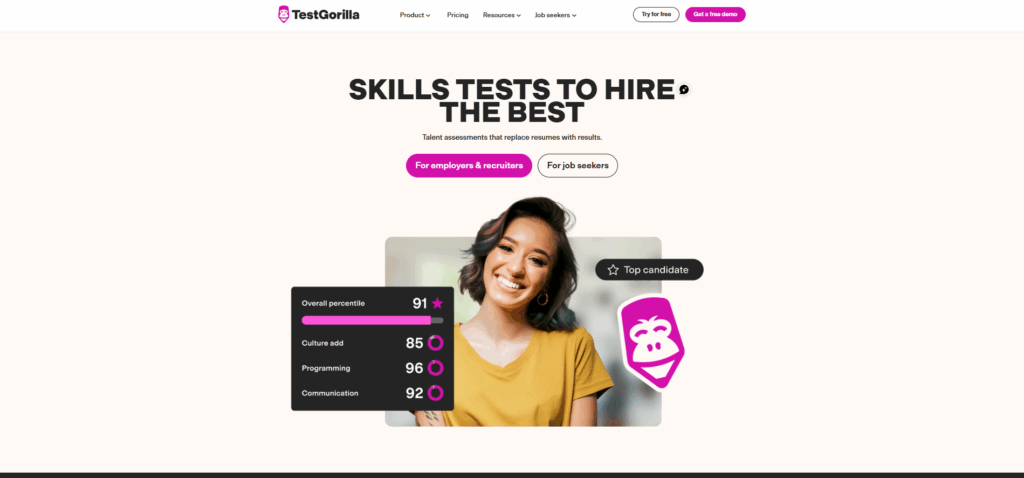
TestGorilla is built around short, stackable tests. You assemble an assessment from several ten-minute modules covering cognitive ability, personality, language and role knowledge, then compare candidates on one scorecard. It is one of the easiest platforms to get running in an afternoon.
Key features
- Library of short tests spanning cognitive ability, programming, language, personality and culture fit.
- One-way video questions for communication and customer-facing roles.
- Anti-cheating signals including webcam snapshots and full-screen tracking.
- Branding controls on the candidate-facing assessment.
Best for
Small and mid-sized teams that want to replace CV screening quickly and do not need deep technical assessment or heavy proctoring.
Pricing shape
Published plans with a free tier, priced by feature level rather than purely by candidate volume.
3. Adaface
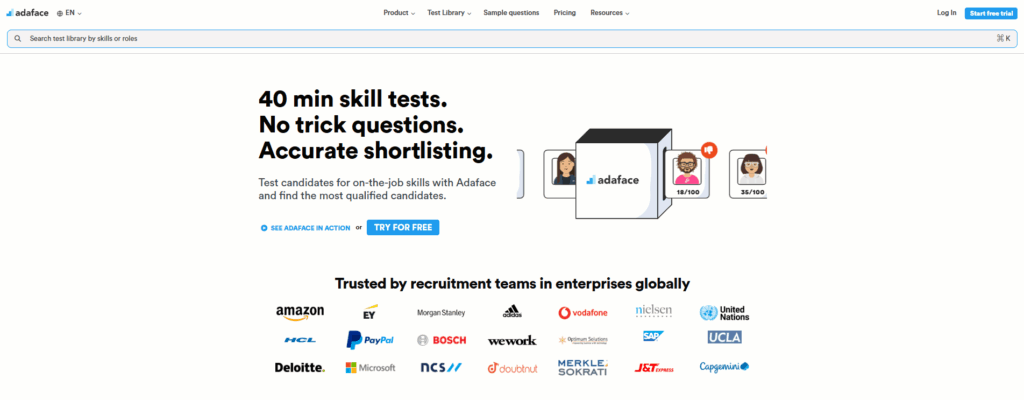
Adaface's bet is that candidates abandon long multiple-choice tests, so it delivers assessments as a chat conversation instead. For engineering and analytics roles where good candidates have options, that completion-rate argument is worth taking seriously.
Key features
- Conversational, chatbot-style test delivery.
- Role-specific test templates across engineering, finance and support.
- Custom question support for company-specific scenarios.
- Reporting aimed at a quick shortlist rather than a long psychometric profile.
Best for
Technical and analytical hiring where candidate experience drives completion, and where the team would rather have most applicants finish a shorter test than a minority finish a longer one.
Pricing shape
Published plans, tiered by the number of candidates assessed.
4. Vervoe
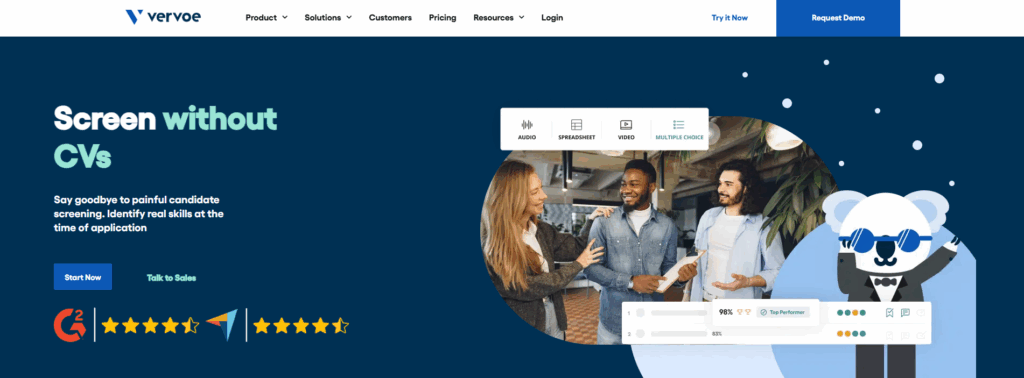
Vervoe scores what a candidate produces rather than what they select. Assessments are built as job simulations, and the AI grades open-ended work, ranking candidates on output. If your problem is that a strong test score keeps turning into a weak hire, this is the category to look at.
Key features
- AI-graded job simulations with open-ended tasks.
- Automatic candidate ranking based on submitted work.
- Large template library across sales, support, marketing and operations.
- Grading that can be trained on how your own team rates answers.
Best for
Sales, support, marketing and operations roles where the deliverable is judgment and communication, not a right answer.
Pricing shape
A published entry tier with larger volumes quoted by sales.
5. Codility
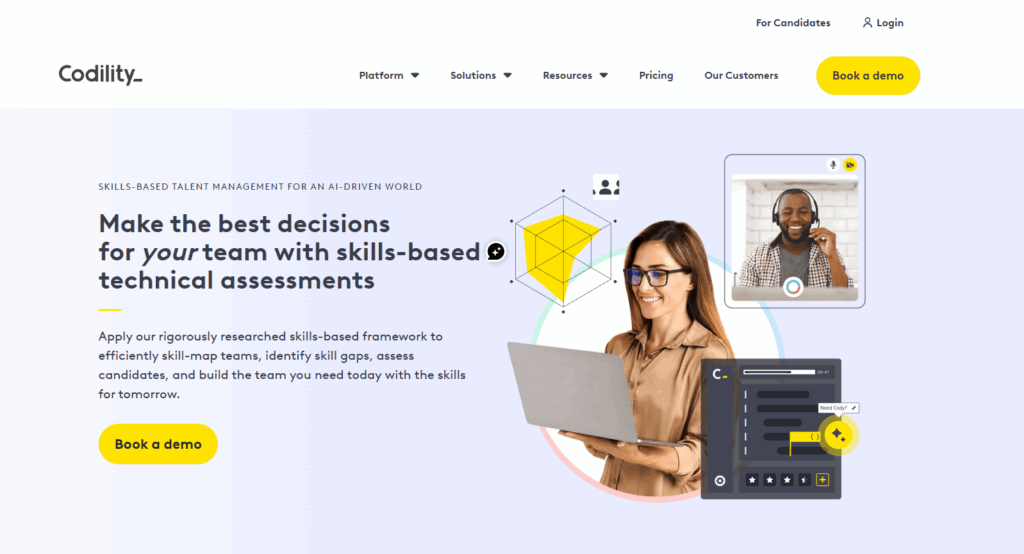
Codility is a technical hiring platform aimed at engineering organizations that want every candidate assessed the same way. It leans hard on standardization: calibrated tasks, consistent scoring, and reporting built for defending a decision to a hiring committee.
Key features
- Standardized coding tasks with task difficulty calibrated across candidates.
- Live pair-programming interviews in a shared editor.
- Plagiarism and similarity checks on submitted code.
- Reporting designed for structured engineering panels.
Best for
Engineering teams hiring at scale that need consistency across many interviewers and locations.
Pricing shape
Quote-led, aimed at mid-market and enterprise engineering teams.
6. Mercer Mettl
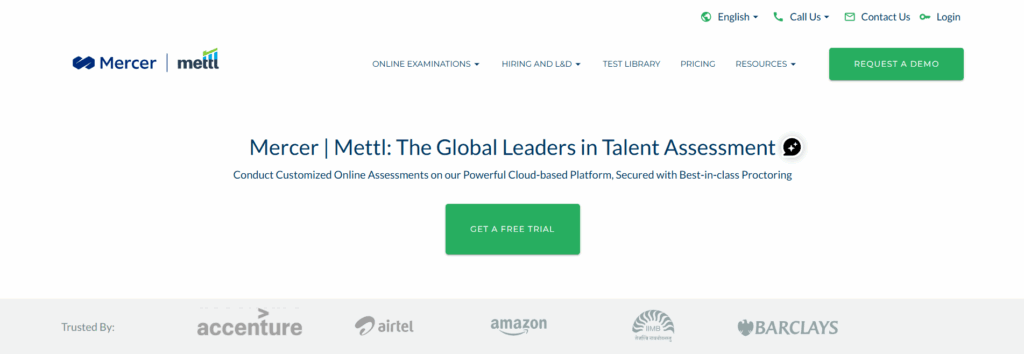
Mettl is the closest like-for-like swap for UbiAptitude, particularly for teams hiring in India and the Middle East. It combines a wide psychometric and aptitude catalog with remote proctoring built for high-stakes exams, which is why universities and certification bodies use it alongside employers.
Key features
- Broad aptitude, psychometric and behavioral catalog.
- Remote proctoring including live human proctoring and record-and-review.
- Campus and volume hiring workflows.
- Certification and exam delivery alongside recruitment testing.
Best for
Campus recruitment, regulated hiring and certification programs that need supervised testing at volume.
Pricing shape
Quote-led, typically annual contracts.
7. iMocha
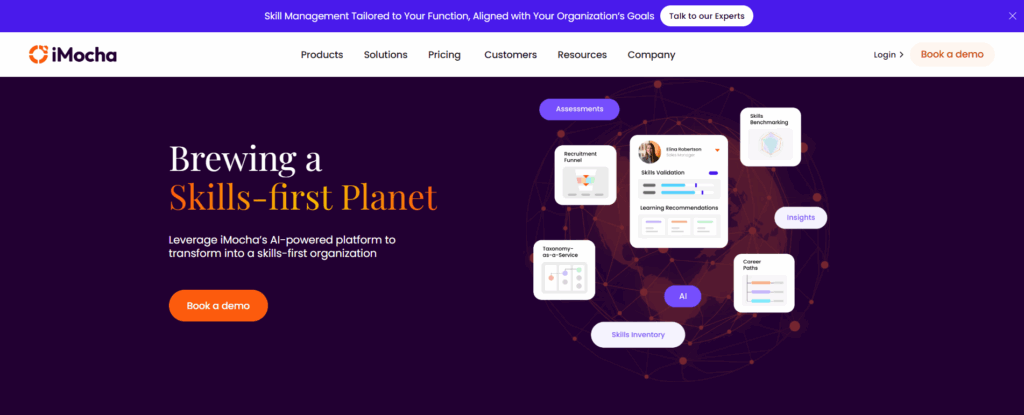
iMocha has moved from pre-hire testing towards skills intelligence: mapping the skills an organization already has, finding the gaps, and using assessments to validate both. For an enterprise building a skills taxonomy, that internal use case often justifies the platform more than hiring does.
Key features
- Very large skills library spanning technical, business and language skills.
- Skills-gap analysis and internal talent mapping.
- Custom test authoring for company-specific competencies.
- Enterprise reporting across business units.
Best for
Large enterprises running internal mobility and workforce planning alongside recruitment.
Pricing shape
Quote-led enterprise agreements.
8. HireVue
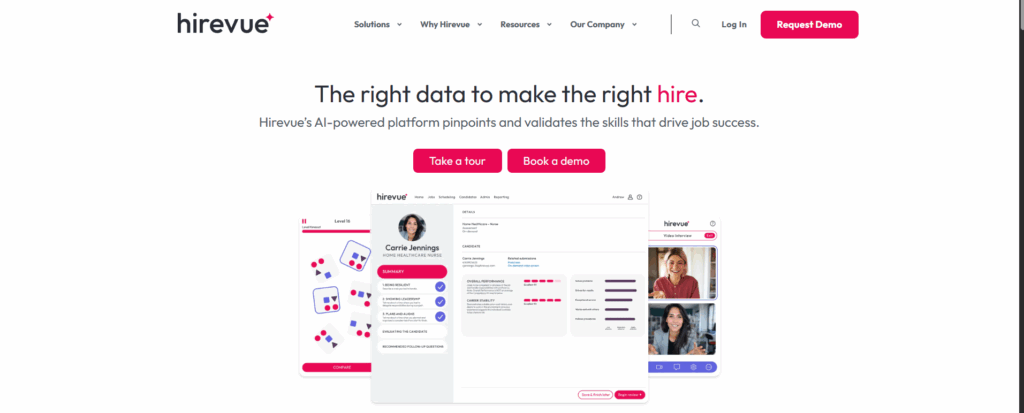
HireVue is an interview-led platform. Assessments exist, but the center of gravity is structured video interviewing at very high volume, with scheduling and workflow built around it. Retail, hospitality and financial-services teams hiring thousands of people a year are the natural buyers.
Key features
- Structured on-demand and live video interviewing.
- Interview scheduling and coordination at volume.
- Game-based and technical assessments alongside interviews.
- Enterprise workflow and compliance tooling.
Best for
Enterprises whose bottleneck is interview throughput rather than test design.
Pricing shape
Quote-led enterprise contracts.
9. TestDome
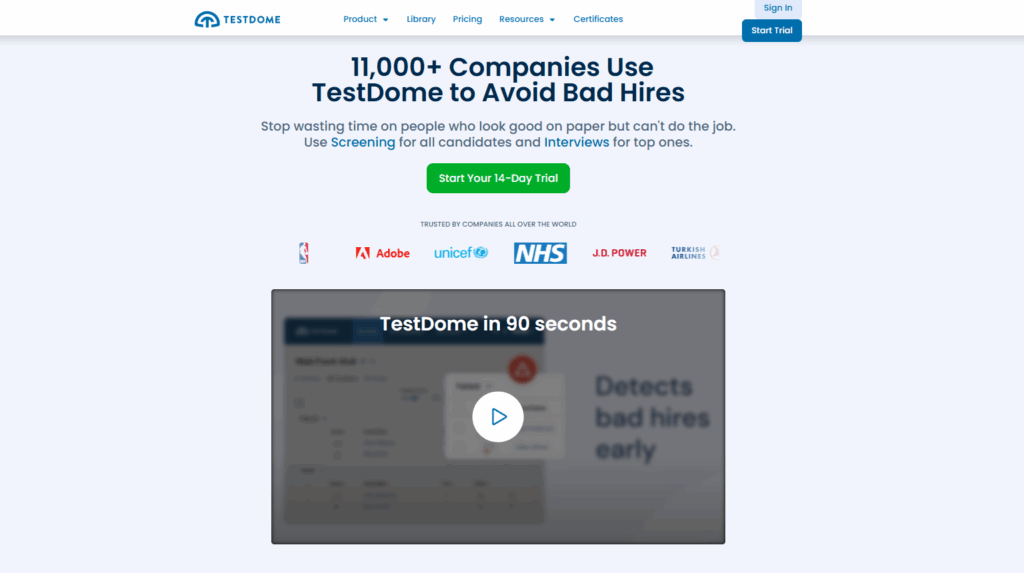
TestDome keeps things narrow and practical. Questions are short tasks rather than trivia, the catalog covers programming plus common office and accounting roles, and you can buy without talking to anyone. For a team making a handful of hires a quarter, that matters more than feature depth.
Key features
- Task-based questions across programming, data, accounting and office skills.
- Automatic scoring with worked solutions.
- Basic proctoring including webcam snapshots and copy-paste detection.
- Self-serve purchase with no sales call.
Best for
Small teams and single hiring managers who want a practical test today.
Pricing shape
Published and pay per candidate, with packs of candidate slots.
10. Coderbyte
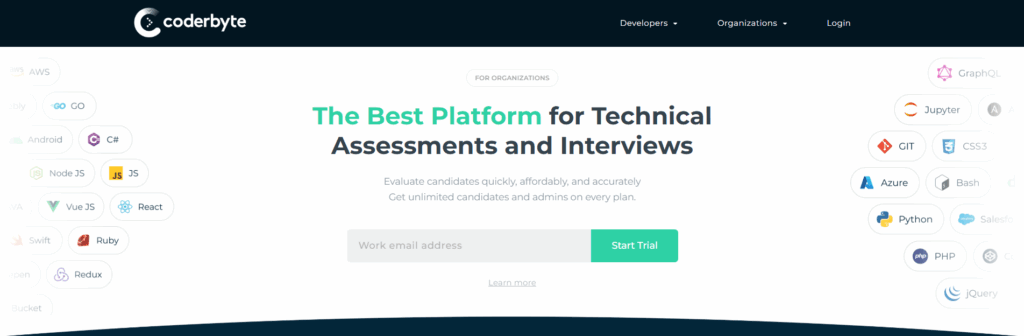
Coderbyte started as a practice site for developers, which shows in the size of its challenge bank. As a hiring tool it is a straightforward, affordable way to screen developers before an engineer spends an hour on an interview.
Key features
- Large library of coding challenges across many languages.
- Take-home projects and timed screening tests.
- Video interviews with a shared code editor.
- Candidate reports with code playback.
Best for
Startups and small engineering teams screening developers on a tight budget.
Pricing shape
Published plans by seat and candidate volume.
11. HireMojo
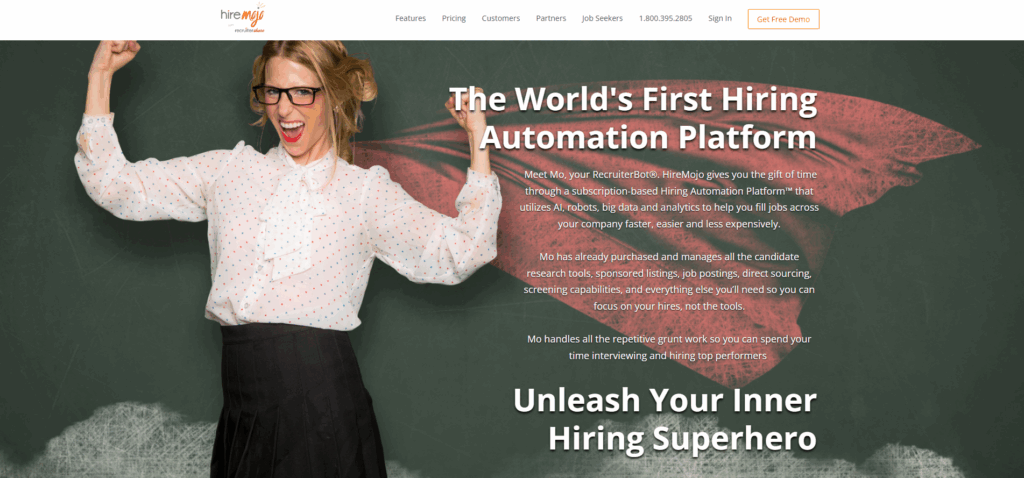
HireMojo is less an assessment vendor than a hiring-automation system: job advertising, candidate sourcing, screening and scheduling packaged together. It belongs on this list only if your gap is the whole funnel rather than the test itself.
Key features
- Automated job posting and candidate sourcing.
- Screening questions and interview scheduling in one workflow.
- Recruiting analytics across the funnel.
- Templates built from previous hiring campaigns.
Best for
Small teams with no recruiter who need the whole process handled, not a deeper test.
Pricing shape
Subscription by open role, quoted.
12. HackerEarth
HackerEarth pairs developer assessment with hackathons and coding contests, so the same platform screens candidates and builds a pipeline. For companies that recruit engineers from campuses or developer communities, the events side is often the real reason to buy.
Key features
- Coding assessments across a wide language range.
- Hackathons and contests used for employer branding and sourcing.
- Live technical interviews with a collaborative editor.
- Plagiarism detection on submissions.
Best for
Engineering teams that recruit through campus programs and developer events.
Pricing shape
Published plans for smaller teams, quoted for enterprise.
13. HackerRank
HackerRank is the default technical assessment tool at many established engineering organizations. Its strength is breadth and familiarity: a very large question bank, real-world project tasks, and interview tooling engineers already recognise.
Key features
- Extensive technical question library and real-world project tasks.
- Collaborative interview environment for live technical rounds.
- Plagiarism detection and role-based benchmarking.
- Integrations across common engineering and recruiting stacks.
Best for
Established engineering organizations standardizing how every candidate is technically assessed.
Pricing shape
A published entry tier with mid-market and enterprise pricing quoted.
14. TestInvite
TestInvite is exam software more than a test catalog. You build the questions, control the delivery rules, and run secure sessions. If your value is in assessment content you have already written, this gives you more control than a library-first platform.
Key features
- Question-bank authoring with sections, timing rules and randomization.
- Secure delivery with screen recording and webcam monitoring.
- Detailed item and section analytics.
- Multi-language exam delivery.
Best for
Teams and training providers running their own exams and certifications.
Pricing shape
Published, usage based by session.
15. eSkill
eSkill's pitch is customization. Rather than a fixed battery, you build a job-fit test by mixing subject areas, then add behavioral or video questions. It has a long track record in operational, clerical and call center hiring.
Key features
- Mix-and-match subject tests to build a role-specific assessment.
- Behavioral questions and one-way video responses.
- Simulation questions for office software and customer scenarios.
- Proctoring options for supervised sessions.
Best for
Operational, clerical, contact center and staffing use cases needing tailored job-fit tests. Our roundup of eSkill alternatives goes deeper if this is the shortlist you are on.
Pricing shape
Quote-led, by subscription.
How should you choose between these tools?
Start with the roles, not the catalog. Write down the five roles you will hire most of next year, then ask what evidence would actually convince you someone can do each one. For a data analyst that is a query and a chart. For a support lead it is a written reply to an angry customer. An aptitude score is a proxy for both, and a weak one.
That is the thinking behind the Testlify Multi-Signal Talent Evaluation Model: one signal is fragile, several are not. Instead of advancing a candidate on one strong test score or one polished interview, you advance them when independent signals agree, for example a work sample, a structured interview and a reference check pointing the same way. It is also the practical answer to the validity research above, which keeps finding that how you combine and structure evidence matters more than which single instrument you buy.
Two things to settle before you sign anything.
Adverse impact. Aptitude and cognitive tests are among the most likely selection tools to produce group differences. The EEOC's guidance on employment tests is blunt about where the burden sits: if a selection procedure has a disparate impact, the employer has to show it is job-related and consistent with business necessity. A vendor's validation study is evidence, not a defense you can borrow wholesale.
Automated decision rules. If you hire in New York City and any tool substantially assists a screening decision, Local Law 144 requires an annual independent bias audit and notice to candidates. Ask each vendor how they support that before the demo ends, not after.
Start testing for the job, not the aptitude
If aptitude scores keep clearing candidates who then struggle in the role, the fix is usually evidence, not a bigger battery. Testlify covers the reasoning and personality tests you already run, adds work samples, coding and AI interviews, and keeps the final call with your team. You can browse the test library, start on a 7-day free trial with no card, or book a demo and have someone build a role-specific assessment with you. If UbiAptitude is your current tool, the Testlify vs UbiAptitude comparison covers the switch in detail, and the ATS integration list shows how results reach your existing pipeline.
Key takeaways
- Aptitude testing is a starting point, not a hiring system. UbiAptitude does reasoning and psychometrics competently, but reasoning scores do not tell you whether someone can do the job. If your last three mis-hires all passed the test, that is the signal to widen the evidence, not to raise the cut-off.
- Buy for the roles you actually hire. A platform built for 4,000 graduate applications is the wrong shape for 40 engineering hires, and the wrong fit shows up as candidate drop-off and recruiter workarounds rather than as an obviously bad product.
- Combine signals instead of trusting one score. The 2022 reanalysis of selection-method validity put structured interviews among the strongest predictors and revised older estimates down. Pair a work sample with a structured interview and you get a more defensible decision than any single battery gives you.
- Treat proctoring as a buying criterion. Remote testing without integrity controls produces confident numbers about the wrong person. Look for evidence a recruiter can review, such as graded flags, rather than automatic rejection.
- Count started assessments, not invitations. Credit-based pricing bills on candidates who begin a test, not on everyone you email, so the quote you compare should use the number who actually start rather than the size of your invite list.
- Settle compliance before the demo ends. Adverse-impact exposure sits with the employer, and NYC Local Law 144 adds an annual bias audit and candidate notice for automated tools. Vendors should make that easy to evidence.
FAQs

Director of Marketing
Akash Patange is the Director of Marketing at Testlify, where he works closely with HR leaders and recruiters to help organizations improve hiring outcomes. He writes about talent assessment, recruitment technology, and data-driven hiring practices.
LinkedInRelated resources
View all
Alternatives
Top 15 Zapilio Alternatives and Competitors
Alternatives
Top 15 TalentClick Alternatives and Competitors
Alternatives
Top 15 ASC Smarter Assessment Alternatives and Competitors in 2026
Alternatives
Top 15 Canditech Alternatives and Competitors
Alternatives
Top 15 eSkill Alternatives and Competitors (2026)
Alternatives
Top 15 TestInvite Alternatives and Competitors
Get started.
Hire on proof, not resumes.
Run your first skills-based assessment free — no credit card required.