
Testlify vs. Predictive Index: Which Skills Assessment Platform is Best for HR Teams?
Testlify vs. Predictive Index: Discover which skills assessment platform best suits your hiring needs
Did you know that organizations adopting skills-based hiring tools have reported up to a 50% reduction in time-to-hire.
As a result the demand for reliable skills assessment platforms has grown exponentially and companies are gravitating toward providers with proven track records of success.
Testlify and Predictive Index have emerged leading skills assessment platforms in the market, each offering comprehensive pre-employment assessment capabilities designed to enhance the hiring process for organizations worldwide.
However, choosing between the two can be quite a challenge. In this article, we will be drawing comparisons between the two platforms to help you determine which platform best fits your hiring needs.
 ChatGPT
 Gemini
 Claude
 Grok
Grok Perplexity
What is Testlify?
Testlify is a leading AI-powered skills assessment platform that empowers organizations to quickly identify the best candidates worldwide and make more objective hiring decisions.
How does Testlify work
Testlify is designed to optimize your hiring process. Our conversational AI powered interview & talent assessment platform enables recruiters to assess candidates’ skills with precision, empowering you to make well-informed decisions. Here’s how Testlify works:
1. Create tailored assessments
Recruiters can create tailored assessments by choosing from a library of 3,500+ pre-built tests or leveraging AI to generate custom questions. The platform supports diverse question formats, including multiple-choice, open-ended and even coding challenges.
Furthermore the platform supports the creation of conversational AI-powered interviews that simulates on-the-job scenarios across chat, voice, and video formats.
2. Send candidate invitations
Once an assessment is ready, recruiters can invite candidates via email. Candidates do not need to create an account; they can access the assessment directly through the invitation link, ensuring a smooth and user-friendly experience.
3. Advanced anti-cheating and proctoring measures
To maintain the integrity of the assessment process, Testlify incorporates advanced proctoring features. These include webcam monitoring, screen recording, browser lockdowns, and location tracking, ensuring that assessments are completed honestly and without external assistance.
4. AI-Powered scoring and analytics
Testlify employs AI to automatically score assessments, providing recruiters with detailed insights into candidates’ performance. The platform offers comprehensive reports that break down scores by skill, question type, and overall performance, facilitating informed decision-making.
5. Integration with applicant tracking systems (ATS)
To streamline the hiring workflow, Testlify integrates seamlessly with over 100 ATS platforms, including Greenhouse, Lever, and Recruitee. This allows you to effortlessly import candidates’ profiles, compare assessment results and make data driven hiring decisions.
6. Data compliance
Testlify is GDPR compliant and prioritizes the security of your recruitment data. It features advanced admin management, strong security integrations, rigorous data governance, comprehensive audits, and robust privacy protections, all backed by SOC 2 Type II, AICPA, and ISO 27001 certifications.

What is Predictive Index?
The Predictive Index is a talent optimization platform and pre-employment assessment provider that has been refined through 65+ years of behavioral science research. It’s best known for its scientifically validated behavioral and cognitive assessments, which help organizations understand how people work so they can hire smarter and build stronger teams.
How Predictive Index works?
Predictive Index emphasizes assessing on-the-job skills of candidates with realistic, role-specific tests that accurately reflect the challenges they’ll face in the workplace. Here’s how the platform work:
1. Define role requirements (Job Target)
The Predictive Index process often begins with defining what “good” looks like for a role. Recruiters or hiring managers use PI to set up a Job Target, which identifies the ideal behavioral traits and cognitive ability needed for the specific job.
This target profile serves as a benchmark against which candidate results will be compared, ensuring the assessments are aligned with your organization’s needs for that role.
2. Invite candidates
After establishing a Job Target, recruiters send candidates an invitation to complete PI’s two primary assessments: the PI Behavioral Assessment™ and the PI Cognitive Assessment™. Invitations can be sent via email or through an integrated ATS workflow, and candidates can complete the assessments online from any device.
3. Automated scoring
Once a candidate finishes, PI instantly scores the assessments. The Behavioral Assessment results in a specific profile of the candidate (often mapped to one of PI’s known reference profiles like “Analyzer,” “Collaborator,” etc.), and the Cognitive Assessment yields a score and percentile ranking. The platform then compares these results to the Job Target for the role.
Candidates who closely match the target profile (behaviorally and cognitively) will be flagged or ranked as best fits. Recruiters can view a ranked shortlist of candidates based on their predicted job success and fit for the role.
4. Interview guidance and insights
Predictive Index doesn’t stop at raw scores, it provides rich interpretive reports and tools to make the results actionable. Crucially, PI also generates personalized, objective interview questions for each candidate based on their assessment results and any gaps or strengths relative to the Job Target.
These suggested questions help hiring managers probe areas of concern or interest in follow-up interviews. In addition, the platform offers insights on how to manage or onboard the candidate effectively if hired, given their profile bridging the gap from hiring to talent development.
5. Data compliance
The Predictive Index is designed with enterprise security and compliance in mind. It adheres to GDPR requirements and has successfully completed audits like SOC 2 Type II and achieved ISO 27001 certification, demonstrating strong safeguards around data privacy and security
Testlify vs. Predictive Index feature comparison
Choosing the right hiring platform can transform your business. That’s why our in-depth, feature comparison of Testlify and Predictive Index highlights the key features you need to make the right choice.
Features | Testlify | Predictive Index |
|---|---|---|
Test Library | ||
Role-specific tests | ✓ | ✗ |
Coding tests | ✓ | ✗ |
Cognitive ability tests | ✓ | ✓ |
Programming tests | ✓ | ✗ |
Number of programming languages supported | 45+ | ✗ |
Situational judgment tests | ✓ | ✗ |
Typing test | ✓ | ✗ |
Software skills tests | ✓ | ✗ |
Non-technical tests | ✓ | ✗ |
Psychometric tests | ✓ | ✓ |
Personality tests | ✓ | ✓ |
Motivation test | ✓ | ✗ |
Assessment templates | ✓ | ✗ |
Custom assessments creation | ✓ | ✗ |
Assessments | ||
Custom assessment builder | ✓ | ✗ |
Custom coding questions | ✓ | ✗ |
Multiple-choice questions | ✓ | ✓ |
Short answer questions | ✓ | ✓ |
Long answer questions | ✓ | ✓ |
Rating questions | ✓ | ✗ |
Date questions | ✓ | ✗ |
Fill in the blanks | ✓ | ✗ |
Microsoft Word/Excel/PowerPoint questions | ✓ | ✗ |
Google Docs/Slides/Sheets questions | ✓ | ✗ |
Qualifier questions | ✓ | ✗ |
File upload questions | ✓ | ✗ |
Assessments curated by I/O psychologists | ✓ | ✓ |
Quality check | ✓ | ✓ |
Interview | ||
Audio interviewing (Voice AI) | ✓ | ✗ |
One-way audio interview | ✓ | ✗ |
Video interviewing (Video AI) | ✓ | ✗ |
One-way video interview | ✓ | ✗ |
Chat simulation (Chat AI) | ✓ | ✗ |
Custom interview questions creation | ✓ | ✓ |
Candidate Experience | ||
Customizable email templates | ✓ | ✗ |
Mobile-friendly | ✓ | ✓ |
Candidate support | ✓ | ✗ |
Welcome video | ✓ | ✗ |
Average assessment length | 40-60 minutes | – |
Assessment attempts | Customizable | – |
Anti-cheating Features | ||
Session recording | ✓ | ✗ |
Snapshot capturing | ✓ | ✗ |
Mouse tracking | ✓ | ✗ |
Disabled copy-paste | ✓ | ✗ |
Microphone and camera access | ✓ | ✗ |
Location access | ✓ | ✗ |
IP address tracking | ✓ | ✗ |
Question-level activity logs | ✓ | ✗ |
Full-screen mode | ✓ | ✗ |
Force full-screen mode | ✓ | ✗ |
Tab proctoring | ✓ | ✗ |
AI assistance detection | ✓ | ✗ |
Restrict multiple monitors | ✓ | ✗ |
Randomization of question sequence | ✓ | ✗ |
Time limit on tests | ✓ | ✓ |
Screen sharing | ✓ | ✗ |
Dual camera proctoring | ✓ | ✗ |
Honesty Agreement | ✓ | ✗ |
Reporting and Analytics | ||
Detailed reports | ✓ | ✓ |
Public link to share reports and scorecards | ✓ | ✗ |
Exportable/downloadable reports | ✓ | ✓ |
Recruiting analytics | ✓ | ✓ |
Candidate benchmarking | ✓ | ✓ |
Completion rate and response insights | ✓ | ✗ |
Enterprise Friendly | ||
White label | ✓ | ✗ |
Custom branding | ✓ | ✗ |
ATS integrations | 100+ | 11+ |
User, role, and access management | ✓ | ✓ |
Bulk candidate invite | ✓ | ✓ |
Share public link invite to candidates | ✓ | ✗ |
Candidate pipeline management | ✓ | ✓ |
Internationalization | ✓ | – |
Campus hiring support | ✓ | ✗ |
Dedicated account manager | ✓ | ✗ |
Security and Compliance | ||
GDPR | ✓ | ✓ |
CCPA | ✓ | ✓ |
SOC2 | ✓ | ✓ |
ISO 27001 | ✓ | ✓ |
Customer Support | ||
24/7 support | ✓ | ✓ |
On-call support | ✓ | ✓ |
Email support | ✓ | ✓ |
Product demo | ✓ | ✓ |
Training & onboarding tour | ✓ | ✓ |
Testlify vs. Predictive Index: Test library & test types
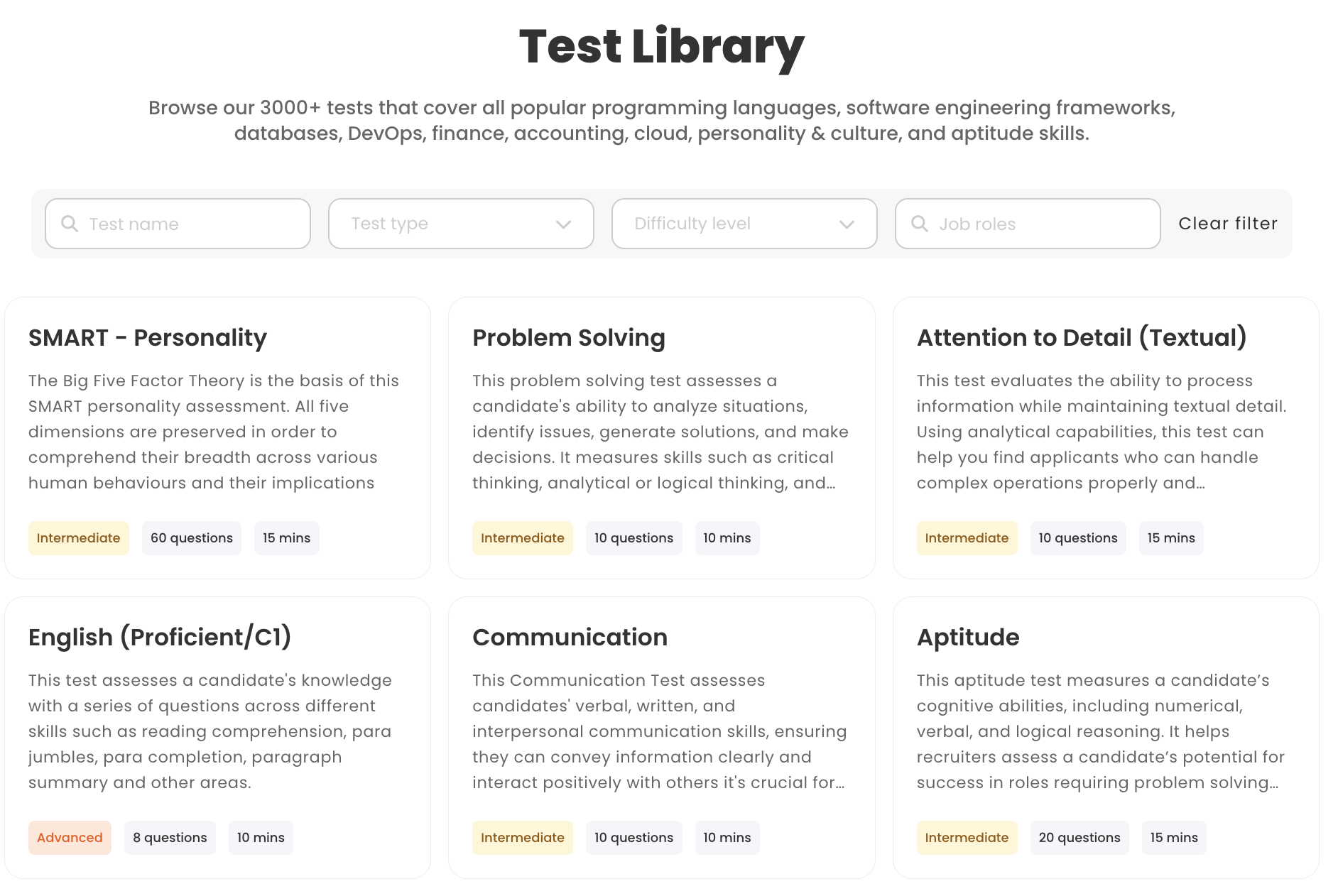
Testlify offers unique conversational AI-powered interviews (chat, voice, video), along with over 3,500 tests covering 4,500+ job roles across 50+ industries. Test types include:
- Cognitive ability tests (e.g., problem-solving, logical reasoning, attention to detail)
- Role-specific tests (e.g., tailored assessments for various job roles)
- Blue-collar hiring tests (e.g., practical skill assessments for blue-collar roles)
- Programming tests (e.g., coding, algorithm design, technical proficiency)
- Software skills tests (e.g., Microsoft Office, CRM systems, other software tools)
- Psychometric tests (e.g., personality traits, emotional intelligence, behavioral tendencies)
- Situational judgment tests (e.g., decision-making, conflict resolution, judgment in real-life situations)
- Live coding tests (e.g., real-time coding challenges and assessments)
- Typing tests (e.g., speed, accuracy, data entry proficiency)
- Language tests (e.g., proficiency in speaking and writing specific languages)
Predictive Index, by contrast, takes a very focused approach to assessments. The platform essentially provides two core assessments:
- Behavioral assessment: This assessment uncovers a candidate’s innate work style. This test results in a behavioral profile that can predict how the candidate will behave in various work situations and what type of roles or environments they’d thrive in.
- Cognitive assessment: This assessment evaluates a candidate’s ability to think critically and accurately solve problems. It’s an indicator of the candidate’s capacity to learn new information, handle complexity, and adapt to challenges on the job.
Aside from these, Predictive Index does not offer other types of skills tests. You won’t find technical coding tests, software-specific quizzes, situational judgment tests, or other role-based assessments in PI’s catalog. The philosophy of PI is to prioritize depth and scientific validation over breadth.
Verdict: When it comes to the range of tests, Testlify’s expansive library vastly outshines Predictive Index’s limited offerings. Testlify provides thousands of assessments across virtually every domain, enabling recruiters to thoroughly evaluate job-specific skills and knowledge in addition to general aptitude.
Predictive Index, on the other hand, sticks to its two proven assessments for behavioral and cognitive insights, which limits its coverage.
Testlify vs. Predictive Index: Custom question types
Testlify allows employers to create tailored assessments with 15+ custom question types, including scenario-based MCQs and AI-powered interviews.
- Multiple Choice Questions (MCQs)
- Open-ended and descriptive questions
- AI-powered Chat simulation
- AI-powered Video interview
- AI-powered Audio interview
- Custom coding questions and live coding tests
- Fill-in-the-blanks
- File upload questions
- Google Docs, Sheets, and Slides questions
- Microsoft Office questions
- Rating, number, and date questions
- Qualifier questions
Predictive Index in stark contrast, does not allow recruiters to add their own custom test questions or create new test content. The platform is built around its standardized assessments, and users cannot modify those core tests or insert additional questions of their own.
Verdict: Testlify clearly holds the upper hand in customizability. If you value the ability to create custom questions and tailor assessments to your unique roles, Testlify is the superior choice by far. It allows you to mold the testing process exactly as you see fit. Predictive Index, while providing excellent standardized tests, does not accommodate custom test content at all.
Testlify vs. Predictive Index: White-labeling capabilities
Testlify offers white-labelling capabilities, allowing companies to fully customize the platform with their own branding. This includes adding logos, personalizing emails, and modifying the test interface to best fit the look and feel of your own company.
A standout feature is the ability to personalize invitation and rejection emails. Instead of sending generic messages, companies can craft communications that reflect their brand’s tone and values, leaving a lasting impression on candidates.
Predictive Index takes a more generic approach for candidate-facing branding. In PI’s assessment process, candidates usually interact with a Predictive Index-branded interface.
The emails that candidates receive (with links to the assessments) and the assessment screens themselves typically carry PI’s logo and design. There is no option in Predictive Index to fully white-label or insert your own logo/branding into the assessment experience
Verdict: If maintaining a consistent employer brand is important to you, Testlify’s white-labeling capabilities give it a clear advantage. You can tailor everything from the test appearance to the emails, making candidates feel they are interacting directly with your company at every step.
Predictive Index, while delivering a straightforward candidate experience, offers no such custom branding options.
Testlify vs. Predictive Index: Conversational interviews
Testlify leverages conversational AI to simulate on-the-job scenarios across chat, voice, and video formats, bringing real-world context into the hiring process.
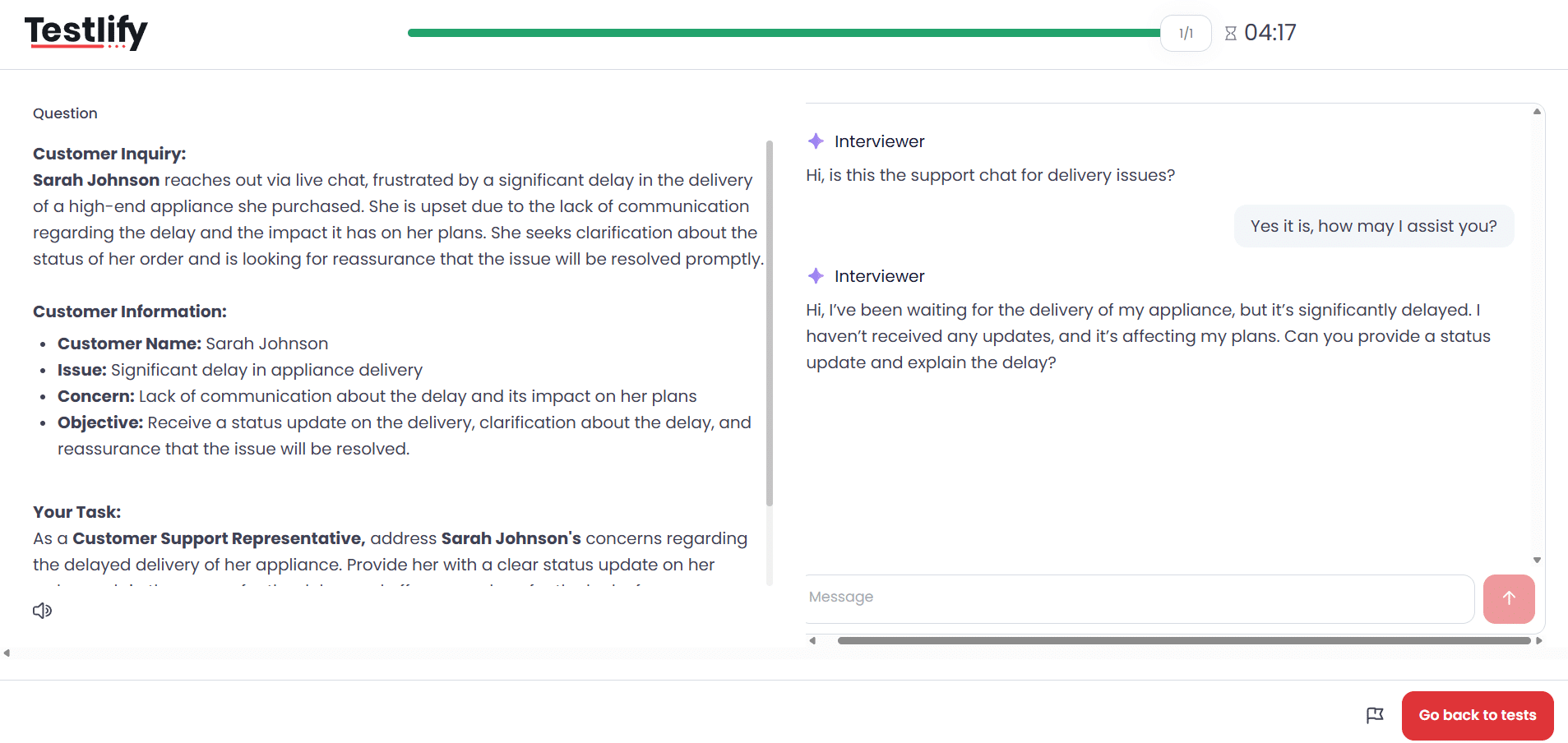
- Chat AI: Assess problem-solving, written communication, and critical thinking by engaging candidates in realistic text-based scenarios, like handling a billing dispute or calming an angry customer.
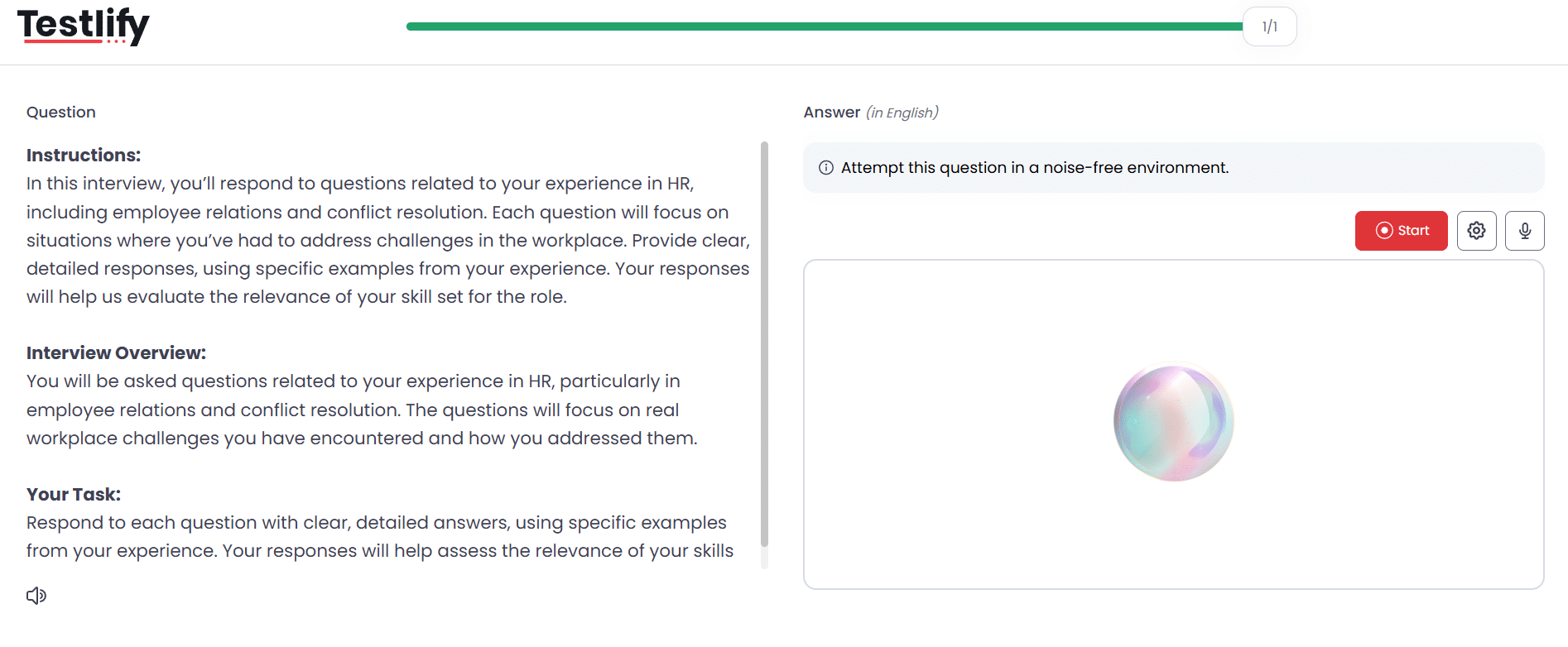
- Voice AI: Evaluate verbal fluency, tone, and persuasion by having candidates respond to role-specific prompts, such as those for sales or customer support.
- Video AI: AI avatars guide candidates through complex job scenarios in asynchronous video interviews, allowing employers to analyze non-verbal communication, confidence levels, and emotional intelligence.
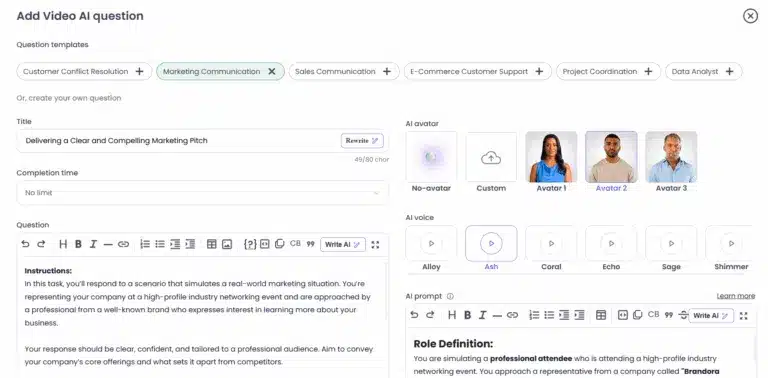
Predictive Index does not include any live or conversational AI-driven interview functionality within its platform. What Predictive Index does provide, as mentioned, are personalized interview questions generated from the assessment results.
These suggested questions are a useful guide for recruiters and hiring managers, but PI itself does not facilitate asking the candidate and recording interview answers using the platform.
Verdict: Testlify is the stronger option when it comes to conversational interviews. Its support for conversational AI powered interviews provides a more immersive assessment experience, making it ideal for roles that demand strong communication skills and real-world problem-solving abilities.
In contrast, Predictive Index lacks any built-in interview simulation or recording tools. If you want to see a candidate speak or handle a role-play scenario, you’ll need to arrange a separate interview or use another product.
Testlify vs. Predictive Index: Anti-cheating & proctoring features
Testlify employs advanced anti-cheating and remote proctoring features ensure that every assessment reflects real skill and genuine effort. The features include:
- Face detection
- Photo id verification
- Webcam snapshots
- Full-screen mode
- Force full-screen mode
- Dual camera proctoring
- Copy/paste tracking
- Mouse-out tracking
- IP proctoring
- Live video monitoring
- Question randomization
- Honesty Agreements
- Question-level activity logs
- AI assistance detection
- Screen recording
- Live environment check
- System requirement check
- Enforce internet speed check
- Focus guard (Anti-Cheat Mode)
- Talking prohibition
Predictive Index incorporates basic security measures such as user authentication and strict time limits to reduce the likelihood of cheating. These safeguards help ensure assessments are completed by the right candidate within a controlled timeframe.
However, the platform lacks more advanced proctoring capabilities such as webcam monitoring, IP tracking, or AI assistance detection that could provide greater visibility into the candidate’s testing environment.
While the enforced time constraints are the primary strength of The Predictive Index’s approach, the absence of features like tab-switch detection or copy-paste restrictions leaves potential vulnerabilities.
These gaps may allow candidates to exploit workarounds, ultimately raising questions about the overall reliability of the assessment results.
Verdict: Testlify’s extensive anti-cheating features (from dual-camera monitoring to AI-assistance detection) offer greater control, visibility, and peace of mind that candidates’ results are earned honestly.
Predictive Index’s approach is comparatively light-touch; it relies on short test length and trust, which may be sufficient for some cases, but it cannot ensure the same level of oversight.
Testlify vs. Predictive Index: Benchmarking analytics
Testlify comes with benchmarking analytics that provide valuable insights into candidate performance, helping organizations evaluate their candidates effectively through comparative metrics.
These metrics allow companies to benchmark candidates against industry standards, which helps to identify top performers, recognize skills gaps, and make informed hiring decisions.
Predictive Index also offers powerful benchmarking, though framed in its own way. PI’s concept of a Job Target is itself a kind of benchmark; it’s essentially a target profile often built from either industry research or your company’s own data (like profiles of top performers in that role). When candidates take the assessments, PI will show you how each candidate matches up against the benchmark profile for the role.
Verdict: Both Testlify and Predictive Index feature global benchmarking capabilities, enabling companies to assess candidate performance effectively with industry-standard comparisons.
Testlify vs. Predictive Index: Integrations
Testlify integrates seamlessly with 100+ ATS platforms and HRMS, allowing you to effortlessly import candidates’ profiles, compare assessment results and make data driven hiring decisions.
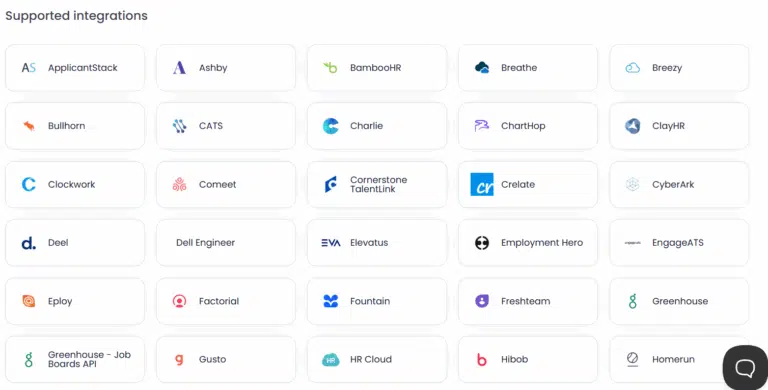
Predictive Index offers 11 out-of-the-box integrations with major ATS platforms like Greenhouse and Lever allowing you to send pre-hire assessments, measure results, and extend offers all from one platform.
Verdict: Testlify is the stronger choice as it is built with integration in mind, offering seamless connectivity with over 100+ Applicant Tracking Systems (ATS) and third-party tools out of the box. This extensive compatibility makes it highly adaptable to diverse recruitment workflows.
Testlify vs. Predictive Index: AI overviews
Testlify supports AI overviews, which provide a concise summary of a candidate’s overall performance in an assessment, highlighting strengths and areas for improvement to help recruiters quickly evaluate candidates.
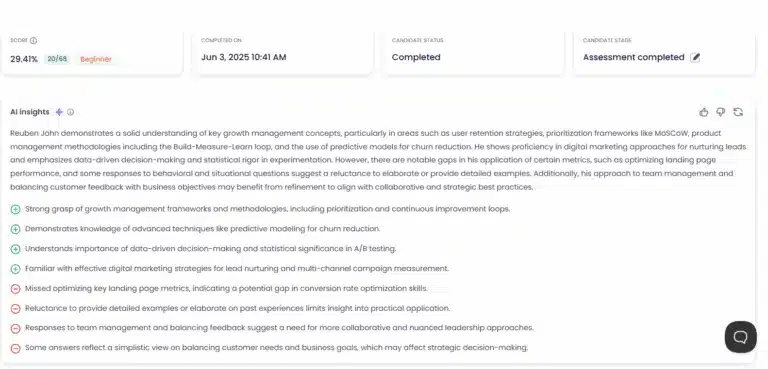
Predictive Index does not offer AI-generated performance overviews. While the platform delivers detailed scorecards and analytics, recruiters will have to manually summarize candidate results without AI assistance.
Verdict: Testlify’s AI-generated overviews simplify the evaluation process by offering quick, actionable insights into candidate performance. Predictive Index does not come with this feature, meaning recruiters will have to put in the extra effort to interpret assessment results.
Testlify vs. Predictive Index: Reporting & insights
Testlify provides detailed analytics on candidate behavior, question-level insights, and benchmarking. You can visualize how candidates compare across roles and industries.
Furthermore candidate assessment reports can be easily shared with key decision-makers in PDF, Excel, or CSV formats, making it easier for them to make informed hiring decisions.
Predictive Index offers a series of in-depth reports that focus on understanding a candidate’s behavioral and cognitive traits. These include:
- Cognitive report: This report shows how a candidate aligns with the Cognitive Target of the job, assessing their cognitive ability to perform the required tasks. It helps gauge how well a candidate will handle the complexity of the role based on their cognitive aptitude.
- Candidate insights packet: A comprehensive report that integrates the behavioral and cognitive assessments, providing a holistic view of the candidate’s fit for the role. This packet addresses key hiring points, making it easy to understand where the candidate excels and where they may need development.
- Interview guide: Predictive Index generates specific interview questions designed to probe areas where the candidate’s traits align with the role, and areas where there might be gaps. This guides recruiters in tailoring their interview questions to gather deeper insights during the interview process.
Verdict: Both Testlify and Predictive Index deliver strong reporting and analytics capabilities that turn raw assessment data into meaningful insights for hiring decisions.
Common strengths include: comprehensive performance breakdowns, easy identification of top candidates, and the ability to share results with stakeholders in a digestible format.
Testlify offers more in terms of analytics depth and visualization. The platform’s reports incorporate AI insights and benchmarking charts that can be very compelling when making the case for a candidate or for refining your tests.
Testlify vs. Predictive Index: Customer support
Testlify is known for its responsive and personalized customer support, provided by human agents across multiple channels. The platform offers dedicated onboarding for new customers and priority support for enterprise clients, ensuring a great user experience.
The Testlify team also welcomes customer feedback and have been noted to roll out improvements in response to customer needs.
In addition to live support, the platform also features a help center with documentation, FAQs, and best practice guides, so your team can self-serve answers to common questions.
Predictive Index offers multi-channel customer support including live chat, email, phone, and a dedicated support portal which helps answer basic queries and provides priority assistance for enterprise clients.
Verdict: Both Testlify and Predictive Index offer robust, multi-channel customer support with priority assistance for enterprise clients. Each platform ensures a smooth user experience through responsive communication and helpful onboarding resources, making them equally reliable when it comes to customer support.
Testlify vs. Predictive Index: Pricing plans
Testlify offers flexible pricing plans that scale with your business, providing everything from basic assessments for startups to advanced features for enterprise-level hiring.
- Starter plan: Ideal for small teams and startups, this plan starts at $139/month (billed at $1,663/year) and includes 100 candidate credits at $17 per credit with support for 3 users.
- Starter: Designed for growing businesses, the Starter starts at $279/month (billed at $3,343/year) and includes 300 credits at $11 per credit with support for 5 users.
- Starter: Built for scaling teams, this plan costs $699/month (billed at $4,192/year) and includes 1,000 credits at $8 per credit with 10 users.
- Premium plan: Suited for high-growth organizations, the Premium plan includes 3,000 credits and supports 20 users, with pricing available upon contacting the sales team.
- Enterprise plan: Designed for large enterprises, this plan includes 10,000 credits and supports 30 users with pricing available upon contacting the sales team.
- Enterprise Plus plan: Designed for large-scale hiring programs, this plan includes 25,000 credits and supports up to 40 users, with pricing details available after contacting the sales team.
- Unlimited plan: For companies seeking unrestricted access, Testlify offers an unlimited plan that includes unlimited candidate credits and full platform functionality, with pricing available on request from the sales team.
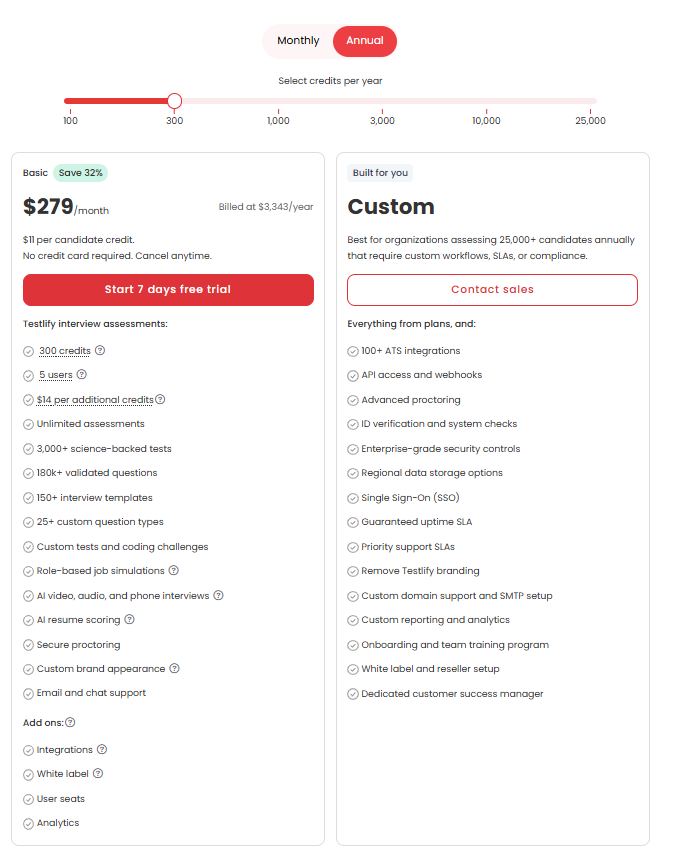
Predictive Index follows a quote-based pricing model. They do not list detailed pricing on their public website; instead, interested customers must contact the company to get a custom quote tailored to their requirements.
Verdict: Testlify’s transparent, tiered plans make it easy to understand costs upfront and to choose a plan that matches your hiring volume and needed features. With transparent pricing, organizations can also plan and scale their hiring efforts effectively, moving to higher tiers as needed without the risk of unforeseen expenses.
Predictive Index's quote-based pricing model can be fine-tuned to your exact needs but comes at the expense of transparency.
Is Testlify a better alternative to Predictive Index?
Testlify and Predictive Index are both strong contenders in the skills assessment space, but which platform is better ultimately depends on your hiring goals, team structure, and candidate evaluation strategy. That said, Testlify emerges as the stronger alternative, and here’s why:
Broader role-based test coverage
Testlify provides a much larger and more diverse test library, featuring 3,500+ assessments across virtually every skill and role imaginable. It covers technical skills, software, cognitive ability, language, personality, and more. Predictive Index, in comparison, offers only its two core assessments. If your hiring strategy is skills-driven and you want to thoroughly evaluate role-specific abilities, Testlify’s expansive coverage gives you far more to work with.
Advanced conversational interviews
Testlify goes beyond standard tests by offering conversational AI-powered interviews integrated into the assessment process. Predictive Index has no equivalent interview feature; it can suggest interview questions, but it can’t conduct interviews. For roles where communication and situational responses matter, Testlify offers a distinct advantage by capturing those insights upfront.
Superior proctoring
While both platforms allow remote testing, Testlify delivers a far more robust proctoring system. Features like dual-camera proctoring, screen recording, and AI assistance detection mean you can trust Testlify results even in high-stakes scenarios. Predictive Index, with only basic time limits and login checks, can’t match Testlify’s level of anti-cheating control.
Extensive ATS integrations
Testlify supports 100+ ATS and HR tool integrations, giving it a clear advantage over Predictive Index’s 30+ integrations. This makes Testlify more adaptable for teams that rely on integrated hiring pipelines and automated workflows.
AI-Driven insights
Testlify’s AI-generated overviews and benchmarking analytics help recruiters evaluate candidates faster and with more confidence. Predictive Index, while offering detailed scorecards, lacks AI summaries, requiring manual interpretation of results.
Other best alternatives to Predictive Index
Feature | TestGorilla | Adaface | Vervoe | Mercer Mettl | HireVue | TestDome | Codility |
|---|---|---|---|---|---|---|---|
Test Library | 300+ | 500+ | 300+ | 400+ | 1000+ | 130+ | 1100+ |
Custom Test Creation | Yes | Yes | Yes | Yes | Yes | Yes | Yes |
Automated Scoring | Yes | Yes | Yes | Yes | Yes | Yes | Yes |
Video Interviewing | Yes | Yes | Yes | Yes | Yes | Yes | Yes |
Proctoring Options | Yes | Yes | Yes | Yes | Yes | Yes | Yes |
ATS Integrations | 17+ | 9+ | 12+ | 16+ | 15+ | 6+ | 11+ |
Reporting & Analytics | Yes | Yes | Yes | Yes | Yes | Yes | Yes |
Final thoughts
Both Testlify and Predictive Index can elevate your hiring process, but the right choice depends on your organization’s priorities. Predictive Index is a well-established platform backed by decades of research. Companies that want a proven, scientifically rigorous assessment of personality and general mental ability, and who might also value using those insights for things like onboarding, coaching, or culture development, will find PI to be a dependable, high-quality tool.
Testlify, on the other hand, represents the future of hiring. It goes beyond standard assessments to transform how you engage with candidates. With a vast test library, conversational AI-powered interviews, and advanced proctoring features, Testlify empowers you to identify top talent and make the right hiring decisions.
Book a demo with Testlify to explore how it can elevate your hiring strategy.

Director of Marketing
Akash Patange is the Director of Marketing at Testlify, where he works closely with HR leaders and recruiters to help organizations improve hiring outcomes. He writes about talent assessment, recruitment technology, and data-driven hiring practices.
LinkedInRelated resources
View all
Competitor Comparisons
Testlify vs. Sova: Which Skills Assessment Platform is Best for HR Teams?
Competitor Comparisons
Testlify vs. Glider AI: Best Skills Assessment Platform 2026
Competitor Comparisons
Testlify vs. Criteria Corp: Which Skills Assessment Platform is Best for HR Teams?
Competitor Comparisons
Testlify vs. WeCP: Which Skills Assessment Platform is Best for HR Teams?
Competitor Comparisons
Testlify vs. Xobin: Which Skills Assessment Platform is Best for HR Teams?
Competitor Comparisons
Testlify vs. Saville Assessment: Which Platform is Best for HR Teams?
Get started.
Hire on proof, not resumes.
Run your first skills-based assessment free — no credit card required.