
Testlify vs Cappfinity: A detailed comparison
Discover the perfect solution for evaluating your candidates’ skills with Testlify. Dive into our comprehensive Testlify vs cappfinity…
Testlify and Cappfinity both screen candidates before anyone books an interview, but they are built for different hiring problems. Cappfinity centers on strengths-based and immersive exercises, and it shows up most often in graduate and early-career programs. Testlify is a broader pre-hire assessment platform: role-specific tests, coding and cognitive assessments, psychometrics, video questions and proctoring controls across technical and non-technical roles.
So the honest short answer is that this is not a like-for-like race. It is a question of whether you are hiring one cohort one way, or hiring many kinds of people all year and want one evidence trail for all of them.
Trusted by 1,500+ hiring teams from fast-scaling startups to enterprise TA functions
 ChatGPT
 Gemini
 Claude
 Grok
Grok Perplexity
TL;DR
- Cappfinity is strongest in strengths-based, immersive assessment for graduate and volume early-career hiring.
- Testlify covers a wider range of roles, with coding tests across 45+ languages, psychometrics, typing tests and situational judgment questions in one place.
- Testlify carries the deeper anti-cheating stack: session recording, snapshots, copy-paste lockout, IP and location checks, randomised question order.
- Cappfinity does not list pricing publicly. Testlify shows its plans openly, so you can budget without a sales call.
- Pick Cappfinity if your hiring is one big graduate intake. Pick Testlify if you hire continuously across mixed roles and need one consistent record of evidence.

What is the difference between Testlify and Cappfinity?
The difference is scope. Cappfinity assesses potential through strengths-based and immersive exercises, tuned for early-career candidates with little work history to judge. Testlify assesses demonstrated skill across the whole org chart, combining role-specific tests, coding assessments, cognitive and personality measures, video responses and proctoring in a single workflow.
That distinction matters more than any feature checklist, because it decides what you can reuse. A graduate-scheme exercise rarely transfers to a senior backend hire. A skills library does.
Feature comparison: Testlify vs Cappfinity
Compare the two side by side before you commit. The table below reflects publicly available information about each platform at the time of writing, and vendor capabilities change, so confirm anything business-critical with the vendor directly.
Features | Testlify | Cappfinity |
|---|---|---|
Test Library | ||
Role-specific tests | ✓ | ✓ |
Cognitive ability tests | ✓ | ✓ |
Programming Tests | ✓ | ✗ |
No. of programming languages supported | 45+ | ✗ |
Situational judgment tests | ✓ | ✗ |
Typing test | ✓ | ✗ |
Software skills tests | ✓ | ✗ |
Non-technical tests | ✓ | ✓ |
Psychometric tests | ✓ | ✗ |
Personality tests | ✓ | ✗ |
Motivation test | ✓ | ✗ |
Assessment templates | ✓ | n/a |
Custom assessments creation | ✓ | ✓ |
Test recommendations for different job roles | ✓ | n/a |
Coding tests | ✓ | ✗ |
Assessments | ||
Custom assessment builder | ✓ | ✓ |
Custom coding questions | ✓ | ✗ |
Multiple-choice questions | ✓ | ✓ |
Descriptive questions | ✓ | ✗ |
Video interview questions | ✓ | ✗ |
Assessments curated by I/O psychologists | ✓ | ✓ |
Google doc | ✓ | ✗ |
Google sheets | ✓ | ✗ |
Google slides | ✓ | ✗ |
Audio questions | ✓ | ✗ |
Qualifier questions | ✓ | ✓ |
File upload questions | ✓ | ✗ |
Quality check | Extensive process incl. peer reviews, sample testing, review by psychometrician & more | n/a |
Video interview questions | ||
One-way video interview | ✓ | ✓ |
Custom video questions creation | ✓ | ✓ |
Candidate's recording attempts per question | ✓ | n/a |
Live video interview | ✗ | ✓ |
Candidate experience | ||
Fully customizable email templates | ✓ | ✗ |
Custom invitation and rejection email | ✓ | ✓ |
Mobile-friendly | ✓ | ✓ |
Candidate support | ✓ | ✓ |
Instructions before assessment | ✓ | ✓ |
Average assessment length | 40-60 minutes | n/a |
Anti-cheating features | ||
Session recording | ✓ | n/a |
Snapshot capturing | ✓ | n/a |
Mouse tracking | ✓ | n/a |
Copy-paste disabled | ✓ | n/a |
Microphone and camera access | ✓ | n/a |
Location access | ✓ | n/a |
IP address tracking | ✓ | n/a |
Randomization of question sequence | ✓ | n/a |
Time limit on tests | Yes, typically 10 minutes | n/a |
Reporting and analytics | ||
Detailed reports | ✓ | ✓ |
Easy to share reports and scorecards | ✓ | ✓ |
Exportable/downloadable reports | ✓ | ✓ |
Recruiting analytics | ✓ | ✓ |
Candidate benchmarking | ✓ | n/a |
Completion rate and response insights | ✓ | ✓ |
Enterprise friendly | ||
White label feature | ✓ | ✗ |
Custom branding | ✓ | ✗ |
ATS integration | ✓ | ✓ |
User, role, and access management | ✓ | ✓ |
Bulk candidate invite | ✓ | ✓ |
Share public link invite to candidates | ✓ | ✓ |
Candidate pipeline management | ✓ | ✓ |
Internationalization | ✓ | n/a |
Campus hiring support | ✓ | ✗ |
Dedicated account manager | ✓ | n/a |
GDPR compliant | ✓ | ✓ |
Multilingual abilities | ✓ | ✗ |
Customer support | ||
24/7 support | ✓ | ✗ |
On-call support | ✓ | n/a |
Email support | ✓ | ✓ |
Product demo | ✓ | ✓ |
Training & onboarding tour | ✓ | ✓ |
How does Cappfinity work?
Cappfinity assesses talent through tailored exercises rather than a fixed test library. It builds interview and assessment content designed to surface a candidate's motivations and strengths, measuring both capability and engagement so recruiters see more than a score. Its cognitive assessments cover verbal reasoning, numerical reasoning, memory and problem-solving through workplace-styled tasks.
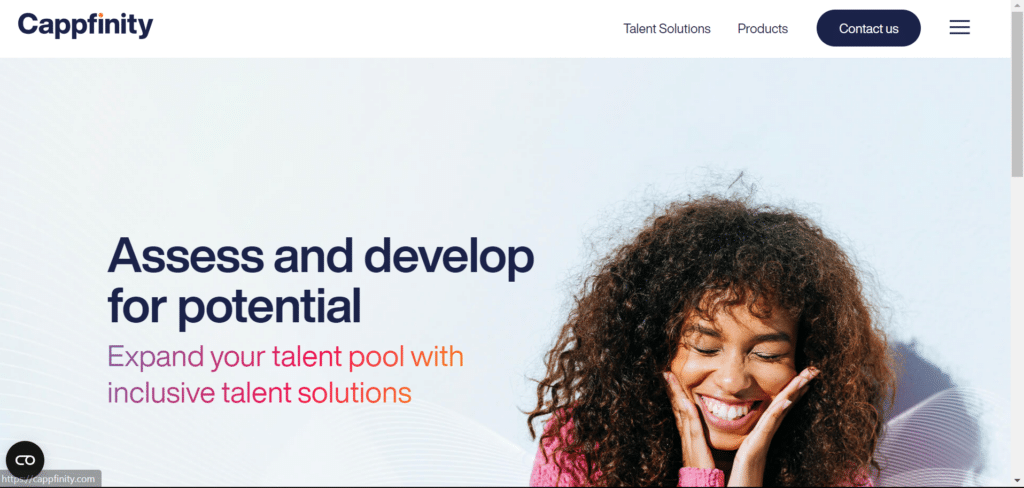
The candidate experience is a deliberate part of the design: short, job-relevant and readable on a phone, which matters when you are asking thousands of graduates to complete something before you have offered them anything.
How does Testlify work?
Testlify runs on the Testlify Multi-Signal Talent Evaluation Model. The idea is simple: one signal is fragile, several signals together are far harder to fake. Rather than advancing someone on a single test score or one good interview, the model combines role-relevant evidence, including skills assessments, coding tasks, cognitive and behavioural measures, video responses and structured reviewer feedback, and moves a candidate forward when those signals agree.
In practice you build an assessment from the test library, invite candidates in bulk or by public link, let the proctoring settings match the risk of the role, then review scorecards side by side. A retail hiring team screening 400 seasonal applicants can lean on a short cognitive and situational judgment pairing. A platform team hiring two senior engineers can run a coding assessment in the language they will actually write. Same platform, same reporting, very different assessments.
Pro tip: set your proctoring strictness per role, not per company. Locking down a 10 minute typing test the way you would lock down a final-round coding assessment mostly costs you completed applications.
Which platform fits which hiring need?
Choose on hiring shape, not on feature count. Cappfinity fits a large, repeating early-career intake where candidates have thin resumes and you need to judge potential fairly. Testlify fits continuous hiring across mixed seniority, where the same team screens a developer, a customer support lead and a finance analyst in the same quarter.
Two facts make that choice sharper than it looks. Employers told the World Economic Forum that nearly 40% of the skills a job needs are set to change by 2030, with 63% naming skills gaps as their main barrier. And people move on faster than hiring plans assume: median job tenure in the United States was 3.9 years as of January 2024. If the skills you screen for keep shifting and your people keep moving, a fixed set of exercises ages badly. A library you can re-cut per role ages better.
The cost of getting it wrong is not abstract either. Gallup puts the price of replacing one employee at one-half to two times their annual salary. That is the real budget line a screening decision moves, not the subscription fee.
If you want the same comparison against a different incumbent, the breakdown of Testlify against SHL covers the enterprise psychometric side. For the mechanics of screening before interview, there is a walkthrough of how AI-assisted pre-hire assessments actually run, and a fuller argument about where aptitude testing helps and where it misleads.
What does Testlify vs Cappfinity cost?
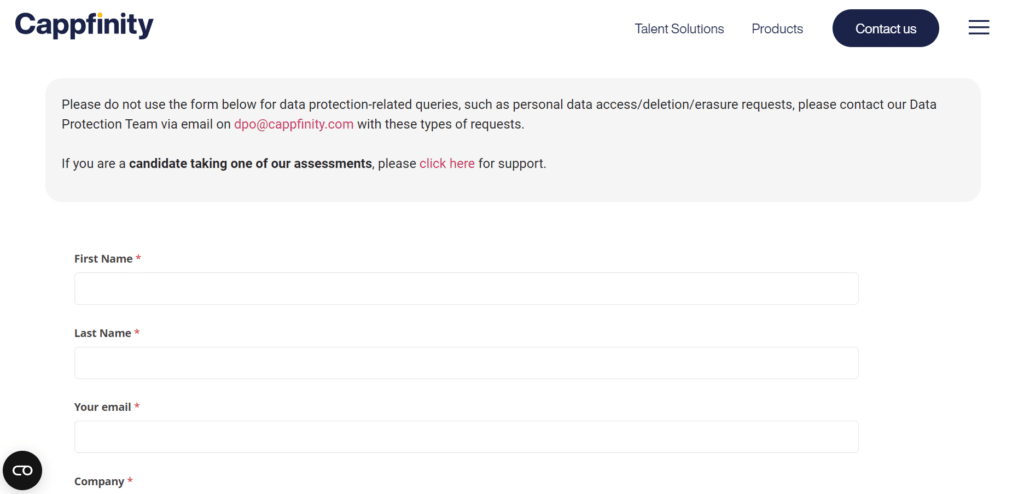
Cappfinity does not list pricing publicly. You contact the company and get a quote built around your program, which is normal for assessment vendors aimed at large graduate intakes, though it does mean you cannot budget without talking to sales first.
Testlify shows its plans openly, including a free tier, so you can size a rollout before anyone books a call. Current plan limits and per-seat details sit on the Testlify pricing page. Worth checking the candidate credit allowance against your real annual hiring volume rather than your headcount, since that is the number that usually decides which tier you land on.
Hire with better evidence
See how the assessments, proctoring controls and scorecards work against one of your own open roles. Book a demo and bring a live requisition to it, because a walkthrough against a real role tells you far more than a generic tour.
Key Takeaways
- The two tools answer different questions. Cappfinity asks whether a candidate has potential worth developing, which is the right question for a graduate intake. Testlify asks whether a candidate can do a defined job now. If you are hiring across seniorities, the second question is the one you ask most often, and buying a tool built for the first will leave you screening senior hires with the wrong instrument.
- Breadth of test library is the practical differentiator. Coding tests across 45+ languages, psychometrics, typing and situational judgment in one platform means a single vendor covers engineering, support and finance hiring. That matters for cost, but it matters more for consistency: one scoring standard beats three.
- Anti-cheating depth decides whether remote scores are trustworthy. Session recording, snapshot capture, copy-paste lockout, IP and location checks and randomised question order are what let you defend a remote result. Without them, a remote assessment is an honour system, and you will find out only after a bad hire starts.
- Open pricing changes the buying process. Quote-only pricing forces a sales conversation before you know whether the tool is affordable. Openly listed pricing lets a hiring lead scope a pilot in an afternoon, which is often the difference between running one and not.
- Screening quality is a budget decision, not a tooling preference. With replacement costs running from one-half to two times salary, a screening step that prevents one wrong hire a year pays for most assessment tooling several times over. Frame the evaluation that way with finance rather than comparing licence fees.
- Match proctoring to role risk. Blanket-strict settings depress completion rates on low-stakes roles and blanket-loose settings make senior technical results meaningless. Configure per role, and revisit the setting when a role's risk profile changes.
FAQs
Related resources
View all
Competitor Comparisons
Testlify vs CredoHire: A detailed comparison
Competitor Comparisons
Testlify vs RecruitPack: A detailed comparison
Competitor Comparisons
Testlify vs Remote Interview: A detailed comparison
Competitor Comparisons
Testlify vs Safety Quotient Assessment: A detailed comparison
Competitor Comparisons
Testlify vs SoftSkillLab: A detailed comparison
Competitor Comparisons
Testlify vs TalentChaser: A detailed comparison
Get started.
Hire on proof, not resumes.
Run your first skills-based assessment free — no credit card required.