
How employee experience is influenced by the tools needed for work
Discover how workplace tools, technology, and reliable systems influence employee experience, productivity, satisfaction, and retention.
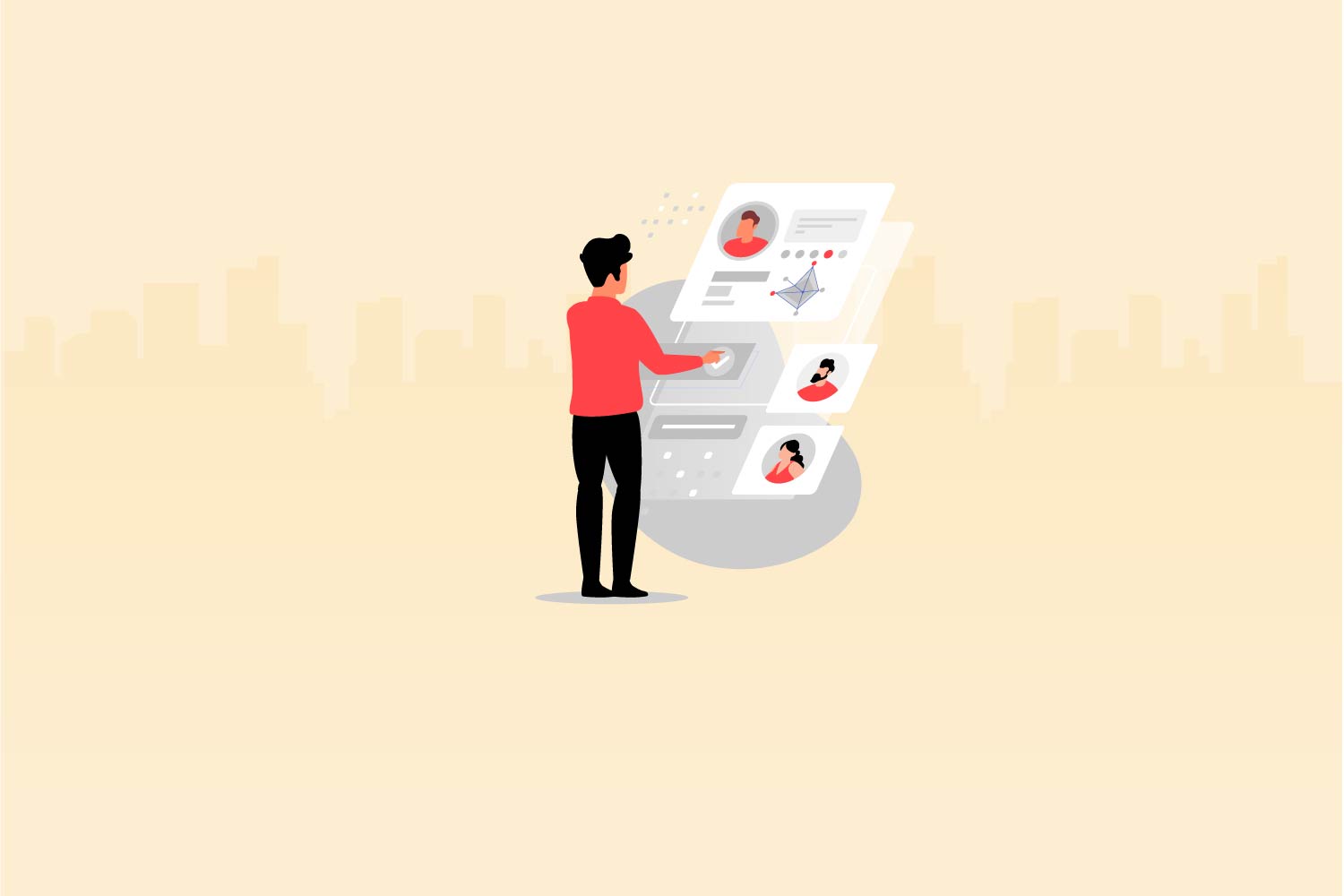
Workplace tools decide how work feels. The software an employee opens every hour, the laptop that wakes up fast or slowly, the approval that takes one click or four handoffs: that is the part of employee experience people actually live in. Salary and career paths matter, but they get reviewed once a year. Tools get judged every ten minutes.
Most employee experience programs still treat technology as an IT budget line rather than an experience people have. That gap is where good intentions quietly die. A company can run engagement surveys, wellbeing sessions, and manager training, and still lose an hour of every employee's day to logins, tab switching, and a request form nobody can find.
 ChatGPT
 Gemini
 Claude
 Grok
Grok Perplexity
TL;DR
- Employee experience is shaped less by big HR programs than by the small daily friction in the tools people use to do their jobs.
- The measurable cost is time and attention: workers toggle between apps about 1,200 times a day and lose close to four hours a week just getting back into flow.
- Tool satisfaction is falling, not rising. Only 23% of digital workers said they were completely satisfied with their work applications in 2024, down from 30% two years earlier.
- You cannot fix what you do not measure. Ticket volume, task completion time, and app switching tell you more than an annual survey does.
- Fixing tools is a shared job. HR owns the experience, IT owns the systems, finance owns the sprawl, and none of them can fix it alone.
- Hiring plays a part too. Tool fluency is a job skill now, and it can be assessed before a candidate joins a stack of 40 systems.

What is digital employee experience?
Digital employee experience is the sum of every interaction an employee has with workplace technology: devices, apps, networks, and the workflows built on top of them. It covers how fast tools run, how easy they are to learn, how well they talk to each other, and how quickly problems get fixed. Good technology is invisible. Bad technology is all anyone talks about.
Analysts have been tracking the discipline for years, and the picture is not flattering. Gartner placed digital employee experience in the Trough of Disillusionment on its 2024 Hype Cycle for Digital Workplace Applications, meaning interest was falling because early implementations had not delivered what leaders expected. "Everyday AI promises to remove digital friction, by helping employees write, research, collaborate and ideate," said Matt Cain, Distinguished VP Analyst at Gartner, in the same research. The promise is real. The delivery has been uneven.
The useful way to think about it: employee experience is what people feel about working for you, and digital employee experience is what they feel about working through you. The second one is easier to measure and far cheaper to fix.
How do workplace tools affect productivity?
Tools affect productivity mainly by taxing attention, not by being slow. Every switch between applications costs a few seconds of machine time and a much larger chunk of human recovery time. Multiply that by a few hundred switches a day and the loss stops being a rounding error and starts being a working week.
The clearest measurement of this comes from a 2022 study of 137 users across three Fortune 500 companies, published in Harvard Business Review. Workers toggled between applications and websites roughly 1,200 times each day. Adding up the reorientation time after each switch, that came to just under four hours a week, or about 9% of their annual time at work, spent getting back to where they were.
The volume of interruption has not improved since. Microsoft's Work Trend Index, published in June 2025 and built on anonymized Microsoft 365 signals plus a survey of 31,000 knowledge workers across 31 markets, found that employees are interrupted every two minutes by a meeting, email, or notification during the workday. The same research counted an average of 153 Teams messages and 117 emails per person per weekday, and found 57% of meetings were ad hoc calls with no calendar invite at all.
Here is the part HR teams tend to miss. None of those numbers describe a technology failure. Every app in that stack works. The failure is in how the pieces fit together, and nobody owns the fit.
What does tool friction actually cost?
Friction costs three things in order: time, then attention, then goodwill. The first two show up in output. The third shows up in your exit interviews about eight months later, usually described as something else.
Employee satisfaction with work applications is going the wrong way. A Gartner survey of 5,141 employees, conducted between April and July 2024, found that only 23% of digital workers were completely satisfied with their work applications, down from 30% in 2022. Companies spent two years buying more software and ended up with less satisfied users.
Engagement is drifting in the same direction. Gallup's State of the Global Workplace report put global employee engagement at 20% in 2025, down from a 23% peak, and priced the lost productivity at roughly $10 trillion, about 9% of global GDP. Tools are not the only cause of that decline, and it would be dishonest to claim they are. But daily friction is one of the few causes an HR and IT team can act on this quarter without waiting for a market to turn.
The honest framing is this: technology rarely creates engagement on its own. It removes reasons to disengage. A person who spends the first 40 minutes of every Monday chasing access to a system they already have access to is not going to be talked into enthusiasm by a wellbeing webinar.
What causes tool sprawl at work?
Tool sprawl is what happens when buying decisions get made faster than they get retired. It is rarely one bad decision. It is fifty reasonable ones stacked on top of each other over five years.
The common sources are predictable:
- Department-level buying. Marketing needs a project tracker this week, so marketing buys one. So does support. So does finance. Now three teams coordinate across three systems that do not share a task list.
- Mergers and reorganizations. Two companies join and inherit two of everything. Consolidation is planned for "after integration" and then quietly never happens.
- Point solutions for point problems. Each new app solves a genuine problem. None of them solve the problem of having 40 apps.
- Nobody owns retirement. Software gets bought by someone with a budget and switched off by someone with time. The second person does not exist on most org charts.
- Access drift. People change roles and keep old permissions, so the tool count per person grows even when the company count stays flat.
The result is a stack that looks fine on a procurement spreadsheet and feels terrible on a Tuesday morning. Employees do not experience your architecture. They experience the number of places they have to look before they find an answer.
Friction type | What it looks like to an employee | What to measure | Who fixes it |
|---|---|---|---|
Application friction | The tool is slow, crashes, or times out mid-task | App crash rate, page load time, device boot time | IT operations |
Skills friction | The tool works, the person does not know how to use it | Feature adoption, repeat how-to tickets | L and D with IT |
Process friction | Finishing a task means leaving the tool, emailing someone, or printing a form | Steps per task, handoffs per request, cycle time | HR ops and process owners |
Integration friction | The same data has to be typed into two systems | Duplicate data entry points, sync failures | IT with the system owners |
Access friction | Waiting days for a login to a tool the role requires | Time to first login, access ticket age | IT and HR onboarding |
Why hybrid work raises the stakes
In an office, a broken tool is an annoyance you can route around. Someone leans over a desk and shows you. In a hybrid or remote setup, the tool is the workplace, so a broken tool is a closed door.
That changes what counts as a small problem. A video call that drops twice a week is an inconvenience for an office worker and a credibility problem for a remote one who is presenting to a client. A file that will not upload is a five-minute delay in a building with a shared drive and a missed deadline for someone working from a home connection at 9pm.
It also changes who notices. Distributed teams lose the informal signal that tells managers something is wrong, because frustration that used to be visible in a room now happens silently in someone's kitchen. If your only feedback channel is an annual survey, you will hear about a year of friction in one paragraph of free text, long after the person has already started looking elsewhere. Companies that get this right build the check into the rhythm of work, the same way they do with other common workplace problems that need early detection.
How do you measure digital employee experience?
Measure it with operational data first and sentiment second. System data tells you where friction is, and people tell you how much it hurts. Running only surveys gives you complaints with no location. Running only telemetry gives you numbers with no meaning. The pairing is what makes either useful.
A workable starter set, in the order most teams can actually get the data:
- Ticket volume by category. Not total tickets, which flatter you when people give up asking. Break it down by cause: access, performance, how-to, integration.
- Time to resolution. Median, not average, so one long-running case does not hide a good week or rescue a bad one.
- Time to first login. How many days after a new hire's start date before they can open every tool their role requires. Anything past day one is a story that new hire will tell for months.
- Steps per common task. Pick five routine tasks (book leave, submit an expense, request access, update a record, find a policy) and count the clicks and handoffs. Count them yourself. Do not ask the system owner to estimate.
- Application switching. If your platform exposes it, track how many tools a person touches to finish one task. The 1,200-toggles-a-day figure only became real when someone measured it.
- Adoption versus licenses. Paid seats against weekly active users. A tool with 90% licensing and 20% use is not a tool, it is a subscription.
- Short pulse questions. Two questions, monthly, tied to a specific system, beats forty questions once a year about "technology" in general.
Pro tip: before you buy a measurement platform, spend one week shadowing four people from different teams and time their five most common tasks with a stopwatch. Most organizations find their worst friction in that week, and the finding costs nothing. Tooling helps you monitor a problem continuously. It is not how you discover the problem in the first place.
Who owns employee experience, HR or IT?
Both, and that is the reason it stays broken. HR owns how work feels, IT owns the systems that decide how work feels, and neither team is measured on the other's outcome. So the ownership question keeps getting answered with a meeting instead of a metric.
What works better is splitting the job by decision rather than by department. HR gathers the experience evidence and decides what hurts most. IT diagnoses the cause and decides what is fixable at what cost. Finance sees the whole subscription list and can see duplication no single department can. Leadership breaks the tie when two teams both need the budget. Written down like that, it stops being a turf question and becomes a sequence.
The most common failure pattern is a technology decision made purely on price, with no one asking what it does to a daily workflow. The cheapest collaboration platform is not cheap if it adds two minutes to every handoff for 800 people. That is roughly 27 hours a day of company time, spent to save a subscription fee. Cross-functional review exists to catch exactly this kind of arithmetic, and it is one of the clearest places where technology decisions support HR teams rather than complicate them.
There is a caveat worth naming. Cross-functional ownership slows decisions down. If every tool purchase needs four sign-offs, teams will route around the process and buy on a credit card, which is how sprawl started. Reserve the joint review for systems that touch a daily workflow or more than 50 people. Let a team buy its own niche tool without a committee.
How to fix workplace tool friction in 90 days
You do not need a transformation program. You need a quarter, a list, and permission to switch things off. The sequence below assumes no new budget, because the version that needs budget never starts.
- Weeks 1 to 2: inventory what people actually open. Not the procurement list, the usage data. Pull weekly active users per tool per department. Expect to find at least three systems nobody has opened in a month.
- Weeks 3 to 4: time the top five journeys. Onboarding, leave requests, expense claims, access requests, and performance reviews cover most of the daily pain. Count steps, handoffs, and systems touched for each one.
- Week 5: ask two questions, not forty. A short pulse per system, named specifically, gets a response rate a general survey never will. Ask what slows them down and what they have built a workaround for. Workarounds are a map of your broken processes.
- Weeks 6 to 8: fix the three cheapest things. Almost every organization has three fixes that cost nothing: a permission default, a form that asks for data the system already holds, a notification setting that pings 200 people. Fix those first to buy credibility for the harder work.
- Weeks 9 to 11: retire or merge two tools. Pick the two with the worst use-to-cost ratio and give them an end date. Migration is the hard part, so name an owner and a date rather than a principle.
- Week 12: publish what changed. Tell people which problems were fixed and which ones were not, and why. The second half matters more. Feedback with no visible outcome trains people to stop giving it, and that silence is more expensive than the friction was.
Teams that run this honestly usually find the same thing: the biggest wins are not new purchases. They are removals, defaults, and permissions. That is unglamorous work, which is exactly why it is still available.
Can you hire for tool fluency?
Yes, and it is becoming a normal part of role requirements rather than a nice-to-have. If a new hire's first month is spent inside eight systems, the ability to learn and work through unfamiliar tools is a job skill, not a personality trait. Most hiring processes still infer it from a resume line that says "proficient in" and hope for the best.
The World Economic Forum's Future of Jobs Report 2025, published in January 2025, projected that nearly 40% of the skills required on the job will change by 2030, and that 59 of every 100 workers globally will need reskilling or upskilling by then, with 11 of those 59 unlikely to get it. The same report's skills outlook puts technological literacy among the fastest-growing skills employers say they need, alongside AI and big data and analytical thinking.
This is where the Testlify AI-Era Capability Framework applies to the employee experience conversation. The framework evaluates whether candidates can perform in workplaces where people and AI tools work side by side, across seven capability areas: core role skill, problem-solving, AI fluency, human judgment, communication, adaptability, and workflow execution. That last one is the direct link to this topic. Workflow execution asks whether a candidate can actually operate through tools, systems, documents, spreadsheets, and chat in realistic work scenarios, rather than describing them in an interview.
Being precise about scope: Testlify is a pre-hire talent assessment platform. It does not monitor your device fleet, resolve tickets, or measure digital employee experience after someone joins. What it does is give hiring teams evidence about how a candidate works through tools before the offer, so a role that lives in six systems is not filled on the strength of a well-written resume. Software skills tests, work simulations, and role-based assessments are the mechanism. The rest of the daily experience is yours to fix, and it is worth understanding which categories of tools shape day-to-day experience before adding another one.
One tradeoff to hold onto: assessing for tool fluency raises the bar for candidates who have used a different stack, and that can quietly screen out strong people from smaller companies or other industries. Test the underlying capability (can this person learn an unfamiliar system and finish a task in it) rather than familiarity with your exact vendor. Familiarity is a two-week problem. Capability is not.
Hire for the workflow, not the resume
If a role runs on tools, assess for tools. Testlify's software skills tests and role simulations let a hiring team see how a candidate handles unfamiliar systems before the first interview, so a shortlist reflects what people can do rather than what they claim. Teams that want to see how that maps to their own stack can book a demo and walk through a role-specific assessment plan.
Key takeaways
- Daily tool friction outweighs annual programs. Employees judge their experience through the software they open every hour, not the benefits package they review once a year. That means the fastest route to a better experience is usually an audit of five routine workflows, not a new engagement initiative.
- The cost is attention, and it is measurable. About 1,200 app switches a day and close to four hours a week of reorientation time is roughly 9% of working time lost to context switching alone. Because it is measurable, it can be argued for in a budget meeting in a way that "morale" cannot.
- Satisfaction with work apps is falling while spending rises. Only 23% of digital workers were completely satisfied with their applications in 2024, down from 30% in 2022. Buying more software is not the fix, and a purchase made without a workflow review usually makes the number worse.
- Sprawl is a governance problem, not a technology problem. Tools accumulate because someone owns buying and nobody owns retiring. Assigning an owner and an end date to two low-use systems each quarter does more for experience than most platform migrations.
- Measure before you buy. Ticket categories, time to first login, and steps per task cost nothing to collect and point directly at the cause. A measurement platform monitors a problem you already found; it is a poor way to find one.
- Feedback without a visible outcome is worse than no feedback. Publishing what got fixed and what did not is what keeps the next round of responses honest. Teams that skip this step see response rates fall and lose their early-warning signal on friction.
- Tool fluency belongs in the hiring bar. With nearly 40% of job skills set to change by 2030, the ability to learn an unfamiliar system is a role requirement. Assess the capability rather than familiarity with a specific vendor, or you will screen out good people for the wrong reason.
FAQs

Wordpress Developer
Yash Patel is a Wordpress and SEO Specialist at Testlify with 3+ years of experience in technical SEO, on-page optimization, and content strategy. He works on improving Testlify's organic presence and produces content focused on hiring, talent assessment, and HR technology.
LinkedInRelated resources
View all
Skill assessment
What skills-based hiring data shows beyond the US and UK
HR & recruitment
AI across all stages of the hiring process in 2026

AI in recruitment
Best practices for hiring data analysts using assessments?
Candidate assessment
What tools support voice responses for language proficiency testing?
Candidate assessment
How do ATS-integrated assessments streamline hiring workflows?
Candidate assessment
How to assess financial modeling and accounting skills pre-hire?
Get started.
Hire on proof, not resumes.
Run your first skills-based assessment free — no credit card required.