
Importance of critical thinking skills and how to assess
Critical thinking leads to informed decisions. Evaluate candidates’ ability to assess complex scenarios, identify solutions, and think strategically.

Critical thinking is perhaps the most desirable skill a candidate can offer. Whether you’re looking for someone to manage, fill a technical position, or even work customer support, employees who are able to think clearly and logically, solve problems quickly, and make well-informed decisions are key to any organization’s success.
Yet even though critical thinking is clearly important, it is difficult to assess candidates. It’s not something you can easily quantify on a quick scan of a resume or by-the-book interview questions.
This blog delves into the significance of critical thinking, its essential elements, and real-world approaches and tools to evaluate this critical talent when hiring.
 ChatGPT
 Gemini
 Claude
 Grok
Grok Perplexity
What is critical thinking?
Critical thinking is the capacity to objectively analyze information, judge arguments, resolve problems, and make decisions based on reason and logic instead of feelings or assumptions. It’s being able to ask the right questions, think in advance, and carefully examine alternatives before making a move.
Core aspects of critical thinking include:
- Problem-solving: Identifying solutions through analysis and evaluation.
- Decision-making: Choosing the best course of action among several options.
- Logical reasoning: Drawing conclusions based on evidence and sound logic.
- Analytical thinking: Breaking down complex issues into manageable parts.
- Open-mindedness: Being receptive to new ideas and willing to revise one’s stance.
- Attention to detail: Identifying inconsistencies or subtle flaws in reasoning.

Why critical thinking matters in the workplace?
Critical thinking skills affect almost every element of performance. This is why they are so important:
For further reading, explore Worldatwork.
1. Better problem solving
Critical thinkers are adept at diagnosing problems correctly and detecting their source instead of treating symptoms. They apply a methodical process, evaluating multiple viewpoints and possible results before making conclusions. This creates effective, long-term solutions instead of quick fixes.
At work, this translates into fewer repeating problems, streamlined workflows, and improved crisis response. Critical-thinking employees can also anticipate future issues and act accordingly, conserving time and resources in the long term.
2. Informed decision-making
Decision-making is the balancing of choices, assessing risks, and selecting the most appropriate choice. Critical thinkers are able to manage this process rationally and with composure. They study facts, factor in short- and long-term consequences, and make decisions grounded in evidence and not emotion or speculation.
This results in wiser decisions that support business objectives. In a high-speed business environment, wise decisions minimize trial-and-error, save money, and enable teams to progress with confidence and clarity.
3. Enhanced innovation
Whereas creativity ignites innovative ideas, critical thinking refines and fortifies them. Critical thinking enables employees to determine the viability, effect, and risk of creative ideas. Through challenging assumptions and scrutinizing details, critical thinkers convert idealistic ideas into tangible, innovative solutions.
In collaborative settings, this combination of creativity and logic fuels strategic innovation that is both bold and pragmatic. Companies that develop both abilities have a competitive advantage by developing ideas that impress as well as function in the real world.
4. Stronger communication
Critical thinking strengthens communication by promoting clarity, organization, and rationale. Critical thinking employees can put forward ideas in logical order, defend arguments with facts, and forecast refutations. Employees who think critically are also better at listening because they evaluate information prior to reacting.
This encourages more open communication, eliminates misunderstandings, and establishes trust among teams. Through writing, presentations, and meetings, effective communicators with critical thinking can persuade, educate, and influence better to create greater collaboration and decision-making among departments.
5. Reduced risk of errors
Faults in the workplace tend to result from hasty decisions, failure to analyze, or disregarding warning signs. Critical thinkers avoid these pitfalls by taking time to evaluate situations critically. They probe data, test assumptions, and weigh consequences before acting.
This, not only lessens the risk of costly mistakes, but also enhances overall quality and reliability of work. In high-stakes positions such as finance, healthcare, or engineering critical thinking is necessary to ensure accuracy and prevent potentially harmful results.
How to assess critical thinking skills in candidates?
Evaluating a skill this nuanced requires a multi-pronged approach from skill-based tests to behavioral questions. Below are the most effective methods:
1. Skills assessments
When assessing creativity skills in candidates, it’s important to look at a combination of cognitive, emotional, and interpersonal skills.
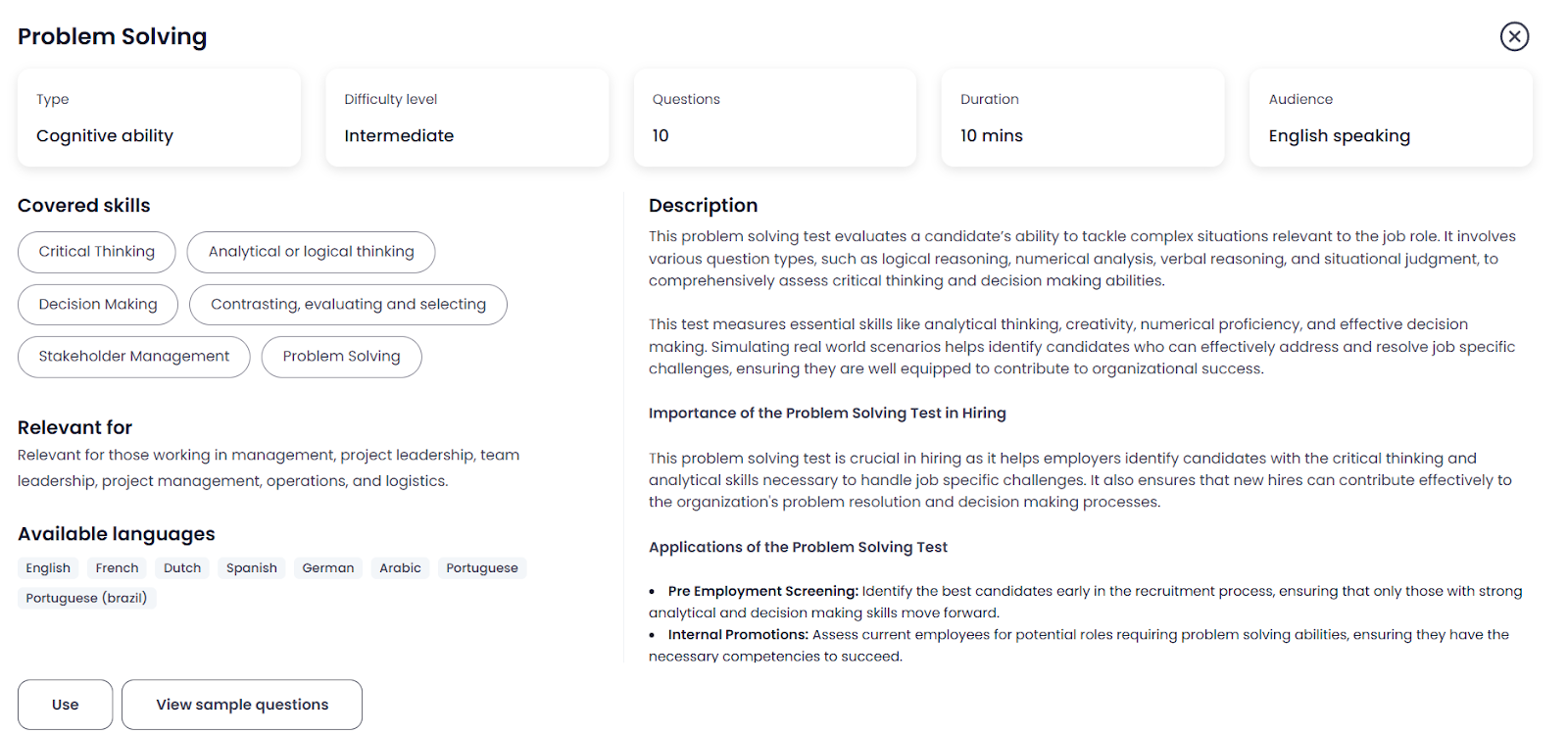
Problem-solving test: This test assesses a candidate’s ability to identify problems, analyze causes, and generate practical solutions. It often includes real-world scenarios that test logic, creativity, and decision-making under pressure. A strong performer in this test will demonstrate structured thinking, clear prioritization, and an ability to break down complex issues effectively. It’s ideal for roles that involve troubleshooting, project management, or operations.
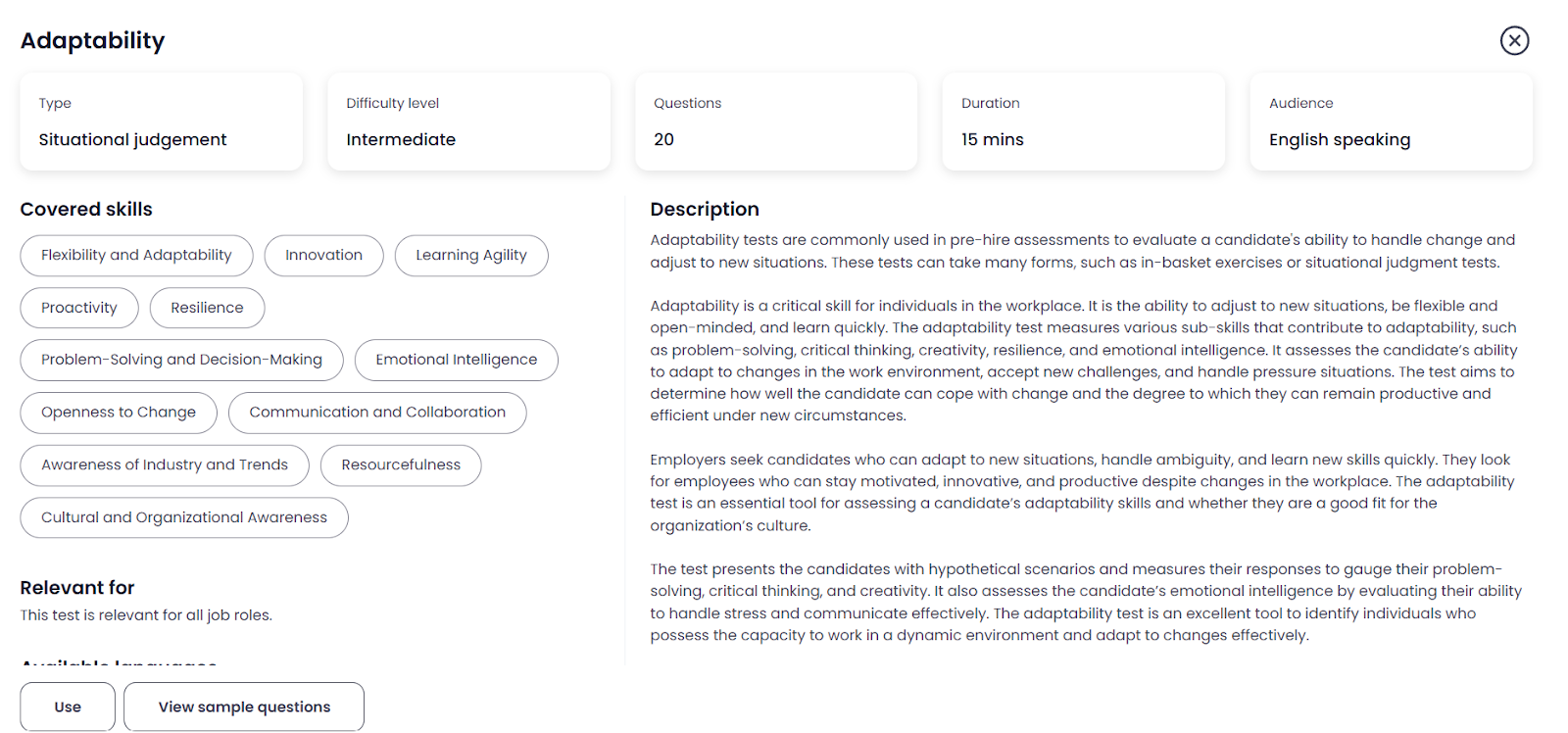
Adaptability test: Testlify’s adaptability test gauges how well a candidate responds to change, ambiguity, or unexpected challenges. It measures mental flexibility, emotional resilience, and the willingness to revise strategies when needed. Adaptive thinkers are often good critical thinkers because they remain calm under pressure and make rational decisions in fluid situations. This is essential for roles in fast-paced or evolving industries like tech, media, or crisis management.
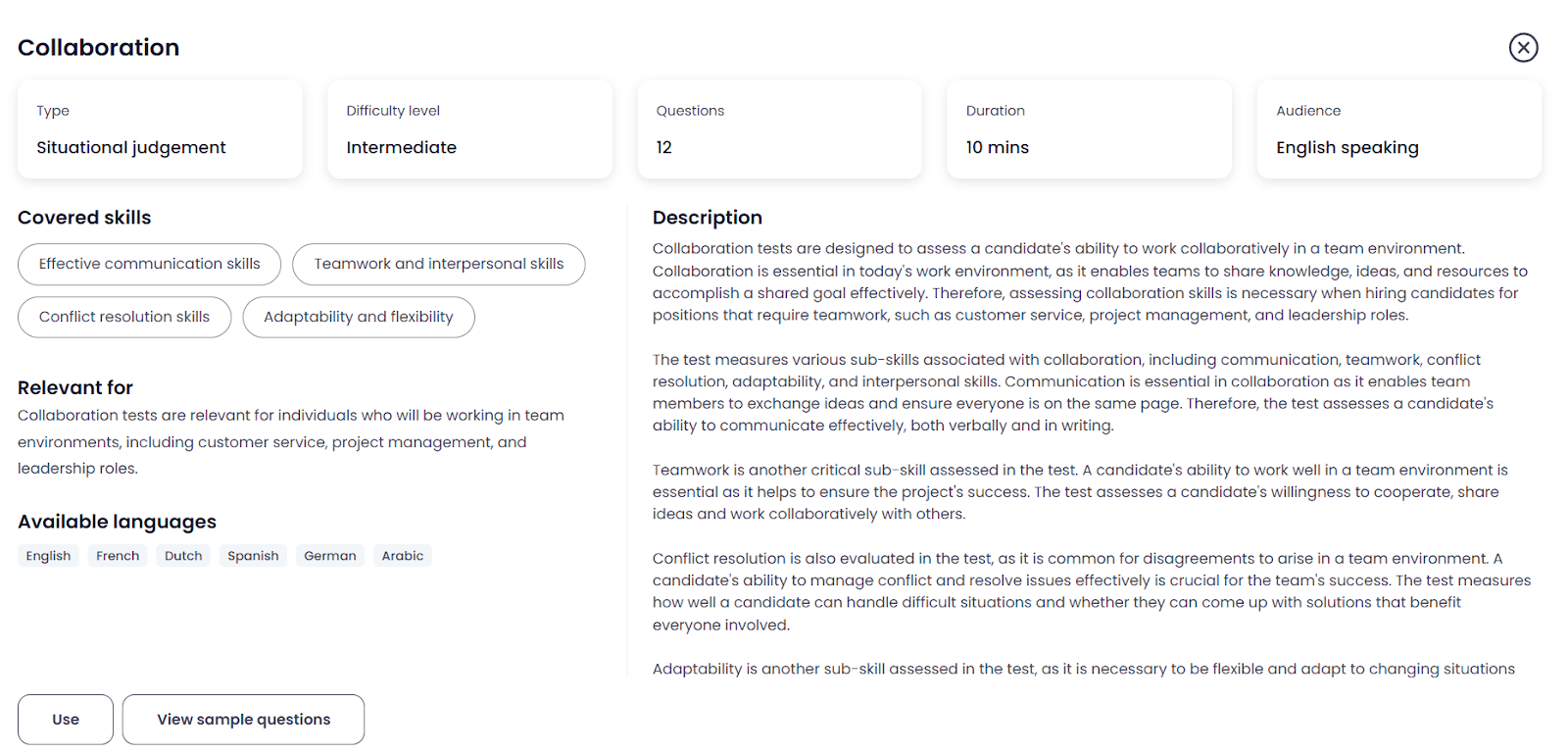
Collaboration test: While critical thinking often involves individual judgment, it’s equally important in team settings. Testlify’s collaboration test assesses how well candidates listen, integrate diverse viewpoints, and work constructively with others to solve problems. It tests whether they challenge ideas respectfully and contribute to group thinking with logic and clarity. This test is especially useful for cross-functional or leadership roles that require group-based decision-making and strategic alignment.
2. Critical thinking test
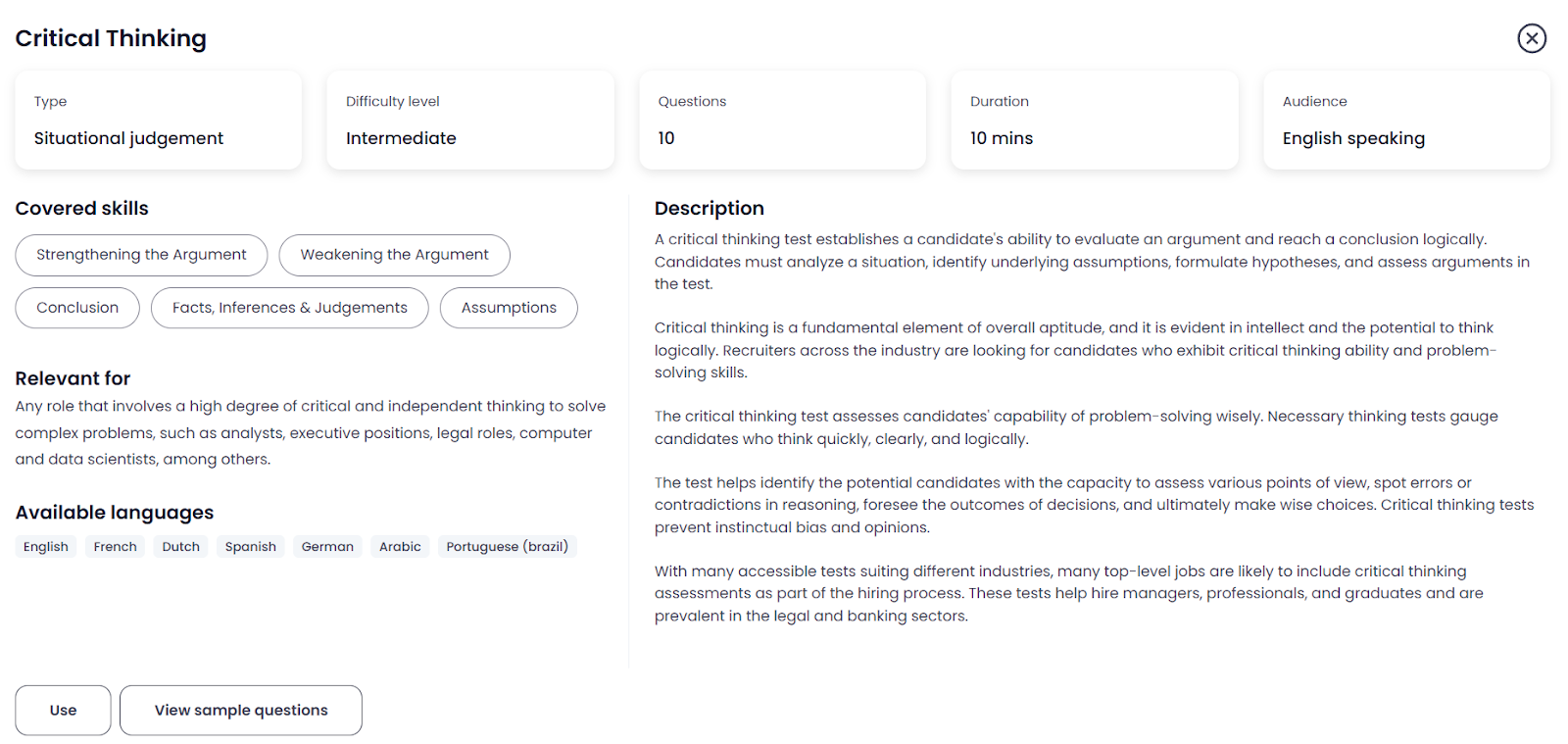
Testlify’s critical thinking assessment is designed to measure cognitive abilities such as logic, reasoning, and problem-solving. This test usually include scenario-based questions that test a candidate’s ability to interpret, analyze, and conclude information.
What it measures:
- Ability to draw conclusions from data.
- Skill in identifying assumptions or logical flaws.
- Judgement in decision-making.
- Analytical depth.
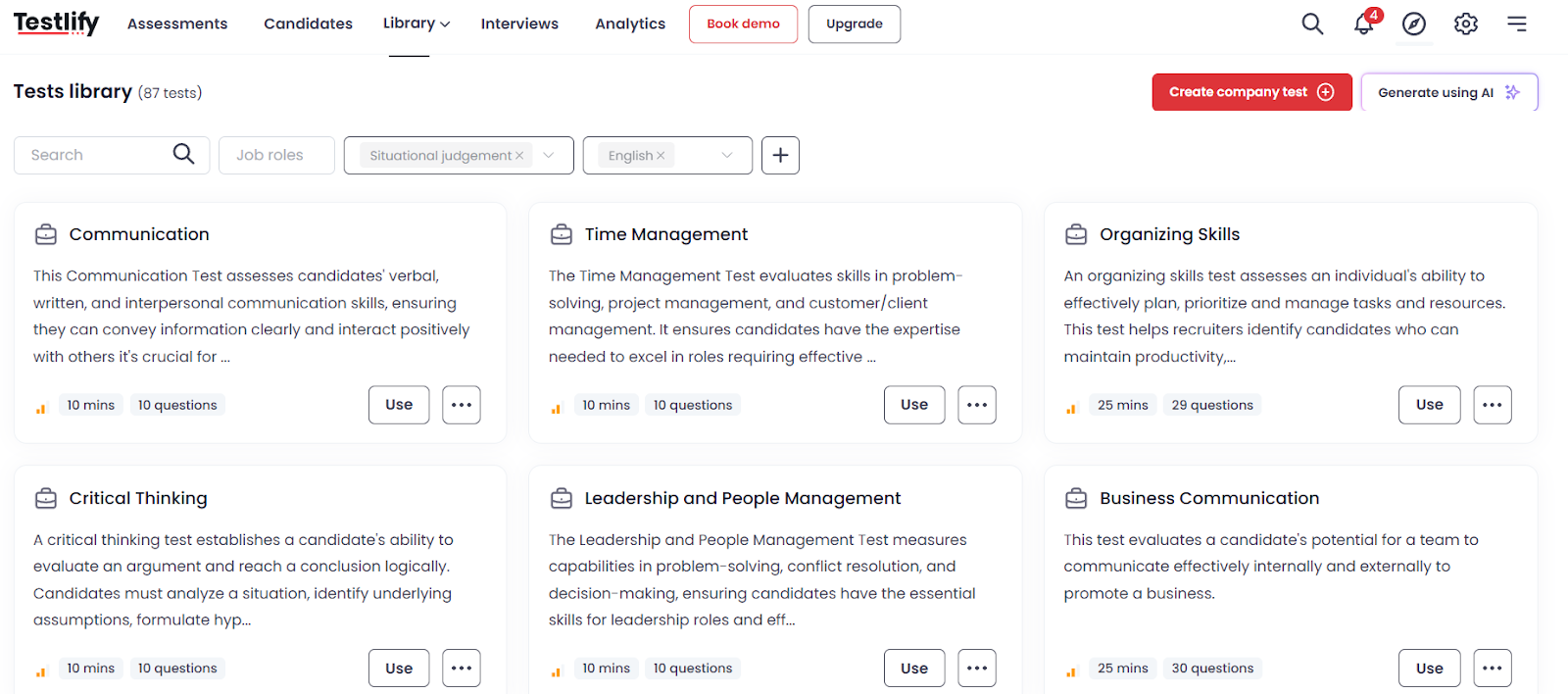
3. Situational Judgment Tests (SJTs)
Situational Judgment Tests present hypothetical work scenarios and ask candidates how they would respond. These can be tailored to evaluate how well a candidate analyzes information and makes rational choices under pressure.
Examples:
- “You’re managing a project that is falling behind schedule. One team member suggests cutting corners to meet the deadline. What do you do?”
- “You’re reviewing data for a marketing campaign and notice inconsistencies in the report. What’s your next step?”
Testlify’s SJTs not only helps assess decision-making but also ethics, prioritization, and information evaluation all key aspects of critical thinking.
Use role-specific SJTs for positions like managers, analysts, or strategists, where decision-making and judgment are part of daily responsibilities.
4. Soft skills and personality assessments
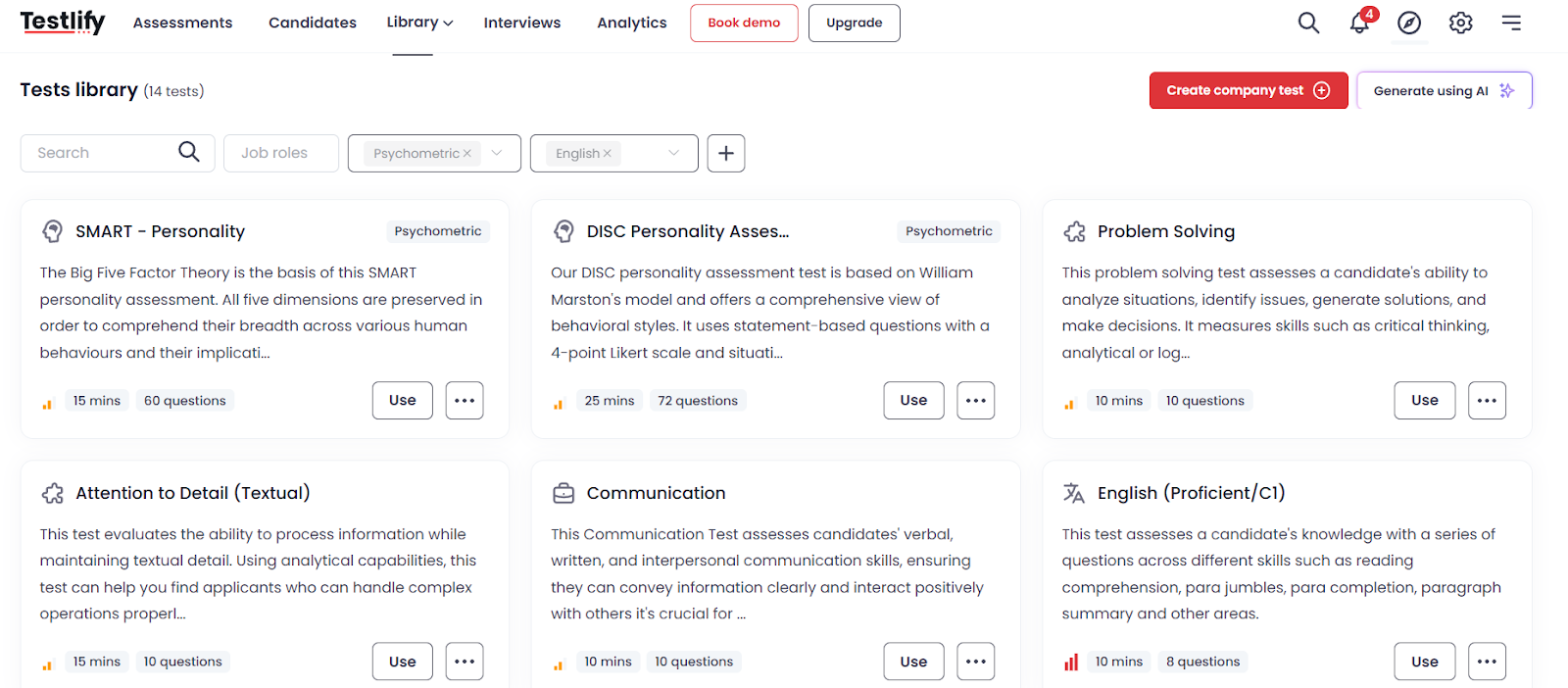
Critical thinking often pairs with traits like emotional stability, openness, and conscientiousness. Soft skills assessments can reveal how a candidate manages stress, remains objective, or pays attention to detail all vital for sound judgment.
Personality tests like the Testlify’s Big Five personality test help identify whether a candidate is curious, reflective, and disciplined. These tests are particularly useful when paired with logic-based assessments, offering a more holistic view of how someone may approach challenges or uncertainty.
5. Behavioral interview questions
Behavioral interviews help assess how candidates applied critical thinking in past experiences. By asking structured questions like, “Tell me about a time you had to make a decision with incomplete data,” interviewers can evaluate a candidate’s approach to analysis, logic, and decision-making.
Look for structured responses using the STAR method (Situation, Task, Action, Result) to assess clarity and coherence. This method helps uncover a candidate’s reasoning skills and their ability to reflect on outcomes and learn from experiences.
Assessing critical thinking in remote hiring
With more companies embracing remote and hybrid work, assessing critical thinking virtually is increasingly important.
Virtual assessment tools:
- Use platforms like Testlify to deliver timed, scenario-based questions online.
- Incorporate video interviews where candidates explain their thought process.
- Use collaborative tools like Miro or Notion to give case studies or challenges.
Tip: Look for clarity, articulation, and logical structure in candidates’ virtual responses.
Continuous assessment post-hire
Hiring doesn’t stop at selection. Embedding critical thinking evaluations into onboarding and performance reviews ensures ongoing development.
Ways to encourage this:
- Provide training on problem-solving and analytical tools.
- Involve new hires in strategy sessions early on.
- Use project retrospectives to reinforce reflection and learning.
Conclusion
Candidates who think critically help businesses navigate uncertainty, solve problems innovatively, and make smart decisions.
To truly assess this vital skill, move beyond resumes and gut feelings. Incorporate tests, simulations, and thoughtful interviews to uncover how candidates think, evaluate, and act.
Whether you’re hiring an entry-level associate or a senior executive, following the methods outlined in this guide will help ensure that you find professionals who not only know their field but also think deeply and strategically about their work.

Content Writer
Yashika Khandelwal is a Content Writer with 3+ years of experience creating research-backed content on hiring, talent assessment, and HR technology. She is a registered Organizational Psychologist and subject matter expert who combines behavioral science with practical recruitment insights to produce accurate, evidence-based content.
LinkedInRelated resources
View all
Candidate assessment
Navigating the hiring landscape in the energy industry

Candidate assessment
Engineering Assessment: How to Hire Better Engineers

Candidate assessment
Pre-hire assessments for HR and recruitment industry

Candidate assessment
Pre-hire assessments for construction industry

Candidate assessment
How pre-hire assessments for automotive industry help hire 10x faster

Candidate assessment
Pre-hire assessments for education industry
Get started.
Hire on proof, not resumes.
Run your first skills-based assessment free — no credit card required.