
Testlify vs Assessment X: A detailed comparison
Discover the perfect solution for evaluating your candidates’ skills with Testlify. Dive into our comprehensive Testlify vs AssessmentX…
Testlify and AssessmentX were both sold as pre-hire assessment platforms. Only one of them still has a working product site. As of August 2026, AssessmentX does not serve a product page at all: it answers with a permanent redirect to a brandable-domain marketplace listing, and the bare domain refuses connections outright. That one fact changes what this comparison is for.
If AssessmentX is still on a shortlist somewhere in your hiring stack, the useful question is no longer which feature set wins. It is whether you are buying from, or already depending on, a vendor you can still reach. This page has been rewritten around that.
 ChatGPT
 Gemini
 Claude
 Grok
Grok Perplexity
TL;DR
- The AssessmentX domain now redirects to a domain-name marketplace, so any AssessmentX comparison written before 2026 (including the earlier version of this page) should be treated as out of date.
- The product's current capabilities cannot be verified from the vendor any more. The old 79-row feature grid on this page has been removed because it scored a named company on things it never publicly claimed.
- Method beats vendor branding. In the revised meta-analytic estimates, structured interviews average 0.42 for predicting job performance and general cognitive ability tests 0.31.
- If an assessment vendor goes dark, your legal duties do not go with it. EEOC guidance puts validity responsibility on the employer, not the test vendor.
- Get candidate data out before you need it. A portability right is only worth what the vendor is still around to honor.
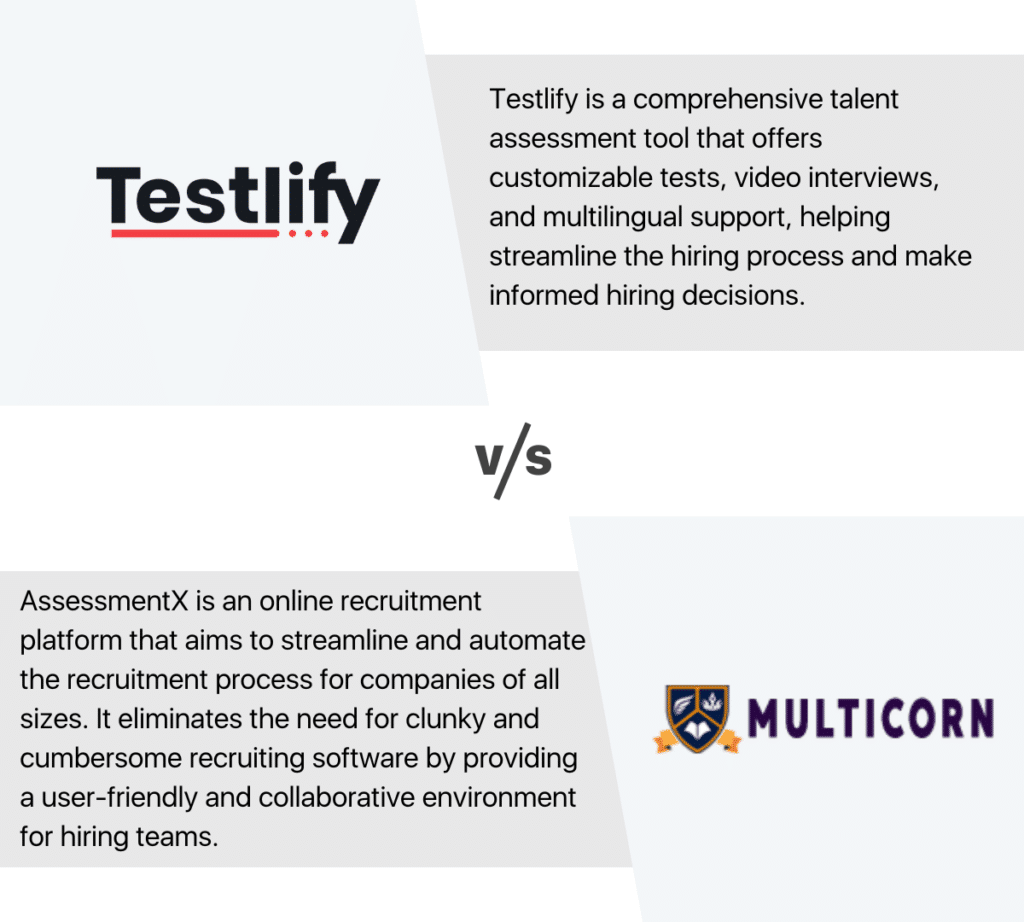

What is AssessmentX?
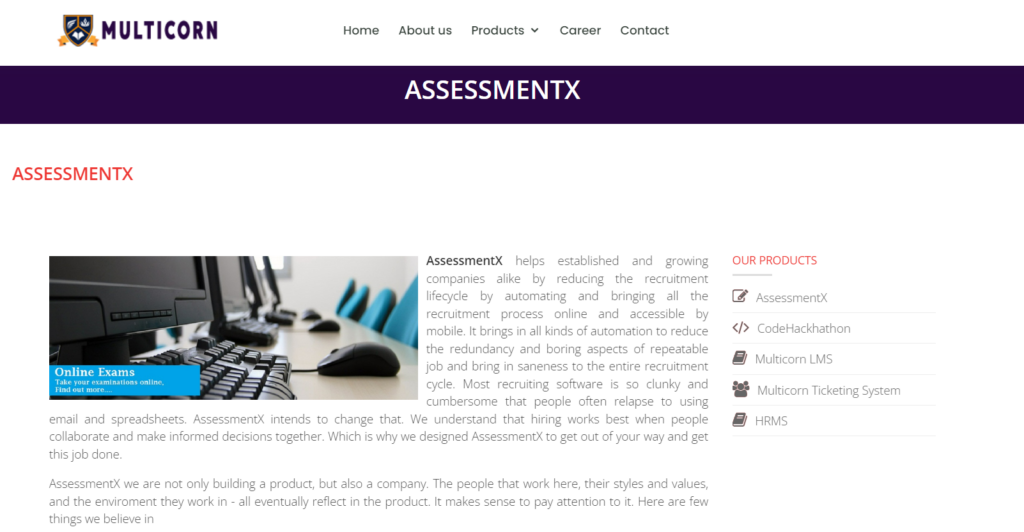
AssessmentX was marketed as an online recruitment and examination platform serving both employers and educational institutions. Material published while its site was live described pre-built psychometric, aptitude and skills tests, custom test creation, and online proctored exams for candidates sitting remotely. That is the honest summary, and it carries an important caveat.
None of it can be checked against the vendor today. Every description of AssessmentX now in circulation, on directory sites and on comparison pages like this one, is a copy of marketing copy that no longer has a live source behind it. When a product's own documentation goes offline, third-party descriptions stop being verification and become folklore.
Is AssessmentX still available?
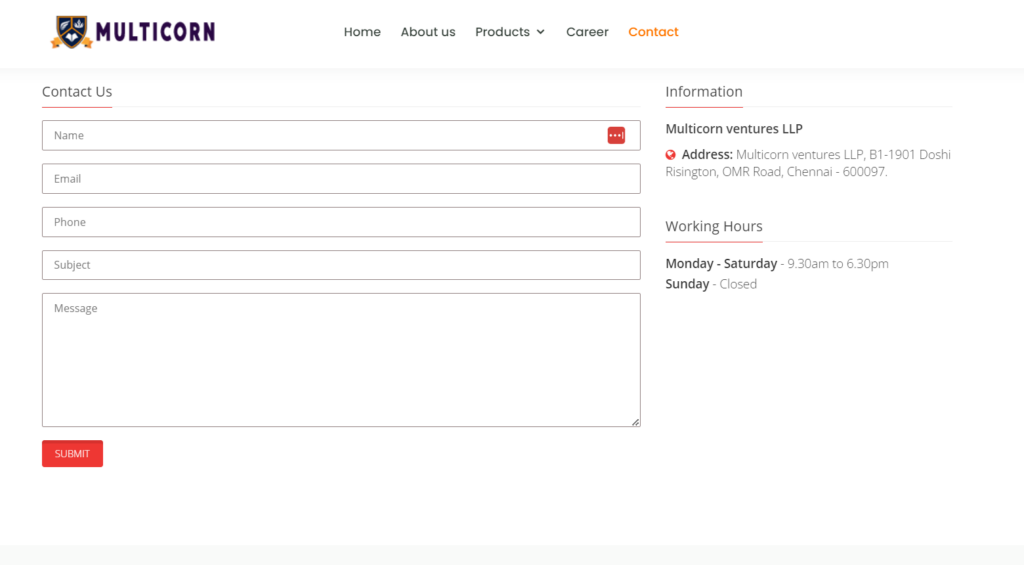
Not in any form a buyer can act on. Requesting AssessmentX returns HTTP 301 to a listing page on a brandable-domain marketplace, the kind of service that buys and resells company names. The apex domain resets the connection. There is no pricing page, no signup, no documentation and no support route reachable from the vendor's own address.
Two things this does not prove, and it is worth being precise. It does not prove the company is dissolved, and it does not prove existing contracts have been terminated. Domains get sold, migrated and misconfigured for reasons that have nothing to do with insolvency. What it does prove is that AssessmentX cannot currently be evaluated, bought, or supported through its published channel, which is enough to act on.
Testlify vs AssessmentX: feature comparison
The table below replaces a 79-row grid that used to sit here. That grid marked AssessmentX absent on capabilities it had never claimed, with no source for any row, on a page Testlify owns commercially. This version compares only dimensions that can be checked against each vendor's own published material, and says "Not published" where a vendor documents nothing rather than implying a gap.
Dimension | Testlify | AssessmentX |
|---|---|---|
Vendor site status | Live, with self-serve signup | Redirects to a domain marketplace listing |
Published pricing | Plans published on the pricing page | Not published, and no longer obtainable |
Free trial | Free plan available | Not published |
Test library | 3,500+ tests across 12 categories | Not published |
Coding and technical tests | Programming, coding and engineering skills | Not published |
Cognitive and psychometric | Cognitive ability, personality and culture | Claimed while the site was live |
Proctoring and integrity | Identity checks, environment and behavior signals | Claimed online proctored exams |
Situational judgment | Yes, plus simulations | Not published |
ATS integrations | Documented integrations and API | Not published |
Support route | Documented support channels | No reachable contact route |
Data export | Reports and CSV or XLSX exports | Not verifiable |
Read the right-hand column carefully. Eight of those eleven rows say some version of "cannot be checked", and that is the finding, not a rhetorical trick. A vendor you cannot audit is a vendor you cannot put in front of candidates.
How much does AssessmentX cost?
There is no published price, and there is now no route to request one. The previous version of this page said pricing "isn't available publicly" and told readers to contact the vendor for a quote. That advice no longer works, because the contact path went with the site.
Testlify publishes its plans on the Testlify pricing page, including a free tier. Whichever platform you end up choosing, published pricing is worth weighting more heavily than most buyers do. A vendor that will not put numbers in public is a vendor whose renewal costs you cannot model.
Which assessment method actually predicts performance?
This is the question a feature grid cannot answer, and it matters more than any row in the table above. Selection science has been recalibrated recently: a 2022 re-analysis found that decades of meta-analytic estimates had been systematically over-corrected for range restriction, which changed the ranking of the tools most companies rely on.
The revised operational validity estimates put job-specific evidence at the top:
Selection method | Mean operational validity |
|---|---|
Structured interviews | 0.42 |
Job knowledge tests | 0.40 |
Empirically keyed biodata | 0.38 |
Work sample tests | 0.33 |
Cognitive ability tests | 0.31 |
Unstructured interviews | 0.19 |
Cognitive ability, long treated as the single best predictor, is no longer the standout. Job-specific evidence is. And the honest reading of that 0.42 is not "structured interviews are 42% accurate". The same analysis reports an 80% credibility interval from 0.18 to 0.66, so the authors describe it as 0.42 plus or minus 0.24. How you build the interview matters as much as choosing to run one. The underlying range-restriction correction paper is worth reading if you set assessment policy.
The practical consequence for a buyer: stop scoring vendors on test-count and start scoring them on whether they produce role-relevant evidence you can defend. A platform with 3,500 tests is only useful if the ones you pick map to the actual job.
What happens to your data if a vendor disappears?
Two duties survive the vendor, and both land on you. The first is candidate data. Under Article 20 of the GDPR, a data subject has the right to receive their personal data "in a structured, commonly used and machine-readable format" and to transmit it to another controller. Exercising that right against a vendor whose site has gone dark is exactly as hard as it sounds.
The second is validity evidence. EEOC guidance is unambiguous on where responsibility sits: "While a test vendor's documentation supporting the validity of a test may be helpful, the employer is still responsible for ensuring that its tests are valid under UGESP." If a selection procedure you ran is challenged, the fact that the vendor no longer exists is not a defence. It is a gap in your file.
So the exit plan is not an IT chore to do at renewal. Export your candidate records, your score data and your validation documentation on a schedule, while the vendor is healthy and the export button still works.
Which compliance duties stay with you?
More than most teams assume, and they attach to the employer rather than the software. Two examples with real teeth.
In New York City, Local Law 144 requires that an automated employment decision tool "has been subject to a bias audit within one year of the use of the tool", that the audit results are publicly available, and that candidates get notice 10 business days before use. Enforcement began on 5 July 2023. A bias audit needs cooperation from whoever runs the tool, which is a problem if that party has gone quiet.
In the EU, the AI Act classifies as high risk any AI system "intended to be used for the recruitment or selection of natural persons, in particular to place targeted job advertisements, to analyse and filter job applications, and to evaluate candidates" (Annex III, point 4(a)). Screening, filtering and scoring all sit inside that description. The deployer carries obligations regardless of who wrote the model.
How to choose a replacement platform
The Testlify Human+AI Evidence-Based Hiring Framework is a useful lens here: combine AI-assisted evaluation with human judgment, using structured evidence instead of resumes, intuition, or inconsistent interviews. AI supports the process, humans make the decision, evidence improves confidence. Applied to vendor selection, it means you are buying an evidence trail, not a test catalogue, so the vendor has to still be there to produce it.
A short continuity check, worth running before you sign anything:
- Load the vendor's own domain and confirm it serves a product site, not a redirect. This takes 10 seconds and would have flagged AssessmentX.
- Find published pricing, or get the quote in writing with a term and a renewal cap.
- Ask for a named current customer reference in your industry, and actually call them.
- Get the support SLA in writing, including the response window and the escalation path.
- Test the data export yourself during the trial. Export candidate records and score data, and confirm the file opens.
- Ask who produces the bias audit and validation documentation, and how often it is refreshed.
- Check that assessments map to role competencies, not just to a large test count.
Pro tip: Run step 5 on your incumbent vendor this quarter, not just on the ones you are evaluating. Most teams discover their export gap during a crisis, which is the worst possible time to find out that score history only exports as a PDF.
Testlify covers the assessment and screening slice of that stack: skills tests, coding and cognitive assessments, personality and culture, situational judgment, and proctoring. It is not an ATS, an HRIS, or a background-check provider, and it does not replace your recruiters. Browse the validated skills test library, read how skills-based hiring changes a screening funnel, or see where psychometric assessments genuinely fit.
If you are actively replacing AssessmentX, the AssessmentX alternatives page covers the switch in more detail. Ready to see it working on your own roles? Book a demo and bring one live requisition to the call.
FAQs
Related resources
View all
Competitor Comparisons
Testlify vs Traitify: A detailed comparison
Competitor Comparisons
Testlify vs Wired2Perform: A detailed comparison
Competitor Comparisons
Testlify vs Verensics: A detailed comparison
Competitor Comparisons
Testlify vs Journeyfront: A detailed comparison
Competitor Comparisons
Testlify vs FurstPerson: A detailed comparison
Competitor Comparisons
Testlify vs Caliper Essentials: A detailed comparison
Get started.
Hire on proof, not resumes.
Run your first skills-based assessment free — no credit card required.