
Top 15 Peoplogica Skills Alternatives and Competitors
Discover 15 powerful Peoplogica Skills alternatives to streamline your hiring process and assess candidates with confidence.
Peoplogica Skills is a web-based skills testing platform built around a very large question catalogue: more than 500 subjects and 4,000 subtopics that you combine into one custom test. Teams look for an alternative when they want published pricing, a free trial, AI interviewing, or proctoring strong enough for remote hiring. This guide covers 15 options and who each one actually suits.
Most "alternatives" lists are a wall of logos. This one starts with what Peoplogica Skills does well, because plenty of teams should stay put. Then it gets specific about the four reasons people leave, and which tool answers each one.
 ChatGPT
 Gemini
 Claude
 Grok
Grok Perplexity
TL;DR: choosing a Peoplogica Skills alternative
- Peoplogica Skills is strongest at breadth of subject matter and at Microsoft Office and call-centre simulations. If that is your whole hiring problem, you may not need to switch.
- The four reasons teams leave: no published pricing, no free trial, no AI or video interviewing, and light proctoring for remote candidates.
- Testlify is the closest like-for-like replacement that adds interviewing and proctoring, with pricing published on the site starting at $139 a month billed annually.
- Developer-heavy hiring pushes you toward the coding-first platforms. Volume retail, call-centre and admin hiring pushes you toward simulation-first ones.
- If you assess candidates with AI anywhere in the process, put the vendor's human-override controls on your shortlist criteria. Since 2024 that is a regulatory question in Europe, not just a fairness one.

What is Peoplogica Skills?
Peoplogica Skills is a cloud-based pre-employment skills testing platform. Its own site describes tests as "created by combining multiple subjects and skill levels into a single skills assessment", drawn from over 500 subjects and 4,000 subtopics across IT, accounting, call centre, engineering, administration, healthcare, sales, HR, retail and hospitality.
Two things make it distinctive. First, the sheer size of the subject catalogue, which is genuinely larger than most rivals advertise. Second, the simulations: an MS Office Excel simulation and inbound and outbound call-centre simulations that recreate the software a person would actually use on the job, rather than asking about it in multiple choice.
Results come back as computer-generated reports, and the product connects to more than 20 talent-acquisition and HR platforms including Bullhorn, Greenhouse, JazzHR, SmartRecruiters, Workday HCM and iCIMS. There is no public per-seat price and no self-serve free trial. You book a demo, and pricing is quoted against how many tests you expect to run.
Why teams look for a Peoplogica Skills alternative
Four objections come up again and again, and they are worth naming plainly because each one points at a different replacement.
- You cannot see the price. No published tiers and no free trial means a demo call before you know whether it fits the budget. For a 40-person company that is often the end of the evaluation.
- Testing stops at testing. Peoplogica Skills grades skills. It does not interview candidates by video, voice or AI, so screening and first-round interviewing stay in two different tools.
- Proctoring is thin for remote hiring. If candidates sit tests unsupervised at home, webcam checks, identity verification and AI-assistance detection matter, and this is not where the product is strongest.
- Reporting is scores, not psychometrics. You get accurate results per candidate. You do not get item-level diagnostics telling you a question is broken.
None of that makes it a bad product. It makes it a 2015-shaped product being asked to solve a 2026 problem, which is a different complaint.
How we evaluated these tools
Skills change faster than job titles do. The World Economic Forum's Future of Jobs Report 2025 puts it at 39% of workers' core skills being transformed or outdated between 2025 and 2030. And people move: the US Bureau of Labor Statistics measured median employee tenure at 3.9 years in January 2024, the lowest since 2002. So you are testing more often, for skills that keep shifting.
That is the case for testing at all. The case for testing well is older and better evidenced. Schmidt and Hunter's 1998 review of 85 years of selection research ranked structured, standardised methods far above unstructured judgement. Sackett and colleagues revisited those estimates in 2022 and revised many of them downward after finding earlier corrections too generous. The coefficients moved. The ranking did not: structured evidence still beats a hunch, and years of experience on a resume still predicts very little.
So each tool below was judged on six things:
- Library breadth against role fit. A 5,000-test catalogue is worthless if none of them match the job you are hiring for.
- Question-type range. Multiple choice measures recall. Work samples, simulations and coding tasks measure the job.
- Proctoring depth. What actually happens when a candidate opens a second tab.
- AI scoring with human override. Whether a recruiter can see, weight and overrule the machine.
- Pricing transparency. Published numbers, or a sales call.
- ATS fit. Whether it plugs into the system you already run.
One deliberate omission: G2 star ratings. The previous version of this page carried a rating for every tool, and ratings move constantly, are collected from self-selected reviewers, and were not verifiable at the time of writing. A number you cannot check is worse than no number.
Quick comparison table
Tool | Category focus | Standout capability | Best for |
|---|---|---|---|
Testlify | All-round assessment plus AI interviewing | Dual-device proctoring, item-level psychometrics | Teams replacing testing and first-round interviews together |
Adaface | Conversational technical screening | Chat-based assessment flow | Reducing candidate drop-off on tech tests |
Vervoe | Job-simulation assessment | AI grading of open task responses | Skills-first hiring where output beats credentials |
Codility | Engineering assessment | Live pair-programming interviews | Enterprise engineering hiring |
Mercer Mettl | Broad corporate assessment | Psychometrics plus human proctoring options | Campus drives and certification testing |
iMocha | Skills intelligence | Skills taxonomy across hiring and internal mobility | Workforce skills mapping, not just hiring |
HireVue | Video interviewing at volume | On-demand interview workflows | Very high-volume enterprise funnels |
TestDome | Work-sample testing | Short, task-shaped screening tests | Fast first-pass filtering |
Coderbyte | Developer screening | Take-home projects and live coding | Startups and mid-market dev hiring |
HireMojo | Hiring automation | Job posting through to shortlist | Small teams with no recruiter |
HackerEarth | Technical assessment at scale | Hackathons and coding events | Employer branding plus tech screening |
HackerRank | Developer assessment | Large coding question bank | Established engineering orgs |
TestInvite | Exam and certification software | Granular test-builder control | Certification and compliance testing |
eSkill | Clerical and software-skills testing | Office and call-centre simulations | The closest match to Peoplogica's own strengths |
Canditech | Job-simulation assessment | One-sitting simulation plus video | Non-technical role simulations |
1. Testlify
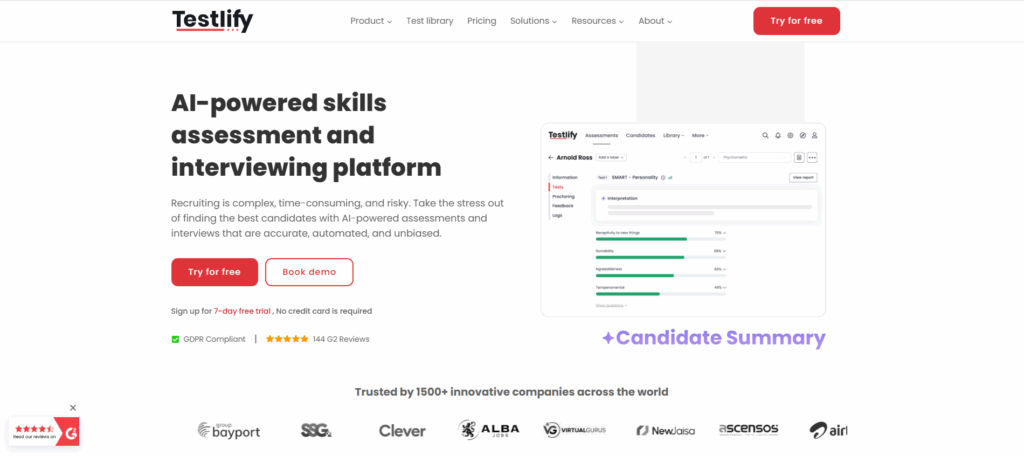
Testlify is a pre-hire assessment and interviewing platform. It covers the same ground as Peoplogica Skills on skills testing, then keeps going into interviewing and proctoring, which is why it tends to be the first stop for teams whose complaint is "testing stops at testing".
Features
- Test library and question types: a library of 3,500+ tests across 4,500+ roles, and more than 25 question types. That includes typing tests scored on 60% accuracy and 40% speed, questions bound to real Google Docs, Sheets, Slides and Microsoft Word, PowerPoint and Excel files, and vibe-coding questions where candidates direct AI tools to a working solution instead of writing every line by hand.
- AI interviewing: one-way async video, two-way conversational AI video, voice questions and outbound AI phone interviews, with selectable AI avatars and voices, custom prompts, attempt and recording-time limits, automatic multilingual transcripts and 150+ interview templates.
- Proctoring: three presets (Standard, Strict, Custom) plus dual-device proctoring, where the candidate's phone becomes a second camera pointed at both the person and the screen. The session will not start until that second device is connected.
- Item-level psychometrics: difficulty index, discrimination index and a quality-risk flag per question, so a badly written question shows up as a broken question rather than a run of weak candidates.
- AI with a human in the loop: the AI checker classifies an answer as human, AI-generated or mixed. AI scores carry an in-product disclaimer that they are guidance only, and "include AI score in the final average" is a toggle a recruiter can switch off.
- Integrations: 100+ ATS integrations, webhooks and Zapier. Testlify also ships a simple built-in ATS (job requisitions, an application form, job-board publishing and an applied to shortlisted pipeline) for teams that do not run one yet.
Testlify pricing
Pricing is published, which on this list is not the norm. Annual billing runs Starter at $139 a month for 100 credits, Basic at $279 for 300, and Business at $699 for 1,000, with Premium, Enterprise and Custom quoted by sales. One credit is one started assessment. There is a 7-day free trial with no card, a 30-day money-back guarantee, and the price is locked for 24 months. See the current pricing tiers for the monthly figures, which differ. ATS integrations, white labeling and SSO are paid add-ons on the self-serve tiers rather than bundled.
Honest limitations
It does not schedule live human interview panels, so calendar coordination stays wherever it lives today. Assessments run on Chromium desktop browsers (Chrome or Edge), with the mobile app acting as a capture fallback rather than a full test-taking surface. The chat-based AI question type is still labelled coming soon.
2. Adaface
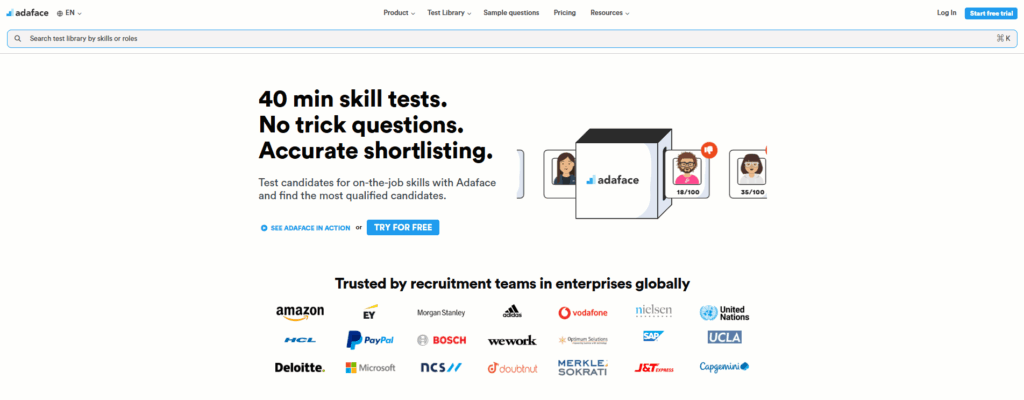
Adaface reframes the skills test as a conversation. Instead of a form, candidates work through role-relevant questions with a chatbot, which measurably reduces the "this feels like an exam" drop-off that kills completion rates on technical screens.
Features
- Conversational assessments: an interactive question-and-answer flow rather than a static test form.
- Role-relevant testing: assessments built around real coding and problem-solving tasks tied to the job.
- Automatic scoring: candidates are scored as they go and assigned a pass, borderline or fail status.
- Library: a catalogue of 150+ pre-made tests, mostly technical, with room to customise.
Best for
Engineering and data teams losing good candidates at the test stage. It is a narrower catalogue than Peoplogica Skills, so it is a poor swap if you hire across admin, retail and call-centre roles.
3. Vervoe
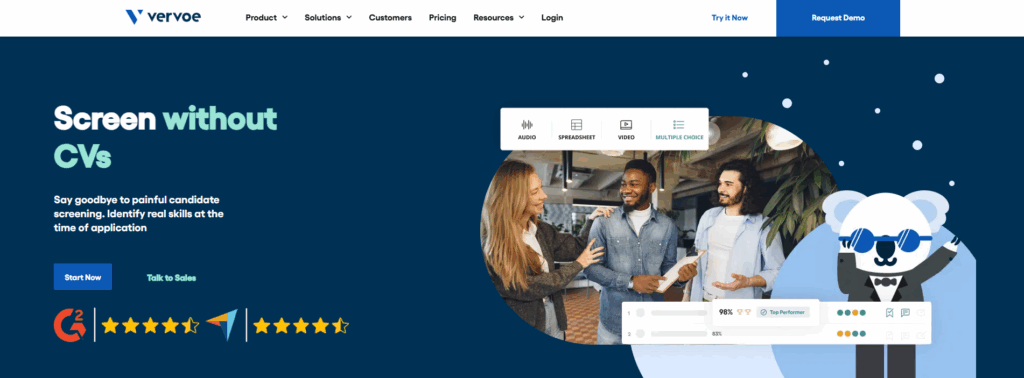
Vervoe's pitch is merit over resumes: put candidates in front of a job-shaped task, then let AI grade and rank what they produced. It sits closer to a work sample than to a knowledge quiz.
Features
- Job simulations: 300+ ready-made assessments across a range of roles and industries.
- Mixed question formats: multiple choice, free text, video responses and custom questions in one assessment.
- AI grading: responses are auto-graded and candidates ranked on performance.
- Integrity controls: plagiarism checks and timed questions.
Best for
Skills-first hiring where you care what someone produces more than what they claim. The tradeoff is that open-response grading needs review, so it saves less recruiter time than a scored quiz does.
4. Codility
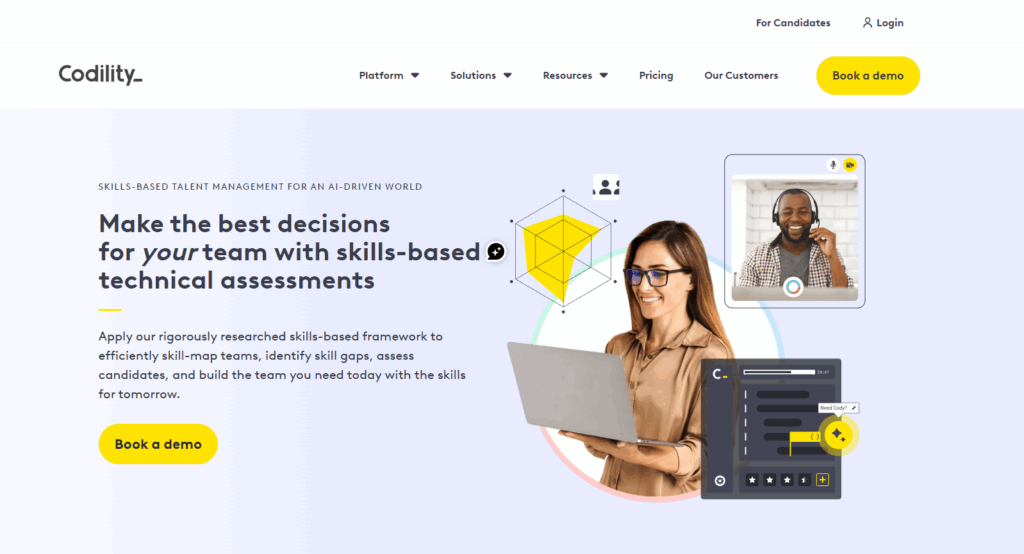
Codility is an engineering assessment platform used mostly by larger technology organisations. Coding tests, live technical interviews and anti-plagiarism controls are the core, with reporting aimed at defending a hiring decision to an engineering manager.
Features
- Coding task library: a broad set of coding and technical tasks across many programming languages.
- Live technical interviews: a real-time pair-programming interface with in-session code evaluation.
- Plagiarism controls: similarity detection built for code specifically, which generic proctoring misses.
- Standardised scoring: the same tasks and rubric for every candidate, which is the mechanism that reduces bias.
Best for
Enterprise engineering hiring. It is not a replacement for a general skills platform, and buying it to test call-centre staff would be an expensive mistake.
5. Mercer Mettl
Mercer Mettl covers technical, cognitive, behavioural and psychometric testing in one suite, backed by Mercer's research bench. It is the closest thing on this list to a traditional assessment house that also sells software.
Features
- Wide assessment range: role-based, domain, coding and psychometric tests in one catalogue.
- Proctoring options: AI monitoring, lockdown browser and human-proctored sessions.
- Branding controls: your logo, colours and a custom subdomain on the candidate-facing test.
- Benchmarked reporting: competency scores and percentile benchmarks rather than a raw mark.
Best for
Campus recruitment, certification programmes and regulated hiring where a defensible psychometric report matters. Pricing is quoted, not published.
6. iMocha
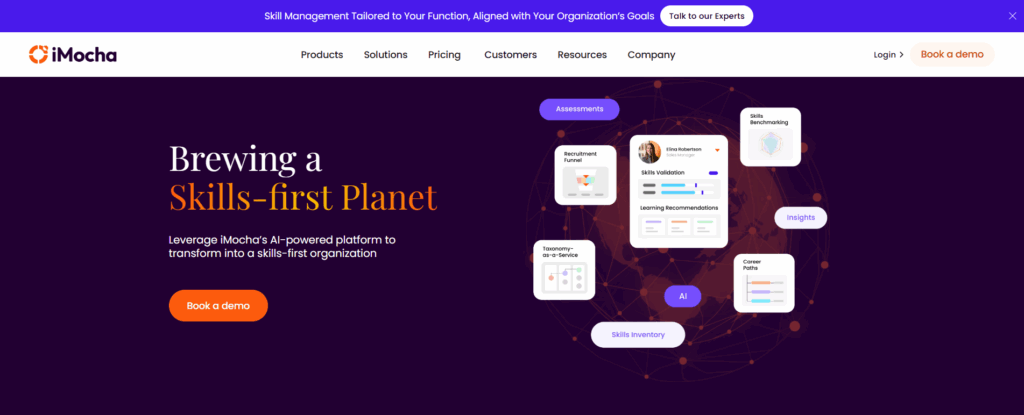
iMocha started as pre-employment testing and has moved toward skills intelligence: mapping what your existing workforce can do, not only what an applicant can do. That is a different purchase, and worth knowing before you scope it as a testing tool.
Features
- Large test catalogue: a wide library spanning coding, IT, finance and language skills.
- Custom test building: assemble tests from existing questions or write your own.
- AI interviewing: an AI interviewer that runs a conversation and returns a qualitative summary.
- Skills taxonomy: skills mapped across roles, which is what powers the internal-mobility use case.
Best for
Organisations doing skills mapping and internal mobility alongside hiring. Overkill if you only screen external applicants.
7. HireVue
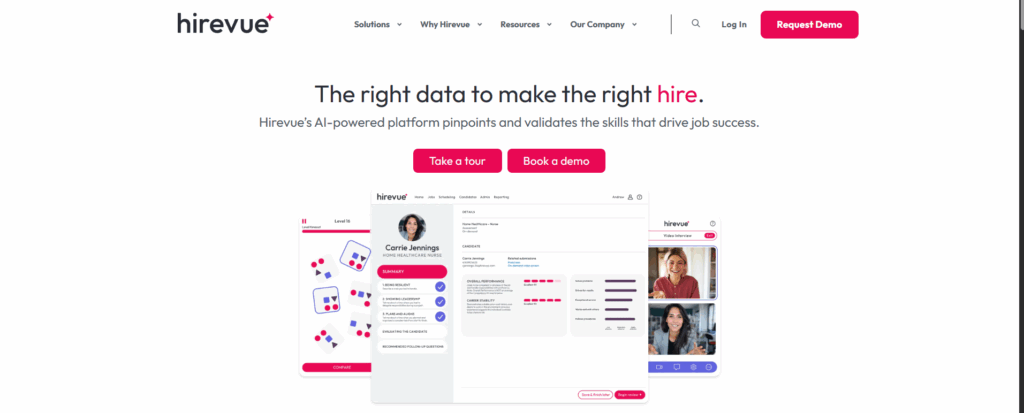
HireVue is a video interviewing platform that expanded into assessment. It is built for funnels measured in tens of thousands of applicants, where the constraint is interviewer hours rather than test content.
Features
- On-demand and live video interviews: recorded one-way interviews with structured scoring rubrics, plus live sessions.
- Validated interview content: role-specific question sets developed by industrial-organisational psychologists.
- Game-based assessments: short cognitive exercises used as an early filter.
- Scheduling and automation: interview scheduling, candidate chatbots and ATS integration.
Best for
Very high-volume enterprise hiring. Note that the company retired facial-expression analysis from its assessments in 2021 after external audit pressure, so any older write-up describing it as reading faces is out of date. Pricing is not published.
8. TestDome
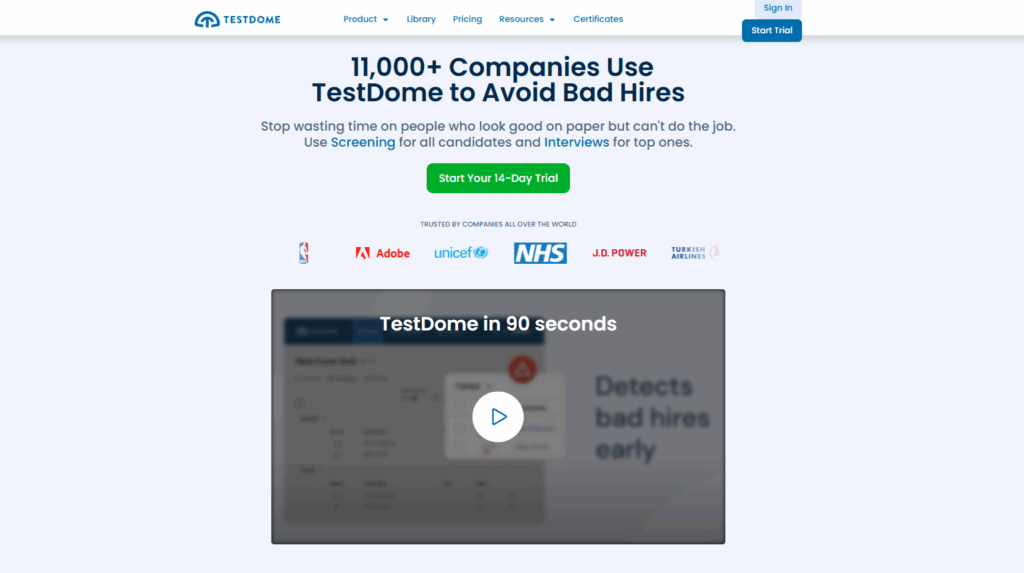
TestDome keeps things deliberately small: short tests built from tasks that resemble the actual job, used as a first filter before anyone spends interview time.
Features
- Work-sample tasks: coding, data entry and customer-service scenarios rather than trivia.
- Ready-made library: 150+ pre-built tests across development, accounting, customer service and admin roles.
- Basic proctoring: webcam monitoring and screen recording to deter the obvious cheats.
- Candidate comparison: side-by-side score views for shortlisting.
Best for
Teams that want a fast, cheap first-pass filter and will interview properly afterwards. Its proctoring is lighter than a compliance-heavy employer will accept.
9. Coderbyte
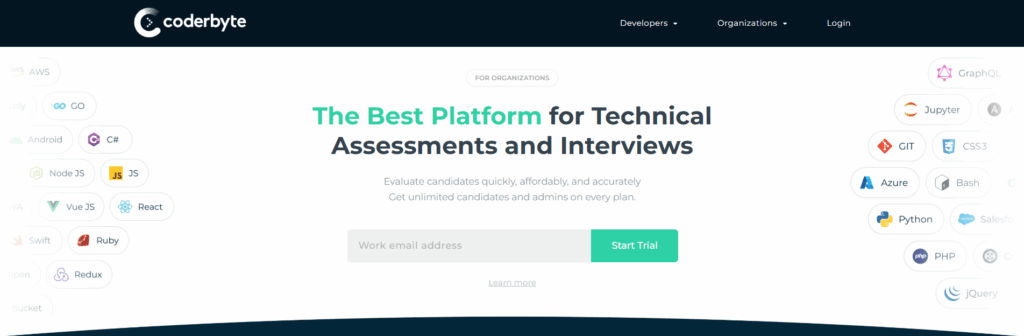
Coderbyte is developer screening for teams without an enterprise budget. Coding challenges, take-home projects and live interviews sit in one subscription.
Features
- Challenge library: a large bank of coding challenges across many languages and skills.
- Mixed question types: multiple choice, open response and SQL queries alongside code.
- Live interviewing: collaborative code editor, spreadsheets, Jupyter notebooks and a whiteboard.
- Playback reporting: candidate code plus recordings of how it was written, which is often more telling than the final answer.
Best for
Startups and mid-sized teams hiring developers and data scientists. Not a fit for non-technical roles.
10. HireMojo
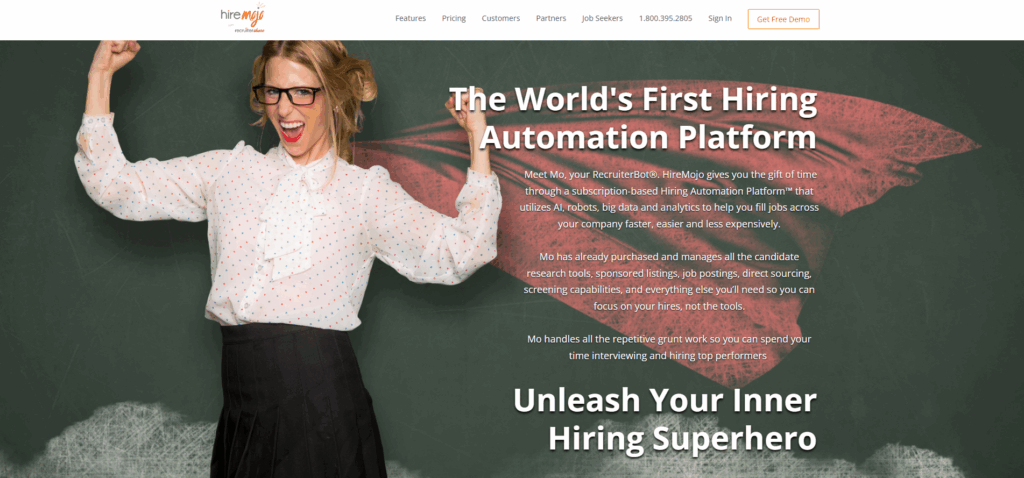
HireMojo is the odd one out here, because it is not really an assessment tool. It automates the recruiting process itself: writing and posting the job, pre-screening applicants, ranking them and moving them along.
Features
- Automated job posting: distribution across job boards from one place.
- Applicant pre-screening: automatic screening and ranking of inbound applicants.
- Content templates: ready-made job descriptions and interview question sets.
- Candidate management: resume views, status tracking, notes, scheduling and rejection emails.
Best for
A small company with no recruiter that needs the whole loop handled. If you came here for test content, this is the wrong shelf. Pricing is quoted, not published.
11. HackerEarth
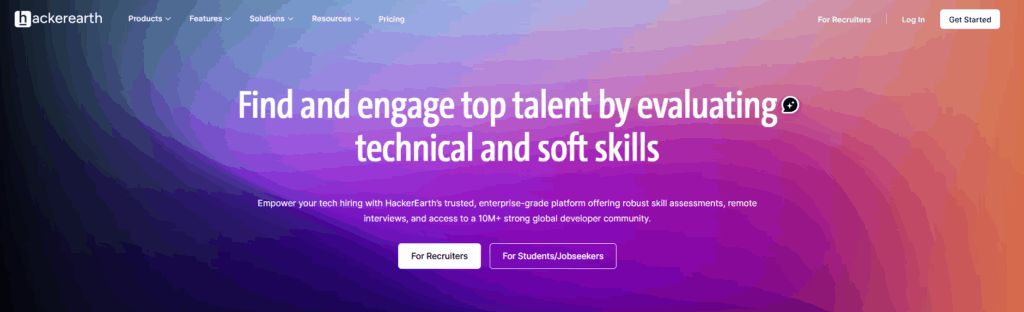
HackerEarth pairs technical screening with developer community events. The hackathon side is a real recruiting channel for engineering brands, not a gimmick.
Features
- Large question bank: a deep catalogue spanning multiple choice, project-based and data-science questions.
- Proctoring: webcam monitoring and plagiarism detection on coding submissions.
- Live coding interviews: a collaborative editor with video and a whiteboard.
- Hackathons: hosted coding events used for sourcing and employer branding.
Best for
Engineering teams that want screening and a sourcing channel from the same vendor.
12. HackerRank
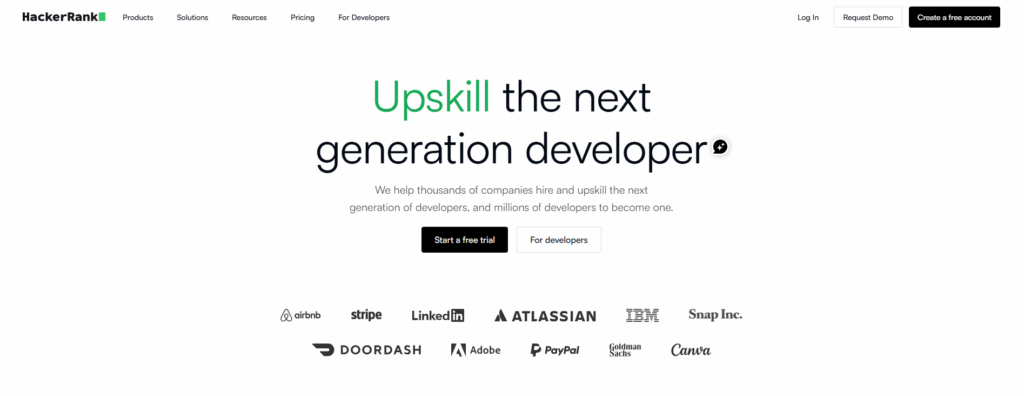
HackerRank has been in developer assessment for over a decade and has the question bank to show for it. Many engineers have already sat one of its tests, which cuts both ways: familiarity lowers candidate friction, and widely circulated questions raise the leak risk.
Features
- Deep question bank: a very large set of coding challenges across dozens of programming languages.
- Screen and interview: asynchronous coding tests plus live pair-programming sessions.
- Integrity signals: proctoring and behavioural signals combined rather than a single flag.
- Enterprise integrations: connections into the major applicant tracking systems.
Best for
Established engineering organisations with a defined technical bar. Not built for non-technical hiring.
13. TestInvite
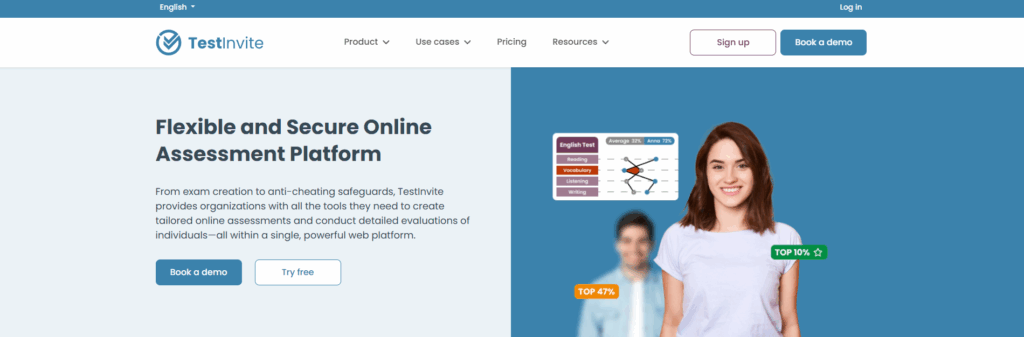
TestInvite is exam software first and hiring software second. If you need to control exactly how a test is built, scored and interpreted, it gives you more knobs than anything else here.
Features
- Flexible test builder: a wide range of custom question types and fine control over test structure.
- Pre-built assessments: ready-made tests for problem-solving, communication and role-specific abilities.
- Configurable reporting: custom scoring logic, derived metrics, norm comparisons and score-band interpretations.
- Exam security: lockdown browser, question randomisation and automated cheating detection.
Best for
Certification, compliance and training assessment. The flexibility is the cost: someone has to configure it.
14. eSkill
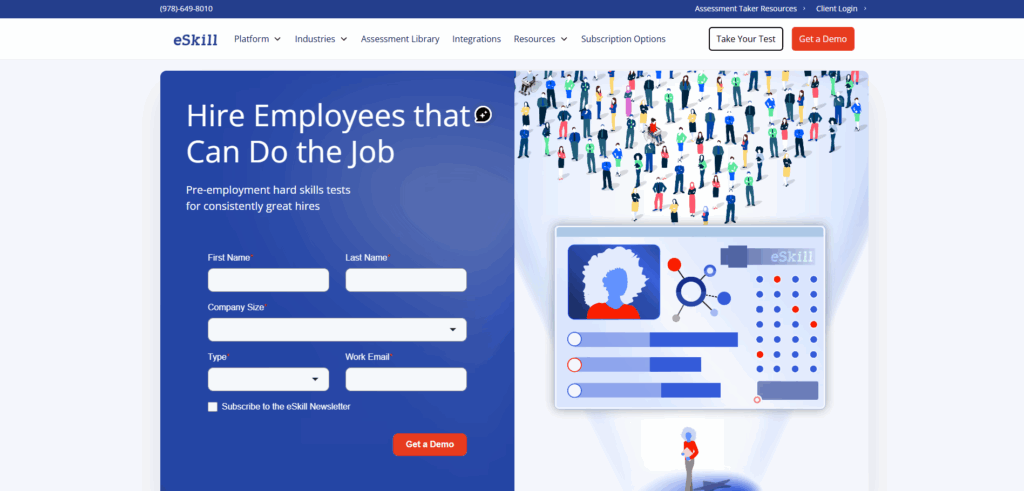
Of everything on this list, eSkill is the closest philosophical match to Peoplogica Skills. It has been doing clerical, software-proficiency, literacy, numeracy and call-centre testing for a long time, with the same combine-subjects-into-one-test approach.
Features
- Broad ready-made library: a large catalogue of assessments plus custom tests assembled by subject and topic.
- Job simulations: interactive simulations for office software and call-centre scenarios.
- Integrity monitoring: copy-paste and tab-switch tracking with real-time flagging.
- Breakdown reporting: scores split by subject and question so you can see where someone fell down.
Best for
A like-for-like move that keeps the same testing philosophy. Which also means it does not solve the interviewing or pricing-transparency objections. Pricing is quoted, not published.
15. Canditech
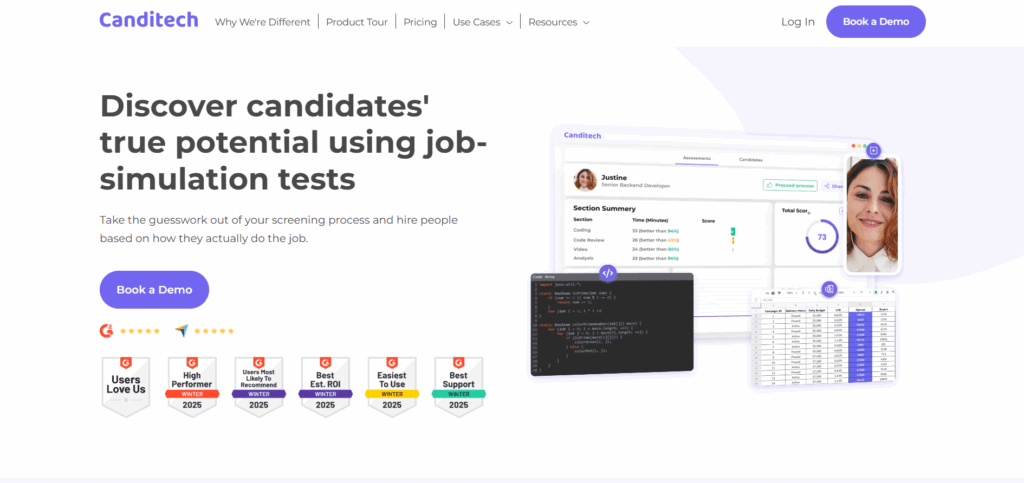
Canditech is a newer job-simulation platform built around one idea: put the whole evaluation into a single sitting that mixes a work simulation with a video response, then rank on the result.
Features
- Simulation library: pre-built simulations plus a builder for custom scenarios.
- Mixed task types: coding, spreadsheet exercises and open-text responses in one assessment.
- Automatic ranking: candidates scored and ordered without manual marking on structured tasks.
- Benchmarking: scores compared against role or industry benchmarks.
Best for
Non-technical simulations, especially sales, operations and customer-facing roles.
Which alternative should you choose?
Match the tool to the objection that made you look, not to the longest feature list.
- You want the same thing, cheaper or clearer. eSkill is the nearest philosophical match. Testlify is the nearest match that also publishes its prices.
- You want testing and interviewing in one place. Testlify for AI interviewing plus assessment. HireVue if your funnel is genuinely enormous.
- You hire developers. Codility or HackerRank at enterprise scale, Coderbyte or HackerEarth below that.
- You hire for admin, retail, call-centre or hospitality. eSkill, Canditech or Testlify. Skip the coding-first platforms entirely.
- You need a defensible psychometric report. Mercer Mettl.
A note for smaller teams, because most buyers here are one. If you are under about 200 people, the founder or the office manager is usually the person running hiring, not a full-time recruiter. That changes the calculus: setup time and a free trial matter more than a deep configuration surface you will never touch. Tools that need a solutions consultant to switch on are a poor fit for a company that hires eight people a year.
One more criterion worth adding to your shortlist. If a tool scores candidates with AI, ask what the human can override. The EU's Artificial Intelligence Act classifies AI systems used to recruit, screen and evaluate job candidates as high-risk under Annex III, with obligations phasing in over several years. That is not legal advice, and no product design is a safe harbour, but "can a recruiter see the AI score, weight it, and switch it off" is now a procurement question rather than a nice-to-have.
Pro tip: before you migrate anything, run your current shortlist through the new tool's free trial using a role you have already hired for. If the tool ranks your actual good hire in the top three, it understands the job. If it does not, the catalogue size never mattered.
The Testlify Human+AI Evidence-Based Hiring Framework is the shape most of these decisions land in: AI does the volume work of scoring and summarising, a human owns the decision, and both stand on structured evidence rather than a resume. You can book a walkthrough with the team or start free and test a role this week. If you want the direct head-to-head instead, read the full Testlify and Peoplogica Skills comparison.
Key takeaways
- Peoplogica Skills is not weak, it is narrow. Over 500 subjects and 4,000 subtopics is real depth, and the Office and call-centre simulations are genuinely good. It stops at scored testing, so if that is all you need, switching costs you time for no gain.
- Name the objection before you shop. The four reasons teams leave (no published price, no interviewing, light proctoring, score-only reporting) each point at a different tool. Buying on feature-list length instead is how companies end up with a coding platform for retail hiring.
- Pricing transparency is a real selection criterion. Most tools here quote rather than publish. For a company under 200 people, where the buyer is often the founder, a demo-gated price is frequently where the evaluation ends, so a published tier and a free trial change who can buy at all.
- Coding platforms and skills platforms are not interchangeable. Codility, HackerRank, Coderbyte and HackerEarth are built for engineering bars. Using one for admin or call-centre hiring means paying for depth you cannot use and missing the simulations you need.
- Proctoring depth should match how candidates actually test. Unsupervised at home is a different threat model from a supervised room. Webcam checks, identity verification, AI-assistance detection and second-camera monitoring matter far more in the first case.
- AI scoring now carries a compliance question. Since the EU classified recruitment AI as high-risk, the practical shortlist test is whether a recruiter can see the AI score, weight it and turn it off. Ask the vendor to show you the toggle, not the marketing page.
- Validate against a hire you already made. The fastest way to judge any of these is to run a past successful hire through the assessment. It costs an hour and tells you more than a demo will.
FAQs

Related resources
View all
Alternatives
Predictive Index alternatives: 10 tools to compare in 2026
Alternatives
Top 15 Sova Alternatives and Competitors
Alternatives
Top 15 Glider AI Alternatives and Competitors
Alternatives
Top 15 Criteria Corp Alternatives and Competitors
Alternatives
Top 15 WeCP Alternatives and Competitors
Alternatives
Top 15 Xobin Alternatives and Competitors
Get started.
Hire on proof, not resumes.
Run your first skills-based assessment free — no credit card required.