
Assess creativity skills: Easy strategies to evaluate candidates
Discover why creativity is essential in the workplace, how to assess it in candidates, and ways to nurture innovative thinking in your team.

Creative recruitment assessment methods are structured ways to measure how a candidate generates, tests, and sharpens ideas, scored against a rubric instead of read off a portfolio. The strong ones look like the job: a real brief, a fixed time limit, and a scoring guide every reviewer applies the same way.
That last part is where most hiring teams lose the plot. Creativity gets talked about as a vibe, so it gets judged as one. Two reviewers read the same case study and one calls it bold while the other calls it unfocused, and the shortlist ends up reflecting whoever spoke last in the debrief.
Creative thinking now ranks fourth among the core skills employers name as essential, according to the World Economic Forum Future of Jobs Report 2025, which surveyed more than 1,000 large employers. A skill that sits that high deserves better than a gut read.
 ChatGPT
 Gemini
 Claude
 Grok
Grok Perplexity
TL;DR
- Creative recruitment assessment methods work when they are scored, timed, and tied to a real task from the role.
- Use more than one signal. A single test tells you less than a test plus a work sample plus a structured interview.
- Write the rubric before the first candidate submits, not after you have seen work you like.
- Generative AI changed the rules. Assess the thinking behind the output, not just the output.
- Score the process, the tradeoffs, and the revision, because those travel to the job. Polish often does not.

What are creative recruitment assessment methods?
Creative recruitment assessment methods are job-relevant tasks and tests that measure idea generation, lateral thinking, and problem reframing under consistent conditions. Each candidate gets the same brief, the same time, and the same scoring criteria, so the comparison is between candidates rather than between reviewers.
Three things separate a method from an exercise. It has to be relevant to the actual work, it has to be scored against criteria written in advance, and it has to be repeatable across candidates. Drop any one of those and you are back to taste.
Which creative recruitment assessment methods work best?
No single method covers the ground. The Testlify Multi-Signal Talent Evaluation Model exists for exactly this reason: combine several role-relevant signals so one weak read does not decide a hire. Here are the six that earn their place, roughly in the order most teams should add them.
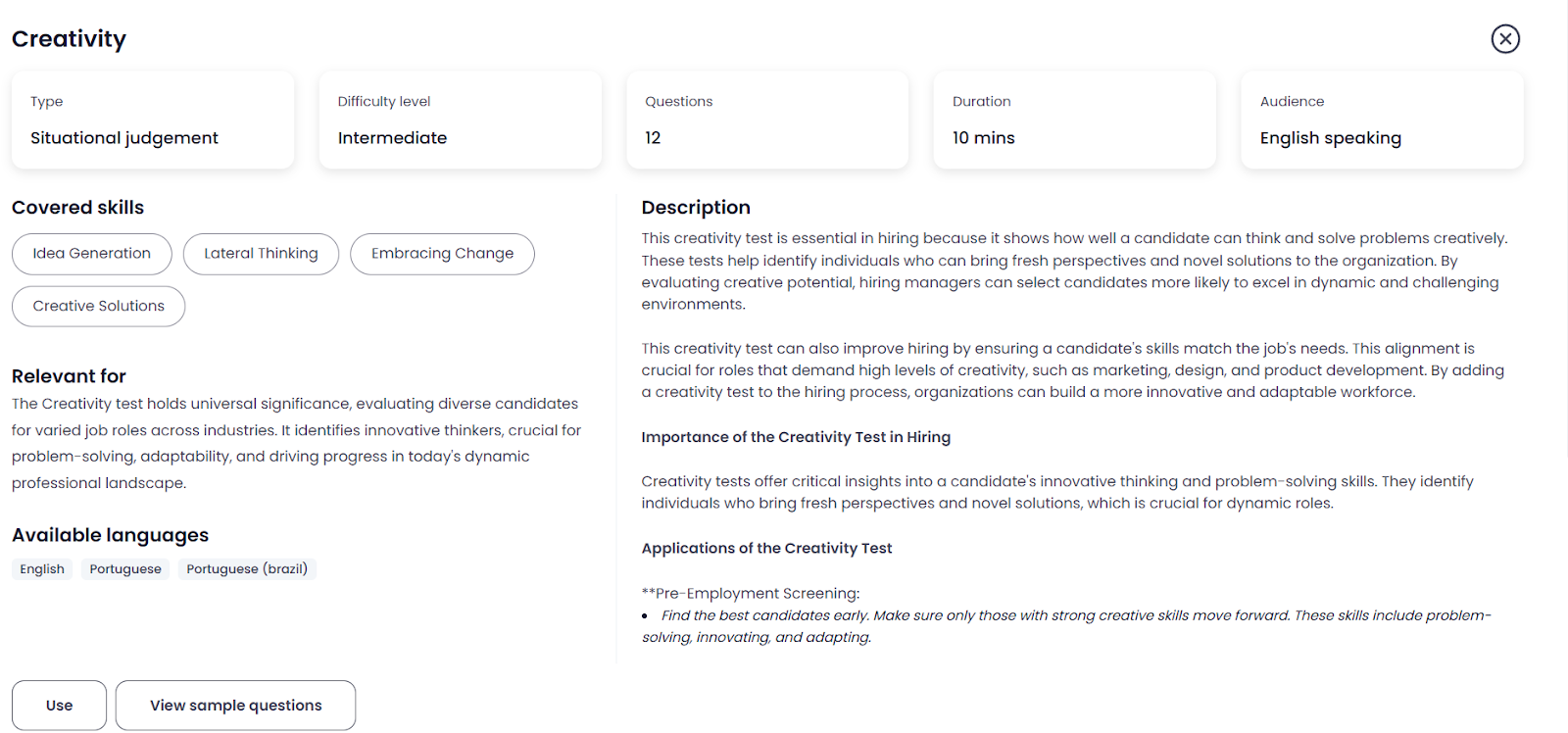
1. Creativity test
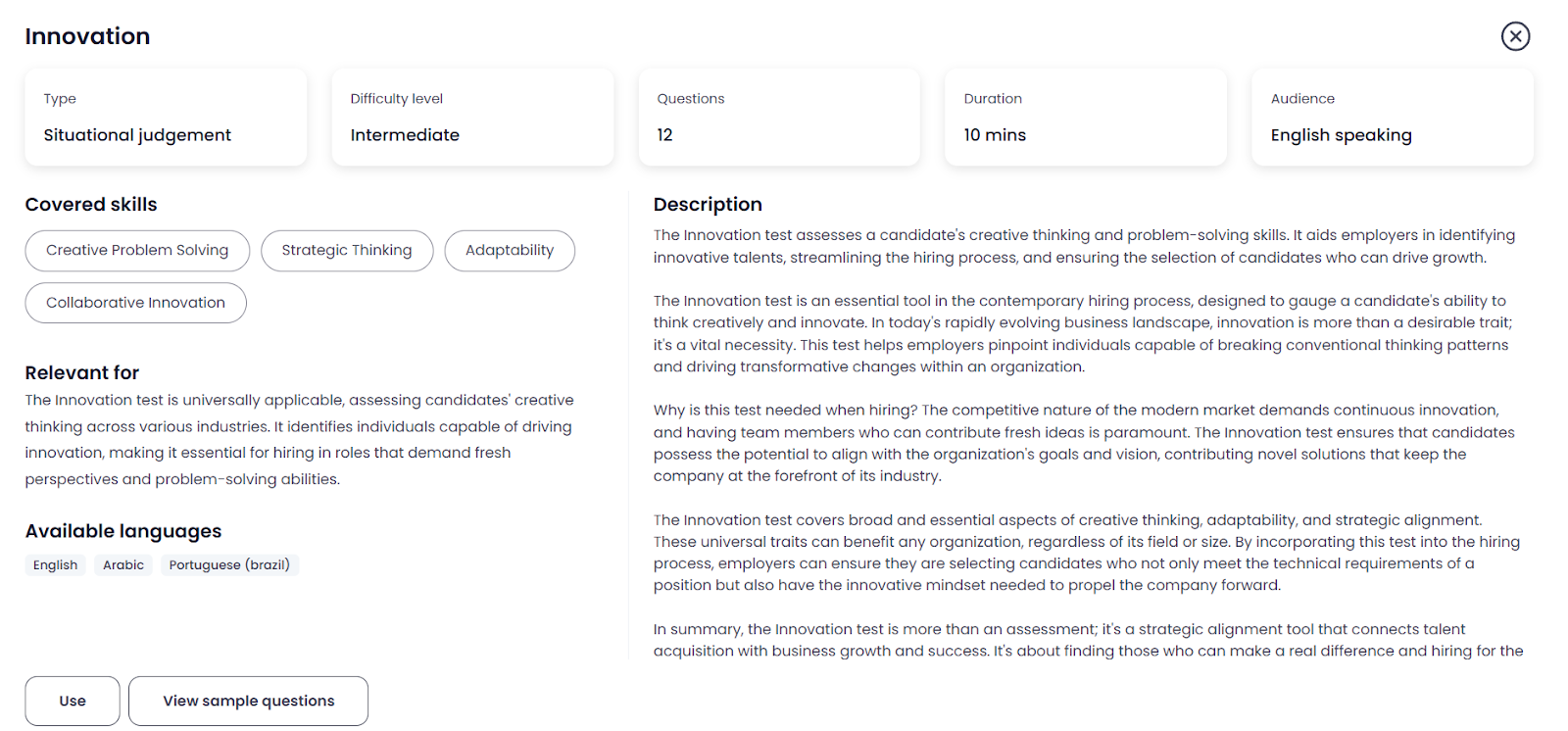
A creativity test measures fluency, flexibility, and originality of thought under standard conditions. It is the cheapest signal you can add and the fastest to compare, because every candidate answers the same items and the scoring is not up for debate. Testlify also runs a separate creative thinking assessment for roles where idea generation is the core of the job rather than one part of it.
Use it as a screen, not a verdict. A test tells you whether someone can produce varied, unusual, workable ideas on demand. It does not tell you whether they can do that inside your brand guidelines with a client on the call.
2. Skills-based assessment built from the role
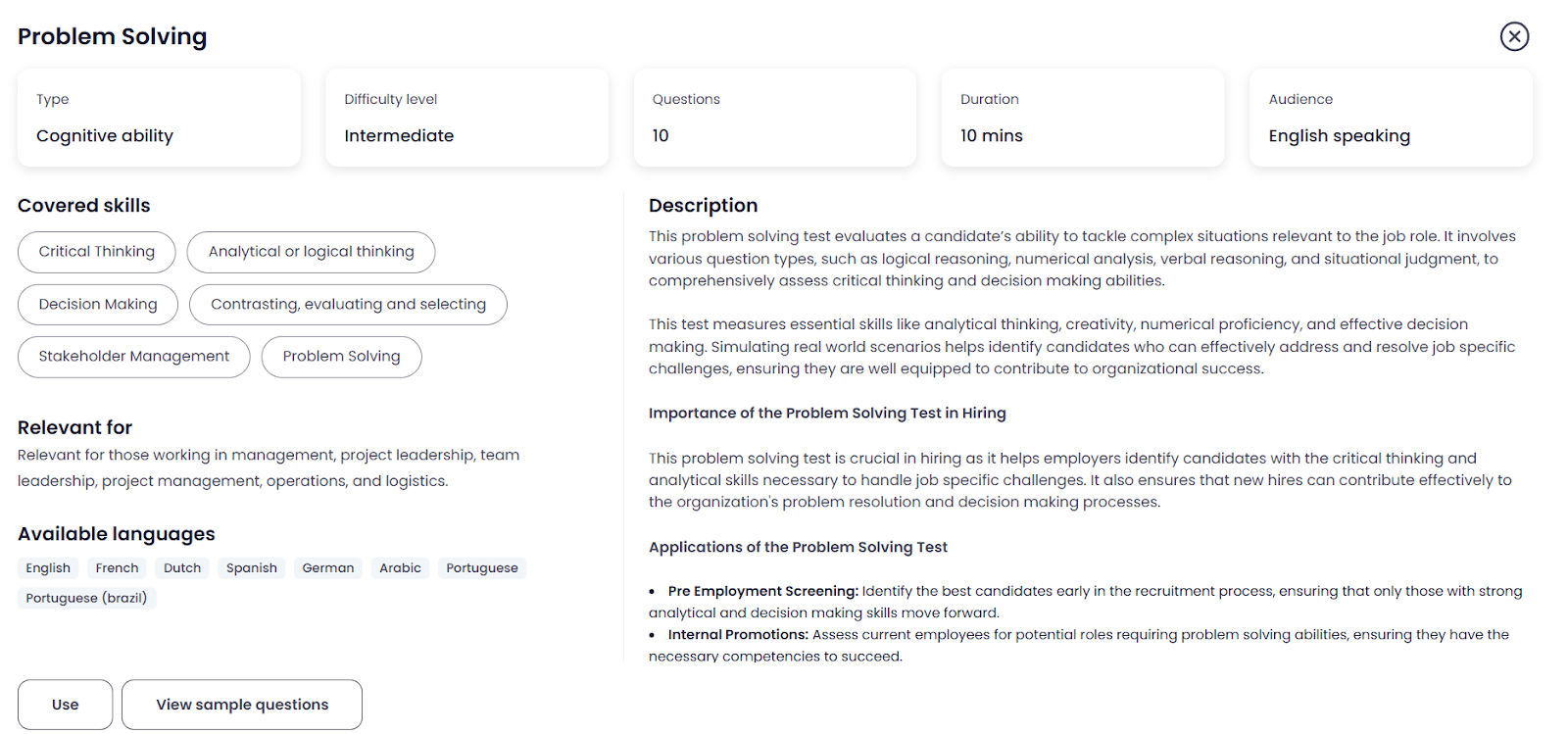
A skills-based assessment starts from the competencies the role actually needs, then picks a test for each one. For a content lead that might be creativity plus writing plus judgment. For a product designer it might be creativity plus problem-solving and critical thinking.
Build the assessment by weighting, not by averaging everything equally. Testlify lets you set a weight from x0 to x5 per test, so a creativity section can count five times more than a general aptitude section in a role where that is the honest priority. Personality and culture tests are qualitative and carry no total score, so do not try to fold them into a number.
3. Situational judgment tests
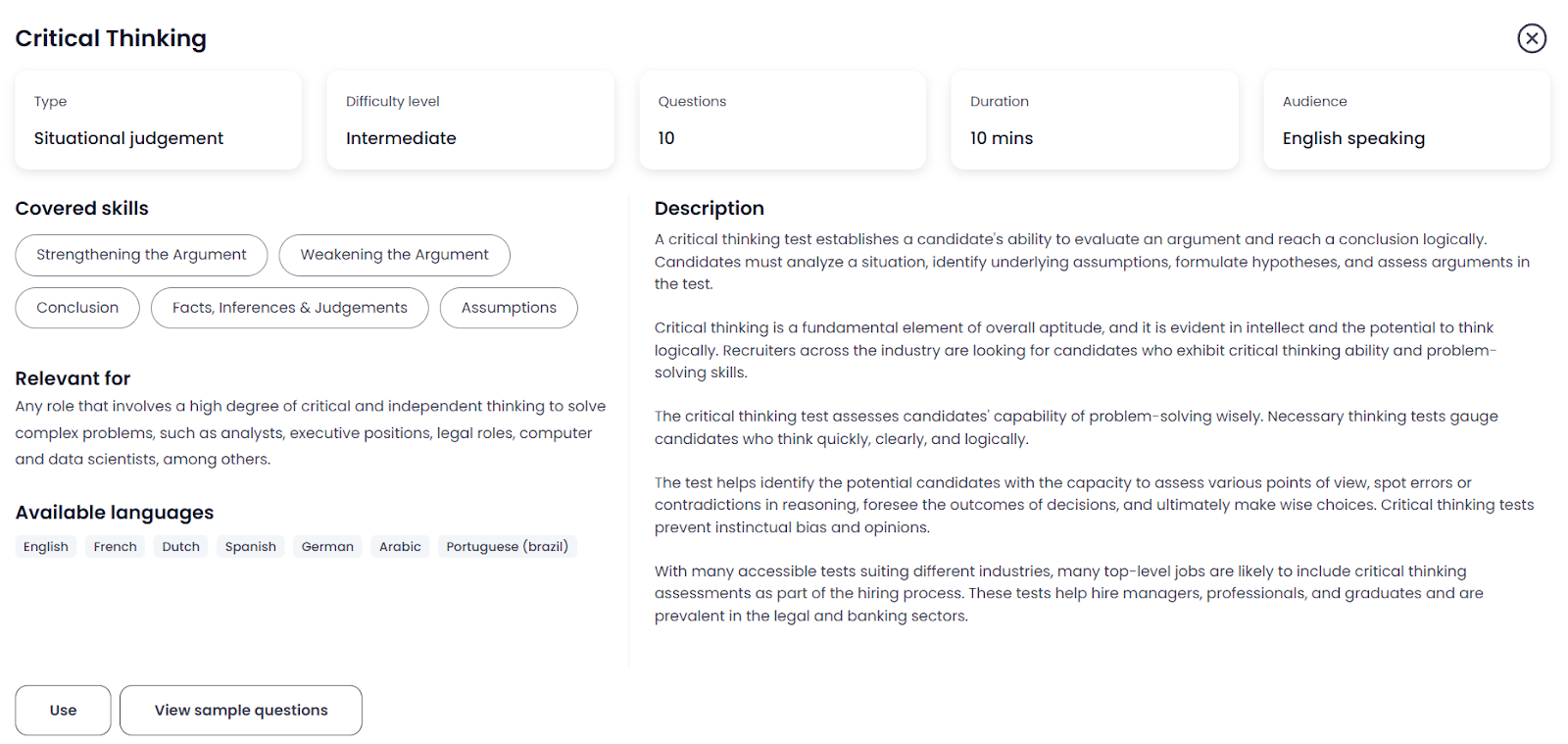
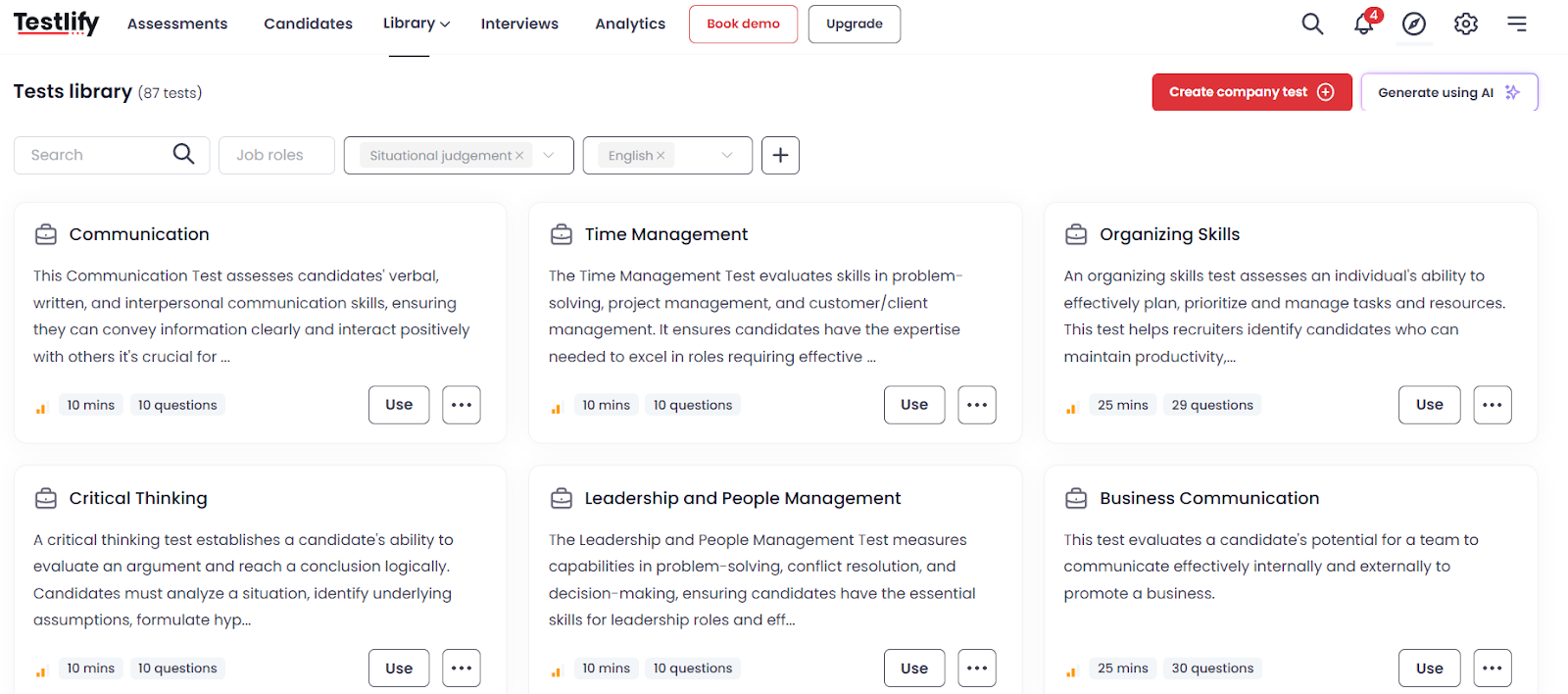
Situational judgment tests put a candidate inside a realistic work scenario and ask what they would do. For creative roles the useful version is not "pick the best answer" but "the client rejected the concept the day before launch, now what". You learn how someone reframes a problem when the first idea is dead.
Ask for the reasoning as well as the choice. Testlify can require a written justification alongside an option selection, and that comment is usually more revealing than the option itself.
4. Scored creative work samples
This is the method most teams already run and most teams run badly. A work sample means a short, paid-where-appropriate brief that mirrors a real task: a campaign angle, a landing page rewrite, a 30-second concept. The failure mode is asking for spec work with no rubric and then arguing about it.
Score four things and publish them to the candidate in the brief: relevance to the objective, originality against the obvious answer, feasibility inside the stated constraint, and quality of the reasoning. Testlify auto-scores open-ended submissions across documents, spreadsheets, presentations, source code, images, and design files including .svg and .fig, and a reviewer can override any score. Keep the brief under two hours. Anything longer selects for candidates with free time rather than candidates with ideas.
5. Structured behavioral interviews
Structured means every candidate gets the same questions in the same order, scored on the same anchors. Unstructured chats about "a project you are proud of" produce warm feelings and weak data.
Questions worth asking:
- "Describe a brief where your first idea was rejected. What was the second one, and what changed between them?"
- "Tell me about a constraint that made the work better."
- "When did you talk yourself out of an idea? Walk through the reasoning."
Score the revision, not the anecdote. The second answer is where the real thinking shows, because the first one is usually rehearsed.
6. AI-era prompt and judgment tasks
Here is the part the older advice on this topic misses entirely. When a candidate can generate 20 concepts in 40 seconds, volume of ideas stops being a signal. What still separates people is the edit: which idea they kill, which they push, and why.
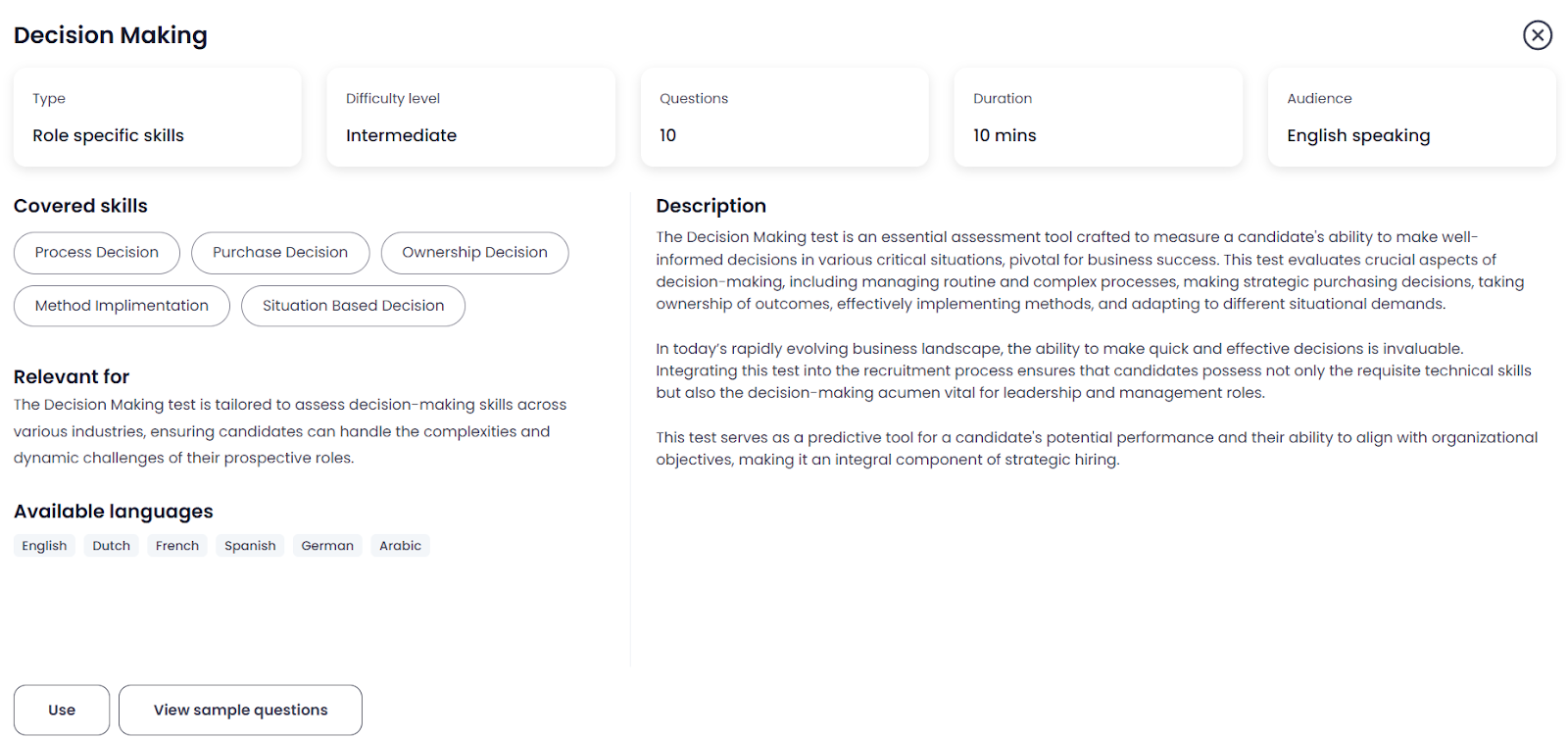
So test that directly. Give candidates a set of AI-generated concepts and ask them to pick one, justify the pick, and improve it. Or hand them the tool openly and score the direction they gave it. Testlify's AI checker classifies an answer as human, AI generated, or mixed, which lets you set the policy honestly rather than pretend the tool does not exist. An innovation test and a decision-making test pair well here, because in an AI-saturated process judgment is the scarce input.
Pro tip: tell candidates your AI policy in the brief, in one sentence. Teams that stay silent get a mix of hand-made and machine-made submissions scored on the same scale, which is unfair to everyone and tells you nothing.
How do you score creativity in workplace without guessing?
Start with the work, not a personality trait. Give candidates a task that resembles the decisions they would actually make on the job, then score the output against the same criteria for everyone.
For most creative roles, four criteria are enough: originality, relevance, execution, and reasoning. define what weak, acceptable, and strong performance looks like before reviewing submissions. If two reviewers are involved, have them score independently first, then compare.
Method | What it measures | Candidate time | Best for | Where it goes wrong |
|---|---|---|---|---|
Creativity test | Fluency, flexibility, originality | 10 to 20 minutes | Early screening at volume | Treated as a final verdict |
Skills-based assessment | Role competencies, weighted | 30 to 45 minutes | Defining the shortlist | Every test weighted equally |
Situational judgment test | Judgment under realistic pressure | 15 to 25 minutes | Client-facing creative roles | Scenarios too generic to bite |
Scored work sample | Applied creative output | 60 to 120 minutes | Final two or three candidates | No rubric, unpaid, too long |
Structured interview | Reasoning and revision | 45 minutes | Every creative hire | Drifts back into a chat |
AI-era prompt task | Editorial judgment | 20 to 30 minutes | Roles where AI is in the workflow | No stated AI policy |
The important distinction is that creativity should not be scored as one vague number. A candidate who produces ten ideas is not necessarily more creative than someone who produces three. The better question is whether those ideas are original, useful for the brief, well executed, and supported by sound reasoning.
Hire for creativity with evidence, not instinct
Pick one role you are hiring for this quarter. Add a creativity test at screen, a scored work sample at the shortlist, and a structured interview with fixed questions. That is a week of setup and it replaces the debrief argument with a scoresheet.
If you want to see how the scoring, weighting, and human override work on a live role, book a demo and bring a real brief.
Key takeaways
- Structure beats instinct. Creativity is judged inconsistently by default, and a rubric written in advance is the single cheapest fix, because it moves the argument from taste to criteria you can defend later.
- One signal is never enough. Pair a test with a work sample and a structured interview, since each one covers a different failure: the test misses context, the sample misses reasoning, the interview misses output.
- Score the revision, not the reveal. Second ideas and killed ideas predict on-the-job behaviour better than a polished first answer, which is usually rehearsed and tells you little.
- Keep work samples short and relevant. Anything over two hours selects for free time instead of talent, and long unpaid briefs cost you the senior candidates you most wanted.
- State your AI policy in the brief. Silence produces a mixed field scored on one scale, which is unfair to candidates and useless to you as evidence.
- Weight the tests to match the role. Equal weighting quietly says every competency matters the same, and for a creative hire that is almost never true.
FAQs

Content Writer
Yashika Khandelwal is a Content Writer with 3+ years of experience creating research-backed content on hiring, talent assessment, and HR technology. She is a registered Organizational Psychologist and subject matter expert who combines behavioral science with practical recruitment insights to produce accurate, evidence-based content.
LinkedInRelated resources
View all
Skill assessment
Top workplace adaptability skills and how to assess them

Skill assessment
Best assessments to assess teamwork skills in candidates
![How to measure time management skills [simple ways with examples]](/api/media/file/Importance-of-assessing-time-management-skills-in-recruitment-for-efficient-work-execution-2.png?dpl=dpl_6Z8Gzi5dgny5ePrnCfPbRPCRYCA7)
Skill assessment
How to measure time management skills [simple ways with examples]

Skill assessment
How to evaluate problem solving skills of candidates

Skill assessment
How to accurately assess attention to detail skill in candidates?

Skill assessment
HR playbook for assessing communication skills in 2026
Get started.
Hire on proof, not resumes.
Run your first skills-based assessment free — no credit card required.