
Short-term disability
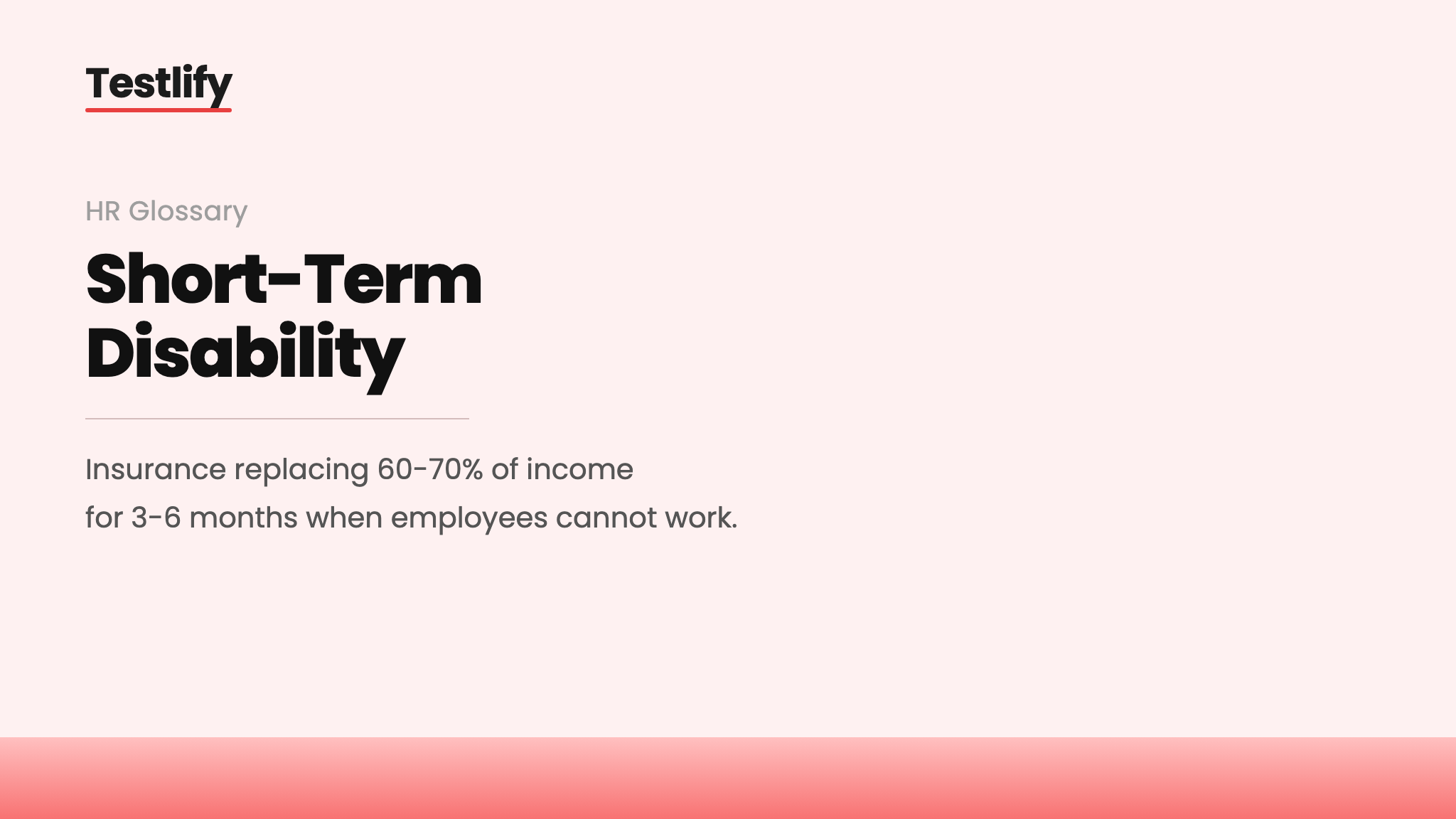
Short-term disability is a benefit that pays employees during temporary disabilities, usually several weeks to a few months.
 ChatGPT
 Gemini
 Claude
 Grok
Grok Perplexity
What is Short-term disability?
Short-term disability is a benefit offered by some employers that provide employees with a portion of their salary during a temporary period of disability or medical leave. This leave is generally shorter, usually several weeks to a few months. During this period, the employee is unable to work due to an illness or injury and is temporarily unable to perform their job duties. The employee may use the short-term disability benefits to cover their expenses while unable to work.
The terms and conditions of short-term disability benefits can vary depending on the employer and the policy they have in place.
How long does short-term disability last?
The duration of short-term disability can vary depending on the employer’s policy and the specific circumstances of the individual’s disability or medical leave. Typically, short-term disability is intended to provide financial support for employees who are temporarily unable to work due to a medical condition or injury. The duration of the leave is generally shorter than long-term disability and can range from a few weeks to several months.
The duration of short-term disability can be affected by a number of factors, such as the type of disability or illness, the employee’s prognosis and expected recovery time, and the employee’s ability to perform their job duties. For example, an employee who has broken their leg and is expected to recover within a few weeks may be eligible for a shorter duration of short-term disability than an employee who has had surgery and is expected to recover within a few months. HBR’s disability benefits research
Additionally, some short-term disability plans may have a maximum benefit period which is the longest period of time for which an employee can receive short-term disability benefits. This is typically determined by the employer and can vary depending on the plan.
It’s important to note that the duration of short-term disability can be re-evaluated as the employee’s condition changes, and the employee may be eligible to continue receiving benefits if they are still unable to work. SHRM’s short-term disability guidance
What is the process for applying for short-term disability?
- Contact the Human Resources department for information on how to apply for short-term disability
- Review benefits documentation or contact the short-term disability vendor
- Check if any available sick days must be used before the short-term disability period begins
- Obtain a note from a physician if required by the employer
- Complete the claim form for short-term disability and provide necessary documents
- Submit the claim form and documents to the HR department or insurance provider
- Follow the employer’s guidelines on documentation and submission deadlines to ensure full access to benefits.
Short-term disability insurance is a foundational employee benefit that protects income during medical leave and supports faster, safer return to work. Using objective assessments and a structured hiring plan drives improvement, helping organizations attract and retain top talent.
Frequently asked questions
Short-term disability (STD) insurance replaces a portion of an employee’s income when they are unable to work due to a non-work-related illness, injury, or pregnancy/childbirth recovery. It typically covers the initial period of disability : from 8-26 weeks : until long-term disability benefits begin or the employee returns to work. STD is one of the most valued employee benefits, particularly for employees with limited savings.
Cite this page
Copy a ready-made citation for this page in your preferred style.
- APA
Testlify. (2023). Short-term disability. https://testlify.com/hr-glossary/short-term-disability/
- MLA
"Short-term disability." Testlify, 25 January 2023, https://testlify.com/hr-glossary/short-term-disability/.
- Chicago
Testlify. "Short-term disability." Testlify. Last modified September 14, 2026. https://testlify.com/hr-glossary/short-term-disability/.
- HTML link
<a href="https://testlify.com/hr-glossary/short-term-disability/">Short-term disability</a>, Testlify (2023)
Related terms
Situational leadership
Situational Leadership is a leadership theory that proposes leaders should adapt their leadership style to the development level of the individual or group they are leading.
Six Sigma
Six Sigma is a methodology for process improvement that aims for near-perfection by reducing defects and variability through data analysis and statistical tools.
Skill
Ability to perform a task or activity acquired through experience, training, or education.
Skill Based Pay
Skill-based pay is a system of compensation where employees are paid based on their level of skill and competency in a specific area or job.
Skills gap
Skills Gap refers to the difference between the skills that employees currently possess and the skills that employers need or require for a certain job or role.
Social Collaboration
Social collaboration refers to the use of digital tools to communicate, share information and work together towards a common goal.
Get started.
Hire on proof, not resumes.
Run your first skills-based assessment free — no credit card required.