
Top 8 HR communities recruiters should join
Explore the top HR communities for recruiters to stay updated on HR practices, and connect with global HR experts for professional growth
The best HR communities for recruiters in 2026 are SHRM, Linked:HR, Human Resources Today, HR.com, Culture Amp, the r/humanresources subreddit, Workology, and People Managing People. Each one gives recruiters a different mix of peer advice, current data, certifications, and job leads, so most people join two or three rather than betting on a single group.
Recruiting changes fast, and no single person can track every shift alone. A good community is where you find out what other talent teams are actually doing before it shows up in a report. This guide breaks down 8 HR communities worth your time, how they compare, and how to turn a membership into real career and hiring value instead of another tab you never open.
TL;DR: Key takeaways
- Treat community membership as continuous learning. With 39% of core skills set to shift by 2030, the recruiters who stay networked hear about new methods first and adapt before their competitors do.
- Match the community to the goal. Certifications point to SHRM or Workology; fast peer advice points to Reddit or a Slack group; analytics point to Culture Amp. Choosing on purpose beats joining on impulse, because the wrong group just adds noise.
- Free communities carry real weight. Reddit, LinkedIn groups, and most Slack spaces cost nothing yet deliver candid, current advice, so budget is rarely the reason to skip joining one.
- Participation is the whole return. A membership you never post in gives back almost nothing; contributing weekly is what turns a group into a network you can call on when a hard role lands on your desk.
- Keep peer advice and hiring evidence separate. Communities are the best place to find ideas and the worst place to confirm them, so validate every tactic against your own skills data before it changes how you screen.
- Depth beats breadth. Two well-chosen communities you use every week outperform eight you joined and forgot, which frees the time you would waste skimming dead forums.
 ChatGPT
 Gemini
 Claude
 Grok
Grok Perplexity
Why should recruiters join an HR community?
Recruiters join HR communities to stay current, solve problems faster, and build a network they can call on. These groups pool real-time advice, salary and hiring benchmarks, and honest feedback on tools, so you learn what works from people doing the same job instead of guessing alone.
The pace of change is the strongest reason. The World Economic Forum reports that employers expect 39% of workers’ core skills to change by 2030, down from 44% in 2023 but still high. The same report shows half of the workforce now completes training as part of a long-term learning plan, up from 41% two years earlier. Communities are where a lot of that learning happens day to day, in conversation, before it reaches a formal course.
The field itself is growing, which raises the value of a good network. The U.S. Bureau of Labor Statistics projects HR specialist roles to grow 8% from 2023 to 2033, faster than the 4% average across all jobs, against a base of 933,700 jobs in 2023 and about 86,200 openings a year. More peers means more people to trade referrals, playbooks, and candid war stories with.
There is a business case too. Gallup found global employee engagement fell to 21% in 2024, down from 23%, a slide it valued at 438 billion dollars in lost productivity. Hiring and retention sit at the center of that problem, and communities are where recruiters swap the practical fixes that move those numbers. Testlify frames the goal as the Testlify Human+AI Evidence-Based Hiring Framework: use peer insight and AI to inform the process, then let humans make the call on structured evidence. A community sharpens the judgment; it does not replace the evidence.

How did we choose these HR communities?
We favored communities that are active, useful to recruiters specifically, and open enough to join without a heavy paywall. Four criteria did most of the work.
- Activity: real, recent discussion, not a ghost forum with posts from two years ago.
- Relevance to recruiters: talent acquisition, sourcing, and hiring content, not only broad HR policy.
- Access: free or clearly worth the fee, with a low barrier to your first useful conversation.
- Signal quality: credible members, cited data, and moderation that keeps spam out.
Here is how the 8 communities compare at a glance.
Community | Best for | Format | Cost |
|---|---|---|---|
SHRM | Certifications and formal HR knowledge | Membership body | Paid |
Linked:HR | Broad networking and job leads | LinkedIn group | Free |
Human Resources Today | Curated HR news in one place | Content aggregator | Free |
HR.com | Webinars and events | Portal and events | Freemium |
Culture Amp | People analytics and engagement | Slack community | Free |
r/humanresources | Candid, real-time peer advice | Subreddit | Free |
Workology | Podcasts and self-paced learning | Media and courses | Freemium |
People Managing People | Leadership and people-ops depth | Content community | Free |
The 8 best HR communities for recruiters
Each community below earns its place for a different reason. Read the “best for” line under each to match it to what you actually need this quarter.
1. Society for Human Resource Management (SHRM)
SHRM is the largest HR professional body in the world, with nearly 340,000 members across 180 countries. For recruiters, its pull is depth and credibility: globally recognized certifications like SHRM-CP and SHRM-SCP, plus research and case studies you can cite when you argue for a change in how your team hires.
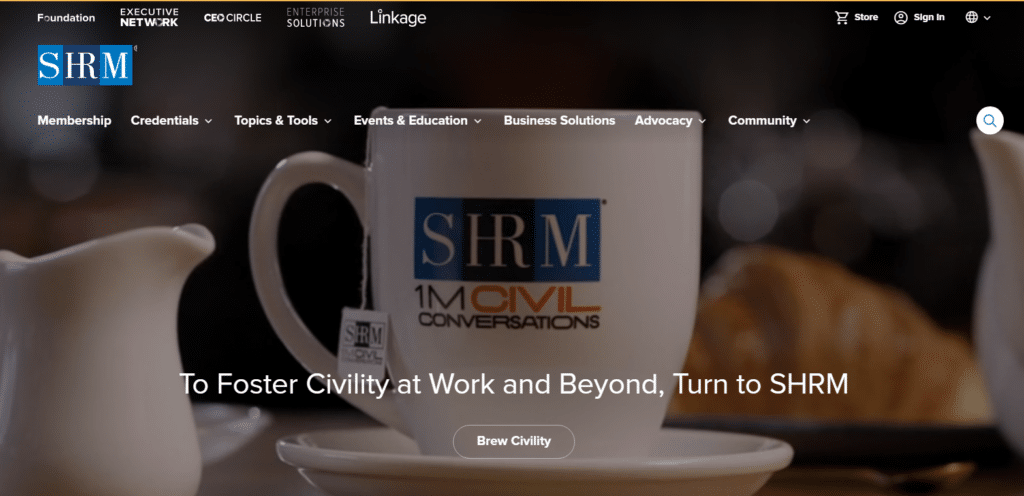
A membership fee applies, so SHRM makes the most sense if you want structured learning and a credential that hiring managers recognize. The certification path alone is a reason many talent leaders keep the membership year after year.
Best for: recruiters who want certifications, compliance depth, and citable HR research.
2. Linked:HR
Linked:HR is one of the largest HR groups on LinkedIn, with well over a million members. Because it sits inside LinkedIn, conversations connect straight to the profiles of the people posting, which makes it easy to move from a good comment to a real professional relationship.
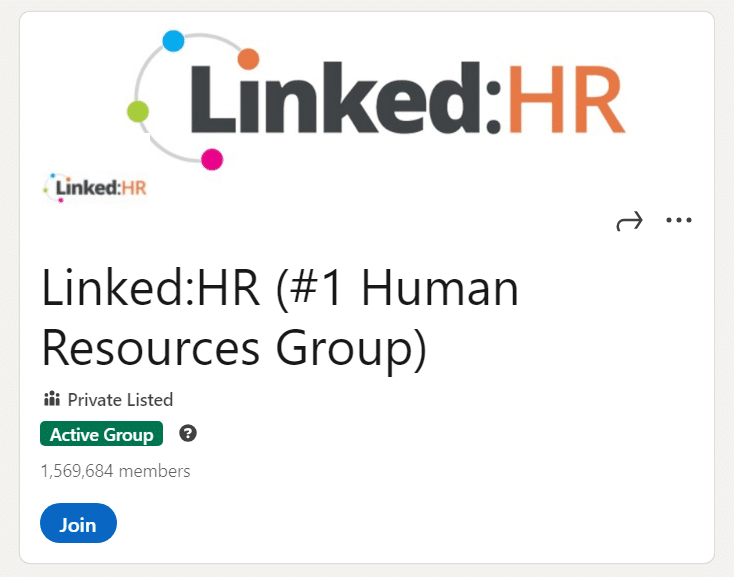
Recruiters get job postings for HR roles, live debate on compliance and employee engagement, and a broad network that spans industries and regions. The trade-off is signal-to-noise: a group this big has its share of self-promotion, so you skim for the threads that matter.
Best for: broad networking, HR job leads, and quick industry pulse-checks.
3. Human Resources Today
Human Resources Today pulls articles and insights from hundreds of HR sources into one feed. It is less a discussion forum and more a way to scan what the whole field is publishing without visiting 20 sites, covering people operations, hiring technology, and current trends.
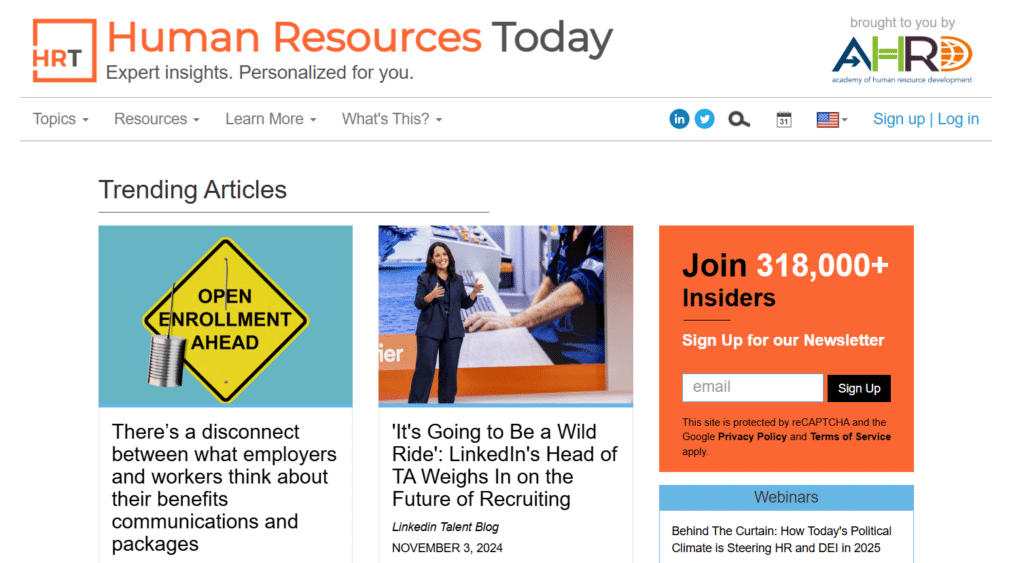
For a busy recruiter, the value is time saved. You get a curated read on emerging topics, then follow the threads worth a deeper look. Treat it as your morning scan, not your only source.
Best for: keeping up with HR news and trends in one curated feed.
4. HR.com
HR.com blends learning with community. It runs frequent webinars and annual events that bring HR professionals together to share what is working, and it hosts a large member base across specialties, from talent acquisition to total rewards.
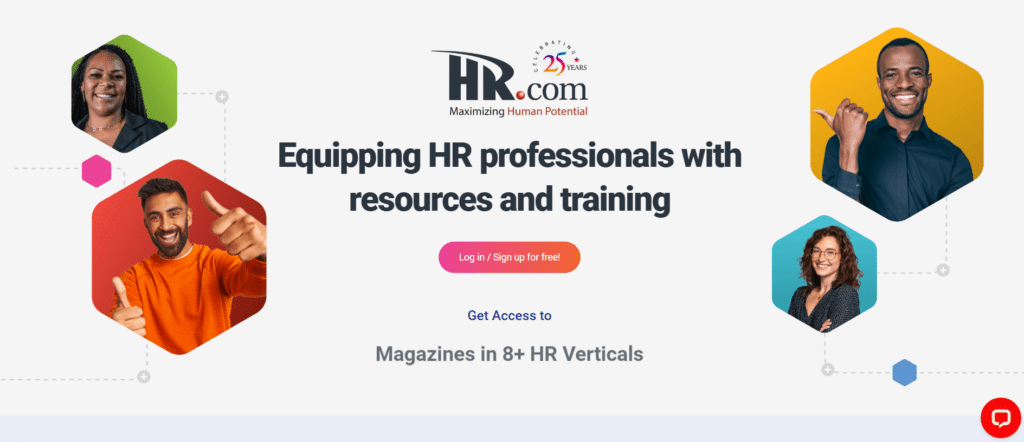
Much of the content is free, with paid tiers for certifications and premium events. If you learn best from live sessions and structured programs rather than open chat, HR.com fits the way you work.
Best for: recruiters who prefer webinars, events, and structured programs.
5. Culture Amp community
Also Read: What is 360 recruitment? What recruiters should know
The Culture Amp community is built for people who care about engagement and analytics. Its Slack space is where HR and people-ops practitioners trade tactics on measuring culture, running surveys, and acting on what the data says.
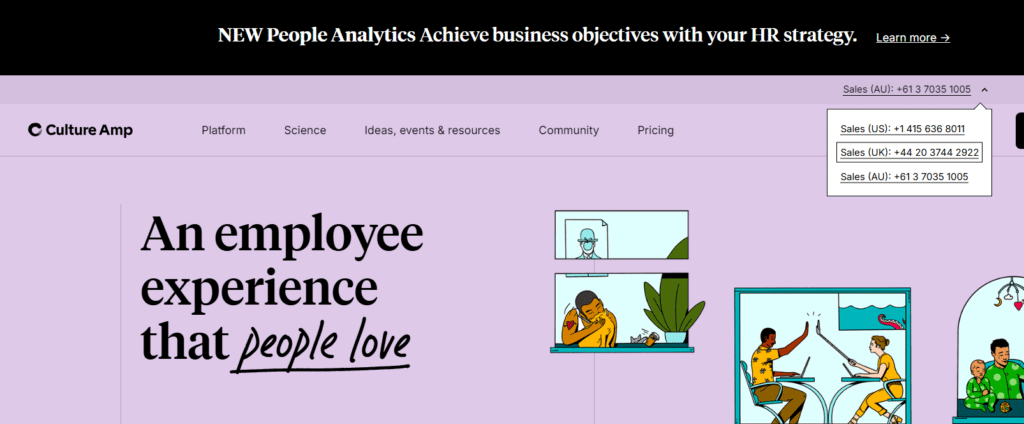
For recruiters, the draw is the link between hiring and retention. Understanding what keeps people engaged after they start helps you screen for fit earlier, and this community is fluent in that data-first way of thinking.
Best for: recruiters who want people analytics and an engagement-first lens.
6. Reddit HR community (r/humanresources)
The r/humanresources subreddit is the most candid room on this list. Anonymity means people say what they really think about tools, salaries, and messy situations they would never post under their own name, which makes it a strong gut-check.
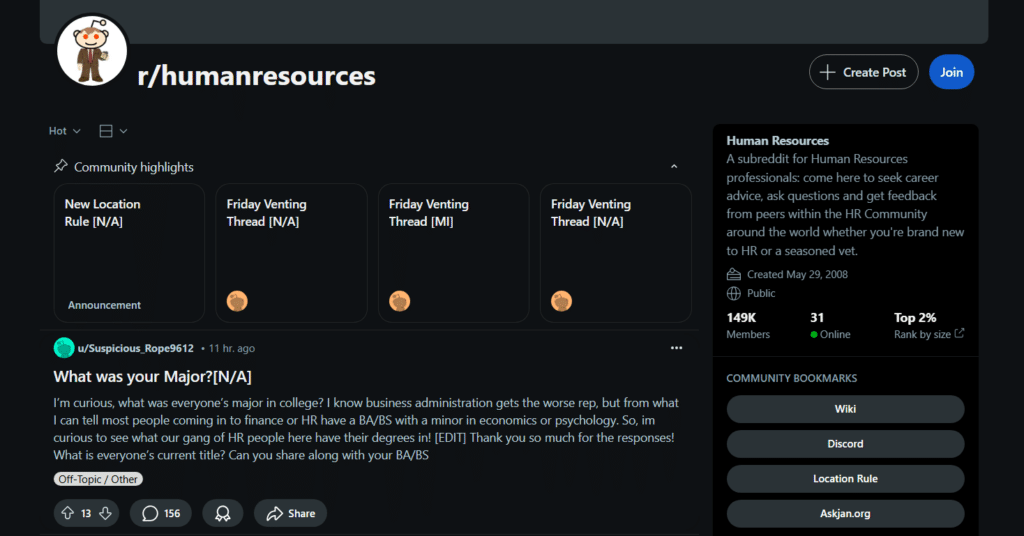
Use it for reality checks and quick answers, and weigh advice against the fact that posters are anonymous. As a free, always-on forum, it is hard to beat for honest, real-world perspective on hiring and recruiting.
Best for: honest peer advice and quick, real-world reality checks.
7. Workology
Workology is an education-first community for HR and recruiting. It is best known for its podcast, blog, and self-paced courses, plus certification-prep programs that help recruiters build formal skills on their own schedule.
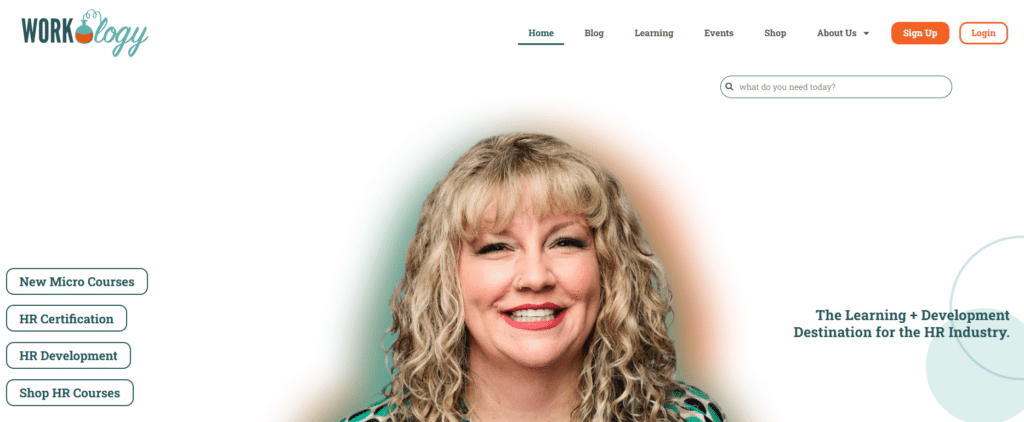
If you like learning through audio and short courses rather than live chat, Workology fits. It suits recruiters who want to keep skills current without committing to a full certification body.
Best for: podcast and course learners who want flexible, self-paced growth.
8. People Managing People
People Managing People is a community for HR leaders, managers, and people-ops professionals who want to run better workplaces. Its strength is depth on leadership, culture, and management, the strategic side of the work that pure recruiting content often skips.
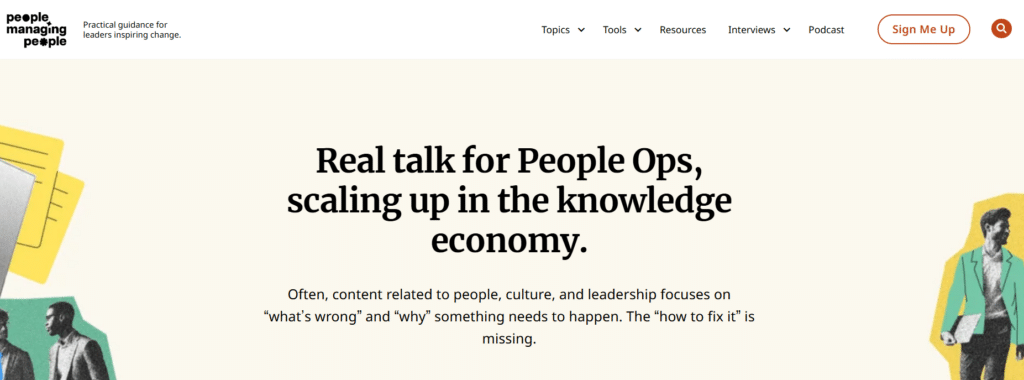
Recruiters moving toward a talent-leadership role get the most from it. The articles and discussions connect hiring decisions to the wider goal of building teams that last, which is where a senior recruiter’s influence really shows.
Best for: recruiters growing into people-leadership and strategy roles.
A few others are worth a look once these are covered: Hacking HR for future-of-work discussion, CIPD for a UK and global perspective, and invite-only Slack groups like PeoplePeople and RecruiterSlack for tight, practitioner-only talk. Want the wider signal too? Our guide on how to stay updated on recruitment and HR trends pairs well with any community habit.
How do you get real value from a community?
You get value from an HR community by contributing, not lurking. Show up weekly, answer questions in your lane, share what actually worked, and the network starts working back for you. Passive membership returns almost nothing.
- Contribute first. Answer 1 or 2 questions a week where you have real experience. Giving before asking is what builds the relationships that pay off later.
- Go where the talk is live. Slack and Reddit move in real time, so you get answers in minutes, not days. Set aside 15 minutes a day rather than a big weekly block.
- Trade real artifacts. Share a scorecard, an interview guide, or a sourcing template. Concrete tools spark better replies than abstract questions.
- Track what you learn. Keep a running note of tactics worth testing. A community only helps if the good ideas make it into how you actually hire.
- Verify before you copy. Peer advice is a starting point, not proof. Test a claim against your own data before you roll it out.
Pro Tip: Pick 2 communities, not 8. One fast peer channel (Reddit or a Slack group) plus one deep learning source (SHRM or Workology) covers most needs. Spreading yourself across every group is how memberships turn into unread tabs. Depth beats breadth here.
Hire on evidence, not just peer advice
Communities sharpen your instincts, but instincts alone do not make a good hire. The Testlify Human+AI Evidence-Based Hiring Framework pairs that peer insight with structured skills data, so the shortlist is scored before the first call and the final decision stays with your team. See how it fits your process in our overview of recruitment methods and emerging trends in pre-employment testing.
Put community insight to work with Testlify. Turn the best hiring ideas you pick up into repeatable, evidence-based screening with skills assessments your whole team can trust.
Frequently asked questions

B2B SaaS Content Writer
Rishav Kumar is a B2B SaaS content writer with 4 years of experience. He loves crafting engaging content. Always exploring fresh ideas, he's passionate about helping businesses grow through impactful writing.
LinkedInRelated resources
View all
HR & recruitment
10 best recruitment books every recruiter should read in 2026
HR & recruitment
What is talent intelligence? Definition, benefits, and implementation guide
HR & recruitment
What is a job leveling matrix? 3 powerful reasons to use it

HR & recruitment
Hire the best nursing talent with these 3 recruitment strategies

HR & recruitment
Finding the right fit when recruiting for high-demand healthcare roles

HR & recruitment
Strategies for nursing talent evaluation for stronger healthcare teams
Get started.
Hire on proof, not resumes.
Run your first skills-based assessment free — no credit card required.