
10 best recruitment books every recruiter should read in 2026
Discover 10 best recruitment books every HR needs to know to enhance hiring strategies, improve candidate engagement, & build strong teams

The best recruitment books teach two things AI still can’t do for you: how to find people worth hiring, and how to judge them once you have them in front of you.
This list pulls together 10 recruitment books that working recruiters and talent leaders come back to, sorted by the problem each one actually solves, from sourcing hard-to-find candidates to running an interview that predicts performance.
The World Economic Forum expects 39% of core skills to change by 2030, which means the way you sourced and screened three years ago is already going stale. The books below are how good recruiters keep up without waiting for a training budget.
TL;DR
- The single best all-rounder is Full Stack Recruiter by Jan Tegze for sourcing, and Who: The A Method for Hiring for interviewing.
- New recruiters should start with sourcing, then interviewing, then candidate experience, in that order.
- Pick a book by the weakest link in your own hiring process, not by how popular the title is.
- AI changes the tools, not the judgment. Structured interviews and clear evidence still decide who gets hired.
- Two to four books a year, actually applied, beats a shelf of unread bestsellers.
 ChatGPT
 Gemini
 Claude
 Grok
Grok Perplexity
Why should recruiters read books in 2026?
Recruitment is evolving faster than ever, and the best recruiters keep learning. Reading recruitment books exposes you to proven hiring frameworks, better interviewing techniques, and new ways to evaluate talent before they become standard practice.
The need to keep learning is only increasing. The World Economic Forum expects 39% of core skills to change by 2030, which means the way you sourced and screened three years ago is already going stale. Recruitment books help you stay ahead of these shifts instead of reacting to them after the market changes.
They also help you avoid costly hiring mistakes. SHRM puts the average cost at about $4,700 per hire, with a median time to fill of around 44 days, so one weak hiring decision burns real money, and weeks you don’t get back. A good recruitment book is the cheapest way to sharpen the judgment that avoids that.

How did we choose these 10 books?
We didn’t rank by Amazon stars. Each book earned its place by being genuinely useful to someone hiring this year, and by covering a part of the job the others don’t.
We weighed four things: is the advice practical, does it hold up now that AI screening is everywhere, does the author come from real recruiting experience, and does it fill a real gap in a modern hiring process such as skills-based hiring or a structured interview process.
Recruitment books at a glance
# | Book | Author | Best for | Core lesson |
|---|---|---|---|---|
1 | The Robot-Proof Recruiter | Katrina Collier | Recruiters who rely too much on automation | Human outreach still wins responses |
2 | Recruit Rockstars | Jeff Hyman | Founders and hiring managers | A 10-step approach to hiring top performers |
3 | Social Media Recruitment | Andy Headworth | Sourcers building a pipeline | Turn social platforms into a candidate channel |
4 | Talent Magnet | Mark Miller | People leaders and employer brand | What top people actually want from work |
5 | Who: The A Method for Hiring | Geoff Smart and Randy Street | Anyone who runs interviews | A scorecard-driven, structured interview |
6 | Hiring for Attitude | Mark Murphy | Teams hiring for culture add | Skills get you shortlisted, attitude gets results |
7 | Full Stack Recruiter | Jan Tegze | New and senior recruiters alike | End-to-end sourcing and recruiting craft |
8 | Recruiting in the Age of Googlization | Ira S. Wolfe | Recruiters facing tech change | Adapt hiring to a fast-moving digital world |
9 | Culture Driven Recruiting | Lee-Anne Edwards | In-house teams fixing culture | Compete on culture, not just pay |
10 | Hiring Success | Jerome Ternynck | CEOs and talent leaders | Hire at scale without losing quality |
Which book should you start with?
Start with the book that matches your job today, not the one with the best reviews. If you’re new and mostly source, read Full Stack Recruiter first. If you run interviews and want fewer bad hires, go straight to Who. Hiring managers and founders get the most from Recruit Rockstars, and talent leaders scaling a team should open Hiring Success. Fix your loudest problem, then come back for the next one.
1. The Robot-Proof Recruiter
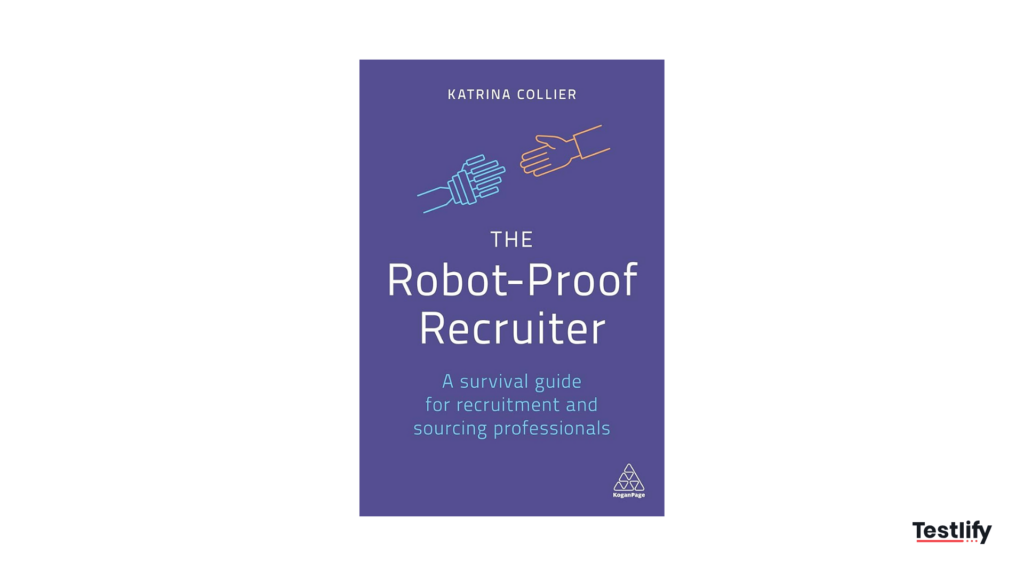
Katrina Collier’s book is a straight answer to a real fear: that automation is coming for the recruiter’s job. Her argument is the opposite. The more hiring runs on bots and templates, the more a human, well-timed message stands out. She digs into candidate outreach, working better with hiring managers, and building a presence candidates trust, which ties directly to candidate experience.
Best for
Recruiters who lean on automation and wonder why reply rates keep dropping.
2. Recruit Rockstars
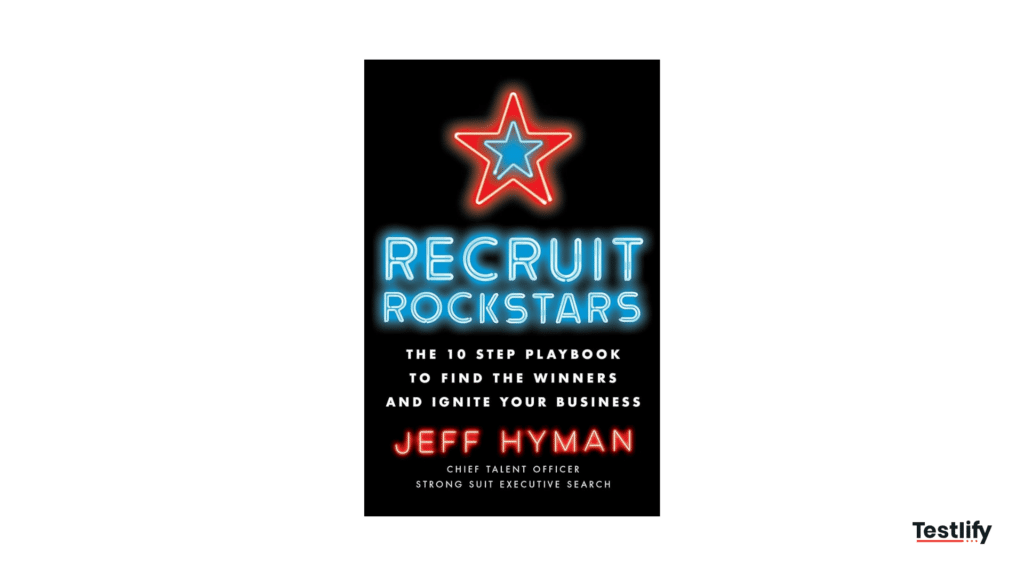
Jeff Hyman lays out a 10-step process for finding the people he calls Rockstars, the top performers who quietly carry a team. His core claim is blunt: most business problems are really hiring problems in disguise. It’s a fast, practical read aimed at founders and hiring managers who want a repeatable way to attract and pick strong candidates.
Best for
Founders and hiring managers building a team from the ground up.
3. Social Media Recruitment
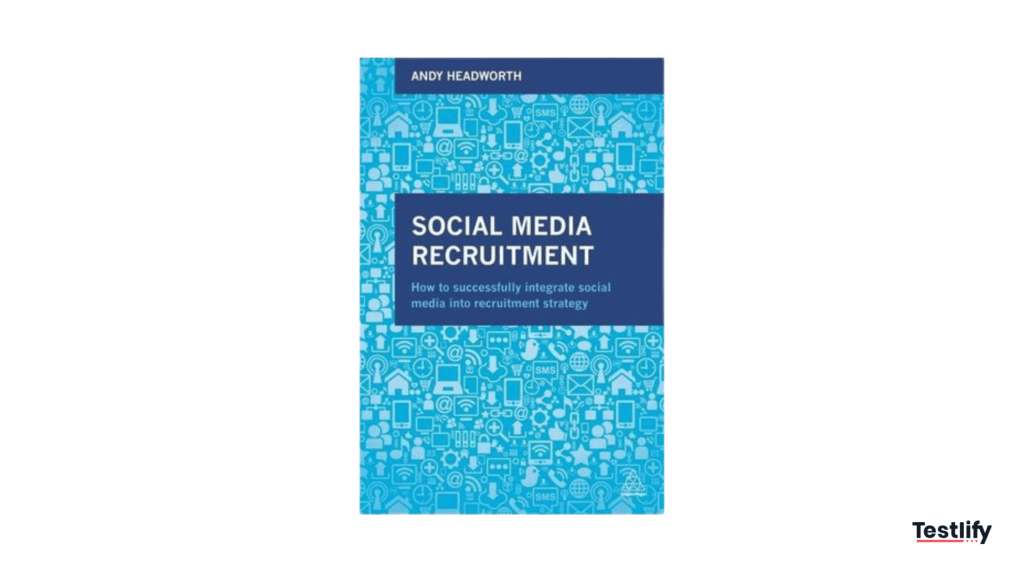
Andy Headworth wrote the most grounded book on using social media to source candidates. It’s full of real case studies rather than theory, and it walks through building a channel from scratch, measuring the return on your time, and folding social sourcing into the rest of your process instead of treating it as a side project. The advice on which platform fits which role still holds up, even as the networks themselves keep changing. Read it for the method, not the specific tactics, and it stays useful for years.
Best for
Sourcers who want a steady inbound pipeline, not one-off viral posts.
4. Talent Magnet
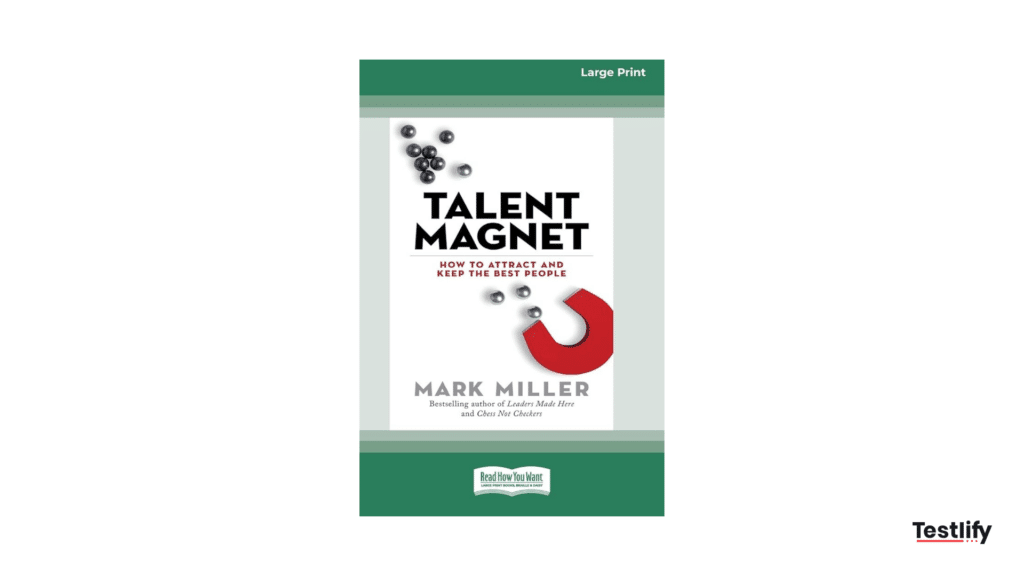
Mark Miller flips the usual question. Instead of asking how to chase talent, he asks what makes talent want to stay. Drawing on his research at Chick-fil-A, he breaks down the handful of things top people actually look for in an employer, and how leaders can build a place that keeps them. It reads more like a leadership book than a sourcing manual, and that’s the point.
Best for
People leaders and anyone who owns employer brand or retention.
5. Who: The A Method for Hiring
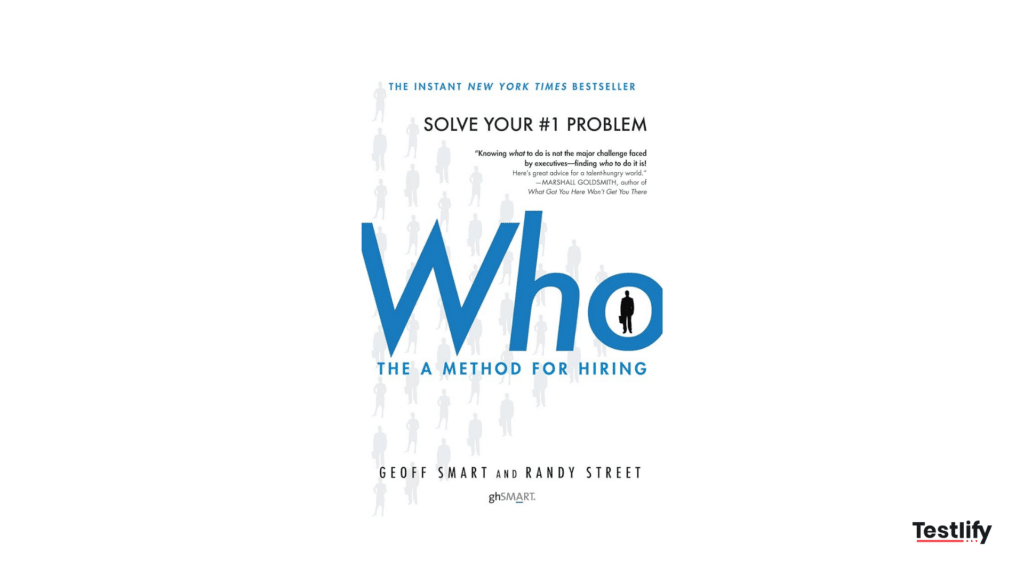
Geoff Smart and Randy Street turned interviewing from an art into a system. Their A Method starts with a scorecard that defines exactly what success in the role looks like, then uses a consistent interview sequence to test each candidate against it. If you only read one book on the actual decision of who to hire, make it this one. It’s the clearest case for structure over gut feel ever written for recruiters.
Best for
Anyone who interviews and wants fewer regretted hires.
6. Hiring for Attitude
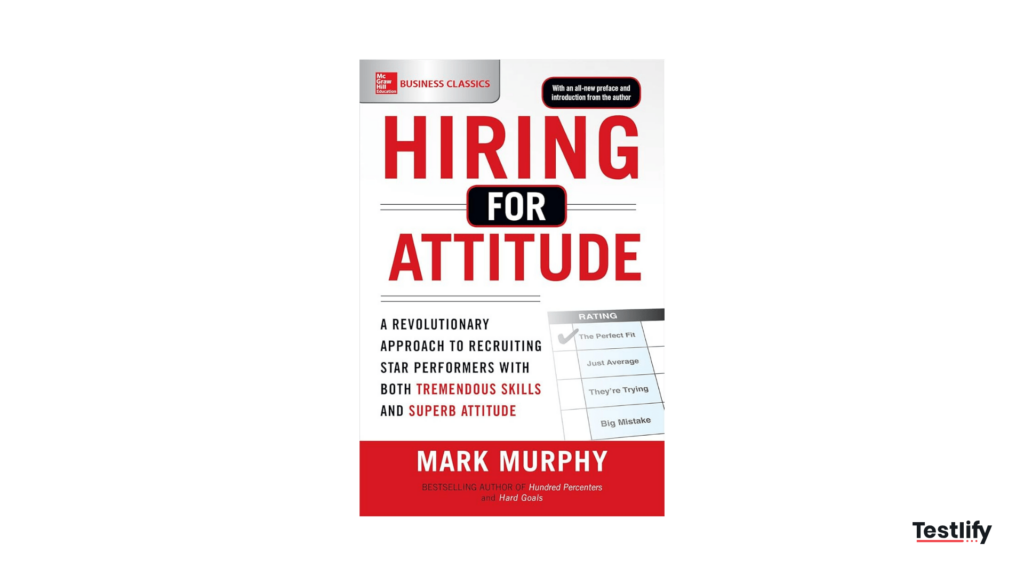
Mark Murphy makes the case that skills get someone shortlisted, but attitude decides whether they succeed once they’re in the seat. Backed by studies of why new hires fail, he offers practical ways to interview for coachability, drive, and fit with how your team works. It pairs well with a skills test rather than replacing one.
Best for
Teams that keep hiring capable people who don’t work out.
7. Full Stack Recruiter
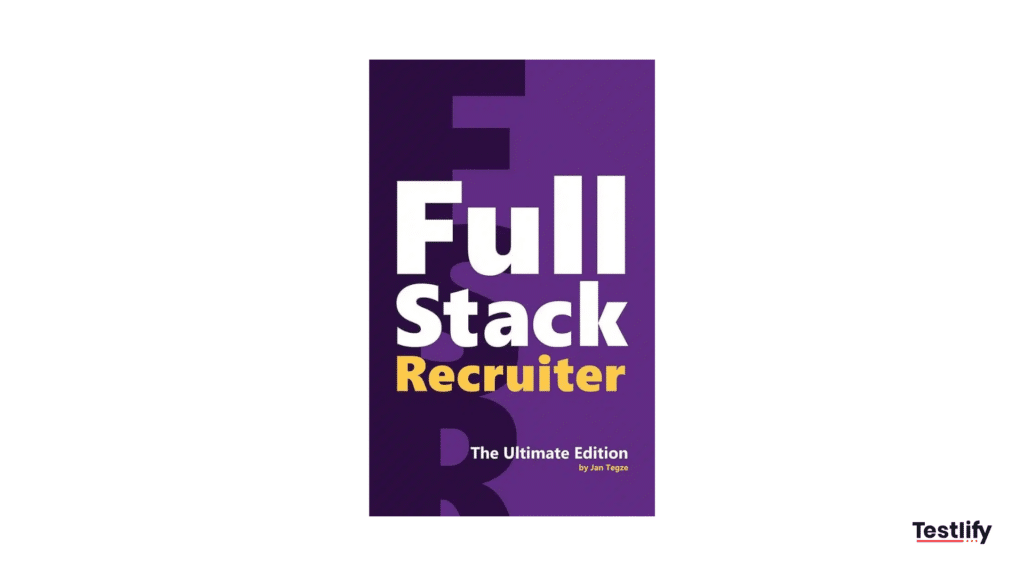
Jan Tegze’s book is the reference manual of the group, more than 500 pages split into sourcing and recruiting. The sourcing half covers Boolean search, X-ray techniques, and outreach that gets replies. The recruiting half covers marketing, analytics, and candidate engagement. New recruiters use it to get competent fast, senior ones keep it on the desk.
Best for
Any recruiter who wants one complete, hands-on reference.
8. Recruiting in the Age of Googlization
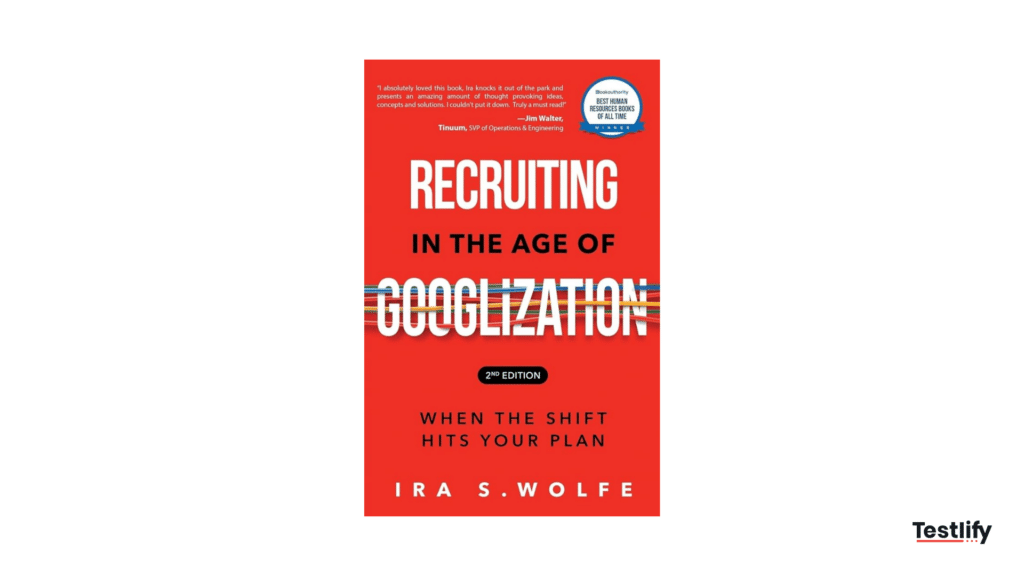
Ira S. Wolfe looks at how quickly technology is rewriting the rules of hiring, from AI screening to the way candidates research employers before they ever apply. His advice is about staying adaptable rather than chasing every new tool. It’s a useful mindset read for recruiters who feel the ground shifting and want a frame for it. Where other books hand you tactics, this one hands you a way to think about change, which is arguably the more durable skill when the tools turn over every couple of years.
Best for
Recruiters bracing for the next wave of hiring tech.
9. Culture Driven Recruiting
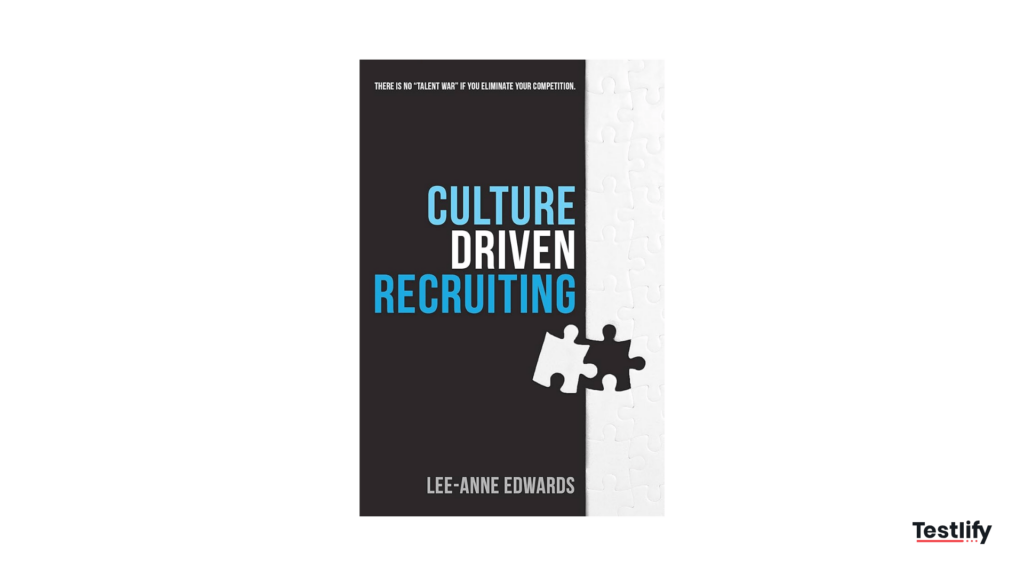
Lee-Anne Edwards writes with nearly 20 years in the chair and zero patience for filler. Her argument is that if you compete on culture, you stop competing on salary alone, and the so-called talent war goes away. Expect blunt stories and practical moves for in-house teams whose hiring keeps stalling on a culture that isn’t clearly defined.
Best for
In-house recruiters and leaders fixing a fuzzy culture.
10. Hiring Success
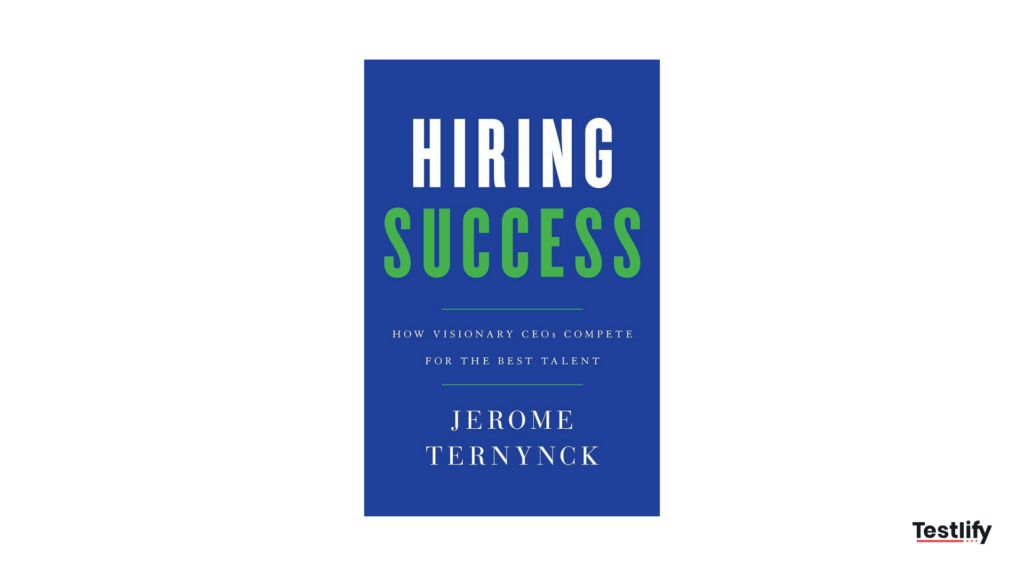
Jerome Ternynck, a SaaS CEO and former recruiter, wrote this for the people who sign off on hiring rather than run it day to day. Drawing on 30 years in the field, he frames talent acquisition as a business function that deserves the same rigor as sales or finance, and shows leaders how to hire at scale without letting quality slip.
Best for
CEOs and talent leaders scaling a team quickly.
How do you turn book lessons into better hiring?
A hiring book only delivers value if it changes how you hire. The common thread across these 10 books is simple: replace resumes and gut instinct with structured, evidence-based decisions.
Put those ideas into practice by assessing candidates on the skills the role actually requires before the first interview. When hiring decisions are based on demonstrated ability instead of assumptions, you consistently identify stronger candidates.
This matters because hiring is continuous, not occasional. Median job tenure in the US is now 3.9 years according to the BLS, the lowest since 2002, so you’re always hiring, and a repeatable, evidence-based process beats reinventing the wheel every time a role opens.
Weave the same rigor through your recruitment methods and the whole funnel gets steadier.
Hire with evidence, not just instinct
Reading sharpens your judgment. Testlify gives that judgment something to stand on: role-based skills assessments that score candidates before the first call, so your shortlist is built on proof. Start free or book a demo and see how evidence-based hiring works in your own funnel.
Key takeaways
- Read for the gap, not the hype: The right book is the one that fixes your weakest step, whether that’s sourcing, interviewing, or closing. Buying the most-hyped title rarely maps to what your process is missing, so audit your funnel first, then pick.
- Sourcing and selection are different skills: Full Stack Recruiter sharpens how you find people; Who sharpens how you choose them. Most hiring misses come from being strong at one and weak at the other, so cover both deliberately.
- Structure beats instinct: The scorecard-and-consistent-interview approach in Who is the most reliable lever any recruiter can pull. It cuts bias and regretted hires because every candidate is measured against the same defined bar, not a mood.
- Attitude and culture are hire-or-fail factors: Hiring for Attitude and Culture-Driven Recruiting both show that capable people still wash out when fit is ignored, so test for how someone works, not just what they can do.
- AI changed the tools, not the judgment: With core skills shifting fast toward 2030, the durable skill is deciding well on evidence. Let AI screen and summarize; keep the hiring decision human.
- Apply one lesson at a time: Two to four books a year, each turned into a single concrete change, moves your metrics further than a stack of unread bestsellers ever will.
Frequently asked questions

Related resources
View allHR & recruitment
What is talent intelligence? Definition, benefits, and implementation guide

HR & recruitment
What is a job leveling matrix? 3 powerful reasons to use it

HR & recruitment
Hire the best nursing talent with these 3 recruitment strategies

HR & recruitment
Finding the right fit when recruiting for high-demand healthcare roles

HR & recruitment
Strategies for nursing talent evaluation for stronger healthcare teams

HR & recruitment
Talent Density: How to Build a Team Like Netflix
Get started.
Hire on proof, not resumes.
Run your first skills-based assessment free — no credit card required.