
How to Hire a Derrick Hand: Skills, Cost, and Testing
Hire a derrick hand by assessing physical fitness, safety training, and experience in operating and maintaining drilling equipment.

A derrick hand spends the shift high on the mast, at the one spot on a drilling rig where a slow reaction becomes an incident. That height is also what makes the hire unforgiving: a polished resume that hides a weak hand costs you safety, rig time, and money the moment the crew starts tripping pipe. To hire a derrick hand well, verify safety certification and mechanical skill first, confirm both with a role-specific skills assessment, and save the interview for judgment and crew fit rather than for guessing whether the paperwork is true.
 ChatGPT
 Gemini
 Claude
 Grok
Grok Perplexity
TL;DR
- A derrick hand guides pipe from the derrick board, mixes and monitors drilling mud, and maintains rig gear, all at height and under the driller’s direction.
- Federal data puts mean pay near $28.04 an hour (about $58,330 a year), so the true cost sits in training, gear, and turnover on top of wages.
- Screen for an in-date H2S ticket, fall-protection and first-aid training, mechanical aptitude, and physical stamina before you weigh anything else.
- Score the skills with a role-specific assessment, then use a structured interview for safety judgment and crew fit, not to re-check the resume.
- Referrals from your own drillers usually beat cold job-board applications on reliability, because a driller has already watched the candidate work at height.

What is a derrick hand, and what do they do?
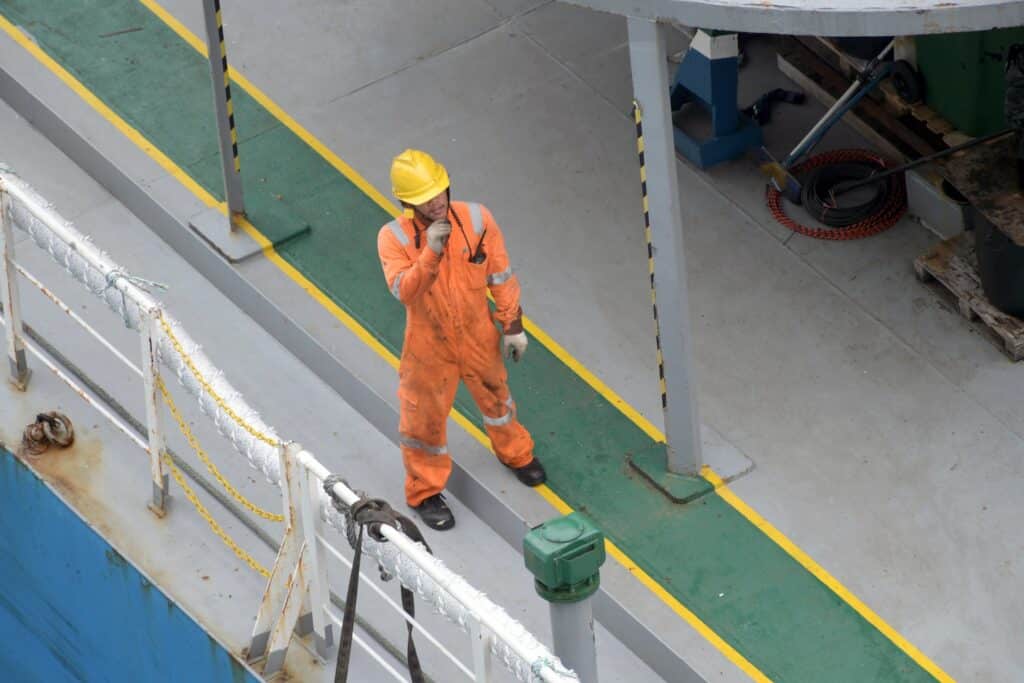
A derrick hand is the crew member who works high on the derrick board and manages the top end of the drill string. They guide pipe as the crew connects and breaks it, mix and monitor the drilling mud that keeps the well stable, and maintain the derrick equipment. On most rigs the role sits above the floor hands and takes direction from the driller.
The job is a promotion from floor hand and a step toward driller, so a good derrick hand is often the crew’s next supervisor. Their work spans mechanical tasks and constant safety awareness, since a single dropped tool or missed mud reading at height can stop the whole operation. The role is defined within standard drilling operations, where the derrick hand owns the mud system and the top-drive area while the crew makes and breaks connections.
What a derrick hand handles on a typical shift
- Working the derrick board and stabbing pipe as the crew trips in and out of the hole.
- Mixing, testing, and adjusting drilling mud to hold pressure and clear cuttings.
- Inspecting and maintaining pumps, hoses, and the circulating system.
- Watching for hydrogen sulfide, pressure changes, and equipment faults, and calling them early.
- Backing up the driller and coaching floor hands on safe technique.
What does it cost to hire a derrick hand?
Plan for a mean wage near $28.04 an hour, about $58,330 a year, based on federal figures for oil and gas derrick operators from May 2023. The full cost runs higher once you add safety training, gear, and the downtime a rig absorbs when a trained hand leaves mid-season.
The Bureau of Labor Statistics counted only 11,510 derrick operators nationwide, with a median wage of $58,210 a year. That is a small, specialized pool. Federal projections add pressure: employment is set to grow about 1 percent from 2024 to 2034, yet roughly 10,600 oil and gas openings a year come open, mostly to replace people who leave. Supply is tight, so the practical lesson is to spend less on posting to more boards and more on verifying and keeping the hands you find.
Which hard and soft skills should you assess?
Assess two layers: the hard skills that keep the well drilling (rigging, mud handling, equipment maintenance, and safety procedure) and the soft skills that keep the crew safe (clear communication, composure at height, and teamwork). A strong hand needs both, because skill without composure is as dangerous on a derrick board as composure without skill.
This is where the Testlify Human+AI Evidence-Based Hiring Framework earns its place. It combines AI-assisted evaluation with human judgment, using structured evidence instead of resumes or gut feel. For a derrick hand that means scoring rigging, mud, and safety knowledge with a validated assessment, then letting the driller and hiring manager weigh the human signals a test cannot read, such as how a candidate talks through a near-miss. The assessment narrows the field on evidence; the people make the call.
Hard skills to check
- Rigging, hoisting, and safe pipe handling under load.
- Mixing and reading drilling mud, including density and viscosity checks.
- Preventive maintenance on pumps, hoses, and the circulating system.
- Working knowledge of well-control and hydrogen-sulfide procedure.
Soft skills to check
- Communication that stays clear over radio and rig noise.
- Composure and sound judgment when a connection or a pressure reading goes wrong.
- Teamwork and the willingness to coach floor hands.
- Reliability across long hitches and night shifts.
Use a table like this to turn each skill into something you can actually check before an offer goes out.
Skill to assess | Why it matters on the rig | How to check it before hiring |
|---|---|---|
Rigging and pipe handling | Mishandled pipe at height is a top injury source | Skills assessment plus a supervised practical on a stand-down rig |
Mud mixing and monitoring | Wrong mud weight risks well control | Scenario questions in a test, confirmed by a reference on real wells |
Safety and H2S procedure | Sour gas can be fatal within a breath or two | Verify an in-date H2S certificate, then test judgment on hazard scenarios |
Composure under pressure | Panic at height endangers the whole crew | Structured interview questions on past near-misses |
How do you test a derrick hand’s skills before hiring?
Score the role-specific skills first with a structured assessment covering rigging, mud handling, mechanical reasoning, and safety judgment, then confirm the result with a structured interview and a reference check on real rig performance. Testing before the first call keeps a good resume from hiding a weak hand, and a plain resume from hiding a strong one.
Safety judgment is not a soft extra here; it is the filter that protects lives. The Occupational Safety and Health Administration lists vehicle incidents, struck-by and caught-between events, fires, falls, confined spaces, and chemical exposure as the leading rig hazards, and records 489 oil and gas extraction deaths across 2013 to 2017. A candidate who cannot talk through a hydrogen-sulfide response or a stuck-pipe call is a hiring risk no matter how strong the rigging score looks.
A practical sequence works best: run a derrick hand skills assessment to shortlist on evidence, apply the same rigor you would to any blue-collar skills evaluation, and close with a structured interview so every candidate answers the same safety and judgment questions. Consistent inputs make the shortlist comparable, which is the whole point of testing before you talk.
Pro Tip: Check the H2S certificate’s expiry date, not just that one exists. A lapsed ticket is one of the most common gaps on oilfield resumes, and on a sour-gas well it is the line between a compliant crew and a shutdown.
Where do you find qualified derrick hands?
The fastest reliable source is a referral from your own drillers, because they have already watched the candidate work at height and under load. Beyond that, oilfield job boards, trade and drilling schools, and active basins such as the Permian surface volume, though cold applicants need heavier verification.
- Crew referrals: highest signal, since a working driller vouches for real performance.
- Oilfield and trade job boards: good reach, but confirm certificates and references before shortlisting.
- Drilling and trade schools: a pipeline for newer hands you can train up from floor-hand roles.
- Regional hubs like the Permian Basin: dense talent, high competition, so move fast on strong candidates.
Derrick hand job description template
Copy this template and adjust the specifics for your rig, region, and rotation. Clear, honest postings attract hands who stay.
Job title: Derrick hand
Report to: Driller. Location and rotation: state the basin and the hitch schedule (for example, 14 on, 14 off).
Responsibilities
- Work the derrick board and handle pipe safely during trips.
- Mix, test, and maintain drilling mud and the circulating system.
- Inspect and service pumps, hoses, and derrick equipment.
- Monitor for hazards, including hydrogen sulfide and pressure changes, and report them immediately.
- Support the driller and guide floor hands on safe practice.
Qualifications
- Prior floor-hand or derrick experience on a drilling rig.
- In-date H2S certification, first aid, and fall-protection training.
- Mechanical aptitude and the physical stamina for work at height.
- A clean drug and alcohol screen and a valid driver’s license.
What we offer
- Competitive pay in line with regional oilfield rates.
- Paid safety training and certification renewals.
- A clear path from derrick hand to driller.
Derrick hand interview questions to ask
Keep the questions consistent across candidates so answers are comparable. Group them by what you are testing.
Safety judgment
- Walk me through the last time you detected a hazard at height. What did you do first?
- How do you respond when an H2S monitor alarms during a trip?
- Describe a near-miss you were part of and what changed afterward.
Hard skills
- How do you check and adjust mud weight when returns look off?
- What is your routine for inspecting the circulating system before a shift?
- How do you handle a stuck-pipe situation from the derrick board?
Teamwork and reliability
- How do you coach a new floor hand without slowing the trip?
- Tell me about a long hitch that tested you and how you stayed sharp.
Shortlist derrick hands on evidence, not guesswork
Testlify scores rigging, mud handling, mechanical reasoning, and safety judgment before the first call, so your shortlist is built on what candidates can actually do at height. See how it works on a live walkthrough.
Key takeaways
- Safety certification is the first filter, not a formality. Sour gas can kill within a breath, so an in-date H2S ticket gates every other qualification, which means an unverified certificate should stop a shortlist before skills even come up.
- The real cost sits beyond the wage. Mean pay near $28.04 an hour is only the base; training, gear, and mid-season turnover carry the larger bill, so retention planning belongs in the hiring budget from day one.
- The talent pool is small and replacement-driven. With about 11,510 derrick operators nationwide and roughly 10,600 oil and gas openings a year, speed and verification matter more than reach, so invest in a tight shortlist over a wide net.
- Test skills before you interview. A role-specific assessment scores rigging, mud, and safety judgment on evidence, which keeps a strong resume from masking a weak hand and frees the interview for judgment and fit.
- Referrals from your drillers beat cold applicants. A driller has watched the candidate perform at height, so a referral carries verified signal that a job-board application cannot, and it usually shortens time-to-hire.
- Structure keeps the shortlist honest. Scoring every candidate against the same assessment and the same interview questions makes the comparison fair and defensible, which is what turns a fast hire into a good one.
Frequently asked questions

Content Writer
Yashika Khandelwal is a Content Writer with 3+ years of experience creating research-backed content on hiring, talent assessment, and HR technology. She is a registered Organizational Psychologist and subject matter expert who combines behavioral science with practical recruitment insights to produce accurate, evidence-based content.
LinkedIn





Get started.
Hire on proof, not resumes.
Run your first skills-based assessment free — no credit card required.