+1 (844) 755 8378

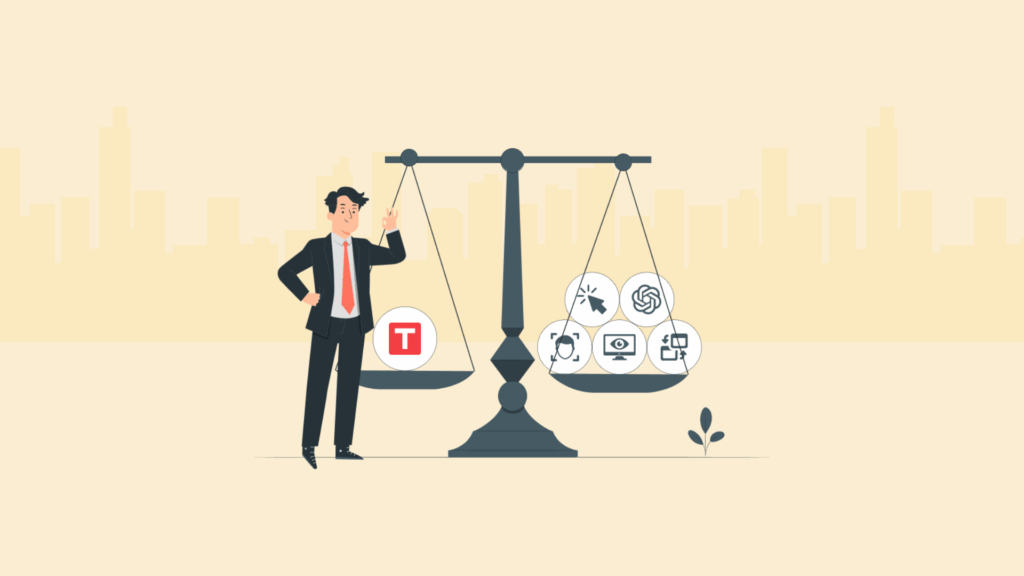
Enterprise hiring is being closely watched. More than €4.5 billion in GDPR fines have already been imposed by international regulators, and a growing patchwork of state laws in the United States now requires strict data handling during the hiring process.
Hiring teams must demonstrate that all interactions with candidates are safe, consistent with their brand, and free from bias.
This is where white label interview tools are stepping in. They’re enabling enterprises to run fully branded, end-to-end interviews within a platform that’s already SOC 2 certified, GDPR ready, and CCPA aligned.
Let’s dive into how white label interview tools are helping enterprises streamline their talent pipelines, without losing speed or brand identity.
What is a white-label interview tool?
A white-label interview tool is a pre-built video or assessment platform that companies can rebrand and customize as their own to conduct candidate interviews.
Instead of building the technology from scratch, businesses license the tool and apply their own logo, colors, domain name, and branding elements, so it looks like a native part of their product or website.
That means candidates don’t see third-party logos, generic interfaces, or mismatched workflows. Everything, from the email invitation to the interview environment, feels like it’s coming directly from your company.
In this context, “white-label” actually means the following:
- It’s your branding, not theirs: Throughout the candidate journey, use your font, colors, logo, and tone. Everything represents your brand identity, whether it’s an assessment dashboard, a question prompt, or a video screen.
- Not for meetings, but for hiring: Unlike Zoom or Google Meet, these tools come with features specifically designed for recruiters, including asynchronous interviews, structured questions, AI scoring, candidate timelines, ATS integration, and built-in compliance features.
- Fully integrated with your tech stack: White-label tools can be directly integrated with your ATS and HRIS because they provide APIs. Platforms like Testlify, for example, offer end-to-end white-label interviewing, allowing you to customize everything from the invitation email to the video interface, while ensuring seamless integration with over 100 ATS systems.
Generic meeting apps handle conversations; they don’t manage talent-pipeline chores. A white-label interview platform comes with hiring-first functions that plug straight into requisition workflows.
You own the candidate experience and the data optics, without owning the dev backlog. Next, we’ll examine where traditional pipelines fall short and precisely how white-label tools address those gaps.


Where do traditional pipelines break down?
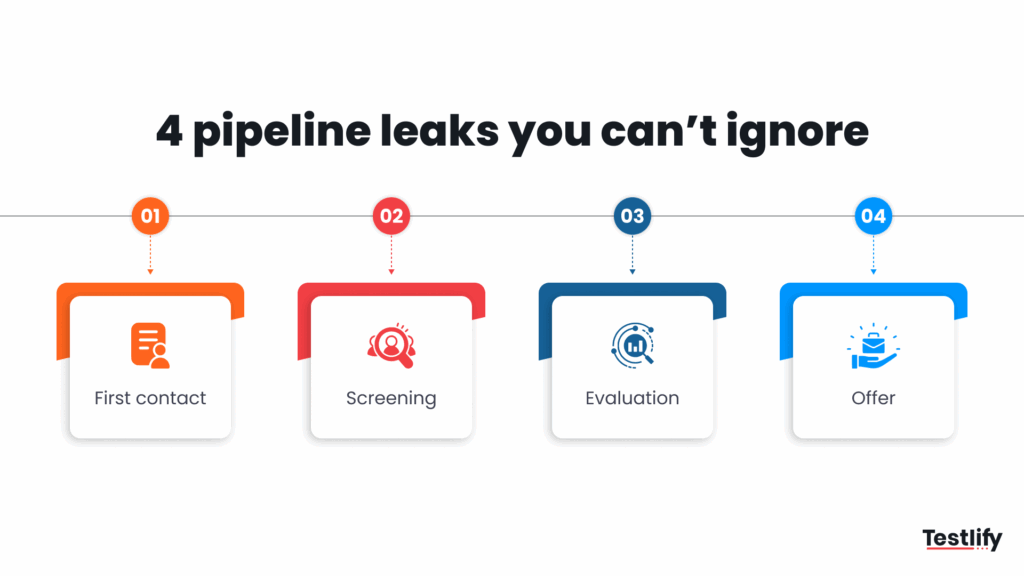
Most enterprise pipelines stumble at the same chokepoints. Below is a stage-by-stage look at the cracks,
| Pipeline stage | What usually breaks |
| 1. First contact & scheduling | Back-and-forth emails. |
| 2. Screening & short-listing | Live phone screens pile up. |
| 3. Team evaluation & decision | Managers watch clips in various tools; notes are stored in email threads. Bias creeps in when questions vary. |
| 4. Offer & onboarding hand-off | Candidates jump from vendor-branded interview apps to corporate portals. |
How white-label tools help:
1. First contact: where speed kills (or saves) your shortlist
- The platform sends an instant, branded async interview link, customized with your logo, tone, and timing.
- Candidates record their responses anytime, anywhere.
- Recruiters receive clips in the ATS, with no requirement to chase calendars.
2. Screening: where speed meets structure
- You create pre-set question templates for each role or department.
- Responses are reviewed using structured rubrics and optional AI scoring.
- Faster screening equals faster movement down the pipeline.
3. Evaluation: where inconsistency costs clarity
- Everyone reviews interviews on the same branded platform, with access-controlled visibility.
- Feedback, scores, and decision timelines stay connected.
- Dashboards display who has been reviewed, who is pending, and who is ready to proceed.
4. Post-evaluation: where offers stall and compliance gets messy
- The platform includes built-in controls for data privacy, retention, and regional hosting.
- Full audit trails are accessible to HR, IT, and Legal teams.
How do white label interview tools reduce time-to-hire and cost-per-hire?
If there’s one thing enterprise recruiters are under pressure to fix, it’s speed. Time-to-hire has become a competitive edge. And cost-per-hire? In 2025, that number is under a microscope in every HR budget meeting.
Hiring takes time, and time is expensive. However, we rely too heavily on back-and-forth emails, live calls, and dispersed tools, which is a significant factor in the hiring slowdown.
White label interview tools fix that by removing the usual roadblocks. Instead of waiting days to schedule calls, you send out branded, on-demand interviews right away.
Recruiters can review multiple responses simultaneously. That alone shortens your hiring timeline by a few days, sometimes even weeks.
Additionally, because everything is automated, your team can spend more time shortlisting qualified applicants and less time on tedious tasks. That’s how these platforms directly reduce both time-to-hire and cost-per-hire.
Check out: Testlify’s newly launched average time-to-hire calculator.
How do white label interview tools protect your brand and improve candidate experience?
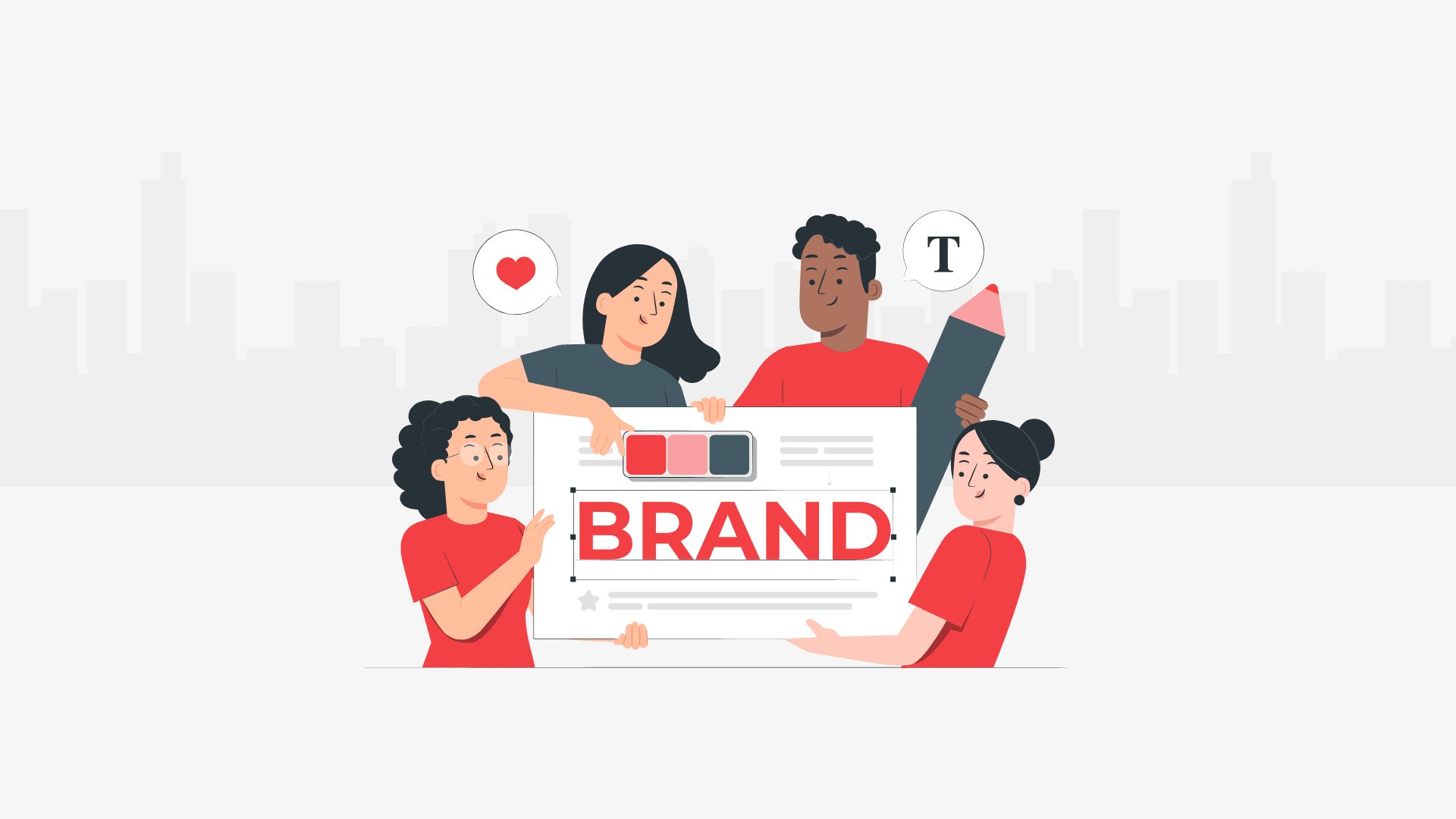
The majority of interview platforms have a generic feel. After clicking on a link, candidates are directed to a third-party branded tool. Your business suddenly feels less like yours as the tone and images change.
You can provide a smooth, branded experience right away with white label interview tools. The interview invitations include your domain name, colors, and logo.
The interface looks like an extension of your careers page. For candidates, this matters more than we think.
According to Talent Board’s 2024 report, 72% of candidates say a branded, intuitive interview experience positively impacts how they view an employer, even if they don’t get the job.
It not only looks better, but it feels better when every candidate touchpoint reflects who you are. And candidates remember that experience more than benefits or pay.
Final thoughts
Let’s face it, hiring for businesses is more than just filling positions these days.
Protecting your brand, delivering a top-notch applicant experience, and demonstrating a return on investment to leadership are the primary objectives. Inconsistent workflows, generic interviews, and fragmented tools make that impossible.
Platforms for white-label interviews provide structure in chaotic situations. You get:
- A fully branded experience, from invite to offer
- Consistent, structured interviews your team can trust
- Built-in compliance for GDPR, CCPA, and global privacy laws
- Seamless integrations with your existing ATS, HRIS, and workflows
And the best part? You don’t need to rebuild your hiring process to look more polished; you just need to own it.
Want to simplify hiring without losing your brand voice? [Check out Testlify’s white-label features that do precisely that.]